



• N&PD Moderators: Skorpio

Rs 67333

Reminisant B

Greenlighter
Joined
Nov 3, 2005
Messages
401
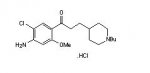
Read about this new chemical in New scientist.

Apparantely a new compound in a series of fast acting anti-depressants. It doesn't say much else except that it works by "binding to a receptor on the surface of brain cells and stimulating them to release more serotonin"

In rats it reversed the symptoms in days compared to weeks in rat models of depression.
 

Attachments

  • rs67333.jpg
    rs67333.jpg
    10.9 KB · Views: 148
It's a 5-HT4 receptor agonist. There was one out(Tegaserod) except it was marketed for IBS, but in March it got shut down because of an alleged relationship between it and increased risks of heart attack or stroke.
 
Is this the drug they're talking about on the Front Page Drugs in the Media?

Did someone say it was related to piperazine?
 
It's a piperidine derivative... but so are a million other drugs out there. No close relationship to bzp or any of the like if thats what you are implying.
 
Be interesting to know how long the after effects or long term anti-depressant effects continued for - in the rat model used.

Lets face it, most drugs of abuse are fantastic anti-depressants if you just take the first few hours or even maybe 12 hours of use. It just so happens the crash and many detrimental effects afterwards is the reason they can't be used as antidepressants.

To have an acute but ALSO lasting effect on depression that also doesn't require redosing that would be something special. (I do wonder though whether it just brightened the rats mood for a few days??)

[I haven't read the full article so the above is just speculation, someone might know more info]
 
opiates, yeah. Never found any problems in terms of crashing with them.

Wasn't there some talk about using a IR stimulant + Delayed Release depressant for depression? It'd be a good idea. Most depressants really decrease the crash of stimulants.

Anyway- there's a great need for fast acting anti-d's. I have fairly severe Bipolar Disorder (type 1) and there have absolutely been times where I needed a "right now" mood lift to prevent suicide, and I know there are lots of other people who have similar experiences.

The structure is really neat. Kinda amphetamine-y. I wonder how pronounced any stimulant effects would be.

It'd be nice to have a straight mood lifter- no stimulation, depression (but not in the sense of affect. Well, none in the sense of affect, obviously, too, though) or other "peripheral" effects.

I've never had the chance to taste SPA, but I'd really like to know how much the stimulant and opioid effects would cancel eachother out. Possibly a good candidate (though I assume not, or it wouldn't have been much of an abused substance).
 
MDMA is an incredibly good fast acting antidepressant. However, it's also a pretty good neurotoxin.

How come no one ever followed through and tried to make non-toxic MDMA analogues (or other drugs with similar effect) for short-term clinical use? It seems perfectly logical.
 
nuke said:
MDMA is an incredibly good fast acting antidepressant. However, it's also a pretty good neurotoxin.

How come no one ever followed through and tried to make non-toxic MDMA analogues (or other drugs with similar effect) for short-term clinical use? It seems perfectly logical.

Possible neurotoxicity is only a secondary problem of MDMAesque antidepressants. The primary problem must be the come down.
 
bigmac74 said:
Possible neurotoxicity is only a secondary problem of MDMAesque antidepressants. The primary problem must be the come down.

Comedown is from MDMA and MDMA metabolites left after the effects of the drug wear off that hang around neurons, as well as damage to tryptophan hydroxylase.

I rarely ever see people who come off of pure MDMA become depressed after the experience, though.
 
Ham-milton said:
Wasn't there some talk about using a IR stimulant + Delayed Release depressant for depression? It'd be a good idea. Most depressants really decrease the crash of stimulants.
Dexamyl?
 
It looks like it has an aniline moiety. I thought that usually wasn't a very good idea metabolically, although the extensive substitution on the aromatic ring might render that point mute in this case.
 
The aromatic substitution pattern is exactly that of metoclopramide!!
 
The aromatic substitution pattern is exactly that of metoclopramide!!

i think thats the reason broshious claimed it was a 5-ht-4-agonist.
due to having done some research regarding 5-ht-4-ligands for the last few months, i'd agree with that notion. (what a sentence :) )
 
morphiquet said:
i think thats the reason broshious claimed it was a 5-ht-4-agonist.
due to having done some research regarding 5-ht-4-ligands for the last few months, i'd agree with that notion. (what a sentence :) )

It wasn't just a claim. A quick search on Rs 67333:

"In the present study, the effects of two novel, potent and selective 5-HT4 receptor agonists, RS 67333 (1-(4-amino-5-chloro-2-methoxyphenyl)-3-(1-n-burtl-4-piperidinyl)- 1-propanone)..."
 
how do you make a rat depressed? bully it in the playground?
make it live with an alcoholic mother?
 
Top


