• N&PD Moderators: Skorpio

Repairing fried nerve endings

shroomcloud

Bluelighter
Joined
Feb 19, 2001
Messages
121
Hi guys
Havent posted here for a while. It used to be only postitive energy about ecstasy on bluelight, we just hyped each other up about how good it was: " Its not the pills that give you axiety/depression/crappy memory man, its the weed, and the crappy weather, yeah man, it cant be pills, they make you feel goooood...blah, But now I see more and more people blaming psychiatric problems on MDXX.

Thats got me worried, cos this for me was proof of exactly what I dreaded. That indeed the pills were to blame for my slow speech, depression, anxiety, bad memory. Im not saying im unhappy or anything: I study a subject that I love, have many loving vriends, etc, etc, generally a good life, but I have a feeling that my life would have been better had I not used ecstacy when I was younger.

I regret abusing pills, or even using ecstasy alltogether, while I used to think it was a gift from god. I feel like its the stupidest thing I have done in my whole life but I was young,13, and very naive when I started.

I suspect that these semi??-permanent side effects are a consequence of the serotonin nerves that have less synaptic axons due to ecstasy use. Good news: the axons grow back, Bad news: they grow back very, very slowly.

How do I make the nerve axons grow back quicker ? Nootropics ? Omega-3 ? SSRI`s ? Bilzor ?
 
Last edited:

oh my

For the repair and ongoing health maintenance, I recommend:

acetyl-l-carnitine 1G 2X day.
alpha-lipoic-acid 300mg 2X day
CoQ10 - 100mg 2X day
DHEA 50mg sublinqual 2x day.
Fish-oil - 2G 2X day.
1 all-purpose multivitamin with minerals, 1 per day.

food:
4 tablespoons for nutritional yeast per day for b vitamins.
4 tablespoons ground flaxseed for omega-3's and lignans.
lots of blueberries
eat very low on the glycemic index.


Sounds like you could use some anti-depressants as well - bupropion 300mg extended release + lexapro 20mg in the AM works well. If you smoke, you might want to cut back on the bupropion. You might substitute 5-htp for the lexapro, not sure what would substitute for the wellbutrin, except mega-doses of piracetam (4G 2X day) + dmae with phosphatidyl serine..
 
My opinion: Stuff like that ^ is a waste of your money and time. I mean, shit, if you want to eat fish oil/OMEGA-3 then do, it's good for you, it's not going to harm you, though it's pretty expensive, but it's not magic cure for brain damage.

But all this piracetam etc stuff, I don't trust it as far as I can throw it... people mix up euphoric effects and pro-cognitive effects when their judging results subjectively.

I think treating your problems, whether they are a result of MDMA or not, is a good idea. I don't know if some citalopram or bupropion will help you with your depression or anxiety.

I do know that I find it unlikely, unless you were heavily abusing MDMA, that you have true axonal loss.

How long have you been abstinant for?
 
I havent touched a pill for at least 2 years. There might not be significant axon loss but still I feel like ecstacy use has caused or worsened some negative feelings, whether it has to do with axons or transporters or some other mechanism i dont know.

You recon nootropics and all the 'anti-aging" crap is a comlete waste of time if youre still young and healthy ? Theres loads of people on bluelight that swear by this stuff like the guy that posted above you.Do you think all these people are talking shit? Its got me interested but im also quite sceptical cos if its so good why isnt everyone on nootropics and supplements and why can you only buy them on the net? smells fishy if you ask me.
 
Last edited:
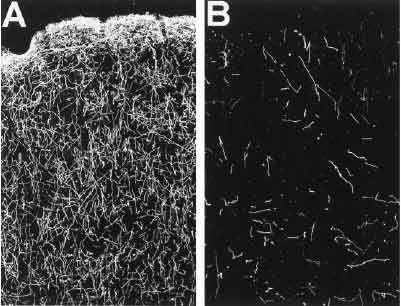
The reason why i thought i was suffering from axonal loss is because my professor(pharmacy) showed slides of serotonin nerves before, right after and several years after MDMA use. They showed that the nerves had substantial axon loss and they still hadnt fully grown back 7 years after drug use.

Then a toxicollogist explained the same thing on dutch television: "the branches of the serotonin nerve grow back slowly but they will never be as numerous and elaborate as before MDMA use"

So of course this shit got me spooked, damn i gotta rebuild my axons quick!! But you dont think that much nerve damage has been sustained?
 
Last edited:
shroomcloud said:
damn i gotta rebuild my axons quick!!
Dear Sir:

I have been requested by the Nigerian National Axon Research facility to contact you for assistance in resolving a matter.
You will get a massive axon regrowth with this new wonder medicine NIG419 (code-name). Normally this is very expensive but because you are a relative of Ben Ahore, a very respected man in this country, we can send it to you for free.
We promise instant axon regrowth in just a week.

Only problem is that you have sum problems getting the NIG419 out of the country, could you aid us with some of your financial funds?

regards,

Joep Ubuntu
 
BilZ0r said:
I do know that I find it unlikely, unless you were heavily abusing MDMA, that you have true axonal loss.

I agree. Some studies have shown fewer axon connections, and lower memory abilities in people using MDMA compared to others. But many of these studies are flawed, in that the two groups compared may have other natural differences that can explain this. Actual axon loss has not been found in humans because it requires slicing up the brain and staining the sections to find the axons, which no Ecstasy user wants to do and which could not be done ethically even if someone volunteered

There's always the possibility of post-mortem work (although on the whole I think the PET scan methodologies are are a very credible substitute for such invasive examination).
 
Mind_Movie said:
Dear Sir:

I have been requested by the Nigerian National Axon Research facility to contact you for assistance in resolving a matter.
You will get a massive axon regrowth with this new wonder medicine NIG419 (code-name). Normally this is very expensive but because you are a relative of Ben Ahore, a very respected man in this country, we can send it to you for free.
We promise instant axon regrowth in just a week.

Only problem is that you have sum problems getting the NIG419 out of the country, could you aid us with some of your financial funds?

regards,

Joep Ubuntu

=D =D =D
 
The picture my proffessor showed us was a scan of serotonin nerve. I think they used dye to color the serotonin. Dont know if all this is possible, if I find the slide I`ll post it.
 
^ I know the image, but it's not from humans, it's from monkeys, given 10mg/kg (via subcutaneous injection) for 4 days straight. Consider humans take closer to 1mg/kg orally... which probably equates to a ~20th the dose.

friedmonkey.jpg


If humans recieved such dramatic neurotoxicity I suspect a) the studies looking for neurotoxicity in humans would have much much much bigger effects and b) tolerance to MDMA would be far more pronounced, i.e. if MDMA blew out all your serotonin how could you roll two days straight?

Furthermore, monkeys that self-administer MDMA don't recieved neurotoxic lesions like those shown above.[1]


I don't think the people who swear by herbal prodcuts/nootropics are bullshit, I just think its 99% placebo effect.
 
lifeisforliving said:
I think SSRI's are the main group of drugs that have been shown, at least in animals, to encourage new neuron growth in the hippocampus.

Is this true ? Then i guess SSRI`s dont just solve the symptoms of depression but the treat the cause of it.
 
^ Well... I don't think cause/effect has been "proven" yet. But SSRI's (and SSRE's for that matter) seem to modulate serotonin in such a way as to spur the growth/differentiation of new neurons in the hippocampus.

It's incredibly interesting considering just a few short years ago we believed that no new neurons formed in the mature human brain.

And of course, following that line of thought.. if SSRI's help form/maintain new neurons and connections - the sudden ceasation of the medication could lead to those connections faltering... therefor a resumption of depressive/suicidal thoughts. *shrug* that's just my guess of course regarding what happens when the SSRI's are stopped.
 
^There are certain nerve circuits in the brain where the sending neuron (the presynaptic neuron) gets its message across the gap (the synapse) between it and the next neuron, the receiving neuron (the postsynaptic neuron) by releasing a the chemical serotonin.


In milliseconds, the serotonin (a kind of protein) molecules diffuse across the gap and reach the receiving neuron. What normally then happens is that these serotonin molecules "find" other kinds of special protein molecules that are embedded in the membrane of the receiving cell. These molecules are called receptors. These molecules then change shape when the serotonin binds to them and this causes a mini electrical signal spread out like ripples spread out in a pond after you throw a stone into it.


What happens is thousands and thousands of serotonin molecules are binding to that many receptors and when there are enough of these mini electrical signals happening all at the same time, a special threshold in the receiving neuron's membrane is reached and a more powerful, self-propagating electrical wave moves down the receiving cell, travels along the cell (a part called the dendrite), reaches the main part of the cell (the cell body) and there together with other signals that had come off of different dendrites (most neurons have many) cause a reaction in the cell body. If this reaction occurs, then a message is sent to the next cell on down the line via the receiving neuron's axon. (It has one and only one axon!).


But what happens to a serotonin molecule after it has done its job of binding to the special receptor and caused that receptor to in turn causes that mini electrical signal? It unbinds from the receptor, the receptor goes back to its original shape and waits for the next serotonin molecule to come along. The body has to have some way of clearing the "old" serotonins out of the gap so that they will not make cause false signals in the receiving neuron by rebinding when the sending neuron is not sending any signal down its own axon to the end (the bouton) where "new" serotonin would be released if it really had fired.


This is where "reuptake" comes in.


The sending neuron also has special receptors, but of a different kind of protein than the other receptors I just mentioned. What the sending neuron has are REUPTAKE receptors. When an "old" serotonin comes wandering near one of these, it binds and the reaction between the two causes the serotonin molecule to be actively transported back into the sending neuron, where it's repackaged and recycled to be ready to be released again a future time that the sending neuron fires. This not only cleans out the gap so that no false signals will be started in the receiving neuron, but it saves the sending neuron from having to manufacture as much serotonin.


What the SSRI's do is bind to these reuptake receptors and take up the places that the serotonins would normally take up. In other words, it IHIBITS the REUPTAKE of SEROTONIN and does so SELECTIVELY (that is, it inhibits these and only these receptors). This way, less serotonin gets actively transported into the sending neuron to be repackaged and recycled. The result is that there are a lot more "old" serotonin molecules in the gap and hence a lot more of them "find" the regular receptors and react with them to cause those mini electrical currents. This makes the receiving neorons fire more often, thus counteracting some forms of depression where the receiving neurons that are activated by serotonin (serotonergic neurons) do not fire often enough.


There is one disadvantage to this method that I have never seen in the literature though. Less serotonin gets recycled and more of it wanders out of the edges of the gap to be lost in the brain and eventually find its way into the bloodstream and by the liver and kidneys is eliminated from the body. Doesn't this put a lot of extra burden on the presynaptic neurons when it comes to the task of manufacturing "new" serotonin in its cell body and actively transporting it down its axon all the way to a bouton? (All of these processes require energy and raw materials.) Could it be that at least some of the time, the presynaptic neurons cannot keep up with this added demand and therefore, significantly LESS serotonin is stored in the vesicles in the bouton and could a result of this be that at each firing of the presynaptic neuron, NOT ENOUGH serotonin is released resulting in the postsynaptic neuron again (as in the natural disease state with no SSRI present) fire not often enough?
 
That's an interesting question that I don't know the answer to. But to clarify:

"In milliseconds, the serotonin (a kind of protein) molecules diffuse across the gap and reach the receiving neuron. "

The serotonin is not a protein; the receptor it targets is a protein.
 
paradoxcycle said:
There is one disadvantage to this method that I have never seen in the literature though. Less serotonin gets recycled and more of it wanders out of the edges of the gap to be lost in the brain and eventually find its way into the bloodstream and by the liver and kidneys is eliminated from the body. Doesn't this put a lot of extra burden on the presynaptic neurons when it comes to the task of manufacturing "new" serotonin in its cell body and actively transporting it down its axon all the way to a bouton? (All of these processes require energy and raw materials.) Could it be that at least some of the time, the presynaptic neurons cannot keep up with this added demand and therefore, significantly LESS serotonin is stored in the vesicles in the bouton and could a result of this be that at each firing of the presynaptic neuron, NOT ENOUGH serotonin is released resulting in the postsynaptic neuron again (as in the natural disease state with no SSRI present) fire not often enough?

Great post...

I see where you are coming from. I thought a few things happened:

1) Excess serotonin is still reuptaked, just not as fast.
2) Excess serotonin not reuptake'd would be ingested by glia and the surrounding cells.
3) Wouldn't MAO-A still bind and degrade the extra serotonin?

From what I've read (not that much) I do agree with your thought about serotonin being a very rate-limited regeneration cycle. Something about the rate limited step that converts 5-HTP into serotonin?

It's also interesting to point out that in all the articles I've read the only "real" mechanism known on how SSRI's work is that they "modulate" the amount of serotonin available... as in the end result may not be necessary more serotonin released.. just that the way (rate of release/reupate) is modulated.

That same "modulation" as with SSRE's allow seems to be the mechanism behind THEIR effeciveness - which is in direct opposition to SSRI's purported "more serotonin in the cleft" idea.
 
Top