-
Neuroscience & Pharmacology Discussion Welcome Guest
Posting Rules Bluelight Rules Recent Journal Articles Chemistry Mega-Thread FREE Chemistry Databases! Self-Education Guide -
N&PD Moderators: Skorpio
You are using an out of date browser. It may not display this or other websites correctly.
You should upgrade or use an alternative browser.🌟🌟 Social 🌟🌟 Rectify's molecular poetry thread
- Thread starter Dresden
- Start date



Smyth2
Bluelighter
- Joined
- Jul 26, 2011
- Messages
- 738
I am getting some pramipexole soon. I saw this patent you might be interested in:
"Compounds for reducing excessive intake of food"
Michael Pieper & Joachim Mierau, WO2003028710 (to Boehringer Ingelheim Pharma GmbH and Co KG).
Smyth2
Bluelighter
- Joined
- Jul 26, 2011
- Messages
- 738
It reminds me a bit of a phytoestrogen called 4EM, 4-(Ethoxymethyl)phenol [57726-26-8].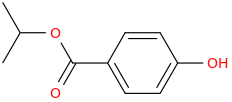
SEMI_SYNTHETIC_ FEMALE_PHEROMONE#4
4-carboisopropoxy-phenol
For Topical And Perfumery Usage. One Of The Finest Scents.
Pearce, Virginia; Nawaz, Zafar; Xiao, Wu; Wiedenfeld, David; Boyle, Nick; Smith, Don (2003). "4-Ethoxymethylphenol: a novel phytoestrogen that acts as an agonist for human estrogen receptors". The Journal of Steroid Biochemistry and Molecular Biology. 84 (4): 431–439. doi:10.1016/S0960-0760(03)00064-5.
Rectify
Bluelighter
- Joined
- Oct 20, 2008
- Messages
- 11,416
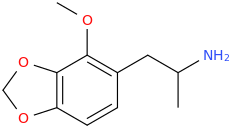
BOO
1-(2-methoxy-3,4-methylenedioxyphenyl)-2-aminopropane
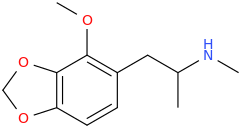
BRANNON
1-(2-methoxy-3,4-methylenedioxyphenyl)-2-methylaminopropane
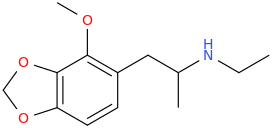
CHRISTINA
1-(2-methoxy-3,4-methylenedioxyphenyl)-2-ethylaminopropane
"It's Just A New Way Of Thinking." - Wu-Tang [1997]Last edited:
Didgital
Bluelight Crew
Stick an alkene between the methoxy group of MMDA and amphetamine and i could see some cleavage going on in stomach acids. However if it was a prodrug, you would get way fucked up on the amphetamine component way before the MMDA even makes an appearance.
OBOVATOLAMINE
1-(2-aminoprop-1-yl)-3,4-methylenedioxy-5-((2-aminopropyl)phenoxy)benzene
From Obovatol, A Constituent Of Magnolia Tree Essential Oil.
"We From The Magnolia." - Juvenile ('of or like Jupiter'), 400 Degreez.
Didgital
Bluelight Crew
Terrible idea. Methyl iodide and lithium aluminum hydride are both chemicals that are extremely hazardous.Tryptamine + CH3I --> LAH --> DMT
5-MeO-Tryptamine + CH3I --> LAH --> 5-MeO-DMT
Make Me!
Why not use NaBH4 and formaldehyde like the rest of the world.
4DQSAR
Bluelighter
- Joined
- Feb 3, 2025
- Messages
- 5,883
Terrible idea. Methyl iodide and lithium aluminum hydride are both chemicals that are extremely hazardous.
Why not use NaBH4 and formaldehyde like the rest of the world.
Besides that - you don't get the product you want. You get mixtures including the quaternary ammonium compounds.
But there is a name-reaction that under the correct conditions, gives almost quantitative yields. Note I have named neither the reaction nor the conditions - so anyone who understands it ALREADY KNEW.
Smyth2
Bluelighter
- Joined
- Jul 26, 2011
- Messages
- 738
^I think he means the Eschweiler–Clarke methylation.
Check this compound: AW-15'1129.

Can't seem to get this reference though: B. Roth, J. Faber and S. Nevs̈imalova, Activ. Nerv. Super., 14, 35 (1972).Last edited:
4DQSAR
Bluelighter
- Joined
- Feb 3, 2025
- Messages
- 5,883
Well, compounds plural.
IF homologues in which that p-Cl can be substituted for , say, a thiomethyl or ethynyl are known, those might be more interesting.
I assume one enantiomer is the active or at least far more potent so this is an example of evergreening.
4DQSAR
Bluelighter
- Joined
- Feb 3, 2025
- Messages
- 5,883
It has a both a secondary and tertiary amine just one methylene from a bulky, lipophilic aromatic ring.
So using those old-school rules on choosing a chiral ligand to resolve enantiomers, it's not hard to choose a chiral diacid although I would always think about camphor-10-sulfonic acid because you are going to wind up with a salt that crashes right out...
But what you choose for bench-scale synthesis isn't really important. Yeild need only be 'enough' whereas any chemical engineer will really work to find the cheapest resolution. I see that the route given wouldn't allow the resolution of the precursor.
BTW assuming that slow onset and long DOA were design goals, the p-Me homologue would be the obvious one to test the scaffold. If nothing else, that methyl is nigh on perfect if you want to keep the ADME simple. I term such groups as 'sacrificial moieties' on the basis that they serve two purposes. They are required for the saught activity but also act as a labile moiety so you KNOW it will just be oxidized and gluconated.