• N&PD Moderators: Skorpio

Recreational Potential of Endocannabinoids

Ham-milton

Bluelighter
Joined
Jul 20, 2007
Messages
5,738
Howdy,

I was wonderying if anyone had any knowlege of the recreational or abuse potential of any of the endocannabinoids, such as anandamide, DTEA or HLEA? I assume that these chemicals (possibly excepting anandamide) would be fairly easy to come by.

I haven't looked into their synthesis, but from what I have seen so far, I don't think they'd be too hard to synthesize, but what do I know?

I have read that Acetaminophen metabolized into the biologically active N-arachidonoylphenolamine, which I don't know how easily can be done in a lab, but if so, might mean a super-available precursor for potentially active cannabinoids.

It's probably a stupid idea, but one that interests me. Has anyone else thought of this?

Hammilton

 
http://www.erowid.org/plants/cannabis/cannabis_pharmacology2.shtml

Within a short period of anandamide being identified, two analogues of anandamide -- docosatetraenylethanolamide (DTEA) and homo-g-linoenylethanolamide (HLEA) were also isolated and identified. They were found to exert similar effects to both anandamide and THC in behavioral tests on rodents and also inhibited the action of adenylate cyclase through G-proteins, the action of which could be blocked by the highly specific CB1 antagonist SR 141716A 23, 24. It was therefore proposed that these substances might function as endogenous agonists at the neuronal CB1 receptor.
"...similar effects to [...] THC in behavioral tests on rodents" sounds like a winner! So hook me up when you're done synthesizing! ;)
 
would anandamide have to be injected or administred rectally or maybe snorted (or not because it's not water soluble) to avoid first pass metabolism?

so maybe synth some "Hydroxypropyl-beta-cyclodextrin" as well which "increases aqueous solubility and stability of anandamide" so it is possible to inject/snort it
 
I believe anandamide/FAAH seems to be a lot like PEA and MAOB,

even at high doses the FAAH seems to get the best of it :(

though certainly would liek to hear others first hand experiences
 
just from a cursory glance, i don't think synthesis of these compounds would be a piece of cake. in fact, i think without some sort of graduate degree in chemistry, it'd pose a hell of a challenge.
 
90070.gif


methanandamide is a metabolically stable analogue of anandamide... seems like it would have good rec. potential
 
you know, I never even considered a methylated derivative. that's a good idea.

Does anyone know anything about the process that converts Acetaminophen (paracetamol) into AM404? It seems nothing like any metabolism I've ever heard of.

tylenol:
200px-Paracetamol-skeletal.svg.png


AM404:
AM404.png


I doubt AM404 has much potential as a recreational drug, since taking tylenol does nothing. Although the rate of metabolism might be significantly slow that you can't make enough quick enough to have a psychoactive effect, only minimal pain relief.

oxidoreductase is right, these aren't going to be easy to synth at all, now that i've had a look.

I wonder what it'd cost to have one of those notorious chinese companies do it.
 
Ham-milton said:
you know, I never even considered a methylated derivative. that's a good idea.

Does anyone know anything about the process that converts Acetaminophen (paracetamol) into AM404? It seems nothing like any metabolism I've ever heard of.
I doubt AM404 has much potential as a recreational drug, since taking tylenol does nothing. Although the rate of metabolism might be significantly slow that you can't make enough quick enough to have a psychoactive effect, only minimal pain relief.

oxidoreductase is right, these aren't going to be easy to synth at all, now that i've had a look.

I wonder what it'd cost to have one of those notorious chinese companies do it.

metabolically:
AM404 simply arises due to FAAH removing the acetyl function and replacing it with arachidonic acid.
chemically it is a straight forward synth, especially as arachidonic acid is becoming more readily available commercially.
it is my opinion that only a few of the many potential long chain fatty acid amides have any recreational potential at all. On the whole they smell awful have very poor adme being chewed extremely rapidly by FAAH and other amidases. I would like to see someone prove me wrong.
 
acetylating anandamide might be a good idea, r-methanandamide is available and is a potent strong CB, much moreso than anandamide. methyl acetyl anandamide would be best, probably much like methyl acetl thc is over 300x stronger than thc
 
it is? I didn't know that; I haven't seen any mention of methyl-acetyl-thc. Where're the methyl and acetyl groups located?

Does chirality have much effect on the psychoactivity of cannabinoids? And do you know if methyl- or acetylization has any impact on the receptor binding specificity? I mean, does it bind with CB1 or CB2? And if CB1, is it more selective for CB1 or CB1a? I wonder...

Has anyone seen this page: http://science.kennesaw.edu/projects/cab/marie.htm

I dunno if aminoalkylindole CB1 agonists would be easier to synth, but I suspect they'd be pretty potent, and in all likelihood, active orally.

I should look around and see if there are any psychoactive AAI's that would be simpler to synth, and look for a company who's willing to synth it for a reasonable price.
 
chirality?

methylate/acetylate the phenolic group

the problem with these sort of molecules is the ridiculous number of substitutions/diastereomers possible on those long chains. I mean, not really a problem, but where to begin?

any biochemistry text would have a good pictoral of how that metabolism would work, its neat.
 
vecktor said:
it is my opinion that only a few of the many potential long chain fatty acid amides have any recreational potential at all. On the whole they smell awful have very poor adme being chewed extremely rapidly by FAAH and other amidases. I would like to see someone prove me wrong.

I agree completely. For recreational potential, I think it's best to stick with the tried and true non-FAA cannabinoids (IIRC, there have been threads on at least one of the CPP compounds in CD).
 
Last edited:
Ham-milton said:
I dunno if aminoalkylindole CB1 agonists would be easier to synth, but I suspect they'd be pretty potent, and in all likelihood, active orally.

Aminoalkylindole cannabinoids have a very low oral bioavailability and are about 1/100 as potent orally compared to parenterally. Else they would be interesting, because they are comparatively easy to synthesize. Generally, the rule for synthetic cannabinoids is that they are either too hard to synth or no good. I'd like to know a compound that breaks this rule.
 
Ham-milton said:
Does anyone know anything about the process that converts Acetaminophen (paracetamol) into AM404? It seems nothing like any metabolism I've ever heard of.
Paracetamol actually seems to act through the cannabinoid system:

Eur J Pharmacol. 2007 Jul 13; [Epub ahead of print]

The local antinociceptive effects of paracetamol in neuropathic pain are mediated by cannabinoid receptors.

Dani M, Guindon J, Lambert C, Beaulieu P.
Department of Pharmacology, Faculty of Medicine, Université de Montréal — CHUM, 3840 rue St-Urbain, Montréal, H2W 1T8, Québec, Canada.

Paracetamol analgesic mechanism of action is still poorly defined but mainly involves central inhibition of cyclooxygenases. Here we tested the peripheral antinociceptive effects of paracetamol (intraplantar injections) in a rat model of neuropathic pain. Paracetamol dose-dependently decreased mechanical allodynia and lowered nociceptive scores associated with hyperalgesia testing. These effects were inhibited by the administration of cannabinoid CB(1) (AM251) and CB(2) (AM630) receptor antagonists. The participation of the peripheral cannabinoid system in paracetamol analgesia is suggested.

PMID: 17651722 [PubMed - as supplied by publisher]

Methanandamide doesn't substitute for THC and other cannabinoids, so its effects are likely quite different from THC.

Psychopharmacology (Berl). 2007 Aug 3; [Epub ahead of print]

Cannabinoid agonists differentially substitute for the discriminative stimulus effects of Delta(9)-tetrahydrocannabinol in C57BL/6J mice.

McMahon LR, Ginsburg BC, Lamb RJ.
Department of Pharmacology, The University of Texas Health Science Center at San Antonio, 7703 Floyd Curl Drive, San Antonio, TX, 78229-3900, USA

RATIONALE: A variety of behavioral procedures have been developed to assess cannabinoid activity in mice; however, the feasibility of establishing Delta(9)-THC as a discriminative stimulus in mice has not been documented. OBJECTIVE: One goal was to establish Delta(9)-THC as a discriminative stimulus in mice; after having done so, another goal was to examine the in vivo mechanism of action of Delta(9)-THC with other cannabinoids and noncannabinoids. MATERIALS AND METHODS: C57BL/6J mice (n = 8) were trained to discriminate Delta(9)-THC (10 mg/kg i.p.) from vehicle while responding under a fixed ratio 30 schedule of food presentation. RESULTS: Mice satisfied the discrimination criteria in 18-98 (median = 67) sessions and the discriminative stimulus effects of Delta(9)-THC were dose-dependent (ED(50) = 2.6 mg/kg). CP 55940 and WIN 55212-2 dose-dependently increased Delta(9)-THC-appropriate responding to 100% (ED(50) = 0.032 and 0.45 mg/kg, respectively), whereas methanandamide and a variety of noncannabinoids (cocaine, ethanol, and ketamine) produced a maximum of 34% Delta(9)-THC-appropriate responding. The cannabinoid CB(1) antagonist SR 141716A (rimonabant) surmountably antagonized the discriminative effects of Delta(9)-THC, CP 55940, and WIN 55212-2; methanandamide did not significantly modify the Delta(9)-THC discriminative stimulus. CONCLUSIONS: The discriminative stimulus effects of Delta(9)-THC, CP 55940, and WIN 55212-2 are mediated by the same (i.e., CB(1)) receptors, whereas the effects of methanandamide or a metabolite of methanandamide are mediated at least in part by non-CB(1) receptors. The discriminative stimulus effects of Delta(9)-THC in mice could be used to evaluate mechanisms of cannabinoid activity with approaches (e.g., inducible knockouts) currently unavailable in nonmurine species.

PMID: 17673980 [PubMed - as supplied by publisher]
 
CP 55,940 is a decent synthetic. I got the chance to play with some a while ago and I thought it was alright. It's not something I'm driven to do again though. Real weed is much better. By itself, it was kinda worthless, a little buzzed but not much. However, in combination with pot, it was remarkably effective. It felt sort of like you've been smoking weed all day and you were on the way down, except it didn't go away, in fact it lasted about three times longer than pot by itself. Interesting to try, but not all that great.
 
CP-47497 is 3x as potent as D9-THC. It's been claimed that it has (close to) the minimum structure necessary for CB1 receptor binding.

It seems like this would be a fairly easy synth target. It's a derivative of 3-phenylcyclohexanol.

CP-47497
70434-82-1.gif


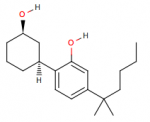
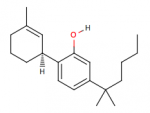
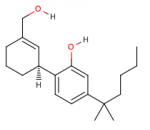
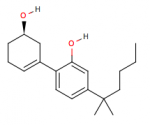
I've attached a number of even simpler structures which could be used as future recreational cannabinoids, based on qualitative SAR data for CB1 receptor agonism
 

Attachments

  • Picture 3.png
    Picture 3.png
    9.1 KB · Views: 101
  • Picture 4.png
    Picture 4.png
    8.8 KB · Views: 94
  • Picture 5.png
    Picture 5.png
    9.5 KB · Views: 88
  • Picture 6.png
    Picture 6.png
    9 KB · Views: 105
considering the bother of synthesing the dimethylheptyl phenol then why not go all the way and synthesise CP 55940?
which has 10 fold greater potency??

In my opinion the future belongs to water soluble cb1 agonists.
 
^^^are there any high-affinity CB1 agonists that are also water soluble? I was under the impression that all of them are highly lipophilic.
 
5-HT2 said:
^^^are there any high-affinity CB1 agonists that are also water soluble? I was under the impression that all of them are highly lipophilic.

the current ones have poor to very poor solubility, though I could forsee modifications that might rectify this situation, the downside would be the potent withdrawal effects that would potentially arise quick in quick out no lingering activity so potential withdrawal problems, THC would probably cause withdrawal symptoms if it wasn't for its long lasting lurking nature
 
Considering the difficult and thus costly synthesis of good cannabinoids and the wide availability of THC from cannabis plants at a reasonable price, I doubt that synthetic cannabinoids are economically viable. The competition from cannabis is too strong.
 
Top