crmt28
Bluelighter
- Joined
- Jun 19, 2014
- Messages
- 52
These compounds seem to be really interesting!
There's RU-28306 which is basically DMT with an extra carbon atom.
There's a really short discussion here on Bluelight.
Molecule: n,n-dimethyl-1,3,4,5-tetrahydrobenzo[cd]indol-4-amine
I couldn't find any info, apart from these papers:
However, the 5-HT2 affinity seems to quite similar to DMT.
Does anyone have any idea if it would act as a psychedelic?
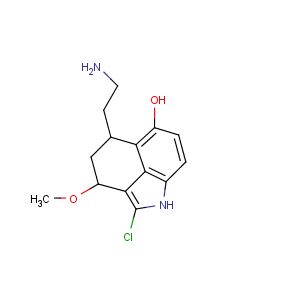
There's also 3-aminomethyl-THBI, which is more potent, and seems to be a more worthwhile compound. But there's no information about it anywhere else.
Molecule: 3-aminomethyl-1,3,4,5-tetrahydrobenz-[cd]indole
It seems to be 4-5x more potent than tryptamine:
This one is probably not psychedelic, since it's just a tryptamine analogue.
But I think we could have some really interesting compounds based on that, like these DMT/Psilocin analogues.


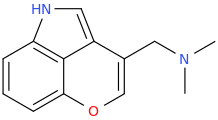
N,N-DMT-BIMA / N,N-DMT-OBIMA (Cool names!)
What do you guys think? There seems to be a lot of potential on these compounds.
There's RU-28306 which is basically DMT with an extra carbon atom.
There's a really short discussion here on Bluelight.
Molecule: n,n-dimethyl-1,3,4,5-tetrahydrobenzo[cd]indol-4-amine
I couldn't find any info, apart from these papers:
- Relative selectivity of some conformationally constrained tryptamine analogs at 5-HT1, 5-HT1A and 5-HT2 recognition sites.
- The Development of Indoleamine Derivatives Selective for Subtypes of Serotonin Receptors
However, the 5-HT2 affinity seems to quite similar to DMT.
Does anyone have any idea if it would act as a psychedelic?
Racemic partial ergolines (PEs) RU 27849 and RU 28306 showed diminished potency compared to TRYFs at 5-HT1 sites, but were equipotent to homologous TRYPs at the 5-HT2 site.
There's also 3-aminomethyl-THBI, which is more potent, and seems to be a more worthwhile compound. But there's no information about it anywhere else.
Molecule: 3-aminomethyl-1,3,4,5-tetrahydrobenz-[cd]indole
It seems to be 4-5x more potent than tryptamine:
However, the partially constrained non-ergoline-like analog 3-aminomethyl-THBI is significantly more potent (4-5 times) than the two homologous compounds (tryptamine and the partial ergoline RU 27849). This suggests that it may be worthwhile to examine totally rigid analogs of the non-ergoline-like conformations attainable by 3-aminomethyl-THBI, particularly those that overlap with possible conformations of the tetrahydropyridylindole RU 28253.
This one is probably not psychedelic, since it's just a tryptamine analogue.
But I think we could have some really interesting compounds based on that, like these DMT/Psilocin analogues.
N,N-DMT-BIMA / N,N-DMT-OBIMA (Cool names!)
What do you guys think? There seems to be a lot of potential on these compounds.
Last edited: