• 🇳🇿 🇲🇲 🇯🇵 🇨🇳 🇦🇺 🇦🇶 🇮🇳
    Australian & Asian
    Drug Discussion


    Welcome Guest!
    Posting Rules Bluelight Rules
  • AADD Moderators: Tronica

New Laws for New Zealand

Verybuffed

Bluelighter
Joined
Aug 15, 2004
Messages
2,750
Location
2615
New law: Legal Highs Drugs must be proved safe for sale
Peter Dunne

16 July, 2012
Drug law reversing onus of proof on way

Cabinet has agreed key details of new psychoactive substances drug legislation that will require distributors and producers of party pills and other legal highs to prove they are safe before they can sell them, Associate Health Minister Peter Dunne announced today.

“As promised, we are reversing the onus of proof. If they cannot prove that a product is safe, then it is not going anywhere near the marketplace,” Mr Dunne said.

“The legislation will be introduced to Parliament later this year and be in force by around the middle of next year.

‘In the meantime, the Temporary Class Drug Notices – the holding measure we have successfully put in place – will be rolled over as required so there is no window of opportunity for any banned substances to come back on the market before the permanent law comes in,” he said.

“The new law means the game of ‘catch up’ with the legal highs industry will be over once and for all.

“I have been driving this for a considerable time. None of these products will come to market if they have not been proven safe – and the cost of proving that will be on those who make and sell them, as it should be,” he said.

“Quite simply they will now have to do what any manufacturer of any product that is consumed or ingested already has to do – make sure it is safe.”

Mr Dunne said that in the past year the Government had put a serious dent in the synthetic cannabis market with the Temporary Class Drug Notices.

“We have seen a 75 percent fall in the number of emergency call incidents around synthetic cannabis products according to National Poisons Centre data.

“That decline began the very month the Notices came into effect,” he said.

“We have banned more than 28 substances and effectively taken more than 50 products that contain them off the market. The latest four substances were just banned on Friday.

“We are winning the battle and we are about to deliver the knockout blow with this legislation,” he said.

Mr Dunne said Cabinet has agreed to establish a new regulator within the Ministry of Health which will be responsible for issuing approvals.

“Companies wishing to sell these products will need to apply to this regulator with scientific data similar to that which is required for the assessment of new medicines.

“For example, they would need to provide toxicology data and results of human clinical trials,” Mr Dunne said.

These tests will prevent products which cause common adverse reactions from being approved for legal sale.

“However, in the end these are pharmacologically active substances, and there is always some degree of risk in taking such products because people can have varying reactions to them,” he said.

Even once approved, any such products are likely to be subject to retail restrictions which will further reduce their potential to cause harm, he said.

“The details of these restrictions have not yet been agreed, but I fully expect that they will involve a legal minimum purchase age and restrictions on the types of premises where they can be sold.

“The legislation will be introduced later this year and will be in place by August 2013. In the meantime all of the existing Temporary Class Drug Notices will be rolled over for a further 12 months so there will be no slippage between them and the coming legislation,” Mr Dunne said.

http://www.beehive.govt.nz/release/drug-law-reversing-onus-proof-way
 
cheers for the read. nothing too unexpected, though, really. surprised it's taken this long to fall into line.
 
I can foresee a lot of issues with this.
I'm guessing they are thinking that nothing will be able to be approved for general use without prescription.

If a synthetic cannabinoid is approved, wouldn't that mean that cannabis should be approved also?
What really defines low risk?? We can already view stats that street grade MDMA was fairly low risk, so low risk that horse riding is more harmful to people than MDMA.
Can these "low risk" regulations be applied to cigarettes and alcohol? would they be approved using these same rules?

They say they are not legalising psychoactive substances, but yet are saying if they are shown to be low risk they will be approved and allowed to be sold.

Interesting.
 
Questions and Answers

What are low risk psychoactive substances?

This refers to new psychoactive substances for which the risks are low enough that they meet the approval criteria set by the regulatory. We say 'low-risk' to avoid implying that they will be entirely safe, as there will always be some risk. This is because different people have different reactions to pharmacologically active substances.

Why are we doing this?

We are doing this because the current situation is untenable. Current legislation is ineffective in dealing with the rapid growth in synthetic psychoactive substances which can be tweaked to be one step ahead of controls. Products are being sold without any controls over their ingredients, without testing requirements, or controls over where they can be sold. The government must prove a risk of harm before controlling a substance. The new regime will require a supplier or manufacturer to apply to a regulator for a safety assessment before any product can be sold.

Are we legalising drugs?

No. The regime will provide stronger controls over psychoactive substances. At the moment, these products are unregulated, with no control over ingredients, place of sale, or who they can be sold to. Because they are synthetic substances, there are a huge number of potential ingredients, which makes it unfeasible to deal with them individually.

It will be illegal to sell any product which has not been through an assessment. There will be strict restrictions on where products can be sold, the purchase age, and marketing restrictions.

What would it cost a manufacturer to take a product through the approval process, and how long would it take?

Based on initial proposals, it is estimated that the cost of testing any product will be in the range of $1 million to $2 million and will take between one and two years.

What will the implications of the new regime be for cannabis?

The legal status of cannabis will not change. This is because the regime will only cover new psychoactive substances that are not already classified under the Misuse of Drugs Act 1975.

Why don’t you just ban everything?

Legislation should not be used to restrict behaviour that cannot be proved to be harmful. Products that meet the approval criteria will be approved. However, our position will still be that not using these products is the safest option.

Is this a stealth way of banning everything and never approving any product?

No. Clear testing requirements are being established to determine the risks of psychoactive products. Products that meet the approval criteria will be approved.

How will risk/safety be determined?

Consistent toxicological and behavioural testing will be required for every product seeking approval. A new regulator will be established to consider the data from this testing for each product. Products that meet the approval criteria will be approved.

What do you mean by the regulator?

A regulator will need to be established for psychoactive substances. This regulator will oversee the approval of products, monitor for compliance with post market restrictions, and reassess products in light of any new evidence of harm that might arise.

How many drugs will get approved?

We don’t know this yet. Products that meet the approval criteria will be approved. This will require toxicological and behavioural testing.

How much will this cost?

Modelling of the start-up costs for the new regime is currently being worked on. A detailed report on fee-setting and costing will be provided to Cabinet by 1 October 2012.

We expect that over time, the costs of this regime will be recuperated through applications fees paid by industry.

Who will do the risk assessments?

The new regulator will consider toxicological and clinical data for each product.

Does this mean the Government is endorsing drugs?

No. At the moment these products are available without any information regarding their risks to health. We are changing the system to require industry to prove they do not pose a greater than a low risk of health before they may be sold.

Will there be controls to stop children buying these drugs from dairies?

Yes, it is intended that there will be restrictions on where substances can be sold and a minimum purchase age. I will provide Cabinet with full details of these restrictions by 1 October 2012.

What happens when the legislation comes into force? Will everything be pulled from the shelves?

Decisions have not been made on this yet but there will likely be a lead in time for industry to obtain the testing results needed.

Will this just backfire and create a bigger black market?

No. We expect that having low risk psychoactive products legally available will discourage consumers from using the black market.

http://www.beehive.govt.nz/release/drug-law-reversing-onus-proof-way
 
Would be nice if they applied this reasoning to currently illicit drugs and gave them a chance to prove they are safe for sale, if cigarettes and alcohol make the cut as 'safe' then what the fuck wouldn't.
 
Agreed.

NZ is different to Australia in a lot of ways. On one hand they are usually a lot more conservative but compared to States such as Qld and WA they can be a lot more progressive.

I can see cannabis being decriminalize in NZ well before Australia, particularly as it doesn't need 7 different state governments to implement. Not any time soon mind you but 10-15 yrs perhaps.
 
I can see cannabis being decriminalize in NZ well before Australia, particularly as it doesn't need 7 different state governments to implement. Not any time soon mind you but 10-15 yrs perhaps.

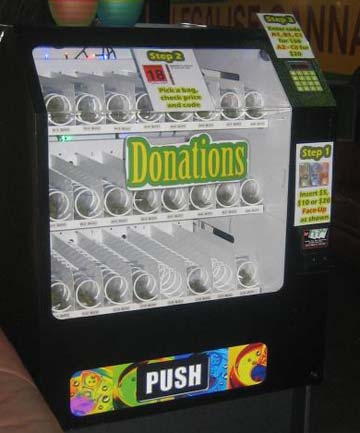
There was a Cannabis group over there that had a vending machine that dispensed Cannabis but the police took it away.
 
6628137.jpg


http://www.stuff.co.nz/auckland/local-news/6640719/Daktory-open-despite-cannabis-bust
 
Some day...maybe.

I find the statement about these laws putting an end to the game of cat-and-mouse (in the article in the OP) a bit hard to take seriously. Pretty damn optimistic.
Clamp down on retail sales of branded RCs and you still have the prevalence of Internet-sourced substances. Either the media or the politicians (or both) are years behind the times on this one.
 
This could be an absolutely incredibly piece of legislation. It has a lot of potential. Assuming the government are reasonable about it, I do see a problem though.

A couple of million dollars is an awful lot of money to spend on a product which may not pass and can be sold by any company once it is approved. As a result, it seems to me like companies will not bother and instead it will just kill the headshops and create an online market, potentially with black market sales as seen with currently illegal drugs.

The lack of headshops may reduce availability to the uneducated, which could be good, but I see a lot of potential for this to go wrong.
 
Would be nice if they applied this reasoning to currently illicit drugs and gave them a chance to prove they are safe for sale, if cigarettes and alcohol make the cut as 'safe' then what the fuck wouldn't.

Totally agree. I think it's completely reasonable for the burden of proof to be on proving the substances are safe (like any other drug), but only if it's applied across the board. You can't justify saying 'everything needs to be proved safe... except these things which, based on no scientific evidence*, we have decided are too dangerous to even let you try'.


* at least for cannabis, psychedelics, etc.
 
Would be nice if they applied this reasoning to currently illicit drugs and gave them a chance to prove they are safe for sale, if cigarettes and alcohol make the cut as 'safe' then what the fuck wouldn't.

Ahh that old chestnut. Politicians have long since learned to dance around or outright ignore that comparison.

OT: Cigarettes are however becoming less popular and taxed more exorbitantly each year. Shit, you don't think they'll target alcohol next in the same way do you?
 
Alcohol and even cigarettes are relatively safe when you compare standard dose. A six pack of beer or half a pack of cigarettes do not cause the social problems that 2 points of most RC's can cause. Sure if you over indulge you see the problems but it is a slower burn so to speak. The limit for "Black out drink" is different than out of control on say MDPV. You only have to see reports around here by any number of experienced drug users who suddenly go from OK to anxiety and/or cardiovascular concerns. Even proven drugs such as MDMA do not agree with many people.

I would also hate to be working in the local A&E the first weekend LSD became a legal substance. Could you imagine hundreds of inexperience psychonauts being unleashed on nightclub districts in the foolish believe that "legal" equaled "safe"? Some people are not fit to take drugs, unfortunately our legal system does not allow discrimination, if it is legal for some, it will be legal for all.
 
I would love to work in A&E that evening. No fights, no aggressive patients, no vomiting. Just patients who needed talking down. I would be volunteer my assistance and I'm sure others would too. Volunteer organisations like kosmicare and dancewize do a great job of taking pressure off of medics at festivals.


that said, we should all be working towards a regulated system where legal for some does not mean legal for all.
 
I have worked crowd care at several drug fuelled events. I think you are kidding yourself if you think drugs suddenly equals no violence/aggression/ and especially vomitting. There is a reason the first aid kit always runs out of vomit bags. Hell I know plenty of people who don't come up until they have their compulsory "sneaky" spew straight after pills
 
Interesting. I've worked for psychedelic crisis care a couple of times and haven't really encountered that at all. Sometimes people come in combative but once security are out of the picture, they soon calm down.

Vomiting happens but only 10% of the people we see? I guess the real pukers go to the medical tent.
 
I have even seen house party's full of "sensible people" deteriorate. Bit hard to talk someone down if they are punching window's out with their fists. Some people just shouldn't do acid I'm afraid and a little sticker on the packet warning someone of the dangers just won't cut it.
 
Last edited:
Top