nuke
Bluelighter
- Joined
- Nov 7, 2004
- Messages
- 4,190
Hey everyone, this is a review of an overview presented as Molecular and Cellular Mechanisms of Ecstasy-Induced Neurotoxicity: An Overview in Molecular Neurobiology (DOI 10.1007/s12035-009-8064-1). Thanks goes to the authors for some of the content, of whom I did not ask permission but are encouraged write in this thread if they wish to have their content removed.
Induced Hyperthermia
Hyperthermia appears to play a big role in the neurotoxic effect of MDMA, in that it often fails to develop in the presence of non-elevated body temperatures.
DA/5HT Agonism
-Blocking SERT with a substrate: temperature will still elevate
-DA antagonism: dose-dependent attenuation of hyperthermia
-D1/D2 antagonism (Haloperidol): dose dependent attenuation
-D2 antagonism: no effect
-5HT2A/5HT2C antagonism: absence of hyperthermia (2A seems more important)
-D1 and 5HT2A suspected to be the main factors in hyperthermia
Adrenoreceptors
-alpha1 and beta3 receptor antagonism: abolished hyperthermia
-beta1 and beta2 receptor antagonism: no effect
-alpha1 and general beta receptor antagonism: abolished hyperthermia
-alpha1-a and alpha1-b appear heavily implicated
Endocrine
-Hypophysectomized and thryoparathyroidectomized rats: abolished hyperthermia
-UCP3 down-regulation: decreased thermogenesis (in skeletal muscle)
Ambient temperature
-Increases in ambient temperature by heating or crowding increase the neurotoxic effect as well as acute toxicity/lethality
-Animals given 5HT2A antagonists or NMDA antagonists (latter also usually neuroprotective) and artificially heated will still experience neurotoxicity
Species Dissimilarities
-Primates appear to experience hyperthermia at small doses while rats or mice may not
▬
Other miscellaneous effects of/facts about MDMA
Neuroendocrine Effects of MDMA
-Increases: arginine, cortisol, prolactin, corticosterone, oxytocin, vasopressin and adrenocorticotropin
Immunological Effects of MDMA
-Suppression of lymphocyte proliferation
-Profound leukocyte reduction
-Impairs interleukin-1 beta and alpha-TNF secretion
-Reduces number of CD4 cells
-Decline in CD4:CD8 ratio
Cannabinoid System
-CB1 knockout rats will not self-administer MDMA
Effects on Tryptophan Hydroxylase
-Administration of MDMA results in irreversible inhibition of TPH, suspected time to replenish TPH is 1-3 months
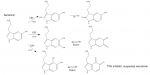
-Not directly caused by MDMA but rather from redox/quinone metabolites
-MDMA increases ROS and nitric oxide, nitric oxide itself inhibits TPH
Role of Glutamate
-Reduction in GLU mediated by DA/5HT release
-Requires further research to establish a possible role in neurotoxicity
▬
Monoamine Oxidase
Monoamine oxidase, particularly MAO-B, is believed to play a large role in the production of MDMA mediated neurotoxicity via the production of free radicals. The formula for the enzymatic degradation of amines by MAO is as follows:
R-CH2-NH2 + H2O + O2 → R-CHO + NH3 + H2O2,
Where hydrogen peroxide can dissociate into hydroxyl radicals and spur the generation of other reactive oxygen species (ROS) like superoxide and nitric oxide.
-MAO-A Inhibition: Extreme acute toxicity
-MAO-B Inhibition: Ablation of neurotoxicity
-Locations of MAO-A in the brain: Catecholaminergic neurons
-Locations of MAO-B in the brain: Serotonergic neurons, astrocytes, glia
-Location of MAOs in the cell: Outer membrane of mitochondria
-MAO-B preferentially breaks down catecholamines but will break down 5HT if MAO-A is not present
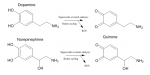
-Superoxide or metals can produce toxic redox cycling quinone metabolites of DA, NE, 5HT and MDMA which generate additional ROS
-Formation of hydrogen peroxide causes the formation of hydroxyl radicals which cause mitochondrial DNA deletions because the mitochondria does not guard its DNA with histones or DNA binding proteins
-5HT2A agonism results in dopamine release; 5HT2C agonism results in GABA release and inhibition of dopamine release
-6-OH-DA neurotoxin pretreatment causes ablation of serotonergic neurotoxicity
-levo-DOPA increases neurotoxicity
-DAT inhibition prevents neurotoxicity
-D2 antagonist has produced conflicting research about prevention of neurotoxicity
-GABA antagonists reduce neurotoxicity
-Pretreatment with levo-tyrosine enhances neurotoxicity
-N-Acetylcysteine and other antioxidants appear to reduce neurotoxicity
▬
Effects of Tryptamine-4,5-dione
-Uncouples mitochondrial respiration
-Inhibits NADH-CoQ1 reductase, cytochrome c oxidase, PDHC and KGDHC (irreversible)
-Because of the above, results in mitochondrial damage
-Difficult to detect this metabolite due to extreme reactivity with proteins and therefore very short half-life
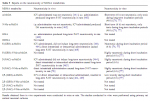
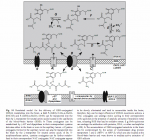
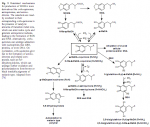
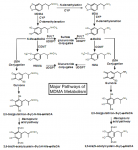
I would encourage those interested to pick a copy of the article as well, this is only a brief overview of the information presented. Please see attached images for metabolic routes and other detailed figures.
Induced Hyperthermia
Hyperthermia appears to play a big role in the neurotoxic effect of MDMA, in that it often fails to develop in the presence of non-elevated body temperatures.
DA/5HT Agonism
-Blocking SERT with a substrate: temperature will still elevate
-DA antagonism: dose-dependent attenuation of hyperthermia
-D1/D2 antagonism (Haloperidol): dose dependent attenuation
-D2 antagonism: no effect
-5HT2A/5HT2C antagonism: absence of hyperthermia (2A seems more important)
-D1 and 5HT2A suspected to be the main factors in hyperthermia
Adrenoreceptors
-alpha1 and beta3 receptor antagonism: abolished hyperthermia
-beta1 and beta2 receptor antagonism: no effect
-alpha1 and general beta receptor antagonism: abolished hyperthermia
-alpha1-a and alpha1-b appear heavily implicated
Endocrine
-Hypophysectomized and thryoparathyroidectomized rats: abolished hyperthermia
-UCP3 down-regulation: decreased thermogenesis (in skeletal muscle)
Ambient temperature
-Increases in ambient temperature by heating or crowding increase the neurotoxic effect as well as acute toxicity/lethality
-Animals given 5HT2A antagonists or NMDA antagonists (latter also usually neuroprotective) and artificially heated will still experience neurotoxicity
Species Dissimilarities
-Primates appear to experience hyperthermia at small doses while rats or mice may not
▬
Other miscellaneous effects of/facts about MDMA
Neuroendocrine Effects of MDMA
-Increases: arginine, cortisol, prolactin, corticosterone, oxytocin, vasopressin and adrenocorticotropin
Immunological Effects of MDMA
-Suppression of lymphocyte proliferation
-Profound leukocyte reduction
-Impairs interleukin-1 beta and alpha-TNF secretion
-Reduces number of CD4 cells
-Decline in CD4:CD8 ratio
Cannabinoid System
-CB1 knockout rats will not self-administer MDMA
Effects on Tryptophan Hydroxylase
-Administration of MDMA results in irreversible inhibition of TPH, suspected time to replenish TPH is 1-3 months
-Not directly caused by MDMA but rather from redox/quinone metabolites
-MDMA increases ROS and nitric oxide, nitric oxide itself inhibits TPH
Role of Glutamate
-Reduction in GLU mediated by DA/5HT release
-Requires further research to establish a possible role in neurotoxicity
▬
Monoamine Oxidase
Monoamine oxidase, particularly MAO-B, is believed to play a large role in the production of MDMA mediated neurotoxicity via the production of free radicals. The formula for the enzymatic degradation of amines by MAO is as follows:
R-CH2-NH2 + H2O + O2 → R-CHO + NH3 + H2O2,
Where hydrogen peroxide can dissociate into hydroxyl radicals and spur the generation of other reactive oxygen species (ROS) like superoxide and nitric oxide.
-MAO-A Inhibition: Extreme acute toxicity
-MAO-B Inhibition: Ablation of neurotoxicity
-Locations of MAO-A in the brain: Catecholaminergic neurons
-Locations of MAO-B in the brain: Serotonergic neurons, astrocytes, glia
-Location of MAOs in the cell: Outer membrane of mitochondria
-MAO-B preferentially breaks down catecholamines but will break down 5HT if MAO-A is not present
-Superoxide or metals can produce toxic redox cycling quinone metabolites of DA, NE, 5HT and MDMA which generate additional ROS
-Formation of hydrogen peroxide causes the formation of hydroxyl radicals which cause mitochondrial DNA deletions because the mitochondria does not guard its DNA with histones or DNA binding proteins
-5HT2A agonism results in dopamine release; 5HT2C agonism results in GABA release and inhibition of dopamine release
-6-OH-DA neurotoxin pretreatment causes ablation of serotonergic neurotoxicity
-levo-DOPA increases neurotoxicity
-DAT inhibition prevents neurotoxicity
-D2 antagonist has produced conflicting research about prevention of neurotoxicity
-GABA antagonists reduce neurotoxicity
-Pretreatment with levo-tyrosine enhances neurotoxicity
-N-Acetylcysteine and other antioxidants appear to reduce neurotoxicity
▬
Effects of Tryptamine-4,5-dione
-Uncouples mitochondrial respiration
-Inhibits NADH-CoQ1 reductase, cytochrome c oxidase, PDHC and KGDHC (irreversible)
-Because of the above, results in mitochondrial damage
-Difficult to detect this metabolite due to extreme reactivity with proteins and therefore very short half-life
I would encourage those interested to pick a copy of the article as well, this is only a brief overview of the information presented. Please see attached images for metabolic routes and other detailed figures.
Attachments
Last edited: