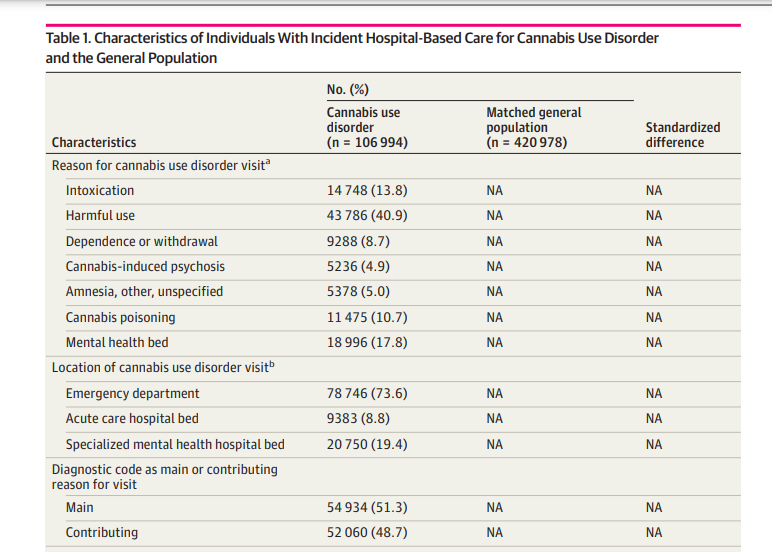
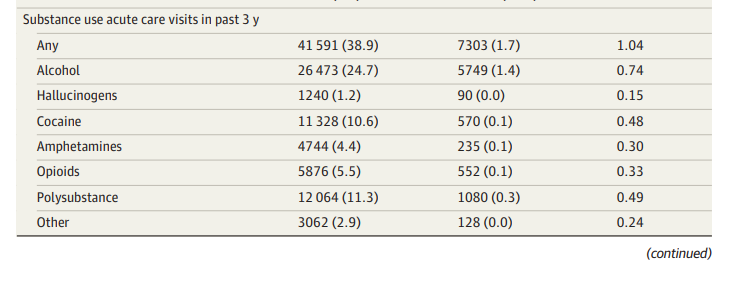
First I would like a definition of "causing social problems" (For me personally it does the opposite I would be an assaulting mofo it it wasn't for weed alledgedly. Are people like me a countermark - could I hypothetically say it helps for 2/3rds with social problems?
Health --- Stroke 42% increased chance which sucks but it does not mean you have a 42% chance of a stroke --- it means if you had a 10% chance you now have 14% (Did I do that math right, excuse and correct me if not)
Haha I would surely be dead or in jail from a temper outburst so I can say it increased my quantity of life
My biggest observations as a clinician who works in addictions and has patients who struggle with cannabis dependence are:
1) Increased baseline anxiety that creeps up over time which self-reinforces use of cannabis to reduce anxiety
2) impaired quality of sleep as it disrupts REM cycles and limits/eliminates dreaming
3) Decreased motivation/volition/attention with concurrent hyperfixation on certain thoughts/activities while making it hard to pay attention to other things (impaired cognitive flexibility and elasticity)
4) Complacency
5) Paranoid ideation/apophenia/conspiratorial thinking/magical thinking/suspiciousness
6) Apathy to personal growth/ambivalence to changing other areas of ones life.
Obviously these things may vary person to person with some people having few if any negative effects while others experiencing most or all if not more. There is a psychological dependence that is less intensely compulsive than nicotine while still being very difficult to successfully address without support. There are ways in which it can sneak into people's sense of identity that make it difficult to disengage from using when people seek to do so.
Additionally - it has significant cardiovascular risks associated with chronic use increasingly the likelihood of heart attacks, strokes and other related health effects. Again - this is the kind of thing that can be managed by other lifestyle choices but it is certainly a consideration.
Finally - it seems to increase vulnerability to psychotic thinking in individuals who may be borderline risk for such things if they weren't using cannabis. It can do so in an insidious way that seems to come out of nowhere until it's obvious to everyone but the users themselves. Obviously, frequency, dose, and context are huge variables here - plenty of people use cannabis without detrimental effects. However, as strains have become more potent and access to high potency formulations have become increasingly normalized - more and more children and adults are becoming chronic daily cannabis users than ever before. It is more common for people to use cannabis daily than to drink alcohol according to national data from this past year.