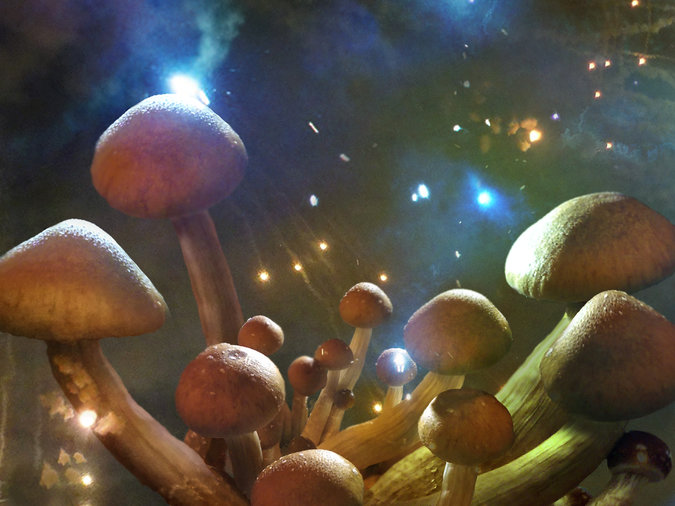
Magic mushrooms for anxiety and depression

Check out the essay in my blog, guys.

Personally, psilocybin allowed me to see past social strata and be accepting of all peoples, and certainly relieved a fair amount of my depression and strife. More than two years after my last trip I still am grateful that I had the experiences, even if some of them were horrible.
 
There are and have been plenty of labs cranking out 4-AcO-DMT and other chems similar to psilocybin for the RC scene, it can't be that time consuming and difficult.
 
^ maybe, but mushrooms have been tested over thousands of years, and are very safe and extremely powerful.
They can easily be life-changing (see Ho-Chi-Minh's post above for example; there is research that makes this point strongly).
RCs may be just as good or better, or far worse. We don't know.
Mushrooms deserve to be researched intensively so that we can know more about these amazing gifts from nature.
(So do RCs, but it seems logical to work with mushrooms first due to their history and what is already known about them.)
 
Could “Magic” Mushrooms Be Used to Treat Anxiety and Depression?

http://blogs.smithsonianmag.com/sci...o-treat-anxiety-and-depression/#ixzz2VvIwyOAp

In the 1960s and early 70s, researchers such as Harvard’s Timothy Leary enthusiastically promoted the study of so-called “magic” mushrooms (formally known as psilocybin mushrooms) and championed their potential benefits for psychiatry. For a brief moment, it seemed that controlled experiments with mushrooms and other psychedelics would enter the scientific mainstream.

Then, everything changed. A backlash against the 1960s’ drug culture—along with Leary himself, who was arrested for drug possession—made research nearly impossible. The federal government criminalized mushrooms, and research ground to a halt for over 30 years.

But recently, over the past few years, the pendulum has swung back in the other direction. And now, new research into the mind-altering chemical psilocybin in particular—the hallucinogenic ingredient in “magic” mushrooms—has indicated that carefully controlled, low doses of it might be an effective way of treating people with clinical depression and anxiety.

The latest study, published last week in Experimental Brain Research, showed that dosing mice with a purified form of psilocybin reduced their outward signs of fear. The rodents in the study had been conditioned to associate a particular noise with the feeling of being electrically shocked, and all the mice in the experiment kept freezing in fear when the sound was played even after the shocking apparatus was turned off. Mice who were given low doses of the drug, though, stopped freezing much earlier on, indicating that they were able to disassociate the stimuli and the negative experience of pain more easily.

It’s difficult to ask a tortured mouse why exactly it feels less fearful (and presumably even more difficult when that mouse is in the midst of a mushroom trip). But a handful of other recent studies have demonstrated promising effects of psilocybin on a more communicative group of subjects: humans.

In 2011, a study published in the Archives of General Psychiatry by researchers from UCLA and elsewhere found that low doses of psilocybin improved the moods and reduced the anxiety of 12 late-stage terminal cancer patients over a long period. These were patients aged 36 to 58 who suffered from depression and had failed to respond to conventional medications.

Each patient was given either a pure dose of psilocybin or a placebo, and asked to report their levels of depression and anxiety several times over the next few months. Those who’d been dosed with psilocybin had lower anxiety levels at one and three months, and reduced levels of depression starting two weeks after treatment and continuing for a full six months, the entire period covered by the study. Additionally, carefully administering low doses and controlling the environment prevented any participants from having a negative experience while under the influence (colloquially, a “bad trip.”)

A research group from Johns Hopkins has conducted the longest-running controlled study of the effects of psilocybin, and their findings might be the most promising of all. In 2006, they gave 36 healthy volunteers (who’d never before tried hallucinogens) a dose of the drug, and 60 percent reported having a “full mystical experience.” 14 months later, the majority reported higher levels of overall well-being than before and ranked taking psilocybin as one of the five most personally significant experiences of their lives. In 2011, the team conducted a study with a separate group, and when members of that group were questioned a full year later, the researchers found that according to personality tests, the participants’ openness to new ideas and feelings had increased significantly—a change seldom seen in adults had increased.


Read more: http://blogs.smithsonianmag.com/sci...o-treat-anxiety-and-depression/#ixzz2WPXstj6u
 
This is interesting in light of the recent Supreme Court decision that you can't patent a product of nature (there was a company that had patented Angelina Jolie). Pharmaceutical companies will not jump on this horse, and their representatives in congress will continue to block anything that threatens their oligopoly over people's emotions.

I think I used the word "oligopoly" correctly.
 
There is no clear connection between human volunteers having a mystical experience and mice disassociating a sound from a shock stimulus.
While the article tries to lump these together into "treating anxiety and depression", the truth is likely far more complex.
This just goes to show how very little we really know about psychedelics, including mushrooms.
Much more research is needed to begin to understand these incredibly potent substances.

(I used fairly high doses of mushrooms once a week for several months as part of a program of self-therapy. I made some great advances, healed some childhood traumas, and experienced essentially no negative effects. So I have a deep respect for mushrooms, and their value as a learning tool.)

As for the oligopoly thing, I agree 100%, and think that it is very sad that people may miss out on these incredible tools because the big companies won't profit.
 
NYT: Can Mushrooms Treat Depression?

Can Mushrooms Treat Depression?
By EUGENIA BONE
NOV. 29, 2014

30MUSHROOM-master675.jpg

I TRIED magic mushrooms out of curiosity and in middle age. I’d been on the amateur mycological circuit for a couple of years, but hallucinogenic species were rarely mentioned at the foraging expeditions and conferences I attended. It’s almost as if they were the black sheep of mycology: embarrassing to serious taxonomy jocks. I read some books on the subject, but most were tripper’s guides that didn’t utilize, um, specific language or current science. Psychoactive mushrooms had been in a kind of scientific ghetto ever since they were criminalized in 1968. But now the drug derived from the mushroom, psilocybin, is finally being re-examined for its medical applications.

A study published last month in the Journal of the Royal Society Interface compared M.R.I.s of the brains of subjects injected with psilocybin with scans of their normal brain activity. The brains on psilocybin showed radically different connectivity patterns between cortical regions (the parts thought to play an important role in consciousness). The researchers mapped out these connections, revealing the activity of new neural networks between otherwise disconnected brain regions.

The researchers suspect that these unusual connections may be responsible for the synesthetic experience trippers describe, of hearing colors, for example, and seeing sounds. The part of the brain that processes sound may be connecting to the part of the brain that processes sight. The study’s leader, Paul Expert at King’s College London, told me that his team doubted that this psilocybin-induced connectivity lasted. They think they are seeing a temporary modification of the subject’s brain function.

The fact that under the influence of psilocybin the brain temporarily behaves in a new way may be medically significant in treating psychological disorders like depression. “When suffering depression, people get stuck in a spiral of negative thoughts and cannot get out of it,” Dr. Expert said. “One can imagine that breaking any pattern that prevents a ‘proper’ functioning of the brain can be helpful.” Think of it as tripping a breaker or rebooting your computer.

Psilocybin is present in a wide range of mushrooms, especially in the genus Psilocybe, though why it exists in the mushroom is not fully understood. When ingested, psilocybin metabolizes to psilocin, which resembles the chemical structure of serotonin — a neurotransmitter that regulates mood, appetite, sleep, cognitive functions like memory and learning and feelings of pleasure. Psilocin may simulate serotonin, and stimulate serotonin receptors in the brain.

Psilocybin was first synthesized in the late 1950s, by the chemist Albert Hofmann (who also synthesized LSD from a fungus). In the years following its discovery, a number of studies were conducted, on psilocybin’s efficacy in treating alcoholism, as a tool in therapy and as a mechanism by which the terminally ill might better cope with despair. But clinical research into psilocybin became professionally marginalized, and research funding dried up about the same time it entered the mainstream as a recreational drug. Outlawed in 1968, it was swept up in the counterculture panic of the Nixon era and classified as a Schedule 1 drug, like heroin, under the Controlled Substances Act of 1970. A Schedule 1 drug means it is considered to have the highest potential for abuse and no currently accepted medical use.

Continue reading the main storyContinue reading the main storyContinue reading the main story
It’s taken over four decades for the cultural taboo against psilocybin to relax enough for the drug to be re-examined for its medical applications, though a license to use it in a lab must be approved by the Drug Enforcement Administration and strict, time-consuming protocols must be met to ensure it is used safely. Still, doing this kind of research is no longer guaranteed to tank your career, and a small number of studies have been completed, with more underway, many of them building on the work accomplished by scientists in the 1960s.

A range of studies have suggested that controlled doses of psilocybin can help the user escape cognitive ruts of all sorts. One study, published in the British Journal of Psychiatry in 2012, rated the vividness of autobiographical memory of subjects on psilocybin and found the drug enhanced their recollection, and “subjective well-being” upon follow-up. The researchers concluded that psilocybin might be useful in psychotherapy as an adjunct therapy to help patients reverse “negative cognitive biases” — a phenomenon common in depression by which one has a greater recall of negative memories than positive ones — and facilitate the recall of important memories.

Other studies have suggested that psilocybin may modify obsessive compulsion by reducing symptoms like repetitive counting or hand-washing, and in a paper published in Neurology in 2006, the authors interviewed cluster headache sufferers who had used psilocybin to treat their horrific condition, and learned that even low doses — less than is needed to actually trip — could bring about remission. (I also know someone who claims psilocybin cured his stuttering.) A study published last year in the journal Experimental Brain Research found that psilocybin eliminated conditioned fear responses in mice, which has implications for sufferers of PTSD. And psilocybin has been shown to relieve anxiety, depression and despair in terminal cancer patients, who describe their experience as giving them a new perspective on their lives.

continued here http://www.nytimes.com/2014/11/30/opinion/sunday/can-mushrooms-treat-depression.html?_r=0
 
NPR: Your Brain On Psilocybin Might Be Less Depressed

Your Brain On Psilocybin Might Be Less Depressed
January 24, 2012
NANCY SHUTE

2038938320_ba14ac5214_b-08d6531d270afa9f946a30ea8a60ea9a037cab75-s1800-c85.jpg


This could be your forest on psilocybin.​

Magic mushrooms are said to blow your mind, but the hallucinogenic chemical psilocybin, the active ingredient, actually reins in key parts of the brain, according to two new studies.

The memorably vivid emotional experiences reported by mushroom users may flourish because the parts of the brain suppressed by psilocybin usually keep our world view tidy and rational.

And since the brain area affected by psilocybin can also be out of whack in mental health problems such as depression, the researchers speculate that the drug may turn out to be useful in treating mental illness.

"The brain's doing a lot to keep our experiences of the world orderly and constrained," says Robin Carhart-Harris, a post-doc in neuroscience at Imperial College London, and lead author of the studies.

The studies are among the first to use brain imaging to take a peek at the brain on psilocybin.

"Depression can be described as a particularly restrictive state of mind," Carhart-Harris told Shots. "People are stuck on how terrible they are. This seems to suggest that people can have a lifting of that negative thinking under psychedelics."

One of the studies asked 10 volunteers to recall particularly happy memories, like getting married or becoming a parent, both with and without psilocybin. The people found the memories much more vivid, visual, and happy while under the influence. That study will be published in the British Journal of Psychiatry on Thursday.

In the second study, 30 volunteers lay in an MRI machine while tripping for science. The brain scans showed less activity in areas of the brain that may act as connectors, or hubs. One of those areas, the posterior cingulate cortex, is thought to figure in consciousness and ego. It's also hyperactive in people with depression.

The researchers hadn't expected to find less brain activity with psilocybin. The thought has always been that psychedelic flights of fancy are the result of an overactive brain. The results were published Monday in the Proceedings of the National Academy of Sciences.

Serious research into psychedelic drugs was pretty much shut down after the excesses of the trip-happy 1960s. Harvard famously fired Timothy Leary in 1963 for experimenting far too enthusiastically with psilocybin and other mind-altering drugs. Psilocybin remains an illegal drug in the same category as heroin and LSD, which the Justice Department says has "no legitimate medical purpose."

Still, several recent small studies have found improvements in people with depression or obsessive-compulsive disorder after taking other psychedelics. Another found less anxiety and improved mood in cancer patients who used psilocybin.

Carhart-Harris says he was inspired to experiment with psilocybin by Roland Griffiths, a neuroscientist at Johns Hopkins University in Baltimore. Last year Griffiths reported that when he tested high doses of psilocybin in 18 volunteers, 72 percent reported profoundly spiritual experiences, as well as improvements in mood and attitude that lasted more than a year.

But those trips weren't all good; 39 percent reported extreme anxiety or fear at some point in the five 8-hour sessions. People trained as monitors kept the study participants company in an effort to reduce the impact of those bad experiences.

The next step is to see if psilocybin actually does alleviate symptoms of depression. Carhart-Harris hopes to start a pilot study asking that question by the end of the year.

Source http://www.npr.org/blogs/health/201...r-brain-on-psilocybin-might-be-less-depressed

.........................................................................................................................................

I think that patents on natural traditional medications should be illegal. When the great benefits of psychedelics are widely known and accepted the last thing im going to do is give some greed driven Big pharma some ridiculous price after paying out the roof to get a permission slip from some MD thats playing hard core catch up.

The amazing thing is that when we start useing these plants and chemicals to heal the huge sickness that covers this planet.. the greedy and power crazed will not be tolerated. We all will start to work together to promote the greatest standard of living for all instead of running the rat race in hopes of being in the top one percent. We all can be in the top 1%.

 
Last edited:
Quite interesting indeed.
Remarkable perspective about depression as well.
And a great picture!
 
Last edited:
^ I agree with you, NSA.

They are illegal because, after taking an eighth of mushrooms, it is really, really hard to put on your suit and go back to working as an accountant the next morning.

They are illegal because a population that thinks is the most dangerous type of population for a government to try to control.

They are illegal because they can induce "spiritual experiences" (based on experimental evidence from Harvard). If people are running around thinking that they have seen the face of God, or Buddha, they tend to be less materialistic, which means less keeping up with the Joneses, which is what the economy depends on to survive.

They are illegal because people often grasp their priorities, and "going to work like a zombie slave for 40 years in order to earn a small pension" doesn't tend to be near the top of the list, which is crowded with "love my family and friends", "fulfill my passions" and "live happily".
 
Psilocybin Switches Off Part Of Brain That Causes Depression-Professor Nutt

Speaking at Breaking Convention, a three-day conference held in London that aimed to explore the benefits of psychedelic drugs as medicines, amongst other topics,Professor David Nutt talked to me about his concerns on how the law is interfering with medical research and why LSD is still a problem child.

Professor David Nutt is to drug science what David Attenborough is to the natural world. A renowned neuropsychopharmacologist based at Imperial College, London, Professor Nutt is famed for sparking debates around illegal drugs and government policies.

He is one of a few voices for the psychedelic community, and those researching banned substances, who speaks candidly about drugs by using science to back up what he says.

Hearing him talk at Breaking Convention about how laws are making it very difficult to research psychedelic drugs, makes it feel like the human race is missing out on something: a giant leap for medicine that politicians are happy to shun.

When the idea that psychedelics like LSD and psilocybin (the compound found in magic mushrooms) can be used to treat a variety of mental health issues, such as addictions, anxiety and depression, why wouldn’t you want to delve into the rabbit hole of research, and see where it takes you?

Professor Nutt and his team have been busy pioneering the use of techniques called ‘brain imaging’ to explore how psychedelics work in the brain. They have achieved three studies with psilocybin and have just completed the world’s first ever brain-imaging study with LSD, and the results are exciting for scientists, doctors and patients alike.

“We’ve [discovered] that these drugs have quite profound effects, for instance, they switch off the part of the brain that causes depression.
:sus:

Now we’re doing a trial using psilocybin to treat depression because we think where conventional treatments fail, psilocybin might work.”


full:http://reset.me/story/psilocybin-sw...ion-but-current-laws-interfere-with-research/
 
^ no idea, but there are plenty of positive anecdotes about microdosing. I've been thinking about experimenting with it myself.
 
^ no idea, but there are plenty of positive anecdotes about microdosing. I've been thinking about experimenting with it myself.
I would have to be very careful. :\ I have not taken any sort of psychedelic experience in over a decade unless you count vaping cannabis which I did about 5 years ago, and I have not used any drugs at all for over 3 years. I would find it difficult to take a low dose of mushrooms since I prefer moderate/high doses of them, and I've heard that low/lower doses give people anxiety and that you do not really trip on them.

When I have taken mushrooms before my pupils stay dilated for hours even after I come down. But LSD does not make my pupils dilate at all, go figure. I have not taken LSD in over a decade since I stopped taking it when research chemicals that are not LSD at all first started being sold as acid, and I have no desire to take any of those.
 
Last edited:
afaik it would be impossible to switch off the part of the brain that causes depression, even if it were, it wouldn't be something you would want to do.

Harvard said:
It’s often said that depression results from a chemical imbalance, but that figure of speech doesn’t capture how complex the disease is. Research suggests that depression doesn’t spring from simply having too much or too little of certain brain chemicals.

Rather, depression has many possible causes, including faulty mood regulation by the brain, genetic vulnerability, stressful life events, medications, and medical problems. It’s believed that several of these forces interact to bring on depression.


To be sure, chemicals are involved in this process, but it is not a simple matter of one chemical being too low and another too high. Rather, many chemicals are involved, working both inside and outside nerve cells.

There are millions, even billions, of chemical reactions that make up the dynamic system that is responsible for your mood, perceptions, and how you experience life.

With this level of complexity, you can see how two people might have similar symptoms of depression, but the problem on the inside, and therefore what treatments will work best, may be entirely different.
 
afaik it would be impossible to switch off the part of the brain that causes depression, even if it were, it wouldn't be something you would want to do.

Bingo.

The solution is far from taking x drug to make you better. Obviously is more complex than that, and we are only beginning to understand how to treat depression effectively, with and without medications/drugs.

Psilocybin may help some for some reasons, but its just one tool of countless others to do a job that has countless tools required to sole it.
 
^I agree. Serious mental illness treatment involves much more than substances. It involves a great commitment in the form of lifestyle changes, and a whole lot of hope.

For some people I have no doubt that psychedelics can offer much-needed positive psychiatric effects. But we still don't know that much about them. David Nutt should proceed cautiously so that government doesn't restrict them as before.
 
Top