• N&PD Moderators: Skorpio

Lets talk even more about CYP450 enzymes!

Jamshyd

Bluelight Crew
Joined
Aug 26, 2003
Messages
15,489
Location
Not on a train, sadly.
For those of us here interested in polypharmacy...

http://www.bluelight.ru/vb/showthread.php?t=184919 This is bilzor's fantastic complication of opioid metabolism. Unfortunately, the tables/figures are gone :(. If bilzor or anyone else can repost them, I would be most appreciative :)

http://www.bluelight.ru/vb/showthread.php?t=294058 This thread has a link to a handy enzyme chart.

Wikipedia has a good ammount of info on inhibitors, inducers, and substrates.

I am wondering what people's thoughts are on good combinations of inhibitors and inducers that would cause recreational drugs with good active metabolites (namely, opioids and benzos).

I also have three specific questions:

1. Does anyone know if Ketamine has any role in the cyp450 system? if so, is there a difference between single-dose and multiple dosing?

2. Same questions applying to nicotine.

3. Same questions applying to ethanol.

 
Jamshyd said:
I also have three specific questions:

1. Does anyone know if Ketamine has any role in the cyp450 system? if so, is there a difference between single-dose and multiple dosing?

2. Same questions applying to nicotine.

3. Same questions applying to ethanol.[/color]

Unsure about ketamine, but nicotine is a substrate for CYP2A6 and CYP2B6. Ethanol is metabolized by alcohol dehydrogenase, which is a non-CYP liver enzyme.
 
See thats the thing - sometime ago it was mentioned in a thread (probably by FnB) that chronic alcohol use tends to induce certain CYP enzymes.

I believe I read the same w.r.t smoking.

I started this thread for two main reasons, the first is that I'm examining the Japanese health system and I found one consistency: they prefer polypharmacy here. Some drugs are included in certain preparations for absolutely no reason, yet they seem to influence liver enzymes.

The second reason I asked is because I am trying to get a better understanding of the CYP450 system and its relation to recreational drug use - I think a lot of what seem to be "idiocyncracies" reported in OD forum can be answered with a good knowledge of how this system works...
 
raybeez said:
Unsure about ketamine, but nicotine is a substrate for CYP2A6 and CYP2B6. Ethanol is metabolized by alcohol dehydrogenase, which is a non-CYP liver enzyme.

Ketamine (metabolized to norketamine) is via CYP3A4 (same as morphine like opiates) as I found out when having to take chlorethryomycin for an infected sinus (it's a potent 3A4 inhibitor). Full anaesthetic effects from 120mg IM; and that was with a reasonable tolerance.

Of course taking an antibiotic just to potentiate a drug is a very bad idea as it breeds antibiotic resistant normal flora, some of which are opportune pathogens
 
^Are you serious?

I agree that antibiotics are a bad idea as potentiators. The other options aren't much nicer either: antivirals and the like.

However, I keep reading that Hyperforin (from St. John's Wort) is a 3A4 inducer. Do you have any comments on this one?
 
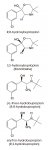
I was looking at the ring-closed metabolites of bupriopion lately, pictured below, and wondering if a similar transformation could be utilized with a phenmetrazine prodrug. Does anyone know a mechanism for this transformation? I am aware of phendimetrazine, but the requirement of N-demethylation generally makes for shitty drug, at least recreationally.
 

Attachments

  • Metabolites_of_bupropion.png
    Metabolites_of_bupropion.png
    38.5 KB · Views: 105
hussness said:
I was looking at the ring-closed metabolites of bupriopion lately, pictured below, and wondering if a similar transformation could be utilized with a phenmetrazine prodrug. Does anyone know a mechanism for this transformation? I am aware of phendimetrazine, but the requirement of N-demethylation generally makes for shitty drug, at least recreationally.

looking at Bu again it really seems to be not much more than 3-chloro-cathinone with just more going on at the amine that i am not sure has intrinsic value on effect or is simply just a large N-"alkylation"

?????

such as what is you threw that N-dimethylethyl (if that is correct) on 4-Cl-Amph itself?
 
You're right about it being m-chlorocathinone with a t-butyl group. The drug has no recreational value because it causes seizures at recreational doses, which, ironically, is probably why it is not a controlled substance. This uncontrolled status, in turn, has probably had a significant effect on sales. But I'm not interested in bupropion. I just want to know something about which enzyme creates the cyclic metabolites, and whether that information would be useful in to know for the creation of other PEA prodrugs -- like a drug that would cyclize to 2-phenylmorpholine in vivo.
Talking about PEAs is pretty much like beating a dead horse, as the SARs are fairly well known, but this was just a curiosity of mine.
 
Stupid wikipedia! I think explicitly drawn hydrogens are meant to be methyl groups. I wasn't aware that 2-phenylmorpholine didn't do much. It was my impression that the alpha-methyl group on amphetamines was only there to resist degradation by MAOs. I made the guess that cyclized derivatives such as phenmetrazine would probably not be transportable, and as such probably exert most of their action through reuptake inhibition. This second conjecture is probably not correct, but given my current knowledge of amphetamine SARs, I am still inclined to believe that the alpha methyl group is not always a requirement.
To refine my initial question, I'm mainly interested in the cyclization process, so, in other words, phenmetrazine-type prodrugs.
 
hussness said:
I was looking at the ring-closed metabolites of bupriopion lately, pictured below, and wondering if a similar transformation could be utilized with a phenmetrazine prodrug. Does anyone know a mechanism for this transformation? I am aware of phendimetrazine, but the requirement of N-demethylation generally makes for shitty drug, at least recreationally.

Here you go (the biological mechanism):
CYP2B6 mediates the in vitro hydroxylation of bupropion: potential drug interactions with other antidepressants.
Hesse LM, Venkatakrishnan K, Court MH, von Moltke LL, Duan SX, Shader RI, Greenblatt DJ.

Department of Pharmacology and Experimental Therapeutics, Tufts University School of Medicine, and the Division of Clinical Pharmacology, New England Medical Center, Boston, Massachusetts, USA.

The in vitro biotransformation of bupropion to hydroxybupropion was studied in human liver microsomes and microsomes containing heterologously expressed human cytochromes P450 (CYP). The mean (+/-S.E.) K(m) in four human liver microsomes was 89 (+/-14) microM. In microsomes containing cDNA-expressed CYPs, hydroxybupropion formation was mediated only by CYP2B6 at 50 microM bupropion (K(m) 85 microM). A CYP2B6 inhibitory antibody produced more than 95% inhibition of bupropion hydroxylation in four human livers. Bupropion hydroxylation activity at 250 microM was highly correlated with S-mephenytoin N-demethylation activity (yielding nirvanol), another CYP2B6-mediated reaction, in a panel of 32 human livers (r = 0.94). The CYP2B6 content of 12 human livers highly correlated with bupropion hydroxylation activity (r = 0.96). Thus bupropion hydroxylation is mediated almost exclusively by CYP2B6 and can serve as an index reaction reflecting activity of this isoform. IC(50) values for inhibition of a CYP2D6 index reaction (dextromethorphan O-demethylation) by bupropion and hydroxybupropion were 58 and 74 microM, respectively. This suggests a low inhibitory potency versus CYP2D6, the clinical importance of which is not established. Since bupropion is frequently coadministered with other antidepressants, IC(50) values (microM) for inhibition of bupropion hydroxylation were determined as follows: paroxetine (1.6), fluvoxamine (6.1), sertraline (3.2), desmethylsertraline (19.9), fluoxetine (59.5), norfluoxetine (4.2), and nefazodone (25.4). Bupropion hydroxylation was only weakly inhibited by venlafaxine, O-desmethylvenlafaxine, citalopram, and desmethylcitalopram. The inhibition of bupropion hydroxylation in vitro by a number of newer antidepressants suggests the potential for clinical drug interactions.

PMID: 10997936 [PubMed - indexed for MEDLINE]
http://www.ncbi.nlm.nih.gov/sites/e...ez.Pubmed.Pubmed_ResultsPanel.Pubmed_RVDocSum

If you inhibit 2D6 you get greater levels of hydroxybupropion too. The transformation into the cyclized analogue may also be highly variable a la mephenytoin.

Indeed,
Validation of bupropion hydroxylation as a selective marker of human cytochrome P450 2B6 catalytic activity.
Faucette SR, Hawke RL, Lecluyse EL, Shord SS, Yan B, Laethem RM, Lindley CM.

Division of Pharmacotherapy, School of Pharmacy, University of North Carolina at Chapel Hill, Chapel Hill, North Carolina, USA.

The purpose of this study was to establish bupropion (BUP) hydroxylation as a selective in vitro marker of cytochrome P450 (CYP) 2B6 catalytic activity. Among a panel of 16 human liver microsomes (HLMs), BUP hydroxylase activity varied 80-fold when assayed at 500 microM substrate and significantly correlated with CYP2B6 blotting density (r(2) = 0.99) and S-mephenytoin N-demethylase activity (r(2) = 0.98). Kinetic analysis of BUP hydroxylation was performed in a subset of seven HLMs representative of the 80-fold range in activity. Sigmoidal kinetics suggestive of allosteric activation was observed in five HLMs exhibiting low or high activity; the mean apparent K(m) for BUP hydroxylation in these HLMs (130 microM) was similar to the K(m) for cDNA-expressed CYP2B6 (156 microM). Nonsaturable, biphasic kinetics was observed in two HLMs exhibiting low activity. Among a panel of cDNA-expressed P450 isoforms, CYP2B6 and CYP2E1 demonstrated the highest rates of BUP hydroxylation at 12 mM BUP (7.0 and 2.4 pmol/min/pmol of P450, respectively). The relative contributions of CYP2B6 and CYP2E1 to BUP hydroxylation were estimated by using immunoinhibitory monoclonal antibodies (MAB) to these enzymes. MAB-2B6 produced 88% maximum inhibition of BUP hydroxylation when assayed at 12 mM BUP in a high activity HLM, whereas MAB-2E1 produced 81% maximum inhibition in a low activity HLM. However, negligible inhibition by MAB-2E1 was observed when low and high activity HLMs were assayed at 500 microM BUP. These results demonstrate selectivity of BUP hydroxylation for CYP2B6 at 500 microM BUP, thereby validating its use as a diagnostic in vitro marker of CYP2B6 catalytic activity.

PMID: 10997944 [PubMed - indexed for MEDLINE]

Synthesis of cyclized bupropion analogues:

http://www.freepatentsonline.com/20060058300.html
http://www.patentstorm.us/patents/6342496-description.html

A chlorinated/brominated analogue of phenmetrazine might be kind of interesting (maybe a little euphoric or psychedelic or empathogenic?) and also likely easy to make, but not on my list of things to eat. I'm sure someone out there would, though.
 
Last edited:
A chlorinated/brominated analogue of phenmetrazine might be kind of interesting (maybe a little euphoric or psychedelic or empathogenic?) and also likely easy to make, but not on my list of things to eat. I'm sure someone out there would, though.


There are always takers for that sort of thing! =D
 
4-Cl-phenmetrazine would likely be even more anorexogenic than the parent, but indanyl- or MD-phenmetrazine would certainly be interesting if one wants to explore potentials for this base structure
 
Dear Dopamine-enchanted friends,

If you would like to talk about future dopaminergic stimulats, there are at least 4 or 5 threads about the subject already. I undetstand your reward-conditioned behaviour in trying to turn this thread into another dopaminergic stim thread, but I would kindly like to remind you that this thread is, in fact, about CYP450 enzymes, and not the wonderful world of dopaminerfic stims.

Lots of Love,

Jamshyd

ps. please don't take this post too seriously :)

=D
 
ok, are there known suicide inhibitors of said enzyme?

and what are the endogenous substrates for the cyp450 enzymes? or is it a strictly xenobiotic spanking system?
 
Top