It's got an unusually long tail compared to phenyl
ethylamine (the metabolite is based on phenyl
pentylamine) but
there's many examples of active drugs with long tails, including phenyl
propylamines and
this phenylbutylamine series which interacts with serotonin & dopamine receptors including SERT, 5-HT2A, D1, D2, D3, D4. Designed to be antagonists at these receptors.
Assuming it's the final metabolite it could have originated from the aldehyde & amine. Similar to how the body metabolises phenethyl
amine -> phenacetyl
aldehyde -> phenyl
acetic acid. The 3 hydroxy groups on the phenyl (4-hydroxy-5-(
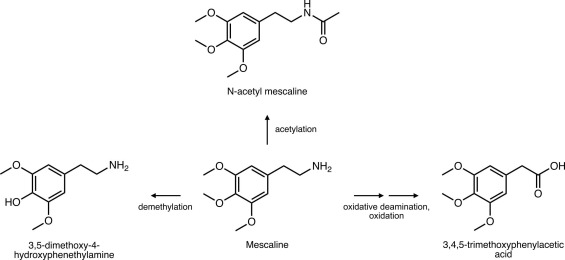
3,4,5-trihydroxyphenyl)pentanoic acid) could be the result of demethylation similar to how the methoxy on mescaline becomes a hydroxy:
See demethylation of the 4-methoxy -> 4-hydroxy.
The hydroxy on the tail (
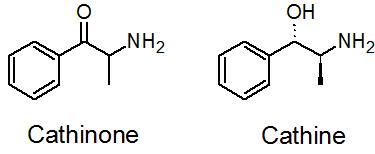
4-hydroxy-5-(3,4,5-trihydroxyphenyl)pentanoic acid) might have originally been a keto group, similar to how the hydroxy (OH) group on cathine originates from the keto (O) group on cathinone (cathinone gets oxidised into cathine):
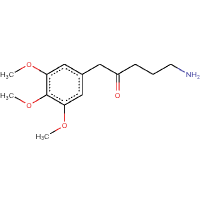
Assuming the original metabolite identification was accurate and assuming those demethylation/oxidation steps take place, the original molecule in fresh mushrooms might look like this:
(SMILES: COc1cc(CC(=O)CCCN)cc(OC)c1OC)
This molecule would be unstable due to the keto (O) group - similarly to how the keto group in cathinone is unstable thus degrades to cathine. This matches the practice of heating the mushrooms to make them inactive:
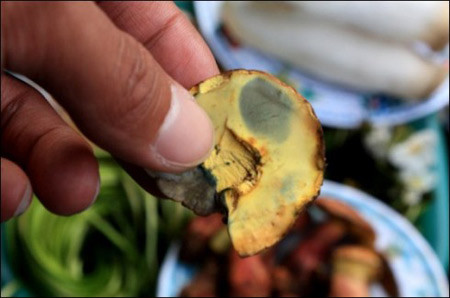
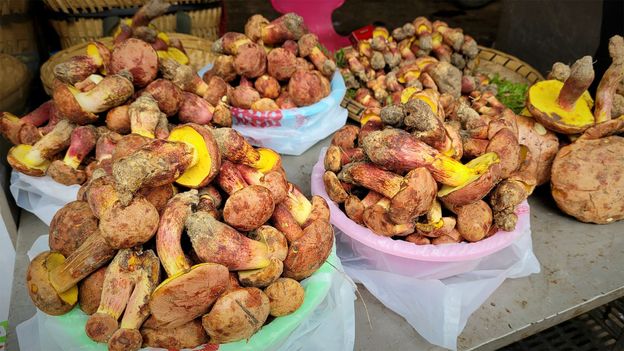
One thing that seems a clue is the comment about hot pot places saying to let the mushrooms boil for 15 minutes to not trip. This implies a much more heat labile compound than muscimol or a simple tryptamine.




 www.bbc.com



 ate them unknowingly/first psychedelic taste?