• N&PD Moderators: Skorpio

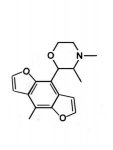
Is 'ring substituted phenmetrazine derivatives as 5HT2a agonists such a daft idea?

fastandbulbous

Bluelight Crew
Joined
Jul 29, 2004
Messages
21,324
Location
that rainy little island off europe
Is 'ring substituted phenmetrazine derivatives as 5HT2a agonists' such a daft idea?

Ring substituted phenmetrazine derivatives would equate to the alpha methylBOM/BOB type of compounds that Shulgin describes as active psychedelics in PIHKAL. The problem comes in that the are by nature secondary and higher amines. Secondary amines are almost exclusively not good 5HT2a agonists, both phenethylamines (N-methyl DOM/DOB) and indole based compounds (N-methyltryptamine, nor-LSD). So the best way of doing it, considering the morpholine ring is analogous to the LSD D-ring, is to N-methylate it, as seen with LSD.

Stick the well known phenethylaminesubstitution patterns onto the phenyl ring and voila! (the benzodifurans/dragonfly compounds would need some creative naming! - Maybe the duck/duckling series. Seriously)

DOM-duck, Donald's lost cousin! =D
 

Attachments

  • DOM-duck-duckling.JPG
    DOM-duck-duckling.JPG
    12.8 KB · Views: 496
Last edited:
On that note, why not psychedelic ring substituted benzylpiperidines?
Had already thought about them and drawn plenty out but wrote them off because of their bulkiness. This has renewed my interest, hadn't thought of them as LSD analogs. :) Then again, they're not phenyl-R, they're benzyl-R. Phenyl would work better for 5-HT2A agonists it would seem.

F&B - why the morpholine ring over a piperidine one?
 
Last edited:
The BOx compounds work, beta methyl ones don't (perhaps a 3,4-didehydro/1,2,5,6-tetrahydro-1-methylpyridine might be better) - reckon you'll need either a source of lone pairs or a double bond
 
Last edited:
It just occured to me that the more complicated these compounds get, the more expensive they will be to buy. All these crazy things would probably be out of most peoples' price range. I'm talking hudreds of dollars for a few mgs? Any opinion on that?
 
Sorry to be pedantic, but isn't that a substituted phendimetrazine? The phenmetrazines would, one assume, be stronger. This is a similar point to my substituted aminorex series... Just you love phenmetrazine ;-) Good plan, though, you can get substituted nitropropenes/nitropropanes made to order so I guess they would make the nitroalcohol as readily. Of course, a route not going through the amino-alcohol would be best...
BTW What software was all that drawn in?
 
these substances are part of a larger family of substances, the canardamines. not to be confused with cardamines which are as everybody knows extracted from cardamon using a lemon squeezer.
 
Last edited:
cardamines also being greek for butterfly... If I google canardamine I get nothing whatsoever. I guess when Google's spiders go across BL then this will make it a googlewhack!
BTW, IS there a way to make these without going through the amino-alcohols?
 
Take the N-methyl away and we could have a winner. What do they call a duck with one if its bills removed?

PS thank you for the TIHKAL re: your message. ;)
 
^^ I think F&B's point was that you'd need the N-methyl moiety, as 2' amines don't seem to be effective 5-HT2a agonists. One must either have a naked amine (in the PEAs) or a fully clothed amine (3' amine, in the tryptamines) for 5-HT2a activity. If having a secondary amine retained activity, then we would expect nor-LSD to be active, but it is not. Since there (obviously) is no way of making phenmetrazine a primary amine, then I think tertiary would be the logical starting point.

I also enjoy the idea of phenmetrazine. While I have never been lucky enough to have the real thing, my experiences with phendimetrzine tell me that it would be well worth it. The parent phenmetrazine could also be ripe for substitution, although it is probably not as tolerant as amphetamine proper. No need to double-furan the compound however. I'm sure that if phenmetrazine-based psychedelics work, then the 2,5-dimethoxy-4-halo substitution pattern would work just as well.

I'll see if I can't do a little 3D energy-minimized modeling of a phenmetrazine-based DOI derivative later.
 
Last edited:
No need to double-furan the compound however. I'm sure that if phenmetrazine-based psychedelics work, then the 2,5-dimethoxy-4-halo substitution pattern would work just as well.

Yes, I know, but when I drew the furans & dihydrofurans on paper, I could just see this little 'duck' in the molecule, then thinking that Nichols named the dragonflies because he could see an insect in their structure... I am the weaver! (blatant Bill Hicks' plagiarism:) )
 
Well, I should certainly think it falls outside the MoDA since it's a distinct morpholine ring. Any way to make it without going through those controlled PEAS, though?
 
haribo1 said:
Well, I should certainly think it falls outside the MoDA since it's a distinct morpholine ring. Any way to make it without going through those controlled PEAS, though?
of course. I can see two routes immediately If was to go through my notes I'm sure there are plenty more.
diketone, red amination with ethanolamine and ring closure.
or alternatively reductive cyclisation of the suitably substituted nitro compound

also only certain beta hydroxy phens are UK conntrolled.

whether psychedelic activity can be retained is unknown, but it is already known that DAT and SERT are tolerant to bulky groups in this position, so if the 5ht2a agonists don't fly then the entactogenic varients might. I might finally get round to reading the morpholine patents to see if the methoxy morpholines ave been assayed.

F&B
which isomer of diphenmetrazine retained stimulant activity? it was with the methyl group moved somewhere on the morpholine ring? this interests me as it is legal. and phenmetrazine is supposedly far superior to meth and amphetamine, at least for swedish people.
 
Last edited:
F&B
which isomer of diphenmetrazine retained stimulant activity? it was with the methyl group moved somewhere on the morpholine ring? this interests me as it is legal. and phenmetrazine is supposedly far superior to meth and amphetamine, at least for swedish people.

Y'mean phendimetrazine? It was 2-phenyl-3.6-dimethylmorpholine (move the methyl group well out of the way of the amine!)
 
Phenmetrizine has always caught my attentions - to the point where I was at one time actively searching for at least phendimetrazine to try. It never worked, but anyways:

I LOVE the duck idea!! LOL.

HOWEVER... what about non-dfly mimics? How about DOx mimics, like a simple 2,5-dimethoxy-4-methylphenmetrazine?

Great idea nonthless!
 
This leads to a question I asked a long time ago and never heard a response...with the BOx series...does anyone have an idea which isomer would be the active one with regards to the beta-MeO. And would that active confirmation correspond to this (in theory)? It is surprising that Shulgin did not work with the four isomers of the BOx series....considering many of the amphetamines are represented in the book as the racemate and individual isomers.
 
(R) isomer of the bMeO= most active. Otherwise the amine sticks out the wrong side.
 
BOx (as I am sure you know) have two chiral centers. I am asking about the beta (relative to the amine). Is the most active isomer (1R,2R)-1-(4-bromo-2,5-dimethoxyphenyl)-1-methoxypropan-2-amine? Also, how would the confirmation of the chiral center at the b-MeO affect where the amine points? I don't think it would...you must think I am taking of the other chiral carbon.
 
Last edited:
Oh. I thought the BO series were PEA's, not aMePEA's.

Nah the beta MeO does direct where the amine is. (R) and it points off to the left if you have the ethylamine sidechain facing you, aromatic rring 2-methoxy at the top. (S) isomer it faces to the right, where you want it.

From what I can see from Chem3D, the (1S,2S) isomer is closest in spatial orientation to the other psychedelic amphetamines. The amine isn't quite pointing downward, and to the right, but it's close.
 
Top