• Psychedelic Medicine
  • Psychedelic Medicine Moderator: mr peabody

IBOGAINE | +40 articles

American-Flag-Memorial-Day-2000x1200.jpeg

One Vet’s Ibogaine & 5-MeO-DMT Experience for PTSD and TBI*

by JL | Psychedelics Today |

A former NAVY SEAL struggling with PTS and TBI is granted ibogaine and 5-MeO treatment in Mexico by an anonymous donation through VETS, and returns home with more than he could have ever imagined.

Whoever paid for me… thank you.

It was the most profound weekend of my life.

I didn’t expect too much. I guess I anticipated that this would be like most of the other “cutting edge” treatments for my traumatic brain injury and post traumatic stress: pretty cool, it’d help a bit, I’d be grateful, but that’d be about it.

But here I am, two weekends from my treatment, struggling to find the words to accurately convey how transformative this was for me—how transformative it will be for any of us who are willing to let go, really. I keep typing things and then erasing them, thinking I must sound like a crazy person—some wild-eyed zealot who’s just too far-out to relate to. But then I think… this is the most far-out thing I have ever experienced in this life and whatever crazy talk I throw at you won’t be crazy enough to cover what went down.

In other words: I expected a firecracker and I got about six pounds of C4.

I guess I’ll just stop struggling for adjectives and “as ifs” and just tell you my story. Keep in mind please, as I do, that I can’t stand hippie, new age bullshit, and while I grew up in the church, I’m not particularly religious.

So yeah… joke’s on me.


We’re first introduced to the rest of the group via Signal secure text messaging. I’m stoked to see that a classmate of mine from BUD/S, whom I hadn’t seen in almost 20 years, is going to be there, but the other guys I don’t know. Everyone seems a little held back, but that’s to be expected considering the circumstances.

We meet in San Diego on Friday afternoon for lunch, which is to be our last meal for the day, as we need to be in a fasted state for the ibogaine treatment that night. Little did I know that it would be pretty much the last thing I’d eat until lunch on Sunday.

After an uneventful drive of several hours, we arrive at the treatment house in Mexico and everything kicks into gear as a smoothly-functioning operation. The facilitators arrange the spaces, the doctor and his medical staff take urine samples, do EKGs on all of us, start IVs, and lay out some pretty impressive medical support gear for what I imagined to be a fairly low-risk event.

**Quick aside here: when I signed up for this, I thought it would be beneficial, sure, but as I started doing the preparatory work that I was sent by the organization, weirdly, things started coming up. Family issues. Relationships. Parts of me and things I’d seen and done that I’d buried out of shame or disgust. They said, “The medicine would start working before you take it,” and it really did. So by this point, I was open to something a lot more than what it appeared to be on the surface. So back to our story….

Evening approaches, and we gather around the fireplace. There’s an air of solemnity, but I can tell not all of us are bought in. Or maybe just none of us are at 100% yet. Most of us are pretty closed off, if still willing. It’s just kind of a SEAL thing, I guess.

We write down what we want to leave behind, and we take turns burning our paper in the fire. It’s quiet except for the crackle from the flames, and then the doc passes out our ibogaine doses (measured for our bodyweight) in little wooden bowls. It feels like a sacrament.

Solemnly, we take our medicine, and one by one, the facilitators lead us upstairs to be saged and smudged as a cleansing before moving to our mattresses. Curiously, the cleansing has a gravitas and weight to it that crumbles and dismisses all the shallow and thin echoes of spirituality in yoga studios and SoulCycles across Los Angeles. I receive it with humility.

Settling in on our mattresses, it’s dark. Only flickering candles and the fading light from the sun just below the ocean’s horizon remain to illuminate the room. The medical staff move quietly through, attaching heart monitor leads and O2 clips on our fingers and chests. Once they complete their tasks, I pull my eyeshade down over my eyes and lay back to wait.

Hyper-attentive to my mind and body, several times over the next half-hour, I think, “Is this it?… No… not yet…”

And then it comes.

Uber-detailed and realized visions flood my mind’s eye. They’re nightmares in 4K. I’ve never seen anything with the detail and clarity through my physical eyes that I’m experiencing now. I am completely in a dream yet 100% in my body. Unknowable machines possessed with alien intelligence build and fold out of the space like fractals from some dark pit. Strange visions that make no sense. A nightmare buzzing, like the sky is being chainsawed apart, howls with a clearly defined shape (shape?!) above my head. There’s a loud talking, without cadence or expression, just behind my left ear. It never ceases or pauses and I understand not a word. I open my eyes under the eyeshade and immediately I’m in fields of stars. I close them and I’m back in an alien, machine hell. They told us that if it gets to be too much, raise your eyeshade and you can come out of the visions, but I keep my eyeshade on. I want all of what the medicine has for me.

I begin to dry-heave. I feel hands around me, holding me in a sitting position. The retching is violent and back-to-back, four, five, eight times. Soon I’m laying down again, fighting the urge to vomit. The visions add strange, expressionless, soulless people standing and sitting around me. Again, they’re alien; there is nothing human about them. It must be hours that I try to make sense, assign meaning, figure out the visions, until, worn out, I give up. Just let them come, I think, and I let go.

Innumerable hours pass, or is it minutes? I try to move my arm and my leg, and while I can, nothing’s coordinated. It’s as if I’m operating a crane, and while I can pull one lever at a time, I can’t make the arm do anything resembling a smooth or efficient motion. I really need to piss but can’t conceive of trying to stand right now.

At some point during the night, six, seven, eight hours later, the “visionary stage” ceases, my mind quiets, and the literal nightmare I’ve been in ends. I’m in a trance-like state now, apparently what they refer to as the “contemplative stage.”

Bullshit.

All I’m contemplating is how tumbled and empty I feel. I still need to piss but can’t move. Unfocused, I feel like I’ve had a hard reset and I’m in the BIOS of the motherboard. Everything is in two-toned, 8-bit graphics. I pull off the O2 monitor and scrape off the eyeshade. I close my eyes but don’t sleep. At some point, I notice the sun rise.

Several hours later, I look around the room. All of us are glued to our mattresses in various interpretations of a full-body rictus. No movement.

Sometime later in the afternoon, around three or four I’d guess, I get up and make my way to the restroom and then downstairs. I manage to grab a banana off the counter (which takes a couple tries) and slide down to the floor and eat it. Judging from the expressions on the faces of the staff, I must look like shit… and it appears that they’ve seen this before, or maybe even experienced this themselves.

One of the facilitators comes to me, brings me to the couch, and does some “energy work” on me. I’m too worn out to resist the hippie bullshit… and surprisingly, it helps. A lot. Even though they had no meaning to me, I manage to write down my visions (not that I’ll ever forget them), then make it back upstairs to my mattress.

Several hours later, we attempt dinner. I don’t know how much the other guys manage to get down, but I think I get about two spoonfuls. There’s very little movement and lots of agonized expressions around the table.

Back to bed we go in silence, and in the dark of Saturday night or perhaps the wee hours of Sunday morning, my trance fades and I fall asleep.

When I wake on Sunday morning, I feel like a fever broke in the night. You know the feeling: You’re worn out, exhausted, but you know it’s over. The sickness is gone, leaving only relief.

Still weak, but ravenous, I make it downstairs and as my greedy hands begin to shove food towards my mouth, the facilitator kindly tells me that I still need to be in a fasted state for the 5-MeO-DMT, which we’ll be doing in a few hours.

MORE psychedelics?! I honestly don’t feel up for it. I don’t really want any more than what I’ve just experienced, but I’m in this for the whole enchilada (food metaphors? Fuck, I’m hungry) and I’m committed to following the whole program. I can tell I’m not the only one with hesitation though.

As the rest of the guys make their way downstairs, we gather again around the fireplace and the staff talks us through what’s going to happen next. One of the other guys expresses his doubts about the 5-MeO-DMT, and the facilitator reassures us that this is nothing like the ibogaine. It’s complementary, she says, a nice bookend to what we just experienced. “Hope they’re not matching bookends,” I think.

As she finishes with the brief, the two SEALs there helping out (who had gone through this before) offer a few words: “It’s like a deep dive in the ocean. You’re down 150 feet and it’s beautiful and quiet, and the water pressure is intense, and you’re at peace… but then you look over, and there’s a deep, dark abyss. If you have it in you, go down there. That’s where the jewels are.”

I think we all make up our minds at this point to go all the way, no matter what it feels like.

The staff gives us the order we are to go in and I’m number three of five. They tell us to go wait our turn by the pool, and mention it’s helpful to write what we’re feeling, so I grab my journal and head out to find a private spot by one of the fire pits around the pool. I begin to write, awkwardly, my muscles still not in agreement with my head yet, and I manage to stain the top of a clean page with: “I don’t I.” Frustrated that my hand, brain, and intentions all seem to be separate entities, I try again. This time, slowly, I write:
Ibogaine was a nightmare in 4K that I couldn’t stop or wake up from. I could make no sense of it then or now. I think I had expectations for the medicine as much as I tried not to. I have no expectations of 5-MeO. None whatsoever. It will be what it will be.

I start to put the pen down… but pause… and write:

I feel… different

It’s true. Something’s subtly very different. I write again:

I feel… present

Shocked into an introspective silence, I look inward and feel a clean openness in my soul, like all the accumulated and stored entanglements of my life have been quietly discarded, and I now only recognize they had ever been there by their absence.

Kind of stunned, I sit there with myself and savor the feeling. I haven’t felt this… free since I was probably about twelve. And as I rest in this quiet, subtle peace, awestruck… I hear our first 5-MeO guy scream from the house 50 meters away.

Shit.

As my turn arrives, I’m led into the house by one of the SEALs helping out. Up the stairs, I’m smudged and saged again, and led into the room. It’s kind of sacred. Candles. Music. The doctor and facilitators have really set the space and I can feel it. Speaking in hushed tones, they sit me up on the single mattress covered in a spotless white sheet, and almost in whispers, describe what’s about to happen. The doctor shows me the vaporizer, inscribed with a medical caduceus, and the three doses of toad venom I’m about to encounter. “The profound from the humble,” I think, and then I’m inhaling the “handshake dose,” just to familiarize me with the process. Easy enough, and with no effects to speak of, I pull my eyeshade over my eyes and we move on to the first real dose. I inhale again as the doctor instructs me, holding for a count of ten, then exhale and fall backwards as instructed.

Only just as I begin exhaling, the world explodes. Gorgeous fractals in vivid primary colors, more detailed and distinct than anything my eyes have ever viewed fills… my field of vision? No… my field of consciousness. I can barely feel that I have a body. Bliss suffuses all of me (what is “me”?) and all I feel is love. I remember what the SEAL downstairs said—that if you can handle it, go deeper. Since I’m able to have these thoughts, I figure there must be room left, so I clumsily signal for another dose. Halfway in my body, I’m pulled to a sitting position and again feel the vaporizer against my lips. Drawing deeply and holding, I hear the doctor count down from five. Far away, he whispers, “Exhale…”

…and I die.

No, really. I die. And here is where words begin to fail.

I feel my body atomize and it’s GONE. I’m in a blackness that is teeming, but warm. Infinite. It’s gentle, but I sense that the gentleness, while truly the essence of this Consciousness, is not all of it, and the power… there is no word that can convey the awesome power of this place. It is infinite possibility. And I? I am a speck, a tiny ripple, a wavelet upon an Ocean so vast and deep, how could I have ever thought; how could I have forgotten that I am no less separate from this great Consciousness than a wave is seperate from the Ocean? How can a ripple be apart from the sea? I am no longer “me,” but still completely “I.” And I remember what I am.

I feel a scream coming from deep, and it happens—from somewhere I scream, and I hear it as an observer. But here’s the weird(est) thing. Time has no meaning here, and as I hear this scream, I know that this scream is not just from “now.” It’s from five years ago, and 20, and from when I was two, and from when my parents divorced, and from Afghanistan, and from yesterday. The linear time we live in has condensed to a singularity and this scream is from my now, my past, and probably my future.

I don’t know time, space, or have any ties to what I used to know. There is only existence returned from whence I came, and then, at some point in time or space…

…I walk through the Gates of Heaven.

(If you’re still with me, believe me, I know how this sounds.)

Hands around me, bright light more beautiful than anything I have ever seen, and the purest love, acceptance, grace, and right-ness permeates my existence. The greatest feeling I have ever experienced or could possibly imagine is dwarfed by this feeling. I pull my eyeshade off, and with pure wonder and without the slightest insincerity, think, “Are we dead? Are all of you angels?” I lay there on the mattress, alternately weeping with the sorrow of what we’ve lost and laughing with the realization of what we are, and I whisper, “I am born.”


I will never be the same. I wish I could convey more of this experience to you but words are useless. Ibogaine reached deep inside of me and wrapped up all my trauma and sorrow. It wrapped it up in a dark, wet, moldy, wool blanket and when I screamed, it all came out. I walk around every day in awe, feeling this, seeing with new eyes. I didn’t learn anything, I just remembered.

My brain works now too. It’s the strangest thing. Words flow. Thoughts sizzle. Synapses fire and I can discuss, read, think, and elucidate in ways I haven’t been able to in at least 15 years. I feel smart again. All the TBI had made things slow and fuzzy, but these medicines lit up all the lobes, cortices, stems, and folds of my brain and shocked them back into activity (not a scientific analysis, of course). It was starter fluid for my grey matter.

My relationships are healing. My dad and I are reconciling. He’s so happy. So am I.

I’ve been reading everything I can get my hands on regarding this therapy and the history and use of psychedelics (I prefer the newer term, “entheogens” these days—it means to “create the divine within”).

These are not drugs. This is powerful, powerful medicine and it has the potential to do enormous good. These are sacraments that require much of you and will bring you what you need and are prepared for.

It is not the molecule, but the door that it opens.

To my benefactor: thank you. I’m going to do my part to take this newfound remembering and make the world better, and bring it to as many people as I can. And the most unexpected, beautiful realization? The Brotherhood that we fight with, for, and next to—the ones who scar us and scar with us are also the ones healing us. What an amazing thing!!!!

I never thought I’d be signing off like this, but….

Love and Light,

JL

*From the article here :

 
Last edited:
Beond-Articles.png


Could ibogaine help address the opioid crisis?

by Faye Sakellaridis | LUCID | 22 Apr 2022

What started as a taste of heroin at 16 years old turned into a daily, and costly, habit for Phil Tricovich. After dabbling with opiates in his late teens and early adulthood, he was prescribed pain medication for a back injury in 1997, which “sealed the deal” on his addiction. “It amplified my underlying addictive issues,” he says.

At his worst, he was taking 100 milligrams of Oxycodone and $500 worth of heroin a day, along with methadone. “I was stocked for World War III in my medicine cabinet,” Tricovich recalls.

In 2004, Tricovich was introduced to Dr. Jeffrey D. Kamlet, a leading expert in addiction medicine and ibogaine administration, by a pharmacist who felt he might benefit from meeting the physician who had been successfully treating opiate dependency with an unorthodox approach.

For the next five years, Tricovich repeatedly declined Kamlet’s suggestion that he try ibogaine, skeptical that a strange drug he had never heard of could be the solution to his problem.

Tricovich attempted to quit cold turkey several times – once under Kamlet’s supervision – managing a stretch of two years without touching an opiate before going right back to it.

“You can only go through [quitting cold turkey] so many times. It becomes more difficult,” says Tricovich. “Addicts don’t know that. I didn’t know either.”

Acute opioid withdrawal, which lasts 7-14 days immediately after quitting, is a notoriously hellish experience. “If there is such a thing as the Judeo-Christian model of hell, it’s kicking opiates cold turkey,” says Kamlet. “You’re freezing cold, burning up, shaking, and unable to control your body temperature or bowel movements.”

It’s different from any other substance withdrawal states, explains Kamlet, because your brain lacks the chemicals that would normally protect you from physical or psychological pain, making it the “ultimate fight or flight panic experience. It’s brain gone haywire.”

Acute opioid withdrawal is followed by 60-90 days of post-acute withdrawal syndrome (PAWS), during which the individual feels restless, irritable, discontent, and “craving opiates like oxygen,” says Kamlet.

It’s common for people to act unlike themselves when attempting to quit opioids in order to mitigate their suffering, Kamlet explains. “It will turn the best people into bad people. If the most honest of people had an opiate dependency and were going into acute opiate withdrawal, they would steal 20 dollars from their mother’s wallet to get a fix.”

How effective is ibogaine treatment for opioid addiction?

According to the U.S. Centers for Disease Control and Prevention, opioid-related deaths increased to 75,673 in the 12-month period ending in April 2021, up from 56,064 the year before. Opioid addiction has claimed a half million American lives since 1999.

“Opiate dependency and opiate-related overdoses are predicted to be on a steady incline due to the fact that most of the heroin being sold on the streets today is in fact the synthetic opiate fentanyl and its analogues,” says Kamlet, “which can be hundreds of times more potent than heroin.” By the time the reader finishes this article, approximately 3-5 people will have died from an opiate overdose, he adds.

Ibogaine could “absolutely” have a huge impact on the opioid crisis, says anthropologist and ibogaine researcher Thomas Kingsley Brown, PhD due to its ability to “reset” the brain to its pre-addicted state, effectively bypassing acute opiate-withdrawal and the 90 day PAWS.

“From the first time I witnessed it, I saw this miraculous treatment. I almost thought it was too good to be true,” says Kamlet, who considers himself to be a medical skeptic.

In 2009, Tricovich found himself at a critical point, knowing his opiate usage would inexorably lead to jail or death. On the surface, things were going well – he was newly wed with a pregnant wife, and successful in his executive position in a tech sales company. But he couldn’t shake his habit. Desperate to try anything, he finally decided to head to Cancun with Kamlet, admittedly “without high hopes,” to try ibogaine treatment at a clinic Kamlet was taking his private patients to personally oversee the treatments.

After Kamlet administered the dose, Tricovich waited restlessly, sweaty and irritable from 12 hours of no opiates, convinced this was a complete waste of time.

“All of a sudden,” says Tricovich, “this tremendous peace came over me. And I noticed – I’m not sick anymore.”

Aside from ibogaine’s “reset” effect, the mental and emotional journey induced by ibogaine was therapeutic for Tricovich. He recalls the life review – typical to many ibogaine experiences – in which he witnessed his entire life on a “million movie screens at the same time.”

Facing those memories was crucial for Tricovich, who partly attributes not having properly dealt with his adolescent PTSD and “undiagnosed depression” to why he previously relapsed. “It goes through every shitty thing you did to another human,” forcing you to confront those incidents head on. Addressing the root causes of addiction, which commonly involve unprocessed trauma, is also a key part of ibogaine treatment.

After his treatment, Tricovich wasn’t just craving-free – he felt like a new person.

“It changed everything about me. It changed the way I look at everything. It changed the way I view myself. It changed the way I view the world.”

Is Ibogaine a Cure?

Kamlet is firm that the recovery process is lifelong, and does not end after taking ibogaine. “Ibogaine is not a cure for addiction. It’s the cure for withdrawal symptoms from opiates, as well as other commonly abused substances, including alcohol.”

Patients tend to emerge from ibogaine experiences feeling rejuvenated and excited to be alive. It is hypothesized that ibogaine is metabolized in the liver into noribogaine, which is stored in the fatty tissue for about 90 days, and functions somewhat like an antidepressant. “The day after a flood dose of ibogaine, patients have a 90 day window of opportunity where they are extremely teachable and open to integrating healthier behaviors,” explains Kamlet.

Kamlet advocates that ibogaine treatment be followed with talk therapy and support groups, such as Narcotics Anonymous (NA), 12 Steps, or other recovery programs that the patient feels comfortable with.

“We have a sustainable success rate that far surpasses anything seen in the United States for people who actively integrate into a life of recovery, be it therapy or meetings,” says Kamlet, who serves as chief medical officer of the Mexico-based ibogaine clinic Beond. Brown agrees that ibogaine is hugely effective “when combined with other treatment modalities.”

"On their own, traditional programs may not be as effective. In the typical U.S. model of patients entering residential detox followed by 30-90 days of residential rehabilitation, the relapse rate is thought to be about 90%,"
says Kamlet.

“There is every reason to do what Beond is proposing to do,” says Brown, who authored a promising MAPS study on ibogaine in 2017. “Have addiction counseling and psychotherapy before and after treatment.”

Tricovich waved off Kamlet’s recommendation of going to meetings after his treatment at first, not realizing his pronounced mood boost was temporary. He relapsed once more before taking Kamlet’s advice seriously, and began attending regular NA meetings after his second ibogaine treatment. To this day, he’s been sober for 10 years.

“It’s not a cure. You have to do the work,” says Tricovich. “But it helps you get to the place where you can do the work.”

 
Last edited:
21overdose-articleLarge.jpg


Could 'miraculous' drug be the cure for opioid addiction?

by Mindy Basara

Some Americans are heading to Mexico for a treatment some Marylanders are calling "miraculous."

Josh, who wished not to share his last name or show his face, has a good job and a young family, but that wasn't the case several years ago.

"I was, basically, for lack of words, homeless. I was in a homeless shelter," Josh said.

He was struggling with addiction and on the verge of suicide when he heard about a treatment called ibogaine.

"I definitely didn't want to live the way I was living anymore, and either this was going to work or that was it -- I was done," he said.

Josh traveled to a clinic in Mexico where is legal. It's a schedule 1 drug -- a psychedelic. It's derived from a plant called iboga, which is found in the African rain forest.

A trip from ibogaine lasts anywhere from four to 10 hours. It puts users in a dreamlike state, where they process repressed memories and trauma. Some describe it as resetting their brain.

Josh said after his dose, he didn't feel like he needed any drugs anymore.

"Almost as soon as I got back, I knew my life from before was completely done," Josh said.

Couple George Beck and Diane Baklor accompanied Josh on that life-changing visit. Beck was able to help guide Josh through the experience, because he has been through it himself. He had also struggled with addiction until an ibogaine treatment.

"Literally, went to a facility, woke up eight hours later after taking ibogaine, perfectly cured. There was no craving. I really didn't think about taking a pill," Beck said. "The addiction was literally gone."

"Had I not seen it with my own two eyes, I wouldn't have believed it,"
Baklor said.

Beck and Baklor feel so strongly about the benefits of ibogaine, they moved to Mexico and opened their own treatment center: The Power of I Institute, or POI. It's a holistic, all-inclusive retreat in Cabo San Lucas. Their hope is to one day provide this kind of treatment in Maryland.

Beck and Baklor were encouraged when the Maryland Legislature passed the ibogaine treatment study program to look into the effectiveness and safety of ibogaine for opioid dependence.

WBAL-TV 11 News reached out for an update on the study and received a response, saying, "This study concluded that, although ibogaine has been investigated internationally in uncontrolled, observational trials with some positive results, it has also been associated with serious adverse side effects, including death. There is not enough research on ibogaine to conclude that it is a safe treatment option for opioid use disorder."

Researchers at Johns Hopkins Center for Psychedelic Research echo that opinion.

"Our field has a little bit of a concern about it, because of the potential for medical consequences," said Kelly Dunn, PhD.

Dunn said there have been a handful of cardiac deaths and also prolonged psychosis tied to ibogaine.

"There is not a lot of data regarding what the exact right dose would be, and we know that there's a very fine line between a dose that might have effectiveness for the treatment of opioid abuse disorder or addiction in general, and a dose that would cause significant health consequences, like cardiac impairment," Dunn said.

Beck and Baklor said they take extra safety precautions at the POI Institute and have not had any patients suffer adverse effects.

"It's a medically-focused facility, so people have to be screened ahead of time. We do all their lab work when they get there … reviewed by a doctor," Baklor said. "The actual procedure of the treatment is RN supervised completely and they're monitored the entire time, hooked up to an ECG machine, IV's for fluid."

Baklor believes pictures of a client when she first arrived and about a week after treatment speaks for themselves.

"It's not only saving people's lives with addiction -- We've treated navy seals with PTSD, we've treated people for depression and anxiety. It's just miraculous," Baklor said.

 
Last edited:
1*rp5DraR87eGEok5RNryt-A.jpeg


National Institute on Drug Abuse to test Ibogaine for Addiction Treatment

by Tanya Ielyseieva | Truffle Report | 4 Jan 2022

The opioid-use crisis has gotten significantly worse since the onset of the COVID-19 pandemic, according to the U.S. Centers for Disease Control and Prevention. Overdose deaths rose at a rate of 28.5 percent in the 12 months ending this past April. The number one cause of these deaths is related to the use of both prescribed and illicit fentanyl — a synthetic opioid used as pain medication and which is frequently added to street drugs. The recovery process by conventional options is not that promising for opioid-addicted individuals. New addiction treatment methods have become a necessity.

U.S. Government Agency partners with Delix Therapeutics

The U.S. government has taken an important step in addressing the national substance addiction crisis by partnering with Boston-based neuroscience startup Delix Therapeutics to study a non-hallucinogenic version of psychedelic drug ibogaine.

The National Institute on Drug Abuse (NIDA), a federal scientific research institute under the U.S. The Department of Health and Human Services’ National Institutes of Health (NIH) will test Delix’s patented version of a non-hallucinogenic and non-toxic ibogaine analog for its potential use in treating a range of substance use disorders.

“Partnering with NIDA is an important step towards further uncovering the diverse pharmacological benefits of psychoplastogens, above and beyond our own in-house clinical development programs, and represents the potential for Delix to more rapidly advance our innovative CNS treatments to patients who need them,” said Delix CEO Mark Rus. “Delix is deeply committed to broadening access to safe, fast-acting, and long-lasting medicines for many of the leading causes of disability worldwide, including to help the roughly 20 million people in the U.S. suffering from substance-use disorders.”

The research will be conducted under NIDA’s Addiction Treatment Discovery Program (ATDP). This program works with industry partners to perform preclinical screening, evaluating novel and promising pharmacotherapies that may be more effective treatments for the medical management of substance-use disorders.

Non-Hallucinogenic Ibogaine

Ibogaine is a powerful psychedelic substance derived from the iboga shrub native to West Africa. The Bwiti religion uses different parts of iboga for healing and religious purposes. It is becoming regarded as one of the most promising psychedelics for use in addiction treatment — both anecdotally and through a number of clinical studies. Naturally occuring ibogaine is not the ideal treatment for substance-use disorder due to its intense psychedelic experience and risk of cardiovascular diseases.

“The therapeutic potential for ibogaine is huge,” said Olson in an interview with Forbes. “There are some indications that a single dose can keep people with opioid use disorder drug-free for months.”

Ibogaine is a Schedule I drug in the United States, which means it is illegal and has no medical value. According to MAPS, it’s not considered fit for recreational use.

Delix Therapeutics, co-founded by Nick Haft & David E. Olson, was built upon the research of Olson and his team at the University of California, Davis. According to Delix, Olson’s lab discovered that non-hallucinogenic psychoplastogens are capable of producing sustained therapeutic effects after a single dose. Delix Therapeutics has made its mission to create a non-hallucinogenic ibogaine analog with the potential for treating addiction, depression, and other psychiatric disorders.

“My goal is not to try to convince someone who has undergone a psychedelic experience that the hallucinogenic effects that they experienced were not important to them,” Olson told Wired. “And I’m not saying that a certain patient population might not benefit from the hallucinogenic effects.”

In December 2020, Olson and his lab published a study on their first compound, a water-soluble, non-hallucinogenic, non-toxic analogue of ibogaine — tabernanthalog (TBG) or DLX-7. According to the study, the compound reduced alcohol- and heroin-seeking behaviour and produced antidepressant-like effects.

“We need a drug that people can keep in their medicine cabinet and this is a significant step in that direction,” said Olson.

Then in April 2021, Olson and his team published another study with similar results with another of their compounds, which has a similar structure to MDMA, called DLX-1 or AAX.

“Preclinical results published in Nature last year demonstrated that DLX-7 reduces alcohol- and heroin-seeking behavior, and we are thrilled to collaborate with NIDA to further evaluate its potential as a novel treatment for addiction across a variety of substances and models,” added Olson.

Delix’s DLX-7 does not cause cardiac arrhythmias and intense psychedelic experiences like ibogaine.

“We started with the ibogaine structure because of its fantastic efficacy, and we whittled it down to its essential feature,” Olson told Forbes, describing his modification of the psychedelic substance. “By cutting it down, we got rid of these undesired side effects.”

According to the press release, “the company’s most advanced compounds, which have been profiled in Nature and Cell, are non-hallucinogenic analogs of clinically-validated first-generation psychedelics like psilocybin, LSD, DMT, and MDMA. Delix’s orally bioavailable compounds preserve the long-lasting beneficial rewiring of neurons without the risk, safety liabilities, and other patient access barriers inherent to first- and second-generation psychedelics. The improved safety profile, non-hallucinatory efficacy, and simplified manufacturing process of Delix’s psychoplastogens makes its novel compounds highly scalable and suitable for early use in patients. DLX-1 and DLX-7, the first two development candidates to emerge from Delix, are currently undergoing pre-IND safety and toxicology studies to enable clinical trials to begin in 2022.”

Initial data from NIDA’s research on DLX-7 is expected in early 2022.

 
IBO.jpg


Ibogaine and the heart: A delicate relation*

Xaver Koenig, Karlheinz Hilber

Ibogaine has shown promising anti-addictive properties in humans as the drug alleviates drug craving and impedes relapse of drug use. Though unlicensed as therapeutic drug, and despite safety concerns, ibogaine is currently used as an anti-addiction medication in alternative medicine clinics worldwide. In recent years, alarming reports of life-threatening complications and sudden death cases associated with the administration of ibogaine have been accumulating. These reactions are hypothesized to be associated with ibogaine’s propensity to induce cardiac arrhythmias. The aim of this review is to recapitulate the current knowledge about ibogaine’s effects on the heart and the cardiovascular system, and to assess the cardiac risks associated with the use of this drug in anti-addiction therapy. The actions of 18-methoxycoronaridine (18-MC), a less toxic ibogaine congener, are also considered.

The mechanisms by which ibogaine exerts its psychoactive effects in the brain are only poorly understood, which is attributable to the alkaloid’s complex pharmacology. Effects on multiple neurotransmitter systems via numerous brain targets have been reported. Among those, ibogaine interacts with neurotransmitter transporters, opioid receptors, sigma receptors, glutamate receptors, and nicotinic receptors in low micromolar concentrations. Long-lasting effects after ibogaine intake are attributed to the alkaloid’s long-lived active metabolite, noribogaine.

Although all efforts to clinically approve ibogaine have failed as yet, NIDA has recently committed financial support for preclinical testing and chemical manufacturing, as well as control work intended to enable clinical trials to develop the synthetic ibogaine congener 18-methoxycoronaridine (18-MC) as a pharmacotherapy for addiction. 18-MC also exhibits anti-addictive effects, and is less toxic in animals than ibogaine.

Ibogaine’s complex pharmacology has a considerable potential to generate adverse effects. Besides neurotoxic actions, ibogaine also affects the cardiovascular system, and, in recent years, alarming reports of life-threatening complications and sudden death cases, temporally associated with the administration of the alkaloid, have been accumulating. It was hypothesised that the above-mentioned sudden deaths cases in humans were related to cardiac arrhythmias. These are most probably associated with ibogaine’s propensity to induce a QT interval prolongation in the electrocardiogram (ECG), which is known to enhance the risk for life-threatening Torsade de pointes (TdP) arrhythmia generation.

giphy.gif


Effects on the cardiovascular system

Several indole alkaloids exert effects on the cardiovascular system, and have been or are still used as therapeutic drugs. Among those reserpine has a history as antihypertensive drug, and ajmaline is still approved as an antiarrhythmic medicine. Cardiovascular effects of iboga alkaloids have been known for many years. For example, Tabernanthine, contained in Tabernanthe iboga root bark extracts, induced bradycardia and hypotension in rats and dogs. Low doses of ibogaine didn't change the resting heart rate or blood pressure, but at higher doses ibogaine decreased the heart rate without affecting blood pressure.

In contrast, a significant decrease in heart rate was found in rats already at low ibogaine doses. 18-MC, even at high doses, did not show any apparent effects on either heart rate or blood pressure. Besides these findings on animals, anecdotal evidence suggests that ibogaine can also slow the heart rate in humans. Mash et al. performed intensive cardiac monitoring in 39 human subjects who received single doses of ibogaine for the treatment of cocain/heroin addiction. With dosages in the range of 500–1000 mg, six out of 39 subjects showed a significant bradycardia, and one subject a significant hypotension.

Ibogaine's effects on heart rate

A drug modulating several neurotransmitter systems, such as ibogaine, may generate effects on the cardiovascular system related to its central nervous activity. Further, ibogaine was shown to inhibit voltage-gated calcium channels in rat sympathetic and parasympathetic neurons via sigma receptor activation. This may influence cell-to-cell signalling in autonomic ganglia, and thus the regulation of heart rate by the peripheral nervous system. Interestingly, compared to ibogaine, 18-MC shows significantly less affinity to sigma receptors. If the heart rate is indeed affected by sigma receptor activation, 18-MC will be less effective in this regard.

Ibogaine’s bradycardic action is often related to stimulatory effects of the drug on the cholinergic system. Here, two possible mechanisms were proposed: (1) inhibition of acetylcholinesterase by the drug; and (2) an agonistic action on muscarinic acetylcholine receptors. 18-MC’s affinity for muscarinic receptors is at least two-fold less than that of ibogaine.

A further postulated mechanism by which ibogaine could induce bradycardia is a blockade of voltage-gated sodium channels. Indeed, ibogaine has low micromolar affinity for sodium channels in the brain, and cardiac sodium channel blockers can exert a bradycardic effect. We recently tested ibogaine’s effects on human cardiac sodium channels heterologously expressed in TSA -201 cells. To our surprise we found that low micromolar ibogaine (18-MC) concentrations did not affect Nav1.5 channel currents at all. Consequently, it is unlikely that cardiac sodium channel inhibition by ibogaine significantly contributes to bradycardia generation. However, in this context, the modulation of ion channels, representing major physiological determinants of the heart rate, deserves special consideration.

Ibogaine's effects on cardiac ion channels

Cases of ibogaine-induced QT interval prolongation and associated life-threatening TdP arrhythmias have been accumulating in recent years. The most common reasons for QT prolongation and arrhythmia induction by drugs are modulatory effects on cardiac ion channels. It is therefore noteworthy to look at ibogaine’s effects on ion channels with major importance for electrical impulse conduction in the heart. In this context, we have recently studied the effects of ibogaine and its congener 18-MC on cardiac sodium, L-type calcium, and "human ether-a-go-go-related gene" (hERG), and we found that cardiac sodium and calcium currents are not significantly modulated by ibogaine and its congener 18-MC in a regime of doses normally used to treat human addicts.

The described effects of ibogaine and noribogaine: prolongation and flattening of the human cardiac AP, and relative selective hERG channel inhibition as triggers of QT interval prolongation must be considered proarrhythmic. Moreover, ibogaine’s effects on in vitro cardiac electrophysiology within the drug’s therapeutic plasma concentration range, closely resemble the cardiac actions of formerly approved drugs like cisapride or astemizole, which have been withdrawn from the market because of their propensity to induce TdP arrhythmias.

Here we want to emphasize that not only QT prolongation itself, but also and especially a flattening of the repolarization phase in the AP is considered a proarrhythmic characteristic. Moreover, ibogaine’s effects on in vitro cardiac electrophysiology within the drug’s therapeutic plasma concentration range closely resemble the cardiac actions of formerly approved drugs like cisapride or astemizole, which are known to be unsafe, and have been withdrawn from the market because of their pronounced propensity to induce TdP arrhythmias. Thus, ibogaine, at the doses currently used in humans, must be classified an unsafe drug! Because of its considerably longer half-life in human plasma, ibogaine’s metabolite noribogaine might represent the major proarrhythmic factor. This clearly challenges the idea of noribogaine being considered a potentially safer alternative to ibogaine for anti-addiction medication development.

Risk factors

Based on the findings of the above described experimental studies and case reports on ibogaine’s cardiovascular actions, this section deals with risk factors and their practical impacts for the future application of ibogaine and 18-MC as anti-addiction drugs. First, application of ibogaine, should be done under strict medical observation and continuous electrocardiographic monitoring for an extended time period, which carefully takes noribogaine’s longevity in human plasma into account.

Secondly, prior to ibogaine application one must carefully consider additional risk factors for drug-induced TdP arrhythmias in a patient including female gender, prolonged baseline QT interval, bradycardia, abnormal electrolyte levels, pre-existing cardiovascular disease, ion channel mutations, drug-drug interactions, and genetic variants influencing drug metabolism.

For anti-addiction treatment with ibogaine, two risk factors deserve special attention: bradycardia and hypokalemia. Ibogaine itself induces bradycardia, and hypokalemia is frequent in drug users. Compared with the large number of people who have received ibogaine treatments over many years worldwide, comparably few fatality cases have occurred or have been reported. In addition, drug safety studies on human addicts performed under well-controlled conditions revealed no significant adverse effects.

Baseline screening should include a medical evaluation, physical examination, ECG recording, blood chemistries, haematological workup, and psychiatric and chemical dependency evaluations. In some cases more extensive evaluations should be performed to rule out cardiac risk factors and to exclude subjects for study entry.

Drug-drug interactions

Addicts often have a long history of substance abuse. Alcohol, heroin, cocaine, benzodiazepines, and methadone are among the abused substances, frequently also combinations thereof. Methadone is also prescribed for opioid substitution therapy. When ibogaine is administered to addicts, the presence of other substances in the patient’s blood plasma is not uncommon. This paves the way for adverse drug interactions.

Concerning the heart, alcohol, cocaine and methadone have been associated with QT interval prolongation. If relevant concentrations of such substances are still residing in the plasma when ibogaine is applied, the drug’s QT prolonging effect, and thus the risk of TdP arrhythmias will be raised. Here, methadone deserves special attention because it additionally has an exceptionally long plasma half-life.

Given that noribogaine has a long half-life in human plasma (1–2 days), the inhibition of its metabolism by other drugs will have strong impacts. Thus, cardiotoxic effects may persist for weeks after intake of a single dose of ibogaine. Therefore, we strongly encourage researchers to determine the pathways involved in the metabolic conversion of noribogaine.

Conclusions

Due to the longevity of noribogaine—ibogaine’s active metabolite—in human plasma, cardiac adverse events may also occur several days, in some cases weeks after intake of a single dose of ibogaine. Noribogaine, on the other hand, may also convey long-lasting anti-addictive efficacy after ibogaine application.

Future administration of ibogaine to treat addiction may be justified by the urgent medical need for an effective anti-addiction drug. Thus, the use of a drug known to prolong the QT interval must be based on risk-benefit analysis in individual patients. Where benefit outweighs risk, QT prolongation should not limit necessary therapy. Recommendations on prevention and guidelines for the management of drug-induced QT prolongation and TdP in hospital settings can be found in. Two things need to be carefully considered:

(1) Ibogaine application should only take place under strict medical observation and continuous electrocardiographic monitoring over a sufficiently long period of time.

(2) Additional risk factors for drug-induced TdP arrhythmias must be clarified prior to ibogaine application. Eventually, informed consent should be received from drug addicts, in which the risk of ibogaine-induced sudden cardiac death is appropriately highlighted. Based on the rapidly accumulating knowledge about the potentially harmful cardiotoxicity of ibogaine, the responsible medical authorities are now requested to define respective standards and exclusion criteria to allow for a safer ibogaine anti-addiction therapy in the future.

*From the study here:
https://www.ncbi.nlm.nih.gov/pmc/art...emss-62840.pdf
 
NICK.jpg

Nick Sand

Journey into the realm of ibogaine

by Nick Sand

Back in 1964, when psychedelic exploration was still legal, I obtained three doses of ibogaine. I had previously been doing extensive exploration with LSD, peyote, DMT, and mescaline, both in my laboratory as chief alchemist for the League of Spiritual Discovery, and internally on my own quest for illumination. Always on the lookout for new and effective ways to access God-consciousness, I was eager to try ibogaine. I'd heard fascinating stories about ibogaine from older friends who had turned me on to my first psychedelic experience with mescaline. One told of a parade of cosmic proportions. Another described a pageant of incredible detail and completely realistic visions, like watching a movie. These were some of the tantalizing descriptions presented to me about ibogaine.

LSD tends to magnify, intensify and empower the vision of a timeless moment. DMT, on the other end of the tryptamine spectrum, tends to transport one into a totally “other” realm, replete with elaborate and intensely colorful designs, strange guardian creatures, and visitations from divine messengers. Having retrieved rich treasures of spiritual secrets from the DMT realms, I am intrigued by the descriptions of ibogaine.

Looking through my anthropology books, I found passages describing members of the Bwiti cult in central Africa using Tabernanthe iboga, a traditional plant source for ibogaine, in ceremonies to visit their ancestors and receive instructions. In lower doses, ibogaine is said to give hunters the ability to stay motionless for many hours while they became one with the jungle.

My two intrepid cosmic companions, Alan and Raymond, and myself are all enthusiastic about trying it. We decide to take it at their flat in Brooklyn Heights—a brownstone building that had fallen into disrepair—that lay on the boundary between the black and Puerto Rican neighborhoods. They had fixed the fireplace and transformed the flat into a psychedelic temple. Now assembled, we discuss the preparations. We fast for two days and spend the day before quietly reading, meditating, and doing yoga to ensure the best possible experience. We disconnect the phone and put a “do not disturb, meditation in progress” sign up on the door.

We each take about 800 mg of ibogaine hydrochloride, a chalky white powder with a bitter, earthy taste. We sit on mattresses arranged on a carpet around the fire. We wait one, two, three hours, and nothing happens. The fire burns low, but no one moves to build it up. The shadows grew long and night fell. Simultaneously, we all lay down, as the lethargy that had subtly been coming on grows more intense. I have no desire to move. Everything is silent and still. I feel that I am in a soft, humming, electric cocoon that gives me little “funny bone” shocks if I touch it.

I am in the middle, centered between euphoria and depression. I feel balanced. My sense perceptions are heightened. The little glow from the fire brightens the whole room. My eyes focus in a different way—clear, but taking everything in. And then the room starts to spin. It is similar to an alcohol drunkenness, but with no feeling of vertigo or nausea at all. I am glad that I fasted! The whirling increases and I feel like I am in the center of a pinwheel. Faster and faster it spins, and then I am rising like a projectile through the room—with great chunks of wall and brick peeling back and falling away in slow motion. I shoot up into the stars: a pair of disembodied eyes wandering, searching. I am an essence - a solo awareness flying through the universe, exploring, seeking.

After an immense journey, I come to a planet. It is a sandy yellow color. I am able to project my vision down to it, and I look around the surface of the planet. It is an inhospitable looking place; with winds strong enough to blow rocks and sand past me. It looks lethally hot and dry. I move on. Next, I come to a dark green planet. No clouds. No seas. No mountains. It looks as though it is covered with a poisonous mold. I do not want to go any closer. I continue on through the galaxies until I arrive above a whirling vortex that is coalescing into a solar system. I watched a sun and its planets form, and come closer to observe. I am drawn to one of the middle planets. The fiery liquid surface is cooling and turning from yellow and red to black solids, broken by red rivers of lava emitting flames. Slowly, the planet cools until fumes and vapors veil the entire surface. As I circle the planet, I sense a long epoch of torrential rains, as water vapor forms and condenses in the upper atmosphere and falls toward the burning surface, only to evaporate again long before reaching the ground. Eventually, the planet cools and the rains arrive on the lands below. After what seems like a long time, the clouds begin to clear. I scan the planet now, seeing and being everything that I come across. I watch mountain chains rise and volcanoes burst, and everything subside again and again into flat plains and meandering rivers. Time and time again, mountains rise and dissolve and continents appear and disappear. Then this slows down, and I watch the seas and plains. All is sterile—a tan land with smoking volcanoes and no life, yet fecund and ready.

As I watch, I see life appear. I observe spots of green forming along the seashores. They shoot along the banks, forming a green margin, and then run up the rivers and tributaries like the veins in a leaf. The barren spaces between these branches are filled with proliferating plant life. The oceans seem to be teeming with life, and then the first bug-like creatures start to crawl out on land. They spread all over, rapidly changing into a variety of insects and strange lobster-like creatures. Fern-like plants appear. Vast varieties of life appear and then disappear. Elaborate life experiments succeed one another with awesome complexity.

Then suddenly I am in a steaming swamp-like environment that looked familiar. With awe and amazement, I realize that I am watching the age of the dinosaur, and it slowly dawns on me that I am witness to the history of life evolving on the planet Earth! With a speed that defies accurate recall, life forms change again and again, spreading and multiplying in a dizzying array of shapes and colors. Humanoid creatures appear and soon after are hunting, then farming and building. Civilizations bloom, spread, and subside, like bubbles on a fermenting pond. Ages of war and conquest express the speed of civilization and technology. I witness slaughter and mayhem, torture and mutilation, rape and castration. Man’s inhumanity to man is illustrated in myriad forms. I am there, “in” it, feeling it as both the doer and the done to. For what seems an interminably long time, civilizations rise and fall in inter-folding waves of creation, and brilliant innovations in arts and sciences, only to fall in smoking ruins followed by ages of darkness.

Then, points of light appear in the dark, interconnecting again in new waves of discovery and renaissance. Undulating waves of humanity are crashing and washing over the planet in a succession of expansion and contraction. As I live through this flux and change, there arises in me an awareness of the noble and brave potential of humanity and its duty as the intelligent species to protect the forests and life forms and water of the planet. I experience a feeling of the sacred unity with all life. I see the whole planet’s surface as one organism, inhabited by one spirit, growing its forests to protect its surface and provide even moisture and temperature for all its creatures. I see one species, humanity, as the natural intelligent guardian of all life. I realize that it is humanity’s intelligence that must understand, preserve, and care for the earth’s surface—and life that is its nutrient substrate, its womb, and its mother. I feel how all life was precious, interconnecting, and supportive of all other life. I dedicate my spirit not to destroy any part of this puzzle of divine mystery that is the milk of creation. Throughout, there is this balance, and an acknowledgment of the intertwining of opposites, the negative and positive, the base and noble. This feeling flows through me as a dual aspect of one energy - total, deep... sweeping me away on this immense journey of life’s history. It was like falling in love, so entrancing was this vision.

Hours had elapsed. The fire was long gone, yet this movie continued with fantastic detail, one pageant coming on the heels of another. An example of the incredible detail that ibogaine shows: through my constantly available “zoom lens,” I am observing a French king and his retinue during a formal promenade in the gardens of Versailles. Of this large group of people in courtly splendor, one woman’s dress catches my eye. I can see from a great distance the hem of her dress, an intricate and tiny embroidery of inter-linked fleur-de-lis. Simultaneously, I see both immense and complicated scenes and vistas as well as small details with great precision. On and on it goes, and I never move. This peak experience goes on for at least 14 hours. I am watching scenes from the industrial revolution when the sun shows through the window. The movie continues in stronger and weaker waves, dimming in the light and finally fading out, although I know it is still going on at some internal level. Although I can move around now, I am still high, and it is still going on 24 hours later. This is a long trip!

By afternoon, we are all getting pretty hungry. I decide to brave the world and pick up some food at the corner store. I exit the house, which was located on the black side of the street, and head for a Puerto Rican store on the opposite corner. This is New York, a place where people don’t usually greet strangers on the street. I walk past this old man who glances up and says, “Hello.” Down at the corner I meet a black woman; we also greet each other and smile. I cross the street and enter the store. Pretty soon I am chatting and joking with the owners, and they are putting extra fruit in my bag as gifts. As I exit the store and cross the street, on my return I have to pass through a group of young black gang members who had just arrived. To my surprise they let me pass with no incident. What was going on? As I walk back it hits me. I know where we all came from. We all came from the same source—the same mother. There is no difference between us. I see it, I feel it... I “am” it, and that is recognizable instantly by others. I am transformed into a being at one with all other life. Racism and prejudice are incomprehensible to me. I know where we all come from, from the same universe: we are all one.

What I learned from this trip is that there is a new paradigm arising for humankind. Transcending mind, one finds the spirit or soul. Rejecting the bias of politics and the destructiveness of fear, one finds that life and unity and harmony are served by love. Humanity’s role as guardian of the planet becomes all too urgent as we go beyond the carrying capacity of the planet’s surface. This is the dream we must realize: to bring back the health of life and nature on this planet. Protect the womb that has borne us and still serves us. Bring back the forests, let the waters run clean, and live in love and harmony with each other. It is time to understand the roots of fear and deal with them. Let us join in a dance to celebrate life and love and rediscover the beauty of inner sacredness.

What is this stuff called ibogaine that tastes like earth and lets you see your ancestors? Is it a DNA-designed communication link to our origins? How far back are these origins? Are we visitors from space, planted here on the wings of the God-DNA? Is this cosmic panorama it reveals created to give humanity a real look at our history to understand who we are and how we are connected to the universe? One thing is certain: ibogaine is one of the true, deep psychedelics. It is flesh of the Gods. Use it with preparation, respect, and care, and you may grant yourself a taste of truth, a vision into the nature of reality and an inspiration to enter into the path of unity and knowing.

One of richest uses of psychedelics is giving them enough time and attention to allow the sacred messages to filter through and become meaningful. A day before for preparation and one afterwards for contemplation is ideal. The peyote people would spend the morning after, for a traditional breakfast and sharing the visions they had had and finding meanings in these messages from beyond. In like manner, we can also find new meanings for these visions as the years deepen our perspectives.

So as time passed, I wondered who it could have been that was seeing the evolution of life on our planet. Many years later I came across two ideas that gave new meaning and depth to these ibogaine visions. The first idea came when I read about an explorer in the Amazon questioning the chief of the Mayoruna about the purpose of all the intense psychedelic journeys that the entire tribe participated in. He said that the purpose was to go back to the beginning. The second idea came after reading Jeremy Narby’s book The Cosmic Serpent. I realized that it is quite possible that the DNA molecule has an extraterrestrial origin. In fact, due to the complexity of this life-evolving molecule and the relatively short window it has had to evolve on this earth, DNA’s evolution here on planet earth is just another geocentric earthling myth.

Putting these two ideas together started a process that gave a whole new meaning to my ibogaine vision. I was going back to the beginning, to the beginning of life on this planet. Certainly, it was not my persona that was going back. Then what or who was going back? Who was the “I” that was observing, and so intensely participating in all these lives and journeys? Suddenly I realize the common denominator and the origin of life is the DNA we all carry, whether the simplest bacteria, or modern man. Now my vision takes on a whole new meaning — our consciousness predates this solar system. I'd gone back to the beginning — when I (all of us) were space-borne DNA, looking for a new home to create life. I'd been seeking through one solar system after another, until coming to the nascent solar system we call our home. Down I rush to the surface... after waiting eons for conditions to be right for the formation of life... Down I go, creating new life, evolving from the beginning... into the vast mystery...

 
CAMBS.jpg

Cambridge

Ibogaine and Cardiac Arrhythmia: The Heart of the Matter

Even at therapeutic doses, ibogaine may cause potentially life-threatening cardiac arrhythmia. Science is beginning to unravel the pharmacological factors that may underlie ibogaine-induced cardiotoxicity.

Psychedelic Science Review - December 01, 2021 - By Christopher M. Teske, BS

Ibogaine has shown promising anti-addictive effects in both animal models and human trials, aiding those in search of a novel treatment for addiction and the compulsive behaviors that accompany it. One study found that 91.7% of opioid or cocaine-dependent participants felt ibogaine was useful in addressing substance abuse issues.<span>1 </span>Despite ibogaine’s demonstrated efficaciousness and mainstream acclaim, literature regarding its potential to induce potentially fatal heart arrhythmias and case reports on ibogaine-associated fatalities are accumulating as its pharmacology is further studied.

The use of ibogaine in the West, and particularly as a remedy for substance addiction, was spearheaded by Howard Lotsof in the early 1960s. Lotsof was then a teenager struggling with a heroin addiction, discovering serendipitously after his self-experimentation with ibogaine that he had no desire to use heroin. In addition, he experienced no physical withdrawal symptoms upon cessation. Lotsof would go on to publish many research papers regarding ibogaine’s utility as a remedy for addiction and was awarded many patents over the years for the treatment of numerous specific substance dependencies using ibogaine. He remained an active voice on the issue for decades, serving as a patient advocate for those suffering from addiction and penning the Ibogaine Patients’ Bill of Rights, defining the rights given to ibogaine patients and their own responsibilities upon admission and intake into an ibogaine therapy program.<span>2</span> The Bill of Rights has aided in keeping patients safe and ensuring their satisfaction during treatment.

While ibogaine has been studied with relative fervor for several decades, the opioid crisis and its implications have brought it to center stage. As addiction and its consequences continue to greatly impact peoples’ lives, ibogaine has been viewed by many as a lost hope and a reputable antidote. According to data obtained by the Center for Disease Control (CDC), a record high of 93,331 overdose deaths occurred in 2020 amid the COVID-19 surge, 20,000 deaths greater than in the previous year. The CDC noted that this was the largest single-year increase recorded since 1993.<span>3</span> A great deal of literature has noted ibogaine’s growing visibility within the media and its popularity as a sought-after remedy for addiction, particularly in the context of opioids and opiates. While a general interest arose concurrently with an increase in opioid consumption in the 1990s, public interest in ibogaine has reached its zenith alongside other, more traditional psychedelics.

Ibogaine's Cardiotoxic Effects

As ibogaine’s pharmacology has been further studied, research has accumulated that it has the propensity to cause cardiac arrhythmia by blocking hERG potassium channels in the heart. These channels are essential for normal electrical activity within the heart and for proper coordination of the heartbeat. Ibogaine has been shown to reduce outward potassium flow through the hERG channels, which is important as myocardial cells in the heart reach a phase in the cardiac cycle called repolarization. As in neurons, depolarization involves a steep increase in membrane potential, sending an electrical potential throughout the heart that facilitates its contraction. Afterward, a repolarization phase occurs, returning the membrane to its negative resting potential. The outward flow of positively charged potassium ions through hERG channels aids in the repolarization process.

Ibogaine’s potential to inhibit the potassium current through the channel is concentration-dependent and may result in abnormal electrical activity, causing cardiac arrhythmia and/or sudden cardiac death. Researchers note that blood plasma levels occur in low micromolar ranges after treatment with 500-1,000 milligrams of ibogaine, doses typically used in treating addiction. This finding was associated with another case report of abnormal electrical activity in the heart upon ibogaine intake, evidenced by electrocardiogram (ECG), called long QT. Long QT syndrome, in which the repolarization of the heart following a full heartbeat is prolonged, can result in a rapid, irregular heartbeat, cardiac arrest, and sudden death.

Recent research has illustrated that the long-lived, active metabolite of ibogaine, noribogaine, also inhibits hERG channels. This research implies that noribogaine may be the major proarrhythmic compound, and not ibogaine itself.<span>7 </span>Indeed a number of cardiac-related fatalities in vulnerable individuals have occurred following the ingestion of ibogaine. A considerable portion of these deaths most commonly took place several days post-ingestion, or upon the use of very small doses. The literature notes that this warrants the development of ibogaine derivatives less liable to block hERG channels while retaining ibogaine’s anti-addictive properties.

Conclusion

Long since Howard Lotsof’s pioneering self-experimentation, we’ve learned a great deal about ibogaine and its anti-addictive properties. With this knowledge has come the understanding that ibogaine has pharmacological problems of its own, namely its propensity to induce cardiac arrhythmia and potentially cause sudden death by blocking hERG potassium channels, important in regulating the heart’s electrical activity and rhythm. The development of ibogaine derivatives, including 18-MC and its own derivatives such as ME-18-MC, may provide an answer to the possible safety issues ibogaine may present. These derivatives allow for the anti-addictive properties of ibogaine to be maintained, while the affinity for hERG channels and the potential for complications related to cardiotoxicity are reduced. This serves to ensure safer access to what many consider an important compound for the treatment of addiction and compulsive behaviors.

*From the article here :

 
Dimitri-Mugianis-03-uai-720x405.jpg


Former Underground Provider, Dimitri Mugianis, on the Regulation of Ibogaine

By Jordan May - Psymposia

Dimitri Mugianis is well known in the ibogaine world for his work as an underground provider in the early 2000’s, and for his fiery no-nonsense approach to psychedelics, drug policy, and social justice. Dimitri currently works at the New York Harm Reduction Educators and is the founder of We Are The Medicine, a group working to center conversations surrounding spirituality and drug use.

What follows are the highlights of our conversation. Knowing that Dimitri infuses a political praxis into his work, we were particularly interested in his perspective on the regulation of ibogaine in the United States.

So, what’s your relationship with ibogaine?

I first heard about ibogaine probably in 1991 or 1992. I was injecting heroin, getting high with some people, Greta and Adam Nodelman. They were involved with Howard Lotsof in Holland. Adam was American and Greta was Dutch. They were involved in the anarchist movement, the squatters movement, and so forth. They told me about this thing called ibogaine that they had both taken. They said it was a life changing experience. That was the first time I ever heard anything about it.

It took me probably about 10 years before I actually took ibogaine. I was around it in New York, so I ended up contacting Dana Beal and he told me where to go. I went to Holland to do it. At that point I had been using for 20 years, injecting heroin and cocaine. I was also on methadone, so my habit was very big. My pregnant common-law wife had died, many of my friends had died, so I just made the move.

I did the treatment right outside of Amsterdam, and afterwards I never had a desire to use again. It was an incredibly grueling process. I went right off of methadone into the treatment. I took iboga actually, not ibogaine, for the first time. It was a powerful experience. I didn’t go through the process of physical withdrawal that I knew would be associated not only with heroin withdrawal, but methadone withdrawal – which is crushing. I spent the next 3 months in Greece, where my people are from.

I came back to the States and continued in my recovery. I enrolled in 12 steps, but I had a burning desire to help others who didn’t have access to this treatment. So I began to administer ibogaine to people in the underground. For some of that I worked with Eric Taub, one of the pioneers in the ibogaine world, and we handed out fliers in front of methadone clinics. I treated over 500 people and was eventually initiated into Bwiti, in Gabon. I went back 6 times, studying and being involved in ceremony, and eventually I incorporated the ceremonies into my work.

And then in 2011, I was preparing for the last treatment I was going to do in the States before burning out, and I was arrested by the DEA – and that’s a whole other story.

Have you remained in touch with any of the people who you provided treatments for?

I’m still in touch with a lot of them. Many people that I’ve worked with have framed it in a positive light. Not everyone, some of them just say they threw up a lot and saw weird shit, or didn’t see anything.

But I can tell you one story about a guy named Marcus. When I met Marcus he was kicking methadone and in really rough shape. We were doing the treatment and on the 2nd day he ended up running off. This was very early in my practice and we didn’t know how to keep people in, and it was just a bad scene.

Weeks later, I was really worried about him and happened to see him in the park. He was carrying CD’s under his arm, to sell for money, and he was wearing the same t-shirt he was wearing when he ran out. He was greasy and looked tired. And when he saw me he dropped the CD’s, burst into tears, put his arms around me, and told me it had changed his life. But he was still using, and Marcus eventually OD’d and died. He’s been dead maybe 6 years now.

I’ve stayed in touch with a lot of people and some haven’t used. Some have. I think the idea of a linear healing, with sobriety as the final result, produces shame. When people come back from these experiences, there’s all kinds of things that can be learned. Whether it’s around abuse and trauma, identity, sorrow, grief, all those things.

I’ll tell you something. Tomorrow I’m going to the funeral of someone who’s done ibogaine more than anyone I’ve ever met. I mean he probably did ibogaine over 20 times, flood doses. He died from an overdose last weekend, and he was like my little brother.

So I think that yes we need more maintenance. Methadone, Subutex, etc… should be more available. Yes, we need more treatment facilities. Yes, we need 12 step models and alternative models for those folks whom 12 steps doesn’t work for. Yes, we need harm reduction facilities. Yes, we need holistic healthcare. Yes, we need psychedelics.
But this brother did it all. And he still couldn’t stop.


Dimitri-Mugianis-02.jpg

Dimitri during his Bwiti initiation ceremony in Gabon. August 2007.

You’ve been on both sides of the coin, so to speak – as someone who’s personally faced addiction and lost friends to it, and as a provider for people who didn’t have access to traditional treatment models. Given your experiences, and your politics, what are your thoughts on the movement to regulate ibogaine in the United States?

I think it’s a really complex question. My first thought is that it could be a helpful drug, but I think the existing medical paradigm is extremely damaging. Not only the medical paradigm, but our economic structure, which I think the psychedelic movement is desperately trying to be a part of. To me, it really shows the limitations of these drugs and these practices. The problem is that we come out of these powerful experiences and we immediately try to find a way to reintroduce them to these destructive paradigms that are destroying life on the planet.

So I think we need to have a structural analysis and approach to any sort of treatment modality. You have to look at what that system is looking for, and that system is not looking for detox – it’s looking for maintenance. There’s a lot of good reasons for maintenance approaches, but we also have to look at the prospect of turning someone into a perpetual consumer.

Many of the proponents of ibogaine are calling it a cure, but they’re looking at it in a linear way – with a beginning, a middle, and an end. In my experience with iboga it simply doesn’t work that way. How many people have actually taken it and changed their lives, or have stopped using drugs permanently? It’s in the thousands. Not the hundreds of thousands, and I don’t even think in the tens of thousands. So the numbers aren’t even there.

And if it were to get through the entire legislative process it would be put into a clinical setting. So what I would ask your readers is, “Why is the best place to take psychedelics with a shrink?”

I think that if you look at it, we’re handing these tools over to folks who have not stood the test of moral authority. I think they failed it drastically. I don’t think that the medical establishment has the moral authority to be the gatekeepers of this or any drug.

Again, when we talk about sobriety as the final result, it produces shame. It produces the same toxic relationship to oneself that brings people into addiction in the first place. I call it “psychedelic gaslighting”, the idea that there’s no such thing as a bad trip. That if you had a bad experience it was because you didn’t “work” hard enough, you didn’t let go. Fuck letting go. It’s just more shaming. We shouldn’t always try to reframe the experience when somebody has a bad time. We should stop the gaslighting.

So do I think it’s a good thing? I think that almost everything that comes out of the system at this point is just poisoned fruit. Say we bring ibogaine into the for-profit medical model we have now, that gives insurance companies the power to decide who gets treated – so who’s got good insurance, who’s got bad insurance, right?

We have to remember that prescription is not about accessibility, by definition it’s all about restriction. Unless we start to use psychedelics as a way to tear apart these structures and build new ones in their place, then I think this is all a revolving door.

You mentioned that someone may only take ibogaine a few times throughout their life, but microdosing is a hot topic right now. How do you feel about microdosing ibogaine, and how does it fit into a regulatory model?

I don’t think we can look at it in a vacuum. Let me just say that microdosing has been happening for thousands of years in Gabon. People take small amounts of it – and it’s great.

I just want to say it out loud. These drugs – psilocybin, MDMA, LSD, iboga, ayahuasca – are drugs that get you high. And they can be fun. I know it’s not politically correct to say that. No matter how many fucking naked Burning Man parties you’ve been to, you’re Protestant and you want to call this shit work. Ibogaine is a great aphrodisiac, it’s great to dance on, and it’s great to just walk around on.

We’re always looking for work. You know, all this shit about LSD helping people in Silicon Valley be more productive; I would hope that the opposite is true. I’d hope that we take psychedelics to be less productive in this system. Again, we’re in a Protestant, capitalist society and we can’t think outside of that.

So what I’d say about microdosing is let’s take the professionalism out of it. Why do we have to professionalize it? You don’t need a professional to microdose. I’ll break it down for you: take a little bit. If it’s not enough, take a little bit more. If it’s too much, take a little bit less next time. End of story. You don’t need a fucking shaman. You don’t need a fucking shrink. You don’t need a doctor, or a social worker, or a corporation to tell you how to do that. Real simple. And if it doesn’t seem to be doing you any good, stop taking it.

Microdosing done.


Dimitri-Mugianis-01.jpg

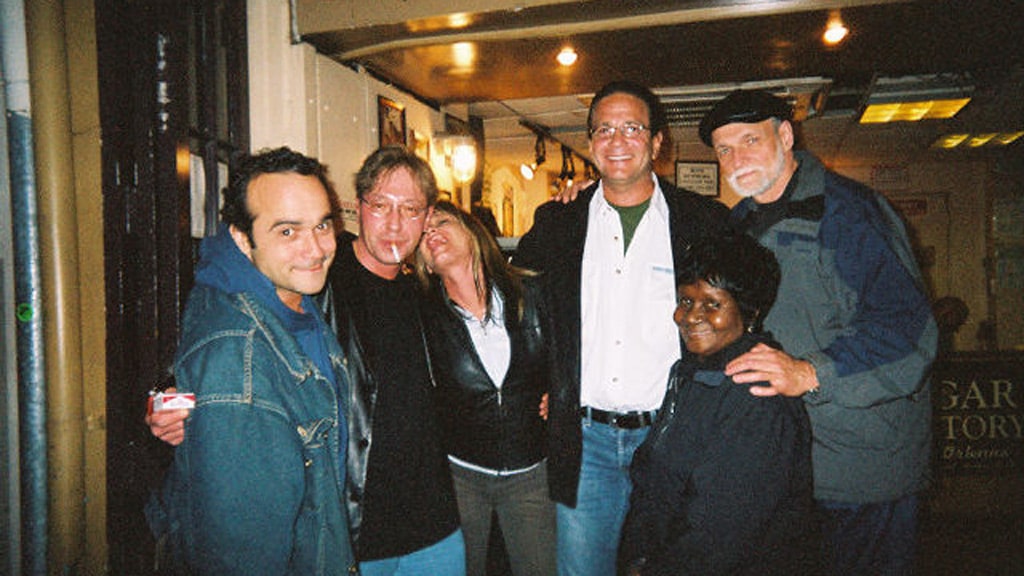
L-R: Dimitri Mugianis, Patrick Kroupa, Margo, Jeffrey Kamlet, Norma Alexander-Lotsof, Howard Lotsof. Photo courtesy of Patrick Kroupa

Do you have any closing thoughts for us?

Although ibogaine can be dangerous, I think the greatest impact from it will come from access without the even more dangerous contact with professionals. I think one reaction to the over-medicalization and high price of boutique ibogaine clinics is that a lot of people are just getting it off the internet to dose themselves. I think this is the most important trend in the movement today, and something that’s not really being talked about – or is only being talked about negatively.

Obviously there are great dangers involved, but there are also benefits. It’s a great failure of the ibogaine community, that we often fall into prohibitionist attitudes such as “Just Say No.”

Collectively, we need to come up with a harm reduction strategy for self-administration. People are taking ibogaine themselves and will continue to do so, so we need to address it.

I’m heartened to see folks being able to buy the drug online and self administer; however, I don’t believe iboga has the potential to significantly impact the so-called heroin epidemic. The plant itself is in great danger – some people are even saying it’s on the verge of extinction – so we need to be mindful that with accessibility comes exploitation.

Yet, despite my misgivings about the medicalization and commodification of ibogaine, the truth is that my life has been transformed, my body transmuted, and my spirit forever changed by this molecule. It set me on a journey of healing that has taken me around the world, even to jail. And it continues to inform me, challenge me, and propel me. I am blessed.

 
Top