-
Neuroscience & Pharmacology Discussion Welcome Guest
Posting Rules Bluelight Rules Recent Journal Articles Chemistry Mega-Thread FREE Chemistry Databases! Self-Education Guide -
N&PD Moderators: Skorpio
You are using an out of date browser. It may not display this or other websites correctly.
You should upgrade or use an alternative browser.I Like to Draw Pictures of Random Molecules
- Thread starter nuke
- Start date
- Status
- Not open for further replies.


Jaw Clenching
Bluelighter
- Joined
- Feb 4, 2005
- Messages
- 551
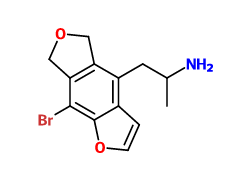
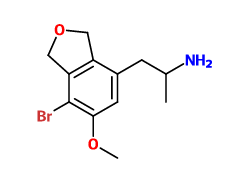
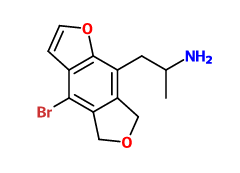
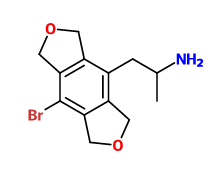
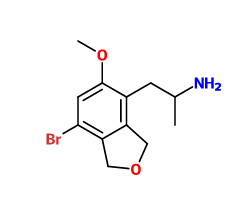
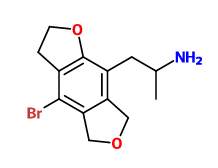
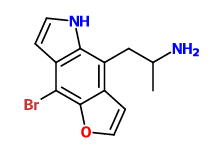
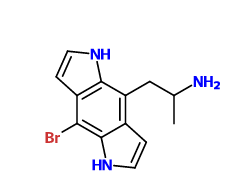
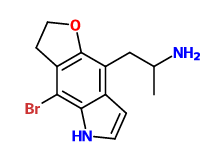
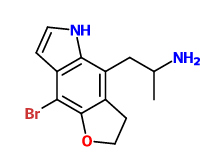
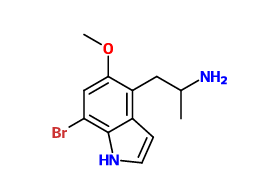
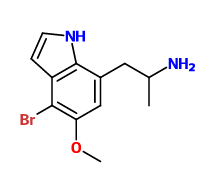
Extensions on the Bromo Fly compounds
The 4- position can be substituted with the standard 2C-x and DOx stuff.
The alpha-methyl can be removed to make them more like the 2C's instead of DO's.
The amine can substitute to NBOMe or NBOH.
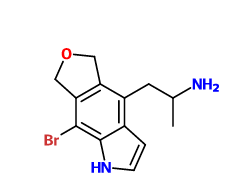
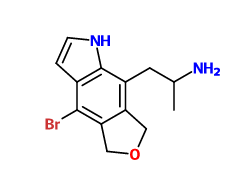
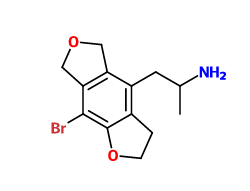
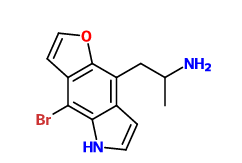
Jaw Clenching
Bluelighter
- Joined
- Feb 4, 2005
- Messages
- 551
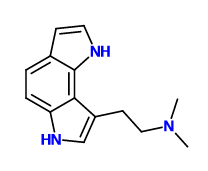
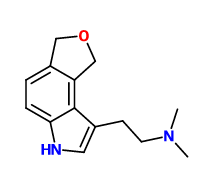
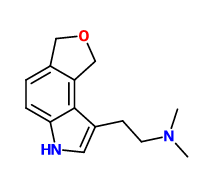
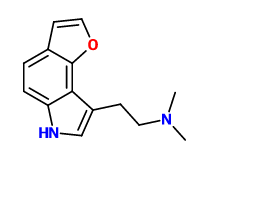
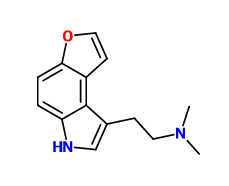
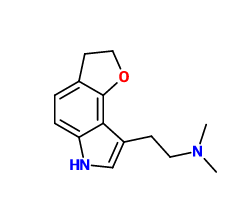
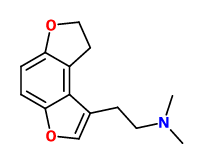
Rigid analogs of DMT
The amine can have all the normal di-alkyl substitutions the 4-HO and 5-MeO tryptamines have.
The amine can have no substitutions, and the alpha carbon can have an alpha or ethyl substitution.
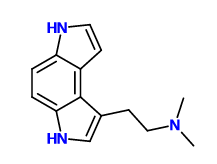
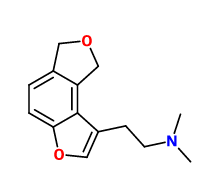
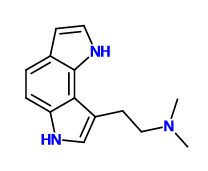
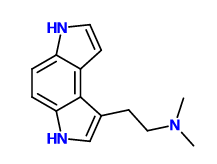
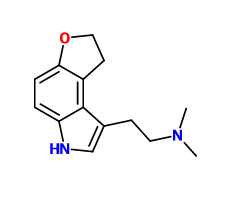
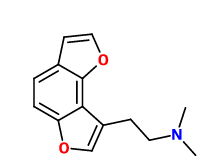
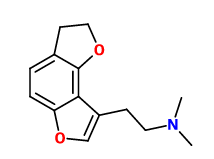
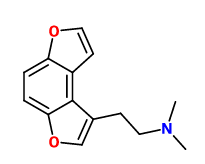
Jaw Clenching
Bluelighter
- Joined
- Feb 4, 2005
- Messages
- 551
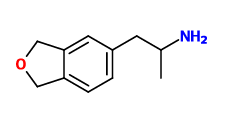
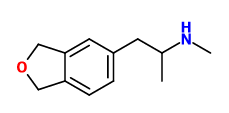
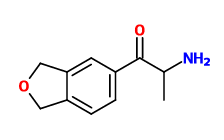
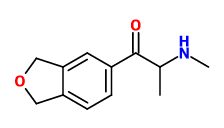
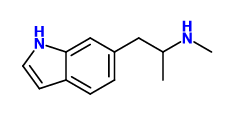
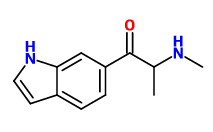
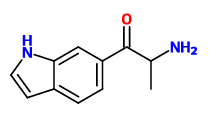
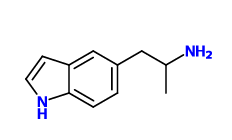
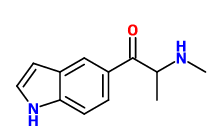
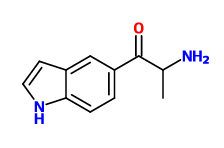
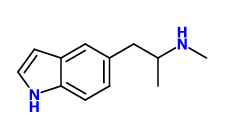
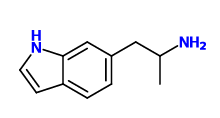
Pyrrole- and Isofuran- groups replace methylenedioxy
MDA, MDMA, bk-MDA & bk-MDMA analogs.
Can have all the other substitutions those compounds have.

Bagseed
Bluelighter

roi
Bluelighter
- Joined
- Sep 2, 2013
- Messages
- 1,545
ok lol
so you don't have anything to counter my point?
Read the title again, carefully.
http://www.oxforddictionaries.com/definition/english/random
Nagelfar
Bluelight Crew
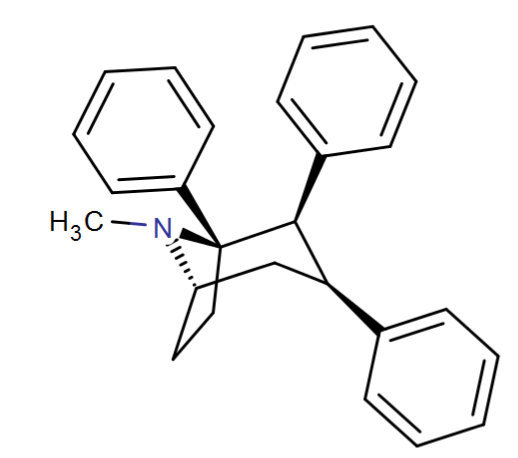
Now with sulfinimine (N-sulfinyl-imine) chemistry C1 analogs of cocaine/phenyltropane are possible! The C1-phenyl analog of cocaine is ten times more potent than cocaine! (seeing how the the N8 analogs gimped it, and all other 6 & 7 analogs, it comes as a bit of a surprise) now make it a phenyl tropane and make that 2beta phenyl also and we get:
Nagelfar
Bluelight Crew
Dude you got at least 6 other places to put a phenyl ring, get back to work ;p
Not and gimp affinity.
But we can always front bridge it:
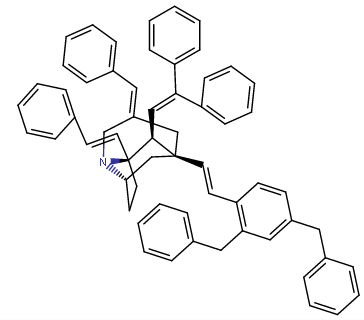
Bet it has affinity, if not at DAT then at least @ SERT! ;-P
Nagelfar
Bluelight Crew
Ha Excellent nagelfar, why can't the half-life be half your life indeed? Next stop, speedbuckyball.
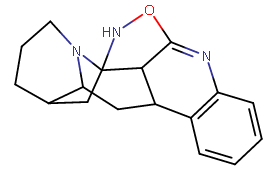
Really, the possibility now open of that C1 position with the nitrogen bridge opens up all sorts of front & back bridged possibilities, the problem is their functionality is mostly based on the nitrogen's lone pair, but adding a second nitrogen at the C1 and front bridging it possibly, having two lone pairs facing each way?
Nagelfar
Bluelight Crew
How would someone draw a covalent binding dopamine receptor agonist? (I know, *not a safe* idea, but lets see it FWIW. ;-p )How would someone draw a covalent binding dopamine receptor agonist? (I know, *not a safe* idea, but lets see it FWIW. ;-p )
http://www.ncbi.nlm.nih.gov/pmc/articles/PMC4115510/
Via fig 1 ^ based on FAUC50 for dopamine you get this:

Though I fear that it might not be terribly selective in disulfide linking and is mostly interesting in in vitro receptor binding experiments... Also the part on the left is pretty unstable.
The hydrazone approach seen in oxymorphazone etc seems much more interesting but it doesn't even seem like it's well understood to what amino acid residue the covalent bond is made to supposedly make a hydrazine. How many amino acid residues can it actually react with, even if in receptor binding dynamics I guess rather exotic 'enzymatic' reactions incl redox can occur... I suppose the hydrazone can bind to amines?
If that were more clarified perhaps one could continue to design a covalent agonist with such a group that targets a specific moiety in the receptor pocket.
It does seem quite evil, but on the other hand in extreme cases wouldn't it be potentially therapeutic to very harshly 'downregulate' functional receptors of certain kinds?
This is poly acetylsulfanyl thiopsilocin:
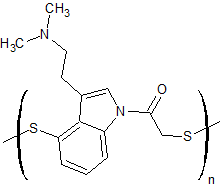
The idea is to administer it in nanoparticulate form that decomposes in the reducing environment of tumor cells. Then hope there are enough esterases available to cleave the acetyl sulfane.. In the case of braincancer, hopefully both the healing power of a bomb of psychedelia and the properties of the thiophenol then kill the tumor. ;p
You'll have to imagine the terminal units in the above pic that were sloppily left out.Last edited:
N0 W4RN1NG
Bluelighter
^^^Fascinating posts, Nagelfar & Solipsis. Is there some possibility your psilocin derivative (or one of it's inevitable metabolites, like perhaps 4-methylthio psilocin, after hydroxylation of the ketone and then N-demethylation?) might also be a potent MAO-A inhibitor once depolymerization occurs? Otherwise, really intriguing idea.
Also, I would just like to say that I tentatively agree that very carefully administered covalently binding, subtype selective "suicide" dopamine receptor ligands would be a potentially useful tool in certain disorders, like tourettes, or drug addiction. Very tricky, as you both mentioned of course, with more possibilities to go wrong than right. Still, absolutely fascinating ideas. Love checking in on this thread from time to time.Of course, it's possible, but why do you ask? Not because they remind you of 2C-T-7 type sulfuric psychedelics which have MAOI concerns? I don't think drugs like thiopsilocin or 5-MeS-DMT would be inherently worrying by the sulfur binding weirdly (strongly) to MAO or something like that, never heard about similar compounds doing that. They should be similar to their parent compounds but a bit less potent. Main reasons not to make things like plain thiopsilocin are the nastiness of such thiophenol chems just generally i.e. smell & taste, possibly some metabolic toxicity.
The polymer idea was really silly, the applications don't apply even if I borrowed some theoretical stuff based remotely on reality like the disulfide bond decomposing in a tumor... it's a funny idea but it wouldn't work (injecting nano particles in brain tumor lol) in any way at all..
so it's not really worth considering the many implications. Just another 'random' molecule..
The other one (covalent agonist) certainly is real, but meant as a theoretical / experimental probe and not for use. Even if another dopamine (for example) covalent agonist or antagonist were made to work, I have trouble thinking of a situation where it would be helpful. The receptors would just grow back is one thing, so you wouldn't even successfully destroy 'wrong' pathways like ones regarding the reward centers for addiction. Who's to say if you'd mostly end up with a person who can't be motivated whatsoever and would have to learn to motivate himself all over again?
I saw a TED talk about neuroscientists being able to locate super specific neurons that light up for e.g. only perceiving anything to do with The Simpsons. Not even very similar things. But they did it in electrode (open skull) patients.. They didn't mention being able to actively going on the hunt for something, but it doesn't seem like a stretch if going by analysis of lots of data after asking someone to focus on that specific thing for a decent amount of time? I sort of doubt myself that a single neuron would be responsible for coding for a single thing (single point of failure), but maybe something like a cluster could be critical... So I would wonder about if you could make a person forget specifically about the drug they are addicted to by excising that region.
I know for serious cases of OCD it's possible to have deep brain stimulation surgery which works miraculously if it does but in about 50% of patients. Seems conceivable you could make something similar work for addiction, idk Tourette's perhaps..
For OCD it works by suppressing activity that basically keeps going in a loop causing a person to check over and over whether it's OK, breaking the loop and making it 'OK' instead of frantically trying to fix it by various behaviors.
I think mirtazapine works for depression by changing the activity some serotonergic receptors compared to others, so the balance basically. Doing so by mainly blocking only some of them antagonistically. So, could you achieve something similar but more immediately and selectively by killing off part of the receptors? I'd expect major brain zaps as a result and huge problems titrating a good dose for it (as receptor populations vary between individuals and you cannot really see just by looking at a person.. *maybe* by giving a person a radioligand and measuring the radiation?)..
You can file all that under 'drastic' ;pLast edited:
N0 W4RN1NG
Bluelighter
Haha, well now we're entering "Eternal Sunshine of the Spotless Mind" territory! Regarding "forgetting" a drug addiction though (if an effective technology is found) it definitely would help, but depending on the addictive substance forgotten, the patient may be in such a depressed / agitated state after cessation (receptor down regulation / monoamine depletion / GcP mediated changes / dynorphin upregulation / etc etc [from "forced forgotten" drug addiction ]) and unaware of the cause, that they may do something drastic like harm themselves. A bit far fetched perhaps, but some thing to maybe keep in mind, even when hypothetically musing about it.
Wow, can you imagine the social implications of that though? "Don't forget, XYZ doesn't know what drugs are anymore, so make sure not to bring them up around him."
It would be like the ultimate version of "The Game". (You just lost the game!) XD Except instead of being reminded of a silly fad, every time you lose THIS game you end up relapsing. What a concept.
Re: MAO-Inhibition,
I am no Shulgin but I know enough to differentiate tryptamine SAR from subbed PEA
No, it reminds me not of 2C-Tx but of 5-MeO-AMT! (which of course I guess does kind of borrow from PEA qsar in it's own right...now I'm just complicating things though) Of course, there, we have the a-carbon methylated, which really does throw a wrench in the gears of metabolism.
Of course this is all pure pontification, (I.E. as you mentioned, regardless of if it inhibits MAO-A or is a DNA cross-linker, or damages chromosomes in ovum...have fun injecting anything intracranially, through healthy tissue)
But before I derail this thread any further I will end my post. BUT I will mention, that to your credit about potential, novel agents to end addiction, I know there is a drastic Chinese surgery being offered which, quite literally, ablates areas of the Nucleus Accumbens...results supposedly vary from "instant happy sobriety" in long term heroin addicts, but also, in many, cognitive impairment and for a few...suicide within months of surgery.
Hatte Ich here the good article found:
http://healthland.time.com/2012/12/13/controversial-surgery-for-addiction-burns-away-brains-pleasure-center/Last edited:
Nagelfar
Bluelight Crew
WP page made for "FAUC50", 'dopamine native-headed' example re-drawn and added. Thanks!http://www.ncbi.nlm.nih.gov/pmc/articles/PMC4115510/
Via fig 1 ^ based on FAUC50 for dopamine you get this:Last edited:- Status
- Not open for further replies.