nuke
Bluelighter
- Joined
- Nov 7, 2004
- Messages
- 4,190
Ring substitutions were largely ignored in TiHKAL, so it's worth talking about.
-The fluorination five and six position on the indole ring in reference to a-MT has been investigated in the mouse and found to induce 5-HT receptor-mediated head-twitch response. Assumptively the alpha-methylation inhibits MAO-A mediated metabolism.
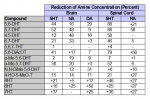
-4,5-Dihydroxytryptamine, 5,6-Dihydroxytryptamine and 5,7-Dihydroxytryptamine are strong neurotoxins with an affinity for SERT greater than that of NET/DAT
-7-Hydroxytryptamine is a putative neurotoxin with a remarkably greater affinity for NET/DAT than SERT. An interesting compound to assay would be 7-F-a-MT, to see if it had stimulant properties.
-Fluorination of the 4 and 7 position of the neurotoxin 5,6-Dihydroxytryptamine results in a dramatically higher affinity for SERT
-5-Fluorotryptamine is a partial agonist at 5HT3 receptors, demonstrating the necessity of 5-position EN for receptor affinity at 5HT3
-One hydroxylated tryptamine neurotoxin derivative actually has an inverse neurotoxic profile (it chronically increases the amounts of all three monoamines in the CNS after administration) -- reference/compound name somewhere buried under papers
-6-OH-Tryptamines are known to be stimulants in animals
-6-OH-DMT is reported to be inactive IV in TiHKAL, while 6-OH-DET is reported to be active but the activity/data suspect. They are minor metabolic products of their non-hydroxylated counterparts.
-5,6-DiMEO-MIPT/5,6-MDO-MIPT/5,6-MDO-DMT is reported inactive in TiHKAL. 5,6-MDO-DIPT is unknown. 4,5-MDO-DIPT is supposed active at 25mg as a psychedelic.
Perhaps you guys have some more information, too.
-The fluorination five and six position on the indole ring in reference to a-MT has been investigated in the mouse and found to induce 5-HT receptor-mediated head-twitch response. Assumptively the alpha-methylation inhibits MAO-A mediated metabolism.
-4,5-Dihydroxytryptamine, 5,6-Dihydroxytryptamine and 5,7-Dihydroxytryptamine are strong neurotoxins with an affinity for SERT greater than that of NET/DAT
-7-Hydroxytryptamine is a putative neurotoxin with a remarkably greater affinity for NET/DAT than SERT. An interesting compound to assay would be 7-F-a-MT, to see if it had stimulant properties.
-Fluorination of the 4 and 7 position of the neurotoxin 5,6-Dihydroxytryptamine results in a dramatically higher affinity for SERT
-5-Fluorotryptamine is a partial agonist at 5HT3 receptors, demonstrating the necessity of 5-position EN for receptor affinity at 5HT3
-One hydroxylated tryptamine neurotoxin derivative actually has an inverse neurotoxic profile (it chronically increases the amounts of all three monoamines in the CNS after administration) -- reference/compound name somewhere buried under papers
-6-OH-Tryptamines are known to be stimulants in animals
-6-OH-DMT is reported to be inactive IV in TiHKAL, while 6-OH-DET is reported to be active but the activity/data suspect. They are minor metabolic products of their non-hydroxylated counterparts.
-5,6-DiMEO-MIPT/5,6-MDO-MIPT/5,6-MDO-DMT is reported inactive in TiHKAL. 5,6-MDO-DIPT is unknown. 4,5-MDO-DIPT is supposed active at 25mg as a psychedelic.
Perhaps you guys have some more information, too.