



-
Neuroscience & Pharmacology Discussion Welcome Guest
Posting Rules Bluelight Rules Recent Journal Articles Chemistry Mega-Thread FREE Chemistry Databases! Self-Education Guide -
N&PD Moderators: Skorpio
You are using an out of date browser. It may not display this or other websites correctly.
You should upgrade or use an alternative browser.Drugs acting on the 'opiate system' other than opiates
- Thread starter serotonin-system
- Start date



fastandbulbous
Bluelight Crew
^ But so can cocaine, amphetamines, nicotine - basically anything that ups dopamine levels in the CTZMurphyClox
Bluelighter
- Joined
- Mar 26, 2008
- Messages
- 1,416
...the sight of an ugly woman as well, as people use to tell in my region. How does this cause rise of dopamine-levels? Straaaaange...
Hammilton
Bluelighter
- Joined
- Sep 2, 2008
- Messages
- 3,435
Wait, a direct agonist doesn't 'raise the level'- I'm confused. I assumed it was because receptors in that area became over stimulated, and that DARIs and Amphetamine didn't cause any substantial changes in the levels found in the CTZ?
For nicotine I think there are better explanations for why it causes emesis.
fastandbulbous
Bluelight Crew
LevoDOPA also has the same effect (GI problems are a common side efect of L-DOPA treatment of Parkinson's disease) and all it's doing is being converted into dopamine. Also seems to me that it also is behind the anti-emetic properties of some of the antipsychotics - those with antagonist activity at dopaminergic receptors
Wait, a direct agonist doesn't 'raise the level'
True, but amphetamines etc are indirect acting agents. They inhibit DAT all over the place (amphetamine also causes the DAT to run backwards and release dopamine), not just the limbic system. The writhing/gesticulation you see in people after biggish doses of amphetamine etc are the same sort as the side effects of getting too much L-DOPA in Parkinson's treatment (too much dopamineric activity in the substantia nigra).
Nicotine also directly stimulates the sympathetic nervous system by acting at nicotinic acetylcholine receptors that directly innervate organs as the presynaptic part of the sympathetic NS. Having your bloodstream fill up with adrenaline (sympathetic stim of the adrenal gland) certainly doesn't help and will contribute towards the urge to purge. It's the dopaminergic activity of opiates/opioids that makes them sometimes turn into a pukefest. Even that most aptly named of alkaloids, emetine (active component of ipecacuhuana), gets it's activity via dopaminergic activity
On a personal level, it's something I find very annoying about CNS stimulants - I always feel that very characteristic nausea when they first start working - I'm not so easy going about vomiting as others, so I tend to notice these things pretty easily (of course with opiates everything seems less distressing, even puking!)Old topic. But nethertheless interessting collection. So I will add some more.
Peppermint. The containing menthol is a kappa-opioid agonist.
That's interessting. Some people told me that it helped them really good for pain (after maybe 4 weeks of ingestion).D-Phenylalanine, which is apparently an enkephalinase inhibitor. I've found it to be helpful.
But I also know of lot of people who told me that they didn't realize any change.
How much did you take? How long did you take it?
Did anybody make experiences with that stuff? Any positive or negative results?
Antihistamines? What kind of antihistamines? There are a lot of different antihistamines and I don't believe that many of them potntiate opiates.Antihistaminics. They are well known to potentiate other opiates through indirect coupling to the opioid-receptors (to put it in short terms)
Cimetidine (I believe that's an antihistamine, too - although it's used for too much stomach acid) can potentiate opioids. But it works on inhibition of a liver enzyme (a cytochrome p450 enzyme).
Grapefruit juice can also potentiate opioid. But it also inhibits a cytochrome p450 enzyme. The potentiation has nothing to do with opioid receptors in the brain.
No, nigella sative doesn't make you high. That is sure. But it is a traditional remedy for a lot of diseases. It shall potentiate opioid effects, But I never tried that.Thymoquinone, from the seed oil of Nigella Sativa, I read a while ago that it is noncrosstolerant with morphine, but morphine is crosstolerant to it, it acts, anecdotally, as quite a potent potentiator of opioids, but doesn't seem to get one high on its own.
It also helps with opioid withdrawal. There are some clinical studies on that. Nigella sativa oil capsules, only 500mg daily, are able to reduce withdrawal symptoms.
Apomorphine is a dopamine agonist, as far as I know. It helps with Parkinson's Disease and also with opioid withdrawal (but makes you puke and puke and puke).Also apomorphine and amorphine
negrogesic
Bluelight Crew
^^^Pukateine
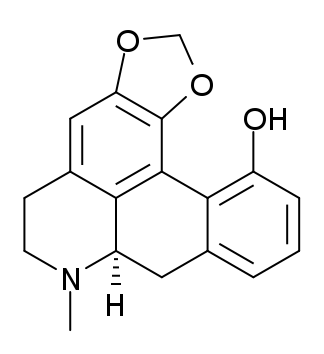
helium-4
Bluelight Crew
Ropinirole as some mu-opioid affinity, though granted it is not seen at therapeutic doses for Parkinson or RLS. Its a D2, D3, D4 agonist primarily with weak affinity for mu-opioid receptors, and some 5-ht receptors
Captain.Heroin
Bluelight Crew
I believe propofol has some effect on the endocannabinoid system. I know this doesn't help you with your search but, good luck.Nigella sativa seeds won't get you "high" on their own, but they definitely have a noticeable effect even by themselves. I haven't taken the oil in ages, and never when I wasn't in withdrawal, but I regularly consume the whole seed coated in raw honey. And there is a consistent and noticeable mood lifting effect, if you take it on an empty stomach it hits you quickly and is pronounced. My wife and I consume it just about everyday for health/mood, and to try to make sure I'm not falling victim to placebo effect I have had a few friends try it, even one who doesn't do drugs, with fairly positive results.
atrollappears
Bluelighter
All drugs except amphetamine and g for half its part cause euphoria trough MU; g and amp also cause euphoria with glutamate; da only as a permissive role on euphoria.
a) What is "g"? Grass? If so, it is said to directly stimulate opioid receptors...
b) What about NDRIs? Are you saying they cause euphoria in a way amph doesn't? Or by amph do you mean straight DA/NA stims in general?GHB it induces glutamate release and also causes euphoria by the MU system.
Ritalin and amphetamine do cause euphoria trough glutamate; coke doest; i was in predromal shizophrenia where most are unable to feel opiates; synaptic glutamate has to be there for mu agonism to cause euphoria; so for me and a mate of me in the same situation only amp made us high; and only on amp we were able to feel opiates.
Also coke only made me paranoia; it also just causes euphoria trough MU; wich i would feel like opies if shizo wasnt a disorder of shizo hypoactivity.
My response to GHB was blunted; i only felt the glutamate euphoria; however on amp i also felt the mu part wich caused the full drug effects.
The research on reward is very very complex and nothing of this can be proven as facts; but there's plenty research allready showing dopamine causes wanting and MU liking.
Nagelfar
Bluelight Crew
Ritalin and amphetamine do cause euphoria trough glutamate; coke doest
...
Also coke only made me paranoia; it also just causes euphoria trough MU
How does Ritalin, as a DRI, come closer to this presumed effect on glutamate to amphetamine, as a DRA, than cocaine which is also a DRI of a more similar conformation with MPH than Amph? Also, in what way does cocaine effect the Mu system? Are you certain of this?Limpet_Chicken
Bluelighter
SLUDGE syndrome.....so evocative.May be wrong on the rit; remember it doesnt induce glut release.
Cocaine-induced mu opioid receptor occupancy within the striatum is mediated by dopamine D2 receptors.
Soderman AR, Unterwald EM.
Source
Department of Pharmacology, Center for Substance Abuse Research, Temple University School of Medicine, Philadelphia, PA 19140, USA. [email protected]
Abstract
Previous studies by our laboratory have demonstrated that the mu opioid receptor antagonist, CTAP, blocks the rewarding effects of cocaine when it is injected directly into the nucleus accumbens or ventral tegmental area (VTA). This finding suggests that cocaine is causing the release of endogenous opioid peptides which activate mu opioid receptors within the nucleus accumbens and VTA. The purpose of the present study was to characterize the dose-response and time-course of mu receptor occupancy following systemic cocaine administration and to determine if release of endogenous opioids by cocaine is mediated by activation of D1 or D2 dopamine receptors. Quantitative in vitro receptor autoradiography was used to measure the regional displacement of (3)H-DAMGO binding following cocaine administration. Adult male Sprague-Dawley rats were given intraperitoneal (i.p.) injections of cocaine and their brains were removed at various times and prepared for mu opioid receptor quantitation. To determine the role of dopamine D1 and D2 receptors in the effect of cocaine on mu receptor occupancy, rats were injected with the selective D1 or D2 receptor antagonists SCH23390 or eticlopride prior to cocaine. For all studies, (3)H-DAMGO binding to mu opioid receptors was measured in the nucleus accumbens, caudate putamen, frontal cortex, olfactory tubercle and VTA. Results demonstrate that cocaine administration caused a time- and dose-dependent reduction in (3)H-DAMGO binding within the nucleus accumbens core and shell. The reduction in mu receptor binding was attenuated by pretreatment with eticlopride. These results suggest that cocaine, acting via D2 dopamine receptors, can cause the release of an endogenous opioid peptide that binds to mu opioid receptors within the nucleus accumbens.
Venrak
Bluelight Crew
I'm surprised nobody mentioned Salvorin A yet. It is a kappa receptor agonist.Last edited:
Nagelfar
Bluelight Crew
Cocaine-induced mu opioid receptor occupancy within the striatum is mediated by dopamine D2 receptors.
...
That, being indirect in the mu-G-coupled receptors, likely doesn't have much to do with the rewarding properties of cocaine, but the body reacting to the stresses of dopaminergic stimulation, solely, as an innate mechanism to natural stimulation of the dopamine receptors. Remember the carboxypeptidase A enzyme breaks down endorphin-mediated agonism before any concentration can be reached no matter how mediated, and only when carboxypeptidase A is inhibited does increasing endorphin (rather than exorphin) agonism produce any kind of reinforcing effect.


