bit_pattern
Ex-Bluelighter
- Joined
- Oct 17, 2008
- Messages
- 8,127
UPDATE: Updated list of signatories
Climate change is real: An open letter from the scientific community
Published 10:52 AM, 14 Jun 2011
Updated 10:59 AM, 14 Jun 2011
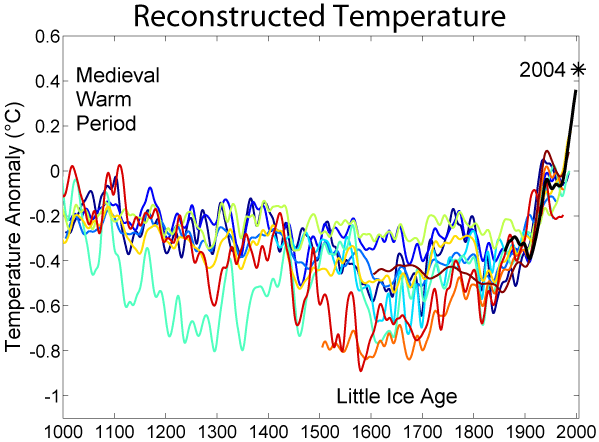
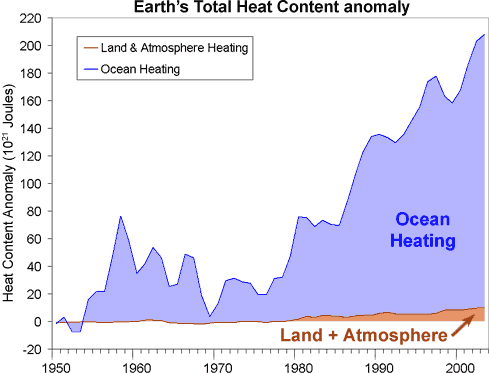
The overwhelming scientific evidence tells us that human greenhouse gas emissions are resulting in climate changes that cannot be explained by natural causes.
Climate change is real, we are causing it, and it is happening right now.
Like it or not, humanity is facing a problem that is unparalleled in its scale and complexity. The magnitude of the problem was given a chilling focus in the most recent report of the International Energy Agency, which their chief economist characterised as the “worst news on emissions.”
Limiting global warming to 2°C is now beginning to look like a nearly insurmountable challenge.
Like all great challenges, climate change has brought out the best and the worst in people.
A vast number of scientists, engineers, and visionary businessmen are boldly designing a future that is based on low-impact energy pathways and living within safe planetary boundaries; a future in which substantial health gains can be achieved by eliminating fossil-fuel pollution; and a future in which we strive to hand over a liveable planet to posterity.
At the other extreme, understandable economic insecurity and fear of radical change have been exploited by ideologues and vested interests to whip up ill-informed, populist rage, and climate scientists have become the punching bag of shock jocks and tabloid scribes.
Aided by a pervasive media culture that often considers peer-reviewed scientific evidence to be in need of “balance” by internet bloggers, this has enabled so-called “sceptics” to find a captive audience while largely escaping scrutiny.
Australians have been exposed to a phony public debate which is not remotely reflected in the scientific literature and community of experts.
Beginning today, The Conversation will bring much-needed and long-overdue accountability to the climate “sceptics.”
For the next two weeks, our series of daily analyses will show how they can side-step the scientific literature and how they subvert normal peer review. They invariably ignore clear refutations of their arguments and continue to promote demonstrably false critiques.
We will show that “sceptics” often show little regard for truth and the critical procedures of the ethical conduct of science on which real skepticism is based.
The individuals who deny the balance of scientific evidence on climate change will impose a heavy future burden on Australians if their unsupported opinions are given undue credence.
The signatories below jointly authored this article, and some may also contribute to the forthcoming series of analyses.
http://theconversation.edu.au/clima...pen-letter-from-the-scientific-community-1808
Signatories
Winthrop Professor Stephan Lewandowsky, Australian Professorial Fellow, UWA
Dr. Matthew Hipsey, Research Assistant Professor, School of Earth and Environment, Centre of Excellence for Ecohydrology, UWA
Dr Julie Trotter, Research Assistant Professor, School of Earth and Environment, UWA Oceans Institute, UWA
Winthrop Professor Malcolm McCulloch, F.R.S., Premier’s Research Fellow, UWA Oceans Institute, School of Earth and Environment, UWA
Professor Kevin Judd, School of Mathematics and Statistics, UWA
Dr Thomas Stemler, Assistant Professor, School of Mathematics and Statistics, UWA
Dr. Karl-Heinz Wyrwoll, Senior Lecturer, School of Earth and Environment, UWA
Dr. Andrew Glikson, Earth and paleoclimate scientist, School of Archaeology and Anthropology, Research School of Earth Science, Planetary Science Institute, ANU
Prof Michael Ashley, School of Physics, Faculty of Science, UNSW
Prof David Karoly, School of Earth Sciences, University of Melbourne
Prof John Abraham, Associate Professor, School of Engineering, University of St. Thomas
Prof Ian Enting, ARC Centre for Mathematics and Statistics of Complex Systems, University of Melbourne
Prof John Wiseman, Melbourne Sustainable Society Institute, University of Melbourne
Associate Professor Ben Newell, School of Psychology, Faculty of Science, UNSW
Prof Matthew England, co-Director, Climate Change Research Centre, Faculty of Science, UNSW
Dr Alex Sen Gupta Climate Change Research Centre,Faculty of Science, UNSW
Prof. Mike Archer AM, School of Biological, Earth and Environmental Sciences, Faculty of Science, UNSW
Prof Steven Sherwood, co-Director, Climate Change Research Centre, Faculty of Science, UNSW
Dr. Katrin Meissner, ARC Future Fellow, Climate Change Research Centre, Faculty of Science, UNSW
Dr Jason Evans, ARC Australian Research Fellow, Climate Change Research Centre,Faculty of Science, UNSW
Prof Ove Hoegh-Guldberg, Global Change Institute, UQ
Dr Andy Hogg, Fellow, Research School of Earth Sciences, ANU
Prof John Quiggin, School of Economics, School of Political Science & Intnl Studies, UQ
Prof Chris Turney FRSA FGS FRGS, Climate Change Research Centre and School of Biological, Earth and Environmental Sciences, UNSW
Dr Gab Abramowitz, Lecturer, Climate Change Research Centre,Faculty of Science, UNSW
Prof Andy Pitman, Climate Change Research Centre, Faculty of Science, UNSW
Prof Barry Brook, Sir Hubert Wilkins Chair of Climate Change, University of Adelaide
Prof Mike Sandiford, School of Earth Sciences, University of Melbourne
Dr Michael Box, Associate Professor, School of Physics, Faculty of Science, UNSW
Prof Corey Bradshaw, Director of Ecological Modelling, The Environment Institute, The University of Adelaide
Dr Paul Dargusch, School of Agriculture & Food Science, UQ
Prof Nigel Tapper, Professor Environmental Science, School of Geography and Environmental Science Monash University
Prof Jason Beringer, Associate Professor & Deputy Dean of Research, School of Geography & Environmental Science, Monash University
Prof Neville Nicholls, Professorial Fellow, School of Geography & Environmental Science, Monash University
Prof Dave Griggs, Director, Monash Sustainability Institute, Monash University
Prof Peter Sly, Medicine Faculty, School of Paediatrics & Child Health, UQ
Dr Pauline Grierson, Senior Lecturer, School of Plant Biology, Ecosystems Research Group, Director of West Australian Biogeochemistry Centre, UWA
Prof Jurg Keller, IWA Fellow, Advanced Water Management Centre, UQ
Prof Amanda Lynch, School of Geography & Environmental Science, Monash University
A/Prof Steve Siems, School of Mathematical Sciences, Monash University
Prof Justin Brookes, Director, Water Research Centre, The University of Adelaide
Prof Glenn Albrecht, Professor of Sustainability, Director: Institute for Sustainability and Technology Policy (ISTP), Murdoch University
Winthrop Professor Steven Smith, Australian Research Council Centre of Excellence in Plant Energy Biology, UWA
Dr Kerrie Unsworth, School of Business, UWA
Dr Pieter Poot, Assistant Professor in Plant Conservation Biology, School of Plant Biology, UWA
Adam McHugh, Lecturer, School of Engineering and Energy, Murdoch University
Dr Louise Bruce, Research Associate, School of Earth and Environment, UWA
Dr Ailie Gallant, Postdoctoral Research Fellow, School of Earth Sciences, University of Melbourne
Dr Will J Grant, Australian National Centre for Public Awareness of Science, ANU
Rick A. Baartman, Fellow of the American Physical Society
William GC Raper, Senior Principal Research Scientist, CSIRO (retired)
Dr Chris Riedy, Research Director, Institute for Sustainable Futures, University of Technology, Sydney
Ben McNeil, Senior Fellow, Climate Change Research Centre, UNSW
Paul Beckwith, Department of Geography, University of Ottawa
Tim Leslie, PhD candidate, Climate Change Research Centre, UNSW
Dr Peter Manins, Chief Research Scientist, CSIRO Marine and Atmospheric Research (post-retirement Fellow)
Prof Philip Jennings, Professor of Energy Studies, Murdoch University
Dr John Tibby, Senior Lecturer, Geography, Environment and Population, University of Adelaide
Prof Ray Wills, Adjunct Professor, School of Earth and Environment, UWA
Jess Robertson, Research School of Earth Sciences, ANU
Dr Paul Tregoning, Senior Fellow, Research School of Earth Sciences, ANU
Dr Doone Wyborn, Adjunct Professor, Geothermal Centre of Excellence, University of Queensland
Dr. Jonathan Whale, Director, National Small Wind Turbine Centre (NSWTC), Murdoch University
Dr Tas van Ommen, Australian Antarctic Division, Cryosphere Program Leader, Antarctic Climate & Ecosystems CRC
Dr Jim Salinger, Honorary Research Associate, School of Environment, University of Auckland
Dr P. Timon McPhearson, Assistant Professor of Urban Ecology, Tishman Environment and Design Center, The New School, New York
Prof Deo Prasad, Director Masters in Sustainable Development, UNSW
Prof Rob Harcourt, Facility Leader, Australian Animal Tagging, Monitoring System Integrated Marine Observing System and Professor of Marine Ecology, Macquarie University
Dr John Hunter, Antarctic Climate & Ecosystems CRC, University of Tasmania
Dr Michael Brown, ARC Future Fellow & Senior Lecturer, School of Physics, Monash University
Dr Karen McNamara, Pacific Centre for Environment and Sustainable Development, University of the South Pacific
Dr Paul Marshall, Director – Climate Change, Great Barrier Reef Marine Park Authority
Dr Ivan Haigh, Post-doctoral Research Associate, UWA Oceans Institute and School of Environmental Systems Engineering
Dr Ian Allison, Antarctic Climate and Ecosystems CRC
Dr Jennifer Coopersmith, Honorary Research Associate Department of Civil Engineering and Physical Sciences, La Trobe University
Professor Emeritus Peter Kershaw, School of Geography and Environmental Science, Monash University
Professor Peter Gell, Director, Centre for Environmental Management, University of Ballarat
Prof David A Hood, Adjunct Professor, Faculty of Built Environment and Engineering, Queensland University of Technology
Professor Lesley Hughes, Head of Biological Sciences and Co-director of Climate Futures at Macquarie, Macquarie University.
Dr Melanie Bishop, Senior Lecturer, Department of Biological Sciences, Climate Futures at Macquarie, Macquarie University.
Dr Jane Williamson, Senior Lecturer, Department of Biological Sciences, Climate Futures at Macquarie, Macquarie University.
Climate change is real: An open letter from the scientific community
Published 10:52 AM, 14 Jun 2011
Updated 10:59 AM, 14 Jun 2011
The overwhelming scientific evidence tells us that human greenhouse gas emissions are resulting in climate changes that cannot be explained by natural causes.
Climate change is real, we are causing it, and it is happening right now.
Like it or not, humanity is facing a problem that is unparalleled in its scale and complexity. The magnitude of the problem was given a chilling focus in the most recent report of the International Energy Agency, which their chief economist characterised as the “worst news on emissions.”
Limiting global warming to 2°C is now beginning to look like a nearly insurmountable challenge.
Like all great challenges, climate change has brought out the best and the worst in people.
A vast number of scientists, engineers, and visionary businessmen are boldly designing a future that is based on low-impact energy pathways and living within safe planetary boundaries; a future in which substantial health gains can be achieved by eliminating fossil-fuel pollution; and a future in which we strive to hand over a liveable planet to posterity.
At the other extreme, understandable economic insecurity and fear of radical change have been exploited by ideologues and vested interests to whip up ill-informed, populist rage, and climate scientists have become the punching bag of shock jocks and tabloid scribes.
Aided by a pervasive media culture that often considers peer-reviewed scientific evidence to be in need of “balance” by internet bloggers, this has enabled so-called “sceptics” to find a captive audience while largely escaping scrutiny.
Australians have been exposed to a phony public debate which is not remotely reflected in the scientific literature and community of experts.
Beginning today, The Conversation will bring much-needed and long-overdue accountability to the climate “sceptics.”
For the next two weeks, our series of daily analyses will show how they can side-step the scientific literature and how they subvert normal peer review. They invariably ignore clear refutations of their arguments and continue to promote demonstrably false critiques.
We will show that “sceptics” often show little regard for truth and the critical procedures of the ethical conduct of science on which real skepticism is based.
The individuals who deny the balance of scientific evidence on climate change will impose a heavy future burden on Australians if their unsupported opinions are given undue credence.
The signatories below jointly authored this article, and some may also contribute to the forthcoming series of analyses.
http://theconversation.edu.au/clima...pen-letter-from-the-scientific-community-1808
Signatories
Winthrop Professor Stephan Lewandowsky, Australian Professorial Fellow, UWA
Dr. Matthew Hipsey, Research Assistant Professor, School of Earth and Environment, Centre of Excellence for Ecohydrology, UWA
Dr Julie Trotter, Research Assistant Professor, School of Earth and Environment, UWA Oceans Institute, UWA
Winthrop Professor Malcolm McCulloch, F.R.S., Premier’s Research Fellow, UWA Oceans Institute, School of Earth and Environment, UWA
Professor Kevin Judd, School of Mathematics and Statistics, UWA
Dr Thomas Stemler, Assistant Professor, School of Mathematics and Statistics, UWA
Dr. Karl-Heinz Wyrwoll, Senior Lecturer, School of Earth and Environment, UWA
Dr. Andrew Glikson, Earth and paleoclimate scientist, School of Archaeology and Anthropology, Research School of Earth Science, Planetary Science Institute, ANU
Prof Michael Ashley, School of Physics, Faculty of Science, UNSW
Prof David Karoly, School of Earth Sciences, University of Melbourne
Prof John Abraham, Associate Professor, School of Engineering, University of St. Thomas
Prof Ian Enting, ARC Centre for Mathematics and Statistics of Complex Systems, University of Melbourne
Prof John Wiseman, Melbourne Sustainable Society Institute, University of Melbourne
Associate Professor Ben Newell, School of Psychology, Faculty of Science, UNSW
Prof Matthew England, co-Director, Climate Change Research Centre, Faculty of Science, UNSW
Dr Alex Sen Gupta Climate Change Research Centre,Faculty of Science, UNSW
Prof. Mike Archer AM, School of Biological, Earth and Environmental Sciences, Faculty of Science, UNSW
Prof Steven Sherwood, co-Director, Climate Change Research Centre, Faculty of Science, UNSW
Dr. Katrin Meissner, ARC Future Fellow, Climate Change Research Centre, Faculty of Science, UNSW
Dr Jason Evans, ARC Australian Research Fellow, Climate Change Research Centre,Faculty of Science, UNSW
Prof Ove Hoegh-Guldberg, Global Change Institute, UQ
Dr Andy Hogg, Fellow, Research School of Earth Sciences, ANU
Prof John Quiggin, School of Economics, School of Political Science & Intnl Studies, UQ
Prof Chris Turney FRSA FGS FRGS, Climate Change Research Centre and School of Biological, Earth and Environmental Sciences, UNSW
Dr Gab Abramowitz, Lecturer, Climate Change Research Centre,Faculty of Science, UNSW
Prof Andy Pitman, Climate Change Research Centre, Faculty of Science, UNSW
Prof Barry Brook, Sir Hubert Wilkins Chair of Climate Change, University of Adelaide
Prof Mike Sandiford, School of Earth Sciences, University of Melbourne
Dr Michael Box, Associate Professor, School of Physics, Faculty of Science, UNSW
Prof Corey Bradshaw, Director of Ecological Modelling, The Environment Institute, The University of Adelaide
Dr Paul Dargusch, School of Agriculture & Food Science, UQ
Prof Nigel Tapper, Professor Environmental Science, School of Geography and Environmental Science Monash University
Prof Jason Beringer, Associate Professor & Deputy Dean of Research, School of Geography & Environmental Science, Monash University
Prof Neville Nicholls, Professorial Fellow, School of Geography & Environmental Science, Monash University
Prof Dave Griggs, Director, Monash Sustainability Institute, Monash University
Prof Peter Sly, Medicine Faculty, School of Paediatrics & Child Health, UQ
Dr Pauline Grierson, Senior Lecturer, School of Plant Biology, Ecosystems Research Group, Director of West Australian Biogeochemistry Centre, UWA
Prof Jurg Keller, IWA Fellow, Advanced Water Management Centre, UQ
Prof Amanda Lynch, School of Geography & Environmental Science, Monash University
A/Prof Steve Siems, School of Mathematical Sciences, Monash University
Prof Justin Brookes, Director, Water Research Centre, The University of Adelaide
Prof Glenn Albrecht, Professor of Sustainability, Director: Institute for Sustainability and Technology Policy (ISTP), Murdoch University
Winthrop Professor Steven Smith, Australian Research Council Centre of Excellence in Plant Energy Biology, UWA
Dr Kerrie Unsworth, School of Business, UWA
Dr Pieter Poot, Assistant Professor in Plant Conservation Biology, School of Plant Biology, UWA
Adam McHugh, Lecturer, School of Engineering and Energy, Murdoch University
Dr Louise Bruce, Research Associate, School of Earth and Environment, UWA
Dr Ailie Gallant, Postdoctoral Research Fellow, School of Earth Sciences, University of Melbourne
Dr Will J Grant, Australian National Centre for Public Awareness of Science, ANU
Rick A. Baartman, Fellow of the American Physical Society
William GC Raper, Senior Principal Research Scientist, CSIRO (retired)
Dr Chris Riedy, Research Director, Institute for Sustainable Futures, University of Technology, Sydney
Ben McNeil, Senior Fellow, Climate Change Research Centre, UNSW
Paul Beckwith, Department of Geography, University of Ottawa
Tim Leslie, PhD candidate, Climate Change Research Centre, UNSW
Dr Peter Manins, Chief Research Scientist, CSIRO Marine and Atmospheric Research (post-retirement Fellow)
Prof Philip Jennings, Professor of Energy Studies, Murdoch University
Dr John Tibby, Senior Lecturer, Geography, Environment and Population, University of Adelaide
Prof Ray Wills, Adjunct Professor, School of Earth and Environment, UWA
Jess Robertson, Research School of Earth Sciences, ANU
Dr Paul Tregoning, Senior Fellow, Research School of Earth Sciences, ANU
Dr Doone Wyborn, Adjunct Professor, Geothermal Centre of Excellence, University of Queensland
Dr. Jonathan Whale, Director, National Small Wind Turbine Centre (NSWTC), Murdoch University
Dr Tas van Ommen, Australian Antarctic Division, Cryosphere Program Leader, Antarctic Climate & Ecosystems CRC
Dr Jim Salinger, Honorary Research Associate, School of Environment, University of Auckland
Dr P. Timon McPhearson, Assistant Professor of Urban Ecology, Tishman Environment and Design Center, The New School, New York
Prof Deo Prasad, Director Masters in Sustainable Development, UNSW
Prof Rob Harcourt, Facility Leader, Australian Animal Tagging, Monitoring System Integrated Marine Observing System and Professor of Marine Ecology, Macquarie University
Dr John Hunter, Antarctic Climate & Ecosystems CRC, University of Tasmania
Dr Michael Brown, ARC Future Fellow & Senior Lecturer, School of Physics, Monash University
Dr Karen McNamara, Pacific Centre for Environment and Sustainable Development, University of the South Pacific
Dr Paul Marshall, Director – Climate Change, Great Barrier Reef Marine Park Authority
Dr Ivan Haigh, Post-doctoral Research Associate, UWA Oceans Institute and School of Environmental Systems Engineering
Dr Ian Allison, Antarctic Climate and Ecosystems CRC
Dr Jennifer Coopersmith, Honorary Research Associate Department of Civil Engineering and Physical Sciences, La Trobe University
Professor Emeritus Peter Kershaw, School of Geography and Environmental Science, Monash University
Professor Peter Gell, Director, Centre for Environmental Management, University of Ballarat
Prof David A Hood, Adjunct Professor, Faculty of Built Environment and Engineering, Queensland University of Technology
Professor Lesley Hughes, Head of Biological Sciences and Co-director of Climate Futures at Macquarie, Macquarie University.
Dr Melanie Bishop, Senior Lecturer, Department of Biological Sciences, Climate Futures at Macquarie, Macquarie University.
Dr Jane Williamson, Senior Lecturer, Department of Biological Sciences, Climate Futures at Macquarie, Macquarie University.
Last edited: