• Psychedelic Drugs Welcome Guest
    View threads about
    Posting RulesBluelight Rules
    PD's Best Threads Index
    Social ThreadSupport Bluelight
    Psychedelic Beginner's FAQ
  • PD Moderators: Esperighanto | JackARoe |

Esoteric Conversations with Albert Hofmann

mr peabody

Bluelight Crew
Joined
Aug 31, 2016
Messages
5,887
Location
Frostbite Falls, MN
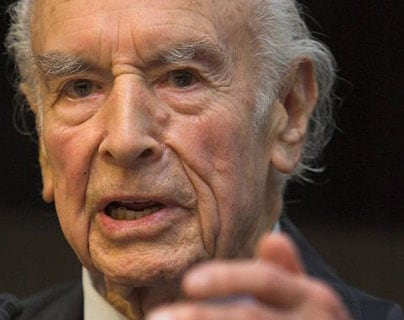
article-0-01163BD200000578-415_233x366.jpg


An interview with Albert Hofmann

by David Jay Brown, M.A [2008]

This is a brief interview that I did with Albert Hofmann, shortly after his 100th birthday.

What originally inspired your interest in chemistry?

My interest in chemistry was inspired by a fundamental philosophical question: Is the material world a manifestation of the spiritual world? I hoped to find deep, sound answers from the solid laws of chemistry to answer this question, and to apply these answers to the external problems and open questions of the spiritual dimensions of life.

When you first discovered LSD did you have an intuitive sense that this drug would have the enormous impact on the world that it has?

I was convinced from the very beginning of the fundamental impact.

What motivated or inspired you to go back and synthesize LSD a second time in 1943?

I synthesized LSD a second time for a deeper pharmacological investigation.

How has your own use of LSD effected your philosophy of life?

LSD showed me the inseparable interaction between the material and the spiritual world.

What sort of association do you see between LSD and creativity?

Since LSD opens up what Aldous Huxley called “the Doors of Perception,” it enhances the fields of creative activity.

Do you think that LSD has effected human evolution?

I do not know if it has effected human evolution, but I hope so.

What are your thoughts on why LSD is almost universally prohibited by governments around the world?

LSD belongs to a class of psychoactive substances that provide the user with a new concept of life, and this new way of looking at life is op-posite to the officially accepted view.

What role do you see LSD playing in the future?

In the future, I hope that LSD provides to the individual a new world view which is in harmony with nature and its laws.

What do you think happens to consciousness after death?

I think that each individual’s consciousness becomes part of the universal mind.

What is your perspective on the concept of God and spirituality?

God is the name of the universal creative spirit.

What sort of relationship do you see between science and mysticism?

Science is objective knowledge and mysticism is personal spiritual experience.

Are you hopeful about the future, and how do you envision the future evolution of the human species?

I am hopeful about the future evolution of the human species, because I have the impression that more and more human individuals are becoming conscious – that the creative spirit, which we call “God,” speaks to us through his creation – through the endlessness of the starry sky, through the beauty and wonder of the living individuals of the plant, the animal, and the human kingdoms.

We human beings are able to understand this message because we possess the divine gift of consciousness. This connects us to the universal mind and gives us divine creativity. Any means that helps to expand our individual consciousness – by opening up and sharpening our inner and outer eyes, in order to understand the divine universal message – will help humanity to survive. An understanding of the divine message – in its universal language – would bring an end to the war between the religions of the world.​

https://maps.org/news-letters/v18n2/v18n2-16.pdf
 
Last edited:

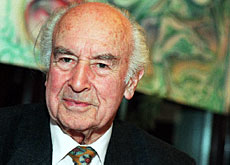
albert-hofmann-404_666429a.jpg


The role LSD has played in my spiritual development

by Albert Hofmann

After my first experiences with LSD, the question arose for me:

Which is true: the picture of the world as we perceive it with our everyday consciousness, or the overwhelming image we perceive under the influence of entheogens?

This caused me to analyze what we know about the mechanism of perceiving reality.

Perception presupposes a subject that perceives, and the object that is perceived. In human relations the subject that perceives is the individual human being, more exactly his consciousness, and the object perceived is the outer material world.

It is of the greatest importance to be aware of the fundamental fact that the outer world consists objectively of nothing more than matter and energy.

In order to make conspicuous the mechanism of our experiencing reality, I have chosen a metaphor from television. The material world functions as transmitter, emanates optical, acoustical, gustatory, olfactory, and tactile signals that are received by the antennae, by our sensory organs, eyes, ears, tongue, nose, and skin and are conducted from there to the corresponding center in the brain to the receiver. There these energetic and material signals are transformed into the spiritual phenomena of seeing, hearing, tasting, smelling, and touching. One does not know how this transformation of material and energetic impulses into the psychic dimension of perception takes place. It includes the mystery of the connection between the material and the spiritual world.

The transmitter-receiver metaphor of reality makes evident that the picture of the outer world comes into existence inside, in the consciousness of the individual.

This fundamental fact signifies that the screen on which the colorful world is perceived is not in the outer but in the inner space of every human being. There are no colors, no sounds, no taste, no odors in the outer world. Everyone carries within himself his own personal image of the world, an image created by his private receiver. There is no common screen outside. This makes us fully aware of the cosmogenic (world-creating) power invested in every human.

Before making use of these considerations to explain the ability of LSD and the other entheogens to change the experience of reality, our knowledge about the essence of consciousness must be reviewed.

Consciousness defies a scientific definition and explanation; for it is what is needed to contemplate what consciousness is. It can only be circumscribed as being the receptive and creative center of the spiritual ego, which has the faculties of perceiving, thinking, and feeling, and which is the seat of memory.

It is of fundamental importance to be aware of how consciousness originates and develops.

The newborn human possesses solely the faculty of perceiving, or more correctly, is this mystic nucleus of life. He owns, to use again the metaphor of television, a blank videocassette, where the incoming stimuli from the outer world are transformed into images and sensations that can then be stored in the memory, providing the groundwork for thinking. Without these signals from outside, no consciousness could develop.

There is common consent that the evolution of mankind is paralleled by the increase and expansion of consciousness. From the described process of how consciousness originates and develops, it becomes evident that its growth depends on its faculty of perception.

Therefore every means of improving this faculty should be used.

The characteristics of entheogens, and their faculty to improve sensory perception, makes them inestimable aids in the process of expanding consciousness.

It was LSD, the most potent entheogen, that, to use Blake's famous line, cleansed my doors of perception and made me see everything as it is, infinite.

In my childhood I experienced spontaneously some of those blissful moments when the world appeared suddenly in a new brilliant light, and I had the feeling of being included in its wonder and indescribable beauty. These moments remained in my memory as extraordinary experiences of untold happiness, but only after the discovery of LSD did I grasp their meaning and existential importance.

As mentioned at the beginning of this short essay, it was my experiences with LSD that caused me to think about the essence of reality. The insights I received, as described, increased my astonishment about the wonder of existence, of which we become conscious in enlightened moments.​
 
Last edited:
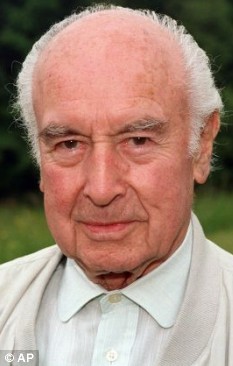
sriimg20060109_6369639_1.jpg


5 facts you may not know about Albert Hofmann and LSD*

by Barbara E. Bauer, MS | Psychedelic Science Review | 10 Jun 2022

People with interest in psychedelics know that the Swiss chemist Albert Hofmann is credited for the first synthesis of LSD in 1938. At the time, he was a research chemist at Sandoz laboratories working on identifying and synthesizing active compounds from medicinal plants.

LSD came into being during a time Hofmann was working with an alkaloid from a fungus called ergot, which infects rye and other cereal grains. The alkaloid was called lysergic acid, and it was the chemical nucleus common to all the ergot alkaloids. Some of these alkaloids had medicinal properties. But often they had unwanted and sometimes severe side effects.

Hofmann was tasked with producing new lysergic acid compounds that did not have side effects. At the same time, he wanted compounds which, based on their chemistry could have pharmacological properties.

So began the story leading up to the synthesis of LSD and the discovery of its psychedelic effects. Below are five interesting facts about Albert Hofmann and his work with LSD over the years.
  1. LSD was one of several ergot derivatives Hofmann synthesized. The correct name of LSD is LSD-25. This is because it was the twenty-fifth in the series of lysergic acid derivatives Hofmann produced.
  2. He synthesized LSD with a purpose in mind. The synthesis of LSD was not an accident. Hoffman did not stumble upon it. He made LSD because he thought it would act as a circulatory and respiratory stimulant. He recognized that its chemical structure was similar to nicotinic acid diethylamide, a similar stimulant (analeptic) of that time.
  3. After Hofmann synthesized LSD, it sat on the shelf for five years. The initial testing of LSD done at Sandoz showed that LSD had a substantial effect on the uterine tissues, an effect seen with other ergot alkaloids. It also made the experimental animals restless during narcosis. As Hofmann recalled, “The new substance, however, aroused no special interest in our pharmacologists and physicians; testing was therefore discontinued.”
  4. Hofmann resurrected LSD because of a “feeling” he had. Or, as he called it a “peculiar presentiment.” Hofmann called LSD “relatively uninteresting” at the time he synthesized it. Despite this, five years later, he produced more and sent it to the pharmacological department at Sandoz for further tests. He said he felt that LSD could have properties other than what the initial testing found. He explained, “This was quite unusual; experimental substances, as a rule, were definitely stricken from the research program if once found to be lacking in pharmacological interest.”
  5. Bicycle Day was Hofmann’s second time on LSD. On Friday, April 16, 1943, Hofmann accidentally ingested LSD while working in his lab. He described a “not unpleasant intoxicated-like condition” with “an uninterrupted stream of fantastic pictures, extraordinary shapes with intense, kaleidoscopic play of colors.” To confirm that LSD was responsible for his experience, he decided to self-test the next workday, Monday, 18, 1943. The story of bicycle day is legendary. Hofmann’s account of his horrific experience self-testing LSD can be explained in part by the dose he took; 250 mcg of the tartaric acid salt. He said he chose the dose by “considering the activity of the ergot alkaloids known at the time.” But at the time, there is no way he could have understood the phenomenal potency of the compound he had created.
 
Top