• N&PD Moderators: Skorpio

Amphetam - A hybrid between d-amphetamine and Piracetam

/navarone/

Bluelighter
Joined
Dec 26, 2003
Messages
1,322
Location
Under your bed, masturbating...
Good day.

Recently I was 'studying' Piracetam and the various pyrrolidone derivates.
Their nootropic abilities intrigued me a lot and since (from what many already have noticed) I'm an amphetamine fan, I came up with and Theoretical although intrigueing substance.

I named it Amphetam
Its full chemical name should be (5S)5-methyl-4-Phenylpyrrolid-2-one
I used ACD/ChemSketch to draw the molecule and make a picture of it:


Now, I'm no fat cat From a Pharmacological point of view, so im asking someone with a bit more competence to give its opinion on this drug.

Something deep inside tells me that this substance kicks ass since it's supposed to have both Amphetaminic and nootropic effects.
Although I cant say nothing for sure.

So the final question is:
What do you think about my 'Amphetam'?

Any opinions would be greatly apreciated.

Peace

 
My guess is the compound would be inactive; you generally can't swap the amine with an amide group in phenethylamine stimulants.
 
Why would anyone think that it'd be inactive? Look at Carphedon- this is basically just it's more simplified brother.

This can pretty much only be better than carphedon proper.
 
I would agree here with Hammilton. Looks like a Carphedon-derivative, and thus, could indeed be active. Alpha-methyls are well tolerated in very most amphetamines...
 
It was in fact carphedon to give me inspiration. I simply added a methyl group in the rightplace and removed what else was attached to the amine in the pirrolidone ring

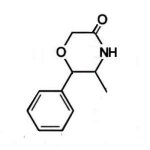
The substance named by fastandbulbous reminds me a lot of phenmetrazine, I was thinking about that substance as well but then a few doubts took over me.
First, would phenmetramide still act as a nootropic?
By adding that oxygen the pirrolidone ring (wich responsible for the nootropic effects of all racetams) i fear that loose its nootropic effects.
Second, phenmetramide would me metabolized into phenylpropanolamine and glycolic acid wich, according to what i read, will be further oxidized into oxalic acid......rather bad stuff for the body.
 
i doubt it has much nootropic effect, but than again most nootropics have little meaningful nootropic effect to begin with =D

it is an amphetamine analogue, and likely possesses the traits of stimulation and appetite suppression and the alpha-methylation will actually likely impede any mild "nootropic" effects

carph is mostly a mild stim that enhances focus (if you call that a nootropic you are someone with weak expectations) and this would likely simply be a stronger stim with a little more "presence" and thus less allowing "quiet focus"...
 
Second, phenmetramide would me metabolized into phenylpropanolamine and glycolic acid wich, according to what i read, will be further oxidized into oxalic acid......rather bad stuff for the body.

Have you got a reference for that as I was under the impression that it was hydroxylated at the 4 position of the phenyl ring, then excreted
 
/navarone/ said:
phenmetramide would me metabolized into phenylpropanolamine and glycolic acid wich, according to what i read, will be further oxidized into oxalic acid......rather bad stuff for the body.
The amount of oxalic acid, which is indeed toxic, is absolutely negligible at the doses of fenmetramide, which would be consumed.

- Murph
 
It forms calcium oxalate crystals in the corticomedullary junction. Solid crystals in your kidneys is never good :)
 
Calcium oxalate (among other insolubles) precipitates in the kidneys and clogs draining vessels.

P.S. Hammilton was a sec faster. Damn... ;)
 
I thought about this type of idea when I first heard about phenylpiracetam and saw that it contained a phenethylamine moiety. Then I actually tried phenylpiracetam and was not particularly impressed (considering the high cost relative to all the classical piracetam derivatives out there), so I kind of lost enthusiasm for the idea. Anyway, I called the molecule that I designed "phenmiracetam" (see below). Unlike your compound, I kept the acetamide on the nitrogen. I don't know what effect removing the N-linked moiety does to the nootropic activity of the 'racetam series, as most seem to have something there.

Perhaps your compound would be far more likely to be a proper stimulant, as the phenethylamine skeleton is pretty tolerant of small-ring connections between the beta carbon and the nitrogen, as seen in phenmetrazine and aminorex/pemoline-type compounds.

And yeah, kidney stones sound like no fun. I've actually always wondered how they are able to "be passed" period. I assume that doctors shatter the larger stones with high power sound waves and then let the little pieces "flow out" (which sounds like it hurts like a motherfucker).
 

Attachments

  • phenylracetams.png
    phenylracetams.png
    5.3 KB · Views: 148
Normally when the amine of an amphetamine is excessively alkylated it tends to loose its stimulant properties.

dimethylamphetmine is a very weak stimulant indeed and so is phendimetrazine.
thats why i removed the acetamide group, however it still keeps the pyrrolidone ring wich is responsible for the nootropic effects of most racetams.

I really wonder if this stimulant could be nootropic as well apart from being less neurotoxic than other amphetamines considering the very low toxicity of racetams.

Honestly i dont know how it would be metabolized....Methamphetamine is normally dealkylated and then reduced by monoamine oxidase into phenylacetone wich is then excreted from the body if i'm not wrong.
my guess is that 'Amphetam' would turn first into 4-amino-3-phenylpentanoic acid and later it will be deaminated by monoamine oxidase into 4-oxo-3-phenylpentanoic acid.
Amphetam itself doesnt really scare me but i wonder if its metabolites could be neurotoxic.
If carphedon doesn't metabolize into neurotoxic molecules then i guess Amphetam should be 'safe' as well.
 
fastandbulbous said:
Have you got a reference for that as I was under the impression that it was hydroxylated at the 4 position of the phenyl ring, then excreted

Not really....it's just a feeling. Normally oxygen linked alkaloids tend to be hydrolized due to the weakness of the carbon-oxygen-carbon bond.
 
The C-O-C bond is fairly strong... hence why diethyl ether is excreted largely unchanged
 
^ agreed. Other routes seem more likely.

Now about the claim that "By adding that oxygen the pirrolidone ring (wich responsible for the nootropic effects of all racetams)."

(just as a point of clarification, the oxygen wasn't added to the pyrrilidone ring- it's what makes it a pyrrilidone ring, hence the 'one' and in the ring there's not an amine, but rather an amide, so it's a 5 membered lactam). /pedantic-illy-ness

What's the basis for that claim though? Has the desoxy version been made?
 
Top