• N&PD Moderators: Skorpio

Aletamine

nuke

Bluelighter
Joined
Nov 7, 2004
Messages
4,190
Or alpha-allyl-phenethylamine, a drug that was investigated as an antidepressant but discarded by the industry (who reported it as being like tricyclic antidepressants). It appears to be a sedative of some sort.

Pharmacologic evaluation of aletamine (α-allylphenethylamine hydrochloride) as an antidepressant


John T. Hitchens1, Raymond Orzechowski2, Sidney Goldstein3 and Irving Shemano3

The National Drug Company Research Laboratories, Division of Richardson-Merrell Inc., Philadelphia, Pennsylvania 19144, USA

Received 18 January 1971. Available online 27 September 2004.

The pharmacologic activity profile of aletamine closely resembles that of the tricyclic antidepressants imipramine and amitriptyline. Effects shared are antagonism of RO4-1284-induced ptosis and depressed exploratory behavior, depression of spontaneous motor activity, prolongation of hexobarbital hypnosis and anticonvulsant action in mice, hypotension and potentiation of norepinephrine pressor effects in dogs, antimuricidal effects, hypothermia in rats and local anesthesia in rabbits and guinea pigs. Aletamine differed from imipramine and amitriptyline as follows: (1) aletamine exerted no apparent central or peripheral anticholinergic effect as suggested by lack of influence on tremorine-induced tremors or salivation; (2) although aletamine was less potent on a milligram basis than imipramine and amitriptyline in preventing RO4-1284 depression, aletamine was more potent than imipramine in counteracting existing reserpine depression (ptosis, depressed exploratory behavior) in mice. Amitriptyline was inactive against reserpine depression. The pharmacologic effects of aletamine differ in several respects from those of d-amphetamine. The effects of aletamine on spontaneous motor activity, hexobarbital hypnosis and body temperature in rodents and on blood pressure in dogs are in opposite direction to those of amphetamine. In further contrast to amphetamine, grouping of mice has no influence on the toxicity of aletamine. Aletamine does not appear to be an inhibitor of monoamine oxidase in vivo since it does not enhance tryptamine-induced convulsions in rats. On an empirical basis, the results indicate that aletamine has pharmacologic properties consistent with potential clinical utility as an antidepressant drug.
http://dx.doi.org/10.1016/0041-008X(72)90150-0

The synthesis is really trivial stuff and it's not controlled in any way. Does anyone have any more information?
 
Last edited:

It evidently has some analgesic properties:

The results of this study indicate that, given three times daily, aletamine hydrochloride, 250 mg., has a greater analgesic potency than propoxyphene hydrochloride, 65 mg., or aletamine hydrochloride, 125 mg. Aletamine hydrochloride, 125 mg., produces an analgesic effect almost equivalent to that of propoxyphene hydrochloride, 65 mg. Only minor changes in mood were evident for any of the treatments. The incidence of side effects was relatively low for each of the four drug regimens.

http://jcp.sagepub.com/cgi/content/abstract/6/2/96

What makes you think it is recreational?
 
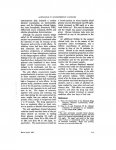
I never said I thought it was, I was just curious as to it's action and effects. Here's a published clinical trial in schizophrenics (whose main side effects were anorexia, insomnia, headache, exacerbation of psychosis and nausea -- all of which are similar to the side effects of amphetamine):
 

Attachments

  • 117.jpg
    117.jpg
    96.6 KB · Views: 105
I've been interested in this one for a while, in addition to alpha-ethyl-phenethylamine. It is rumored that AEPEA is active (and very nice), so I anticipate that alethamine would be active as well.
 
There is a drug with stimulant properties with a 3 carbon alpha side chain (prolintane), but it has a fully saturated alpha group (propyl as opposed to allyl of alletamine), the chemical name being 1-phenyl-2-(1-pyrrolidino)pentane. It's the only stimulant I've ever come across with appetite stimulating qualities

PS Amphetamine is equipotent with morphine as an analgesic in tests, so the drop in analgesic activity (for aletamine) seems to follow the loss of CNS effects
 
^^You've got me on that one. Proproxyphene at 65mg has been shown to provide no greater effect than placebo, which is why proproxyphene-containing products have been removed from the market in the UK, US and Canada. I guess that means that it is now effectively Schedule I, not that anyone will miss it.
 
Last edited:
You sure about that? I've seen no indication that it has been removed from US market. Pretty sure the MRS was prescribed some a bit back for dental work.

^^You've got me on that one. Proproxyphene at 65mg has been shown to provide no greater effect than placebo, which is why proproxyphene-containing products have been removed from the market in the UK, US and Canada. I guess that means that it is now effectively Schedule I, not that anyone will miss it.
 
^^You've got me on that one. Proproxyphene at 65mg has been shown to provide no greater effect than placebo, which is why proproxyphene-containing products have been removed from the market in the UK, US and Canada. I guess that means that it is now effectively Schedule I, not that anyone will miss it.

The FDA has determined to remove it from the market because it is frequently found during autopsies of individuals who've died due to drug overdose. What they don't seem to know, however, is that there's a common suicide cocktail consisting of dextropropoxyphene, domperidone, and benzodiazepines. It appears that they have jumped to the unwarrantable conclusion that it's especially toxic relative to other opioids because of this lone fact (that it is strongly associated with drug-related deaths), when the correct conclusion is that it's so frequently discovered in post mortems because it is preferred by suicidal people on account of its comparatively high accessibility.

There are in fact, then, people who will miss it: suicidal people who are looking for an acceptably peaceful and painless way out.
 
No, they correctly concluded that it's more toxic than other opioids. On a mg per mg basis, it causes far more respiratory depression than any other opioid. Not to mention the cardiac toxicity. The toxicity puts it in the class of barbiturate dangerous, unfortunately.
 
Yep that more or less sums it up, cardiotoxic, placebo potency, but not schedule I. It is merely being phased out at this time, no official news as to a change in scheduling as far as I am aware. I believe a drug can be pulled from the market without specifically placing it into Schedule I (despite the logical reasoning that if it no longer has medical value....). I though that placing something in S1 required specific legislation and not merely lack of acceptable use.
 
PS Amphetamine is equipotent with morphine as an analgesic in tests, so the drop in analgesic activity (for aletamine) seems to follow the loss of CNS effects

Is this on a mg to mg basis? If not how is this determined? I don't doubt it at all, just curious.
 
^ After checking it's dexamphetamine that equipotent (mg for mg) to morphine. It was because of the finding that 2-aminoindan was entered into trials as a possible clinical analgesic, but was dropped because of having too much CNS stimulation as a side effect (I don't know how as 2-AI is a pretty crappy stimulant unless you go for the needle as a route of administration)
 
Is d-amphetamine's putative analgesic activity due to mu agonism or something else?
Propoxyphene is still on the market in the US, but is rarely used anymore. And yes, it does require legislation to change scheduling of a drug, although I think in certain cases the DEA can do this without having to obtain the approval of the legislative branch.
 
Top