• Select Your Topic Then Scroll Down
    Alcohol Bupe Benzos
    Cocaine Heroin Opioids
    RCs Stimulants Misc
    Harm Reduction All Topics Gabapentinoids
    Tired of your habit? Struggling to cope?
    Want to regain control or get sober?
    Visit our Recovery Support Forums

Kratom Agmatine: potentiator or not?

Mycophile

Bluelighter
Joined
Mar 3, 2014
Messages
4,582
So, almost everyone says that if taken regularly for a couple weeks, give or take, that Agmatine lowers Kratom tolerance. However, I had always heard that it is also a potentiator. I haven't experienced potentiation, but I haven't tried it that much.

But one user who seems to have a lot of experience says that Agmatine actually BLUNTS the Kratom euphoria and gets rid of most of it and is only good for tolerance. One site I checked said in HIGH DOSES Agmatine kills Kratom euphoria, but not in low doses.

So, what is everyone's opinion/experience on/with this? Have you found that Agmatine can potentiate Kratom or does it only lower tolerance?

 
Timing is key, I believe this fellow says in this video that at night after the dose has worn off is best. (I’ve been lazy and not rewatched so best to check)

 
Timing is key, I believe this fellow says in this video that at night after the dose has worn off is best. (I’ve been lazy and not rewatched so best to check)


Thanks. Yeah, that's what this guy says.

Does anyone else here have experience using Agmatine to lower their tolerance to Kratom specifically? And did you find that if you took it at the end of the day after the Kratom had worn off that it wouldn't negatively affect your Kratom high on the following day?

Or, if you found that it did negatively affect your Kratom high, how long do you think you'd have to go without taking Agmatine before you'd get the usual amount of euphoria from your Kratom?

Cause I do really want to lower my tolerance to Kratom so it works better, but I don't want it ruining my euphoria, and I'm only on vacation for the next few weeks and especially like to use Kratom while on vacation, so I don't have the luxury of a whole lot of time to stop taking Kratom. I want to regain the beneficial effects as quickly as possible.

So anyone with experience using Agmatine to lower tolerance to Kratom, please respond to these questions. Thanks.
 
Agmatine either has a completely marginal effect reducing tolerance, or it completely dulls the high.

There’s genuinely no free lunch with opioids.

Plus euphoria is so much more complicated than simple tolerance. Once your AWARENESS ITSELF has experienced euphoria, every experience afterward is lesser. It’s just the way it goes.

The only thing that actual makes genuine difference is having an extremely good diet, excellent hormonal health + significant weight training. I spent almost half my life chasing potentators/tolerance reducers, or any secret formula to keep the magic around. And this is the only way to do it.
 
Did some more light reading on this recently

(Not confirmed, only a AI summary of Papers)
It appears co administration is overall on paper the best but there is still some benefit to night dosing, it’s all summaries from Brave AI but all the papers are there, but it’s Rats from memory,

“Post opioid agmatine administration can still be beneficial, despite some claims otherwise.


Research shows that while co-administration is most effective for preventing tolerance, agmatine still supports neurochemical rebalancing during cessation by modulating NMDA receptors and nitric oxide pathways.


This helps accelerate the return to homeostasis, even after opioid use has stopped.


Studies confirm that agmatine co-administered with opioids enhances analgesia and reduces tolerance development, allowing for lower opioid doses.”

Query on Combining with Mag Threonate


Magnesium L-threonate (L-TAMS) crosses the blood-brain barrier effectively and increases synaptic magnesium, which:

  • Blocks NMDA receptors (like agmatine), reducing calcium influx and downstream nitric oxide (NO) production.
  • Inhibits opioid tolerance and enhances opioid analgesia.
  • Reduces required opioid doses in cancer patients, as shown in clinical trials.
  • May synergize with agmatine by reinforcing NMDA receptor inhibition and reducing neuroinflammation.
Co-administering magnesium L-threonate with agmatine could potentiate tolerance-blocking effects, as both target the NMDA-NO pathway—agmatine via receptor antagonism and NOS inhibition, magnesium via channel block.”


Intermittent Use & Tolerance Prevention

Limiting opioid use to ≤3 days at a time, then ceasing with continued NMDA modulation, aligns with evidence that:

  • Intermittent dosing reduces neuroadaptation
  • NMDA antagonists prevent tolerance even after short opioid exposure
  • Homeostatic recovery is faster with ongoing neuroprotection
This approach minimizes cumulative tolerance”
 
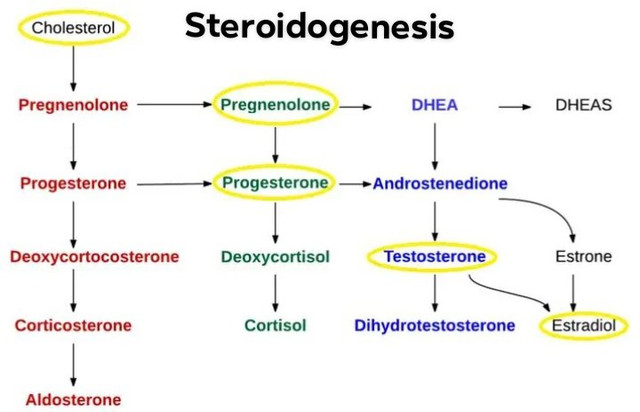
Agmatine boosts levels of Allopregnanolone also. Allopregnanolone is a neurosteroid that acts as a positive allosteric modulator on GABA(A) receptors, it's also prescribed for post-natal depression.

Agmatine had a widespread impact on gene expression and metabolic profiling including (a) activation of PPAR-α
https://doi.org/10.1074/jbc.M113.544726
The activation of PPAR-α may exert neuroprotection through the regulation of genes involved in several signaling pathways and those encoding proteins engaged in cholesterol transport into mitochondria and its metabolism to neurosteroids. Cholesterol is the substrate for neurosteroids, and its level may influence the synthesis of progesterone, allopregnanolone, and other compounds
- https://doi.org/10.3390/ijms25137106

Activation of PPAR-α by the endocannabinoid congener N-palmitoylethanolamine regulates pathophysiological systems (e.g., inflammation, oxidative stress) and induces peripheral biosynthesis of allopregnanolone
- https://doi.org/10.1016/j.biopsych.2019.02.006


orca-image-560794973.jpg
 
Last edited:
Agmatine boosts Pregnenolone levels also. Pregnenolone is anti-cortisol and is the precursor for a few potent GABAergic neurosteroids.

orca-image-560794973.jpg
Can you show me a paper that says that agmatine boosts pregnenolone levels? I did a brief pubmed search and couldn’t find anything (but pubmed is a bit shit and all).

Nvm used ChatGPT to do a quick search and found a few. Time to read em.
 
I was about to say, AI isn't that bad; use it.


This Question Broke CHATGPT! 🍓

How intelligent is AI actually? When given novel new problems, they struggle.

" … the AI nearly failed all of them. It can understand the questions; it can … re-phrase them in its own words, but when it came to actually proving the answer: nothing."

😐
It’s a great tool for literature searches. I’m currently reading the open access paper:

Inhibitory influence of agmatine on catamenial-like seizure susceptibility in progesterone withdrawn female rats


This paper looks at a type of seizures which occur due to postpartum drops in progesterone (and likely much more casually allopregnanolone) levels.

They use the 5alpha reductase inhibitor finasteride to drop levels of neurosteroids to induce a pro-seizure state.

Figure 7 is probably the most relevant to this discussion, which shows finasteride treatment dropping brain allopregnanolone levels by about half (20 ng/g brain matter weight to 10 ng/g brain matter weight). Agmatine at 5, 10, 20, and 40 mg/kg rescues this about halfway (to 15 ng/g). It’s a little strange because there isn’t much dose dependency, while there is a striking dose dependency in agmatine decreasing the severity of pentelynetetrazol (PTZ; a GABA antagonist) induced seizures.

One other thing I wish was included was measurements of allopregnanolone levels on agmatine treated rats without finasteride treatment.

Finally the paper’s conclusions section mentions the low bioavailability of agmatine due to its rapid metabolism by the enzymes diamine oxidase and agmatinase. This makes me want to look for pharmacokinetics studies of agmatine in humans.
 
Some, I can’t not rep sodium channel mutations as sufficient on their own to cause epilepsy ... during my later education.
Here is someone's take on the playing field which you might find curious:
Besides the specific promotional efforts of the drug industry and their branch of government, there is a broader situation that makes their work easier. It is a culture of goony ideas, that ultimately emanates from the academic elite, which (since Descartes, and before) places "thought" above evidence. In biology, "genes" and "membranes" are confused ideas that are used to justify actions that aren't based on evidence. For the Nazis, "cultural degeneracy" was a medical-biological-political category based on that style of thinking. In the United States, "genes" for epilepsy, hyperactivity, language development, IQ, eclampsia, etc., are "found" at Harvard/MIT/Stanford/Yale/Univ. of California, etc., by an elite whose wits have been dulled by environmental deprivation, that is, by a lack of criticism.

To keep OT, it seems that agmatine can potentiate some drugs (eg cannabinoids) but reduce the effects of others. It's psychoactive when used standalone and can have therapeutic benefits when used periodically.
 
Last edited:
Here is someone's take on the playing field which might find curious...
Nah I disagree with that take profoundly. I know people who have done research on these “genes”, and it’s solid research. I really don’t have much space for the whole “elites just do easy/incorrect science due to a lack of criticism”

I have published scientific research, and let me tell you, there is no lack of criticism in peer review (in good journals) and at conferences. Especially at high levels of science cliques form and they gun at each other’s work with a pseudo polite viciousness.

I also take issue with the concept of science being led by an “elite”. Here in the US pretty much every state has state schools which aren’t super flashy, but have solid labs publishing solid research. I think outside the scientific community it may seem quite elitist, but looking from inside it is quite egaltarian.

Yeah there’s perverse incentives in science, but there are also new communities like pubpeer which do democratize things.
 
I think outside the scientific community it may seem quite elitist, but looking from inside it is quite egaltarian.
The author was looking at it from inside! He had direct experience with the elements which he describes. Presumably of an older generation than yourself and most of us here.
 
The author was looking at it from inside! He had direct experience with the elements which he describes.
Who wrote that? It sounds like somebody with a bone to pick. It’s just so black and white.

Of course there are issues with science and stagnation of ideas due to various camps gaining too much power, but to draw the conclusion that there is no evidence for “genes” and “membranes” or penetrant genetic diseases is quite absurd. Of course there can be more nuance, but to take that quote at face value, it is frankly ludicrous.

Science itself is a conservative process (not in a political sense, but in the approach to progress; think of Chesterton’s fence). It resists paradigm changes until there is a great deal of evidence to support one. I view this as a feature as well as a bug, as it keeps the standard of evidence quite high. I do think that there is often a cutting edge of more anecdotal information which often precedes these big paradigm shifts, but just as often that cutting edge is simply hucksters promoting quackery to enrich themselves.
 
Top