• Psychedelic Drugs Welcome Guest
    View threads about
    Posting RulesBluelight Rules
    PD's Best Threads Index
    Social ThreadSupport Bluelight
    Psychedelic Beginner's FAQ
  • PD Moderators: Esperighanto | JackARoe |

Tryptamines 4,5 MDO DMT (And the rest) - Why no progress?

Leprechaun

Bluelighter
Joined
Mar 12, 2000
Messages
1,830
Location
Vic Australia
In Tihkal, Sasha recommended the 4,5 MDO variants over the 5,6 variants, suggesting the 6 position could lead to some problematic effects. (Haven't researched too much with the 6 position on the indole ring.)

I am surprised however, since 1982 when the compound was first noted and 1997 when it was mentioned again in Tihkal. No one has done any new research on these compounds.

None that I have discovered...

Might be a nice area for exploration.

 
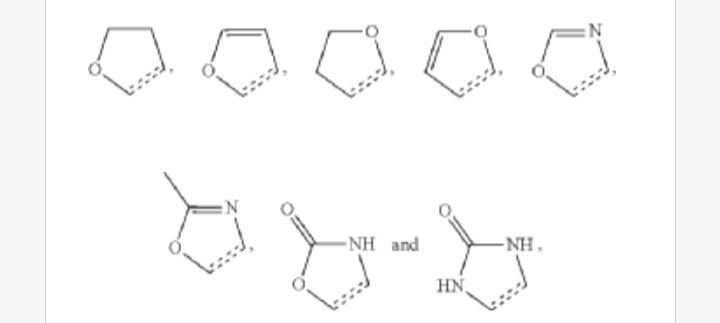
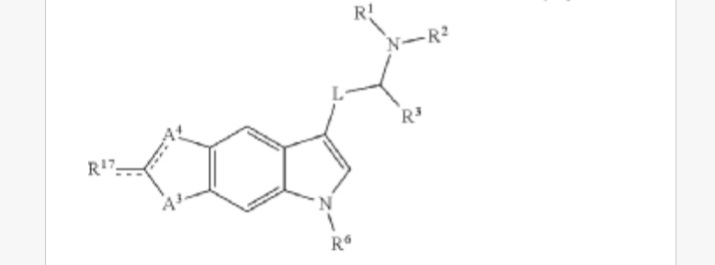
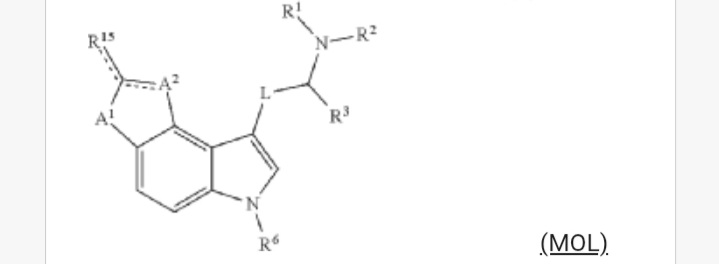
A similar series were patented by a company called Psylo.

Psylo is Australia's first psychedelic biotech startup
See patent: US20250101038

There's also YM-348 which is largely selective for 5-HT2C:

250px-YM-348.svg.png


Sasha recommended the 4,5 MDO variants over the 5,6 variants
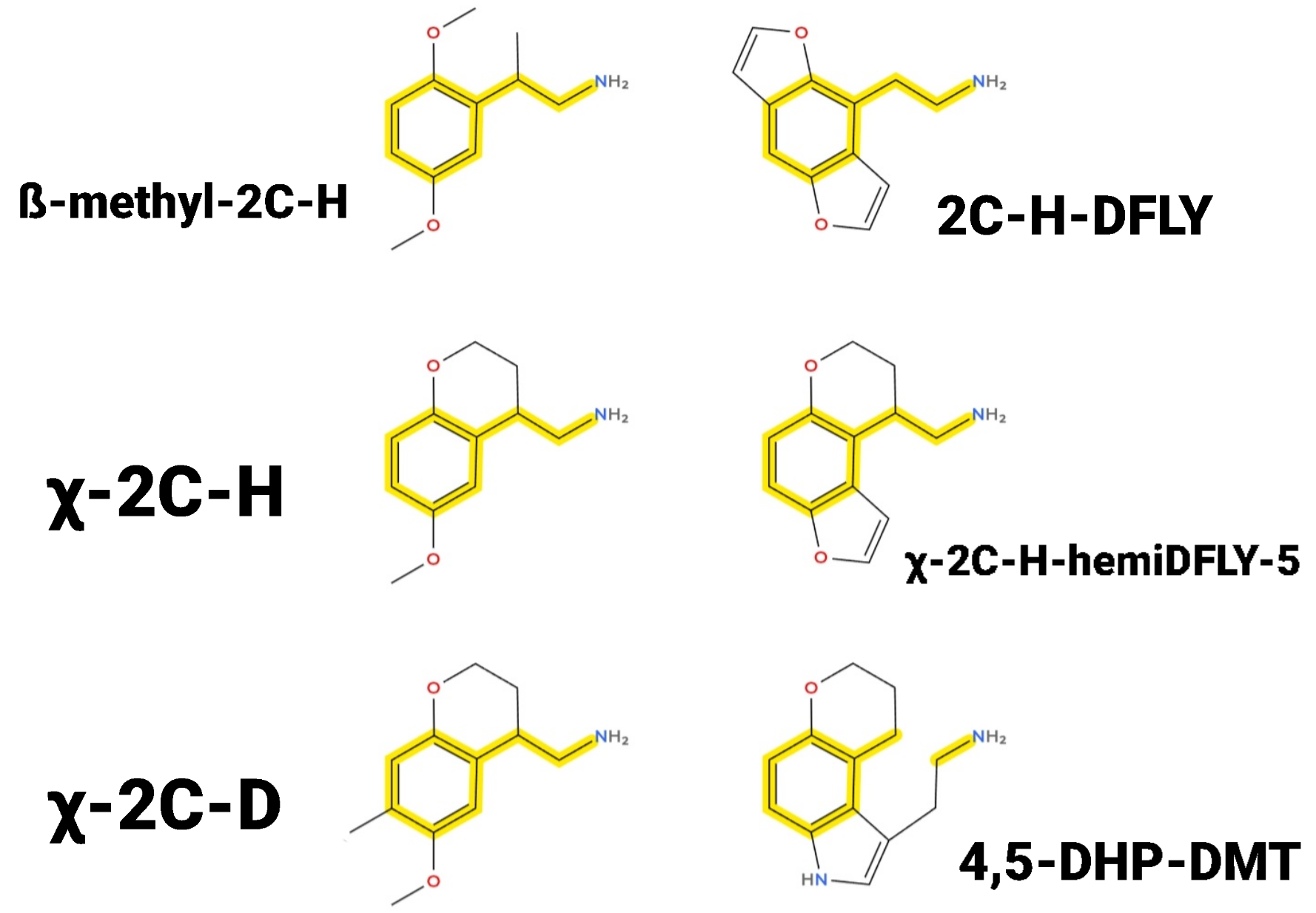
He was on the right track. There's a few 4,5-×-indoles which are very potent, particularly 4,5-DHP-DMT and AL-37350A which have a dihydropyran ring.

4,5-DHP-DMT:

AL-37350A:


The phenethylamine-style analog of 4,5-DHP-DMT is (6-methoxychroman-4-yl)methanamine which interacts with several serotonin receptors, including 5-HT2A. It's essentially 2C-H with the 2-methoxy cyclised around to the ß position (forming a pyran ring). This makes the new compound part of the chroman class... but a convenient label is χ-2C-H. χ is the greek letter after Ψ (Shulgins 2,4,6 series). So χ-2C-D might be interesting!

Mdegm-1.png
 
Last edited:
A similar series were patented by a company called Psylo.


Patent: US20250101038

Screenshot-20260701-212826-Brave.jpg

Screenshot-20260701-212740-Brave.jpg

Screenshot-20260701-212736-Brave.jpg


There's also YM-348 which is largely selective for 5-HT2C:

250px-YM-348.svg.png


He was on the right track. There's a few 4,5-×-indoles which are very potent, particularly 4,5-DHP-DMT and AL-37350A which have a dihydropyran ring.

4,5-DHP-DMT:

AL-37350A:


The phenethylamine-style analog of 4,5-DHP-DMT is (6-methoxychroman-4-yl)methanamine which interacts with several serotonin receptors, including 5-HT2A. It's essentially 2C-H with the 2-methoxy cyclised around to the ß position (forming a pyran ring). This makes the new compound part of the chroman class... but a convenient label is χ-2C-H. χ is the greek letter after Ψ (Shulgins 2,4,6 series). So χ-2C-D might be interesting!

Mdegm-1.png
All quite interesting, yet little has been written in the literature about anecdotal experience.
 
yet little has been written in the literature about anecdotal experience.
Only a small number of people will be aware of these and even less will have the skills to produce them. Your best bet is to visit the Russian hyperlab forums where it's likely that compounds I mentioned have been made & tested. I might go there and share some ideas, including a new PEA class that's distinct from Shulgins 2Cx. It covers what Shulgin didn't explore.

(Haven't researched too much with the 6 position on the indole ring.)
There's 6-MeO-isoDMT, one of those supposed non-hallucinogenic psychedelics.
Conversely, 6-MeO-isoDMT has comparable psychoplastogenic potency and effects compared to 5-MeO-DMT. These effects are blocked by the serotonin 5-HT2A receptor antagonist ketanserin.
250px-6-MeO-isoDMT.svg.png


There's also 13-hydroxy-LSD, 13 is equivalent to the 6 position on indoles.
13-hydroxy-LSD was shown by Nichols and colleagues in 2026 to be an extremely potent dopamine D4 receptor agonist, with ... 380 times greater potency than LSD itself. Moreover, 13-hydroxy-LSD is among the most potent dopamine D4 receptor agonists ever to have been discovered.

250px-13-Hydroxy-LSD.svg.png


If you look at the psychoactive partial ergolines like 9-oxaergoline then adding that 13-hydroxy (equiv to 6-indole) gives new possibilities, eg

N-propyl-9-oxaergoline (RU-29717):
250px-RU-29717.svg.png

In addition to its dopamine receptor agonism, RU-29717 shows affinity for serotonin receptors (5-HT1 + 5-HT2 receptors) ... RU-29717 also caused short-lasting head twitches in rodents, which were hypothesized to be due to serotonin receptor agonism. The head-twitch response is notable in being a behavioral proxy of psychedelic effects caused by serotonin 5-HT2A receptor agonism.

Also this series:
250px-RU-28251_structure.svg.png

4,α-methylene-DPT is a dopamine D2-like receptor agonist and shows affinity for the serotonin 5-HT1 and 5-HT2 receptors (IC50 half-maximal inhibitory concentration = 141 nM and 723 nM, respectively).
 
Last edited:
Only a small number of people will be aware of these and even less will have the skills to produce them. Your best bet is to visit the Russian hyperlab forums where it's likely that compounds I mentioned have been made & tested. I might go there and share some ideas, including a new PEA class that's distinct from Shulgins 2Cx. It covers what Shulgin didn't explore.


There's 6-MeO-isoDMT, one of those supposed non-hallucinogenic psychedelics.

250px-6-MeO-isoDMT.svg.png


There's also 13-hydroxy-LSD, 13 is equivalent to the 6 position on indoles.


250px-13-Hydroxy-LSD.svg.png


If you look at the psychoactive partial ergolines like 9-oxaergoline then adding that 13-hydroxy (equiv to 6-indole) gives new possibilities, eg

N-propyl-9-oxaergoline (RU-29717):
250px-RU-29717.svg.png


Also this series:
250px-RU-28251_structure.svg.png
Appreciate you having gone to the effort of sharing these.

If you have a link to the Russian Hyperlab, it might be worth checking out. Can you PM me?

I am looking at visiting Russia next year if the conflict calms down and might look to pickup some samples for testing.

My only concern would be getting the right import license for experimental compounds.

I live in Australia, so need to check the laws.

It would be interesting to explore these and provide some initial anecdotal insight.
 
My only concern would be getting the right import license for experimental compounds.
I live in Australia, so need to check the laws.

I'm fairly sure that Australia is very [WEF] strict so an import license for novel drugs seems far-fetched...
 
Last edited:
Top