• N&PD Moderators: Skorpio

"3,4-methylenedioxy" analogue of propylhexedrine: a good idea?

Would it be possible to make Methylenedioxymethphenylepherine?

It would be pointless, phenylephrine is almost entirely peripheral (like ephedrine, but much less active). It's also not an amphetamine but a phenethylamine, and would likely be even less active than MDPEA.

 
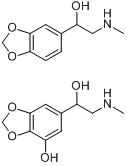
"Methylenedioxyphenylephrine" would either be N-methyl-3,4-methylenedioxy-beta-hydroxy-phenethylamine, or the 5-hydroxy analog.

GMpQR.png


Both would be expected to be basically inactive. Beta-hydroxy phenethylamine compounds are notorious for having more efficacy as decongestants than as stimulants/psychedelics, because they have much higher affinity for alpha-adrenergic receptors.
 
Just a thought,but thanks for explaining.

How about a methylenedioxyphentermine?
 
Last edited:
PiHKAL #116, MDPH
a,a-DIMETHYL-3,4-METHYLENEDIOXY-PHENETHYLAMINE; 3,4-METHYLENEDIOXYPHENTERMINE

DOSAGE: 160 - 240 mg.

DURATION: 3 - 5 h.

or alternatively

#113 MDMP
a,a,N-TRIMETHYL-3,4-METHYLENEDIOXY-PHENETHYLAMINE; METHYLENEDIOXYMEPHENTERMINE

DOSAGE: above 110 mg.

DURATION: perhaps 6 hours.
 
Last edited:
GMpQR.png


Both would be expected to be basically inactive. Beta-hydroxy phenethylamine compounds are notorious for having more efficacy as decongestants than as stimulants/psychedelics, because they have much higher affinity for alpha-adrenergic receptors.

Does the hydroxy function would reduce the blood-brain-barrier permeability of these molecules?
It could produce more peripheral effects and be less enjoyable?
 
Exactly. The hydroxyl increases the polarity of the compound and therefore reduces its ability to cross the bbb, decreasing central effects and having more peripheral side effects. What this means for enjoyability depends on individual taste as some folks like e.g. pseudoephedrine as a psychostimulant.
 
Top