Reminisant B
Greenlighter
- Joined
- Nov 3, 2005
- Messages
- 401
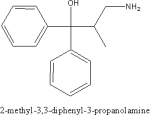
Interesting compound, it looks like desoxypipradrol where the ring has been opened and replaced with a more traditional amphetamine.
Apparently NMDA antagonist:
Anyone think desoxypipradrol or diphenylprolinol have NMDA antagonist effects?
Apparently NMDA antagonist:
2-Methyl-3,3-diphenyl-3-propanolamine (2-MDP) selectively antagonises N-methyl-aspartate (NMA).
Using electrophoretic application to rat central neurones in vivo, and bath application to frog spinal cord in vitro, 2-methyl-3,3-diphenyl-3-propanolamine was found to be a selective antagonist of N-methyl-DL-aspartate, but not of quisqualate or kainate. In this respect the (-) isomer proved to be about three times more potent than the (+) in both preparations.
PMID: 3511477
2-Methyl-3,3-diphenyl-3-propanolamine (2-MDP) produced effects in animals similar to those produced by the dissociative anesthetics such as phencyclidine (PCP). Specifically, it shared the discriminative stimulus properties of PCP in rats trained to discriminate PCP (1 mg/kg) from saline; at higher doses, it disrupted brightness discrimination and stimulated locomotor activities in rats trained to avoid shocks in an automated Y-maze; and it produced surgical anesthesia when injected IV to rhesus monkeys. These pharmacological activities were observed only with the levo-isomer of 2-MDP. The dextro-isomer was either inactive or produced opposite effects, depending on the tests. Among several related diphenylpropylamines, 2-MDP represents the optimal structure for potency of PCP-like effects since changes in the amino, 2-methyl and 3-hydroxy groups reduced the potencies of the PCP-like discriminative properties.
PMID: 6718449
Anyone think desoxypipradrol or diphenylprolinol have NMDA antagonist effects?