




placebonaut
Bluelighter
- Joined
- Feb 7, 2026
- Messages
- 1,100
Not sure why but there seems to be a general lack of info and discussion about blue lotus on BL, having looked at the related threads the info that's around can be out of date, confusing, and doesn't really seem to reference more recent research that's come out.
There seems to be quite a lot of different blue lotus products on the market these days:- dried flowers, powdered extracts, resins, tinctures, vapes, oils, and 98% nuciferine powder. Steeping dry flowers in red wine is a popular way to consume.
1 major issue is that when buying "blue lotus" you may not be getting the right thing "Nymphaea Caerulea", this on it's own can explain some users reports that they get no effect from blue lotus.
Would love to hear from people who have tried real blue lotus "Nymphaea Caerulea", and some of the more modern preparations that are out there.
I've just taken delivery of a tincture, which is "10% nuciferine content confirmed via HPLC" at 1:3, so 3.33%, to give it a try.
A few studies and articles with a lot more info below, some key interesting points pulled out as quotes for ease of access.

 www.acslab.com
 pmc.ncbi.nlm.nih.gov
pmc.ncbi.nlm.nih.gov

 recovered.org
There seems to be quite a lot of different blue lotus products on the market these days:- dried flowers, powdered extracts, resins, tinctures, vapes, oils, and 98% nuciferine powder. Steeping dry flowers in red wine is a popular way to consume.
1 major issue is that when buying "blue lotus" you may not be getting the right thing "Nymphaea Caerulea", this on it's own can explain some users reports that they get no effect from blue lotus.
Would love to hear from people who have tried real blue lotus "Nymphaea Caerulea", and some of the more modern preparations that are out there.
I've just taken delivery of a tincture, which is "10% nuciferine content confirmed via HPLC" at 1:3, so 3.33%, to give it a try.
A few studies and articles with a lot more info below, some key interesting points pulled out as quotes for ease of access.
Exploring Blue Lotus: History, Effects, Products & Ingredients
This guide explains blue lotus, including its historical significance, medical uses, psychoactive qualities, and the best consumption methods.
www.acslab.com
Exploring Blue Lotus: History, Effects, Products & Ingredients
Primary Active Compounds
Experts attribute blue lotus’ therapeutic powers to its main aporphine alkaloids, nuciferine, and apomorphine. Apomorphine is a psychoactive compound that stimulates serotonin receptors and parts of the brain influenced by dopamine. Nuciferine blocks excessive dopamine receptor stimulation, serving as an anxiety reliever and sleep aid.
Apomorphine
- Apomorphine appears often in clinical settings as anesthesia and to ease sleep problems associated with Parkinson’s disease. Studies also link apomorphine to reduced anxiety levels.
- Physicians recognize apomorphine as the oldest antiparkinsonian drug on the market and increasingly prescribe it in Europe for patients with advanced Parkinson’s disease with motor fluctuations.
Nuciferine
- Nuciferine can relax arteries and ease inflammation, which might contribute to therapeutic effects that help with anxiety, sleep, and muscle performance. Studies also link it to anti-obesity impacts that can help with weight loss.
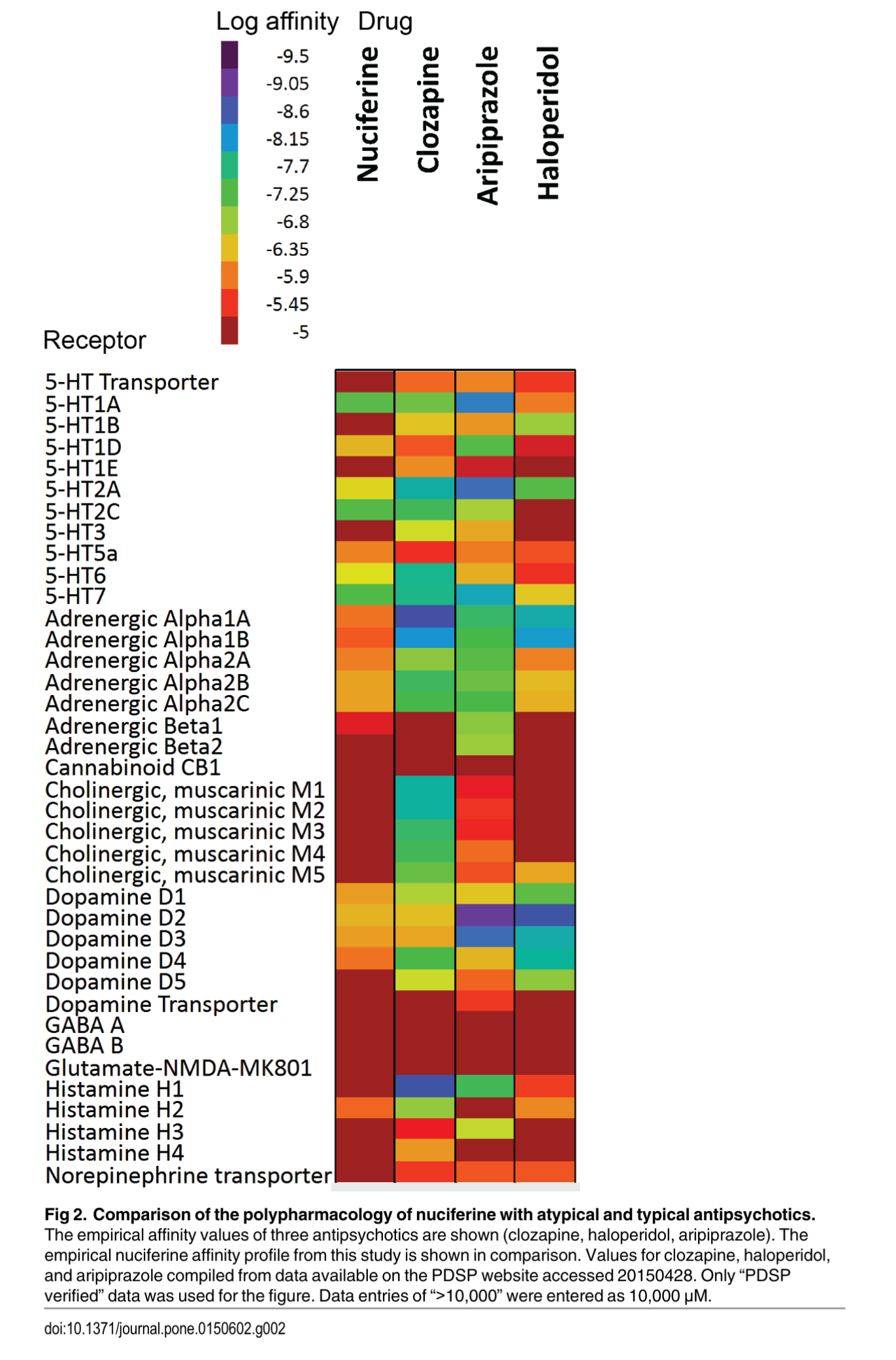
- Another study suggests nuciferine may have potential therapeutic applications as an antipsychotic drug. The nuciferine receptor profile is similar to clozapine, one of the most successful antipsychotic drugs.
In Vitro and In Vivo Characterization of the Alkaloid Nuciferine - PMC
The sacred lotus (Nelumbo nucifera) contains many phytochemicals and has a history of human use. To determine which compounds may be responsible for reported psychotropic effects, we used in silico predictions of the identified phytochemicals. ...
pmc.ncbi.nlm.nih.gov
In Vitro and In Vivo Characterization of the Alkaloid Nuciferine - PMC - The sacred lotus (Nelumbo nucifera) contains many phytochemicals and has a history of human use. To determine which compounds may be responsible for reported psychotropic effects, we used in silico predictions of the identified phytochemicals. ...
Results
Nuciferine shares a receptor profile similar to aripiprazole-like antipsychotic drugs. Nuciferine was an antagonist at 5-HT2A, 5-HT2C, and 5-HT2B, an inverse agonist at 5-HT7, a partial agonist at D2, D5 and 5-HT6, an agonist at 5-HT1A and D4 receptors, and inhibited the dopamine transporter. In rodent models relevant to antipsychotic drug action, nuciferine blocked head-twitch responses and discriminative stimulus effects of a 5-HT2A agonist, substituted for clozapine discriminative stimulus, enhanced amphetamine induced locomotor activity, inhibited phencyclidine (PCP)-induced locomotor activity, and rescued PCP-induced disruption of prepulse inhibition without induction of catalepsy.
Conclusions
The molecular profile of nuciferine was similar but not identical to that shared with several approved antipsychotic drugs suggesting that nuciferine has atypical antipsychotic-like actions.
───────────────────────
Not all Blue Lotus is the same.
And most of what is being sold right now is not what the ancient Egyptians were actually using.
The flower on the temple walls. The one held by Hathor. Offered to pharaohs. Consumed by priests before every initiation.
That is Nymphaea caerulea. The Egyptian Blue Lotus.
What most sellers use is [Nelumbo nucifera].
Beautiful flowers. Sacred in their own traditions. Used in Ayurvedic and Buddhist practices for thousands of years.
But they are not the same plant.
Different profile. Different effect on the body. Different connection to the nervous system and consciousness.
When I first started sourcing I made the same mistake everyone makes.
I trusted the label.
I assumed Blue Lotus was Blue Lotus.
It was only when I prepared both side by side using the same spagyric method that I understood the difference.
The Egyptian flower has a depth the Asian varieties simply do not carry in the same way.
Softer. More grounded.
More connected to something ancient.
This is the flower I source. This is the flower I prepare. This is the flower on the walls.
Comment "LOTUS" and I will send you how to tell the difference.
───────────────────────
https://www.instagram.com/bluelotuspriest/p/DVUcHiUimh1 2026-03-06
Investigating the psychedelic blue lotus of Egypt, where ancient magic meets modern science. Jason Pohl. UC Berkeley News. 2025.03.11
Online, products branded as the blue lotus promise calm moments and psychedelic trips. But they're far different from what ancient Egyptians consumed, a UC Berkeley student researcher says.
The Blue Lotus Flower (Nymphea caerulea) Resin Used in a New Type of Electronic Cigarette, the Re-Buildable Dripping Atomizer - PMC
The blue lotus flower (Nymphea caerulea) is an Egyptian water lily containing apomorphine and nuciferine. Apomorphine has been described as a psychoactive alkaloid and is a non-selective dopamine agonist primarily used to treat Parkinson’s disease ...
pmc.ncbi.nlm.nih.gov
The blue lotus flower (Nymphea caerulea) is an Egyptian water lily containing apomorphine and nuciferine. Apomorphine has been described as a psychoactive alkaloid and is a non-selective dopamine agonist primarily used to treat Parkinson’s disease ...
pmc.ncbi.nlm.nih.gov pmc.ncbi.nlm.nih.gov
Apomorphine is a nonselective dopamine receptor agonist and activates serotonin receptors and α-adrenergic receptors (LeWitt 2004; Millan et al. 2002). It has been used as a sedative-hypnotic since the late 1800s to treat insomnia, depression, or schizophrenia (Ribarič 2012). It has been used in the treatment of erectile dysfunction (Gottlieb 2000) and was sold under the trade name Upriama and Ixense. In 1951, it was reported to successfully treat Parkinson’s disease at a subcutaneous dose of 0.5 to 1.0 mg (Schwab, Amador, and Lettvin 1951). It has also been used in the treatment of alcohol and morphine addiction (Ribarič 2012). In veterinary medicine, it has been used to induce vomiting (Scherkl, Hashem, and Frey 1990). It has also been suggested that apomorphine can play a role in the treatment of Alzheimer’s disease (Okun and Foote 2010; Ribarič 2012)
Nuciferine is an antagonist at 5-HT2A, 5-HT2C, and 5-HT2B, an inverse agonist at 5-HT7, a partial agonist at D2, D5 and 5-HT6, an agonist at 5-HT1A and D4 receptors, and inhibits the dopamine transporter (Farrell et al. 2016). Behavioral effects produced in rats include catalepsy, potentiation of hexobarbitone hypnosis, morphine analgesia, and anticonvulsant action (Bhattacharya et al. 1978). It has been suggested that nuciferine may have potential therapeutic applications as an anti-psychotic drug (Farrell et al. 2016) and on vascular diseases associated with aberrant vasoconstriction (Wang et al. 2015).
Blue Lotus: Benefits, Side Effects, and Safety
Learn about blue lotus, its traditional uses, health benefits, potential risks, psychoactive effects, and its legal status in the U.S. and abroad.
recovered.org
Modern uses and potential benefits of blue lotus
Today, blue lotus is sold as a dietary supplement and, although it is not approved for human consumption by the Food and Drug Administration, is used for its medicinal effects. Research into its effects is limited, and most of these reports are anecdotal or self-reported. <a href="https://recovered.org/hallucinogens/blue-lotus#resource-1">[1]</a><a href="https://recovered.org/hallucinogens/blue-lotus#resource-3">[3]</a>
Because of its calming and sedating effects, blue lotus is commonly used to help treat insomnia and other sleep disturbances and anxiety symptoms. <a href="https://recovered.org/hallucinogens/blue-lotus#resource-3">[3]</a> Other potential uses and benefits of blue lotus include: <a href="https://recovered.org/hallucinogens/blue-lotus#resource-1">[1]</a><a href="https://recovered.org/hallucinogens/blue-lotus#resource-3">[3]</a>
Additionally, blue lotus is found to have a high polyphenol content, which means that it is a good source of antioxidants. As such, it can help to slow aging effects, improve cell growth, and benefit heart health. <a href="https://recovered.org/hallucinogens/blue-lotus#resource-6">[6]</a>
- Improving mood and depression symptoms
- Treating erectile dysfunction
- Pain relief
- Anti-inflammatory effects
- Improved motor control, particularly for those with Parkinson’s disease
Some people use blue lotus in high doses to produce euphoric, hallucinogenic, and mind-altering effects. <a href="https://recovered.org/hallucinogens/blue-lotus#resource-7">[7]</a>
Psychoactive compounds of blue lotus and their effects
Blue lotus produces soothing, mildly stimulating effects due to apomorphine and nuciferine, alkaloids that influence dopamine and serotonin activity to elevate mood and promote relaxation. <a href="https://recovered.org/hallucinogens/blue-lotus#resource-3">[3]</a>
Typical psychoactive experiences involve:
Although the original plant contains both alkaloids, many of the blue lotus products sold online are found to only contain nuciferine, and with differing concentrations. <a href="https://recovered.org/hallucinogens/blue-lotus#resource-3">[3]</a><a href="https://recovered.org/hallucinogens/blue-lotus#resource-7">[7]</a>
- Mild euphoria and relaxation: Users often report feelings of calmness, reduced anxiety, and a gentle uplift in mood, making blue lotus popular as a natural anxiolytic and sleep aid.
- Sedation and sleep enhancement: The calming effects can lead to mild sedation, helping some users fall asleep more easily without intense grogginess.
- Mild hallucinations and altered perception: At higher doses or when smoked or vaporized, blue lotus can induce mild visual and auditory hallucinations, as well as a dream-like state. These effects are generally subtle compared to stronger psychoactive substances.
- Increased libido: Historically, blue lotus was used as an aphrodisiac, and some users report enhanced sensuality and sexual excitement linked to its psychoactive action.
Methods of consumption
Blue lotus is sold online and in stores, as dried plant, tea, oils, and extracts. It can be ingested, brewed, and drank, smoked, and vaped. <a href="https://recovered.org/hallucinogens/blue-lotus#resource-1">[1]</a>
- Teas and dried petals can be added to hot water, which creates a soothing tea.
- Oils can be rubbed on the skin, inhaled, added to a diffuser, or consumed, depending on the form and dosage. This might be used to reduce anxiety or help with sleep.
- In recent years, blue lotus has been used in e-cigarettes or vapes. Liquids, extracts, and resins can be added to the various types of available vape and e-cigarette, which heat or burn the product, creating a vapor or smoke that is inhaled. <a href="https://recovered.org/hallucinogens/blue-lotus#resource-3">[3]</a>
ABSTRACT
Plant extracts and other novel psychoactives can be ingested, vaped, injected, or insufflated. This includes products such as extracts from the blue lotus flower (Nypmhaea caerulea), which is known to produce euphoria and hallucinations at high doses. Blue lotus is sold in several forms, including dried plant material, teas, and extracts for use in electronic cigarettes. Because newer generations of electronic cigarettes can deliver a variety of substances, practitioners need to be mindful of toxicity from a growing number of psychoactives, some of which are not detectable by standard urine drug screens. This case series describes five active duty patients who presented to the emergency department with altered mental status following the use of blue lotus products, four after vaping and one after making an infused beverage. Patients displayed similar symptoms, including sedation and perceptual disturbances. The patients in our series were successfully managed with supportive measures without the need for sedating agents. Recognizing and identifying new trends in substance use can help to provide directions in undifferentiated altered mental status.
You can modify LSD with quite a few things. The way that ayahuasca enthusiasts utilize "adjuncts", there are certainly adjuncts to the LSD experience as well. I find that classic ayahuasca adjuncts like nicotine, passionflower, red/blue/white lotus, and coca tea all worked quite well as LSD adjuncts with similar effects on the experience, and the absence of a potent MAOI in the mix allowed me to play with certain antidepressants alongside LSD that proved to be quite fascinating. D. M. Turner's "The Essential Psychedelic Guide" is where I first read of the combination of Ludiomil alongside LSD, and while I have yet to acquire Ludiomil to try that with, other antidepressants and unexpected pharmaceuticals exhibit super fascinating responses in combination with LSD.

Thanks for your answer ! To be honest, it's by reading some of your post where you mention "lysergahuasca" that got me interested, but actually I don't know much about harmala containing plant.
The way you depict it sounds clearly interesting, LSD is by far my psychedelic of choice since I encounter it, and the possibility to modify it seems promising. From what I understand from your description, you're most on the spectator side, right?
Also when you say "far less LSD", you mean like 25 or 50% less ? I know it's only an estimation and I will be really careful whilst trying it. I'm...

Last edited:






 . Very relaxing.
 "
"
 Tier 1 — strongest evidence for meaningful CNS effects
 Tier 2 — potentially relevant but probably secondary
 Tier 3 — potentially relevant binding, but unknown functional direction