• Select Your Topic Then Scroll Down
    Alcohol Bupe Benzos
    Cocaine Heroin Opioids
    RCs Stimulants Misc
    Harm Reduction All Topics Gabapentinoids
    Tired of your habit? Struggling to cope?
    Want to regain control or get sober?
    Visit our Recovery Support Forums

Ethnobotanicals Blue Lotus (Nymphaea Caerulea) latest info from 2026 - apomorphine/nuciferine

placebonaut

Bluelighter
Joined
Feb 7, 2026
Messages
1,096
Not sure why but there seems to be a general lack of info and discussion about blue lotus on BL, having looked at the related threads the info that's around can be out of date, confusing, and doesn't really seem to reference more recent research that's come out.

There seems to be quite a lot of different blue lotus products on the market these days:- dried flowers, powdered extracts, resins, tinctures, vapes, oils, and 98% nuciferine powder. Steeping dry flowers in red wine is a popular way to consume.

1 major issue is that when buying "blue lotus" you may not be getting the right thing "Nymphaea Caerulea", this on it's own can explain some users reports that they get no effect from blue lotus.

Would love to hear from people who have tried real blue lotus "Nymphaea Caerulea", and some of the more modern preparations that are out there.

I've just taken delivery of a tincture, which is "10% nuciferine content confirmed via HPLC" at 1:3, so 3.33%, to give it a try.

A few studies and articles with a lot more info below, some key interesting points pulled out as quotes for ease of access.


Exploring Blue Lotus: History, Effects, Products & Ingredients

Primary Active Compounds​

Experts attribute blue lotus’ therapeutic powers to its main aporphine alkaloids, nuciferine, and apomorphine. Apomorphine is a psychoactive compound that stimulates serotonin receptors and parts of the brain influenced by dopamine. Nuciferine blocks excessive dopamine receptor stimulation, serving as an anxiety reliever and sleep aid.

Apomorphine​

Nuciferine​

  • Nuciferine can relax arteries and ease inflammation, which might contribute to therapeutic effects that help with anxiety, sleep, and muscle performance. Studies also link it to anti-obesity impacts that can help with weight loss.
  • Another study suggests nuciferine may have potential therapeutic applications as an antipsychotic drug. The nuciferine receptor profile is similar to clozapine, one of the most successful antipsychotic drugs.


In Vitro and In Vivo Characterization of the Alkaloid Nuciferine - PMC - The sacred lotus (Nelumbo nucifera) contains many phytochemicals and has a history of human use. To determine which compounds may be responsible for reported psychotropic effects, we used in silico predictions of the identified phytochemicals. ...

Results​


Nuciferine shares a receptor profile similar to aripiprazole-like antipsychotic drugs. Nuciferine was an antagonist at 5-HT2A, 5-HT2C, and 5-HT2B, an inverse agonist at 5-HT7, a partial agonist at D2, D5 and 5-HT6, an agonist at 5-HT1A and D4 receptors, and inhibited the dopamine transporter. In rodent models relevant to antipsychotic drug action, nuciferine blocked head-twitch responses and discriminative stimulus effects of a 5-HT2A agonist, substituted for clozapine discriminative stimulus, enhanced amphetamine induced locomotor activity, inhibited phencyclidine (PCP)-induced locomotor activity, and rescued PCP-induced disruption of prepulse inhibition without induction of catalepsy.

Conclusions​


The molecular profile of nuciferine was similar but not identical to that shared with several approved antipsychotic drugs suggesting that nuciferine has atypical antipsychotic-like actions.


───────────────────────
Not all Blue Lotus is the same.

And most of what is being sold right now is not what the ancient Egyptians were actually using.

The flower on the temple walls. The one held by Hathor. Offered to pharaohs. Consumed by priests before every initiation.

That is Nymphaea caerulea. The Egyptian Blue Lotus.
What most sellers use is [Nelumbo nucifera].

Beautiful flowers. Sacred in their own traditions. Used in Ayurvedic and Buddhist practices for thousands of years.

But they are not the same plant.

Different profile. Different effect on the body. Different connection to the nervous system and consciousness.
When I first started sourcing I made the same mistake everyone makes.

I trusted the label.
I assumed Blue Lotus was Blue Lotus.

It was only when I prepared both side by side using the same spagyric method that I understood the difference.

The Egyptian flower has a depth the Asian varieties simply do not carry in the same way.

Softer. More grounded.
More connected to something ancient.

This is the flower I source. This is the flower I prepare. This is the flower on the walls.

Comment "LOTUS" and I will send you how to tell the difference.
───────────────────────
h‍ttps://www.instagram.com/bluelotuspriest/p/DVUcHiUimh1 2026-03-06


Investigating the psychedelic blue lotus of Egypt, where ancient magic meets modern science. Jason Pohl. UC Berkeley News. 2025.03.11

Online, products branded as the blue lotus promise calm moments and psychedelic trips. But they're far different from what ancient Egyptians consumed, a UC Berkeley student researcher says.


The blue lotus flower (Nymphea caerulea) is an Egyptian water lily containing apomorphine and nuciferine. Apomorphine has been described as a psychoactive alkaloid and is a non-selective dopamine agonist primarily used to treat Parkinson’s disease ...
pmc.ncbi.nlm.nih.gov pmc.ncbi.nlm.nih.gov


Apomorphine is a nonselective dopamine receptor agonist and activates serotonin receptors and α-adrenergic receptors (LeWitt 2004; Millan et al. 2002). It has been used as a sedative-hypnotic since the late 1800s to treat insomnia, depression, or schizophrenia (Ribarič 2012). It has been used in the treatment of erectile dysfunction (Gottlieb 2000) and was sold under the trade name Upriama and Ixense. In 1951, it was reported to successfully treat Parkinson’s disease at a subcutaneous dose of 0.5 to 1.0 mg (Schwab, Amador, and Lettvin 1951). It has also been used in the treatment of alcohol and morphine addiction (Ribarič 2012). In veterinary medicine, it has been used to induce vomiting (Scherkl, Hashem, and Frey 1990). It has also been suggested that apomorphine can play a role in the treatment of Alzheimer’s disease (Okun and Foote 2010; Ribarič 2012)


Nuciferine is an antagonist at 5-HT2A, 5-HT2C, and 5-HT2B, an inverse agonist at 5-HT7, a partial agonist at D2, D5 and 5-HT6, an agonist at 5-HT1A and D4 receptors, and inhibits the dopamine transporter (Farrell et al. 2016). Behavioral effects produced in rats include catalepsy, potentiation of hexobarbitone hypnosis, morphine analgesia, and anticonvulsant action (Bhattacharya et al. 1978). It has been suggested that nuciferine may have potential therapeutic applications as an anti-psychotic drug (Farrell et al. 2016) and on vascular diseases associated with aberrant vasoconstriction (Wang et al. 2015).


Modern uses and potential benefits of blue lotus​


Today, blue lotus is sold as a dietary supplement and, although it is not approved for human consumption by the Food and Drug Administration, is used for its medicinal effects. Research into its effects is limited, and most of these reports are anecdotal or self-reported. <a href="https://recovered.org/hallucinogens/blue-lotus#resource-1">[1]</a><a href="https://recovered.org/hallucinogens/blue-lotus#resource-3">[3]</a>

Because of its calming and sedating effects, blue lotus is commonly used to help treat insomnia and other sleep disturbances and anxiety symptoms. <a href="https://recovered.org/hallucinogens/blue-lotus#resource-3">[3]</a> Other potential uses and benefits of blue lotus include: <a href="https://recovered.org/hallucinogens/blue-lotus#resource-1">[1]</a><a href="https://recovered.org/hallucinogens/blue-lotus#resource-3">[3]</a>

  • Improving mood and depression symptoms
  • Treating erectile dysfunction
  • Pain relief
  • Anti-inflammatory effects
  • Improved motor control, particularly for those with Parkinson’s disease
Additionally, blue lotus is found to have a high polyphenol content, which means that it is a good source of antioxidants. As such, it can help to slow aging effects, improve cell growth, and benefit heart health. <a href="https://recovered.org/hallucinogens/blue-lotus#resource-6">[6]</a>

Some people use blue lotus in high doses to produce euphoric, hallucinogenic, and mind-altering effects. <a href="https://recovered.org/hallucinogens/blue-lotus#resource-7">[7]</a>

Psychoactive compounds of blue lotus and their effects​


Blue lotus produces soothing, mildly stimulating effects due to apomorphine and nuciferine, alkaloids that influence dopamine and serotonin activity to elevate mood and promote relaxation. <a href="https://recovered.org/hallucinogens/blue-lotus#resource-3">[3]</a>

Typical psychoactive experiences involve:

  • Mild euphoria and relaxation: Users often report feelings of calmness, reduced anxiety, and a gentle uplift in mood, making blue lotus popular as a natural anxiolytic and sleep aid.
  • Sedation and sleep enhancement: The calming effects can lead to mild sedation, helping some users fall asleep more easily without intense grogginess.
  • Mild hallucinations and altered perception: At higher doses or when smoked or vaporized, blue lotus can induce mild visual and auditory hallucinations, as well as a dream-like state. These effects are generally subtle compared to stronger psychoactive substances.
  • Increased libido: Historically, blue lotus was used as an aphrodisiac, and some users report enhanced sensuality and sexual excitement linked to its psychoactive action.
Although the original plant contains both alkaloids, many of the blue lotus products sold online are found to only contain nuciferine, and with differing concentrations. <a href="https://recovered.org/hallucinogens/blue-lotus#resource-3">[3]</a><a href="https://recovered.org/hallucinogens/blue-lotus#resource-7">[7]</a>

Methods of consumption​


Blue lotus is sold online and in stores, as dried plant, tea, oils, and extracts. It can be ingested, brewed, and drank, smoked, and vaped. <a href="https://recovered.org/hallucinogens/blue-lotus#resource-1">[1]</a>

  • Teas and dried petals can be added to hot water, which creates a soothing tea.
  • Oils can be rubbed on the skin, inhaled, added to a diffuser, or consumed, depending on the form and dosage. This might be used to reduce anxiety or help with sleep.
  • In recent years, blue lotus has been used in e-cigarettes or vapes. Liquids, extracts, and resins can be added to the various types of available vape and e-cigarette, which heat or burn the product, creating a vapor or smoke that is inhaled. <a href="https://recovered.org/hallucinogens/blue-lotus#resource-3">[3]</a>


ABSTRACT​


Plant extracts and other novel psychoactives can be ingested, vaped, injected, or insufflated. This includes products such as extracts from the blue lotus flower (Nypmhaea caerulea), which is known to produce euphoria and hallucinations at high doses. Blue lotus is sold in several forms, including dried plant material, teas, and extracts for use in electronic cigarettes. Because newer generations of electronic cigarettes can deliver a variety of substances, practitioners need to be mindful of toxicity from a growing number of psychoactives, some of which are not detectable by standard urine drug screens. This case series describes five active duty patients who presented to the emergency department with altered mental status following the use of blue lotus products, four after vaping and one after making an infused beverage. Patients displayed similar symptoms, including sedation and perceptual disturbances. The patients in our series were successfully managed with supportive measures without the need for sedating agents. Recognizing and identifying new trends in substance use can help to provide directions in undifferentiated altered mental status.


You can modify LSD with quite a few things. The way that ayahuasca enthusiasts utilize "adjuncts", there are certainly adjuncts to the LSD experience as well. I find that classic ayahuasca adjuncts like nicotine, passionflower, red/blue/white lotus, and coca tea all worked quite well as LSD adjuncts with similar effects on the experience, and the absence of a potent MAOI in the mix allowed me to play with certain antidepressants alongside LSD that proved to be quite fascinating. D. M. Turner's "The Essential Psychedelic Guide" is where I first read of the combination of Ludiomil alongside LSD, and while I have yet to acquire Ludiomil to try that with, other antidepressants and unexpected pharmaceuticals exhibit super fascinating responses in combination with LSD.

 
Last edited:
Coincidentally, this was just posted to Instagram:

-----------------------------------------------------------
Wait... they're actually different? 🤔

Most people think every "Blue Lotus" is the same, but that's not the case. In this reel, Rob explains the difference between the Egyptian Waterlily and the Thai Blue Lotus, what makes them unique, and why the authentic Egyptian Waterlily is much more delicate than other blue lotus varieties.

That's one of the reasons we've put so much effort into sourcing the real Egyptian Waterlily. We know it's the variety so many of you love, and we're committed to offering the authentic botanical not just something with the same name.

Have you tried Egyptian Waterlily before, or are you just learning there's a difference? Let us know in the comments! 🌸👇

#egyptianwaterlily
#bluelotus
#thaibluelotus
#healingherbals
#nymphaeacaerulea
#botanicalcommunity
#plantlovers
#herbaleducation
#ancientplants
#naturelovers
#ethnobotanicals
#herbalproducts
#naturalherbs
#holistic
#shopsmallbusiness
-----------------------------------------------------------

Video transcript:

"So we've got some traditional Egyptian water lily in. So this stuff is one of a kind. It's extremely rare in the market. This stuff has been sought after for a while. It's super hard to grow. It's super hard to find. But essentially some of the growers that we've built relationships with have found some traditional Egyptian water lily and they're trying to cultivate it but it is very difficult to propagate, to keep sustaining it through its life cycle and harvest it in an appropriate manner without it disintegrating or falling apart, or it's an extremely delicate flower, from my understanding. Most of the blue lotus that's sold as Egyptian [inaudible] is technically something called thai lotus, and thai lotus is that traditional, very dark purple colored flower with the yellow stamets that you see in the market everywhere sold as blue lotus, but that is not the technical blue lotus, it's like a different strain, like in the world of cannabis we're nervous this might be the last batch we ever have. We're doing everything we can in our power to try to help them grow, finances going down there helping work, finding work for them whatever it takes to keep this going because this plant, this type of phenotype or genetic, specifically, is very different, it's four, 3–4 times the potency and has a special touch than anything that the Thai Lily has ever provided me. I really hope we keep this genetic going alive and we will keep everyone posted what we're gonna do with this last little batch and how we're gonna go about it."


h‍ttps://www.instagram.com/healingherbalsstore/p/DaSjSiQiH3A  2026-07-02
 
Last edited:
Most people think every "Blue Lotus" is the same, but that's not the case. In this reel, Rob explains the difference between the Egyptian Waterlily and the Thai Blue Lotus, what makes them unique, and why the authentic Egyptian Waterlily is much more delicate than other blue lotus varieties.
thanks for calling this out, I read about this and forgot to include it in my initial post.

The main reason I went for the tincture is because it contains both Apomorphine and Nuciferine, I read something somewhere that having both alkaloids was important to get the right high.

would be great to hear from anyone who's tried 98% Nuciferine powder and an extract that has both to report on how they compare.


AI summary of Egyptian v Thai

Plant Species [1, 2, 3, 4, 5, 6]Apomorphine LevelsNuciferine LevelsPrimary Effect Profile
Nymphaea caerulea
(Egyptian Blue Lotus)
High
(Acts as a principal active dopamine agonist)
High
(Prominent synergy with apomorphine)
Mildly euphoric, deeply relaxing, vivid dream enhancement
Nymphaea nouchali / Nelumbo
(Thai Lotus / Water Lily)
Trace to Absent
(Virtually non-detectable naturally)
Low to Moderate
(Varies; highest in true Thai Nelumbo leaves)
Grounding, calming, aromatic, and metabolic support
Key Chemical Distinctions
  • The Apomorphine Factor: Authentic Nymphaea caerulea relies heavily on the synergistic combination of both alkaloids. The absence of significant apomorphine in Thai varieties means they do not mimic the distinct, uplifting sedation of the Egyptian flower. [1, 2, 3]
  • The "Thai Lotus" Variable: If using Thai Sacred Lotus (Nelumbo nucifera), nuciferine is isolated primarily from the leaves and seeds rather than the flower petals alone. [1, 2, 3]


In Nymphaea caerulea (blue lotus), nuciferine is the most abundant aporphine alkaloid, with apomorphine present in smaller amounts. Both interact with dopamine receptors, which is the proposed basis for the mild sedation and dream-related effects users report.

In Nymphaea caerulea (blue lotus), nuciferine is the most abundant aporphine. According to Agrawala et al. (2013), nuciferine and apomorphine are the principal pharmacologically active alkaloids identified in the flower. Apomorphine itself is well-known in clinical pharmacology — it's used as a dopamine agonist in Parkinson's disease treatment — but the concentrations present in blue lotus flower material are far lower than a therapeutic dose of the pharmaceutical drug. That said, the presence of even small amounts is pharmacologically meaningful, particularly in concentrated extracts where aporphine levels are substantially higher than in dried petals. This distinction in lotus chemistry between raw flower and extract is something anyone looking to buy blue lotus should understand before choosing a form.
 
Last edited:
How many vendors advertising Egyptian lilies actually have them. They seem to be all over the place, but I’m skeptical that any are real. Has someone successfully mass produced these?
 
How many vendors advertising Egyptian lilies actually have them. They seem to be all over the place, but I’m skeptical that any are real. Has someone successfully mass produced these?
Extremely rare. You are more than likely going to wind up with more common water lily varieties just buying at a glance.
Here: Subreddit thread for it

...and even then, there are doubters in the replies. Hard tellin', man.
 
yeah certainly a problem sourcing the real thing, but a quick google and you can find well regarded vendors even in the UK where it's prohibited - seems "ceremonial use" is valid. Just do a little be of research before buying.

There's also info on how to tell the dried flowers apart - I think www.azarius.com had something on this IIRC, also I've only just realised that azarius is actually a vendor, the articles I linked were well written and had sources for papers in them, but worth double checking things with the other papers/suorces linked above to confirm
 
Taken the blue lotus tincture now a couple of times, 1 drop as allergy test 1st, then 2, then 3, all under the tongue which worked well and onset was quick.

Had 4 drop last night with a fair amount of cannabis, effect to me felt like a mild version of Kratom, very mellow and relaxing, not something that you're going to take to get off your face but very pleasant, much like I was expecting and hoping for, just something nice to chill with at the end of the night. I'll keep upping the dose to see if I can increase intensity and/or duration, felt like peak effects lasted under an hour for me.

Bonus effect which I'd read about was very vivid dreams and good retention of the dream when I woke up.

I can see this working very well with some alcohol, shame I've stopped drinking, I might see if I could give it a try with some GBL or maybe soma, and/or I think some sedative nootropics might be nice too.

I'll keep trying this for a week or so and then might consider buying some 98% nuciferine extract to see what that's like.

Interaction table from https://www.azarius.com/wiki/ethnobotanicals/blue-lotus/lotus-interactions


Drug classExamplesProposed mechanismSpecies relevanceRisk level
Dopaminergic Parkinson's medicationsLevodopa, pramipexole, ropinirole, apomorphine (injectable)Additive or competitive dopamine-receptor activity. Nuciferine is a partial D2 agonist; apomorphine in N. caerulea is the same molecule used therapeutically. Stacking risks unpredictable motor and cardiovascular effects.All three species (nuciferine). Nymphaea caerulea carries additional risk via apomorphine content.High — avoid combination
Dopamine-receptor antiemeticsMetoclopramide, domperidoneThese drugs block dopamine D2 receptors to reduce nausea. Aporphine alkaloids agonise the same receptors, potentially reducing antiemetic efficacy or causing unpredictable receptor competition.All three species (nuciferine). Nymphaea caerulea heightened via apomorphine.Moderate — likely reduces drug efficacy
AntihypertensivesACE inhibitors (ramipril, enalapril), ARBs (losartan, valsartan), calcium-channel blockers (amlodipine), beta-blockers (metoprolol, propranolol)Apomorphine analogs lower blood pressure via peripheral vasodilation and dopamine-mediated mechanisms. Adding lotus may cause additive hypotension — dizziness, fainting, falls.All three species. Nymphaea caerulea carries the strongest signal due to apomorphine.Moderate — risk of symptomatic hypotension
MAOIs (monoamine oxidase inhibitors)Phenelzine, tranylcypromine, moclobemide, selegiline; also ayahuasca (contains harmine/harmaline)Theoretical: aporphine alkaloids are monoamine-active. MAO inhibition could slow their metabolism, raising effective plasma concentrations. No human data, but the pharmacological logic is sound enough to flag.All three species.Moderate — theoretical but pharmacologically plausible
Sedatives and CNS depressantsBenzodiazepines (diazepam, alprazolam), Z-drugs (zolpidem, zopiclone), barbiturates, gabapentinoids (pregabalin, gabapentin)Additive sedation. Nuciferine's proposed partial dopamine agonism produces mild sedation on its own; combining with GABAergic sedatives deepens CNS depression.All three species.Moderate — additive sedation, impaired coordination
AlcoholEthanol in any formSame additive sedation pathway as above, plus alcohol's own vasodilatory effect compounds the blood-pressure-lowering risk.All three species.Moderate — additive sedation and hypotension
Antipsychotics (D2 antagonists)Haloperidol, risperidone, olanzapine, quetiapine, aripiprazoleAntipsychotics block D2 receptors; aporphine alkaloids agonise them. Unpredictable receptor competition could alter antipsychotic efficacy or side-effect profile. Aripiprazole is itself a partial D2 agonist, adding a further layer of complexity.All three species.Moderate — may alter antipsychotic efficacy
CYP2D6 substratesCodeine, tramadol, dextromethorphan, fluoxetine, paroxetine, tamoxifen, many beta-blockersA 2015 in-vitro study found that alkaloid compounds in Nelumbo nucifera leaves inhibit CYP2D6 isoenzyme activity (Ye et al., 2015). If this translates to humans, co-administration could raise plasma levels of CYP2D6-metabolised drugs.Demonstrated for Nelumbo nucifera. Not yet tested for Nymphaea species, though nuciferine is shared.Moderate — in-vitro signal, human relevance uncertain
OpioidsMorphine, oxycodone, codeine, tramadol, fentanylAdditive sedation and respiratory depression risk. The CYP2D6 inhibition concern (above) is also relevant for codeine and tramadol, which require CYP2D6 for activation — inhibition could either reduce analgesic effect or, paradoxically, alter metabolite ratios.All three species (sedation). Nelumbo nucifera specifically for CYP2D6.High — respiratory depression risk
Erectile-dysfunction medications (PDE5 inhibitors)Sildenafil, tadalafil, vardenafilPDE5 inhibitors lower blood pressure. Combined with the vasodilatory effect of apomorphine analogs, the result could be significant hypotension.All three species. Nymphaea caerulea heightened.Moderate — additive hypotension
Nelumbo-specific alkaloid interactions (liensinine, neferine)Antiarrhythmics (amiodarone, flecainide), calcium-channel blockersLiensinine and neferine in Nelumbo nucifera have demonstrated calcium-channel-blocking and antiarrhythmic activity in vitro (Chen et al., 2013). Combining with prescription antiarrhythmics or calcium-channel blockers could produce additive cardiac effects.Nelumbo nucifera only. Does NOT apply to Nymphaea species.Moderate — in-vitro signal, cardiac relevance
 
Had 4 drop last night with a fair amount of cannabis, effect to me felt like a mild version of Kratom

I discovered a few months ago that Kratoms mitragynine has dopaminergic (D2), cannabinoid (CB1), serotonergic (blocks 5HT2a) and adrenergic (alpha-2A agonist) properties (so it's far more than just an opioid) ... and apparently nuciferine blocks 5HT2a & activates D2 (+ partial inverse agonism at 5HT7, partial agonism at D5, 5HT6 and agonism at 5HT1A, D4).

It's been years since I tried blue lotus but I remember white and pink lotus being interesting also, especially their essential oils.
 
Last edited:
I discovered a few months ago that Kratoms mitragynine has dopaminergic (D2), cannabinoid (CB1), serotonergic (blocks 5HT2a) and adrenergic (alpha-2A agonist) properties (so it's far more than just an opioid) ... and apparently nuciferine blocks 5HT2a & activates D2 (+ partial inverse agonism at 5HT7, partial agonism at D5, 5HT6 and agonism at 5HT1A, D4).

It's been years since I tried blue lotus but I remember white and pink lotus being interesting also, especially their essential oils.
really interesting! I didn't know about the similarities, surprised I was able to notice, not sure if I was just lucky or if there is strong alignment - does anyone else find the same thing?

I'll have to take more of the blue lotus I think before any firm conclusions.

will have a read of the paper thanks.
 
I discovered a few months ago that Kratoms mitragynine has dopaminergic (D2), cannabinoid (CB1), serotonergic (blocks 5HT2a) and adrenergic (alpha-2A agonist) properties (so it's far more than just an opioid) ... and apparently nuciferine blocks 5HT2a & activates D2 (+ partial inverse agonism at 5HT7, partial agonism at D5, 5HT6 and agonism at 5HT1A, D4).

It's been years since I tried blue lotus but I remember white and pink lotus being interesting also, especially their essential oils.
hmm interesting read, 1 thing that I wasn't expecting is that it was found to enhance amphetamine!

might have to give that a try...
 
I’ve used blue lotus a couple times before. a local metaphysical/spiritual/witchy shop near me sometimes has it in stock, not super commonly tho. last time i bought an ounce of it and it was the real deal. i would break apart the petals, ripping them into smaller pieces without grinding them. i’d put a couple flowers worth into a loose leaf tea infuser along with a bag of sleepytime blend of chamomile, spearmint, passionflower, etc and make it into a cup of tea. i got a good few cups out of the amount that i got.

it’s psychoactive effect is definitely subtle but noticeable. i felt very relaxed after drinking it both physically and mentally. the body sensation was very nice- i felt warm with very noticeable muscle relaxation (which was very nice for me, someone with severe muscle pain and tension.) my headspace was very relaxed, my thoughts were slower and quieter with just a general mood boost. drinking the tea had a relaxed smile on my face the whole time. it all felt very clean and natural too, it didn’t feel like a forced artificial relaxation.

blue lotus is also mad popular when it comes to sleep and lucid dreaming and i fully understood why. it made my dreams incredibly vivid, sometimes in an unpleasant way. i know i woke up at least once or twice from vivid nightmares on nights that i drank it. there was one instance where i was almost lucid dreaming. i was like 90% asleep but fully lucid. but by the time i actually started dreaming i dozed off. i was able to remember my dream in the morning much better than normal too, tho the retention didn’t last long as i forget about it after a couple hours of being awake. had i written them down first thing in the morning i’d have remembered them more i’m sure.

it was definitely a nice herb tho, i enjoyed it. it was such a nice subtle relaxation and general mood improvement. i didn’t feel high by any means, it felt very natural. hoping my local shop gets it in again soon, i’d definitely do it again. i’ve also read you can smoke it for the effects too which i’d be interested in. at the time i just figured that since i already have a cup of sleepy relaxation tea every night, why not just add it to that. it didn’t taste bad either. tasted flowery
 
I’ve used blue lotus a couple times before. a local metaphysical/spiritual/witchy shop near me sometimes has it in stock, not super commonly tho. last time i bought an ounce of it and it was the real deal. i would break apart the petals, ripping them into smaller pieces without grinding them. i’d put a couple flowers worth into a loose leaf tea infuser along with a bag of sleepytime blend of chamomile, spearmint, passionflower, etc and make it into a cup of tea. i got a good few cups out of the amount that i got.

it’s psychoactive effect is definitely subtle but noticeable. i felt very relaxed after drinking it both physically and mentally. the body sensation was very nice- i felt warm with very noticeable muscle relaxation (which was very nice for me, someone with severe muscle pain and tension.) my headspace was very relaxed, my thoughts were slower and quieter with just a general mood boost. drinking the tea had a relaxed smile on my face the whole time. it all felt very clean and natural too, it didn’t feel like a forced artificial relaxation.

blue lotus is also mad popular when it comes to sleep and lucid dreaming and i fully understood why. it made my dreams incredibly vivid, sometimes in an unpleasant way. i know i woke up at least once or twice from vivid nightmares on nights that i drank it. there was one instance where i was almost lucid dreaming. i was like 90% asleep but fully lucid. but by the time i actually started dreaming i dozed off. i was able to remember my dream in the morning much better than normal too, tho the retention didn’t last long as i forget about it after a couple hours of being awake. had i written them down first thing in the morning i’d have remembered them more i’m sure.

it was definitely a nice herb tho, i enjoyed it. it was such a nice subtle relaxation and general mood improvement. i didn’t feel high by any means, it felt very natural. hoping my local shop gets it in again soon, i’d definitely do it again. i’ve also read you can smoke it for the effects too which i’d be interested in. at the time i just figured that since i already have a cup of sleepy relaxation tea every night, why not just add it to that. it didn’t taste bad either. tasted flowery
pretty much sums up what I've already found very well.
 
quick update on this blue lotus, I think it's bloody epic! really enjoying it, the dreams on it are amazing, it's especially great with weed and a beer or 2, or just weed and a mix of lemon balm/camomile/magnolia bark. Very chilled out, delivers more than I expected, but I think it needs it's usage keep down to twice a week to maintain it's effectiveness.

I'm going to try to research the powdered extract to see if that's worth it or a risk, however I really recommend a decent strong tincture from a trusted supplier, great to just squirt some under your tongue.

very surprised by how good this is and how little it's discussed, strange. Maybe I'm dosing quite high, hmm
 
very surprised by how good this is and how little it's discussed, strange.

I'd guess that many people unknowingly get the "false" blue lotus (mislabelled) which doesn't have the same effect quality. Plus many probably dismiss "blue lotus" as one of those placebo herbs (to paraphrase). Eg Damiana, if you get a genuine 10:1 extract it's worthwhile imo. Likewise with Albizia (5-HT1A and GABAergic iirc), Guelder rose (scopoletin: 5-HT2A, D2) and Rhodiola rosea (stimulant, adaptogen, all-round enhancement).

or just weed and a mix of lemon balm/camomile/magnolia bark. Very chilled out, delivers more than I expected

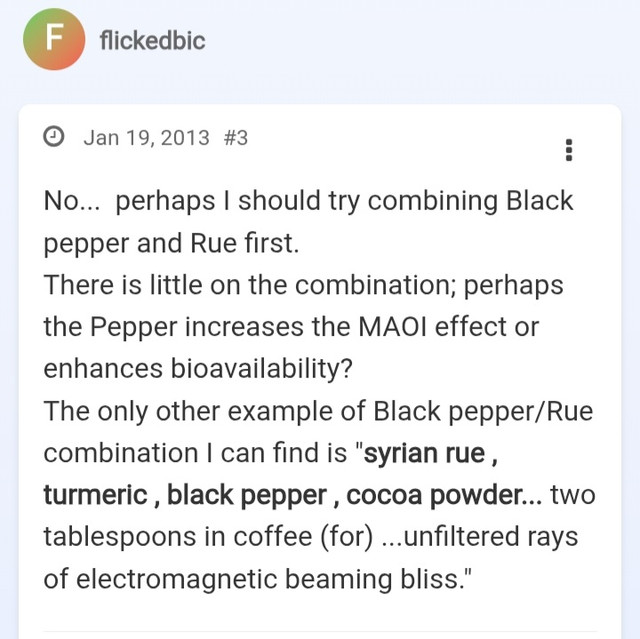
If you add Albizia to that you'd be surprised I think. Botanical synergy is underrated, like this for example - a combo of pepper, syrian rue, turmeric, cocoa and coffee:

Screenshot-20260801-110805-Brave.jpg


The main 5-HT2A item is syrian rue but the other items contribute 5-HT effects amongst others. Turmeric is another one most people dismiss as placebo (this paper covers many phytochemicals, including eugenol & magnolol).

The closest botanical equivalent to ketamine afaik is Yuan Zhi (polygala tenuifolia). And instead of Erythroxylum coca (for cocaine), there's Erythroxylum vaccinifolium aka Catuaba which makes a dark red tea that's very uplifting. It contains tropane alkaloids called catuabines.

This quote is from an academic paper talking about botanical complexity:
Synergy and antagonism in natural product extracts: when 1 + 1 does not equal 2
...
Despite centuries of use, the activity of botanical medicines is only partially understood, and for most natural products on the market, there is a lack of knowledge as to which constituents are responsible for the purported biological activity. Scientific investigation of botanical natural products is challenging because of their immense complexity and variability. Natural products chemistry efforts are typically devoted to reducing complexity and identifying single “active” constituents for drug development. However, given that complex plant extracts, and not single molecules, are often administered for medicinal purposes, interactions between constituents could be of great importance. (source)


It's probably worth pointing out that users of conventional drugs (eg pure molecules RCs, cocaine, opioids, benzos, amphetamines etc) can't expect anything too spectacular from these botanicals. They'd have to first undertake a "reset phase" to restore tolerances etc.
 
Last edited:
it’s psychoactive effect is definitely subtle but noticeable. i felt very relaxed after drinking it both physically and mentally. the body sensation was very nice- i felt warm with very noticeable muscle relaxation (which was very nice for me, someone with severe muscle pain and tension.) my headspace was very relaxed, my thoughts were slower and quieter with just a general mood boost. drinking the tea had a relaxed smile on my face the whole time. it all felt very clean and natural too, it didn’t feel like a forced artificial relaxation.

"it sure [as] heck gets me high 😅. Very relaxing.🙌"

pinkphatcat  2026-08-02  h‍ttps://www.instagram.com/urthblum/p/DbUMzhtv7Vz
 
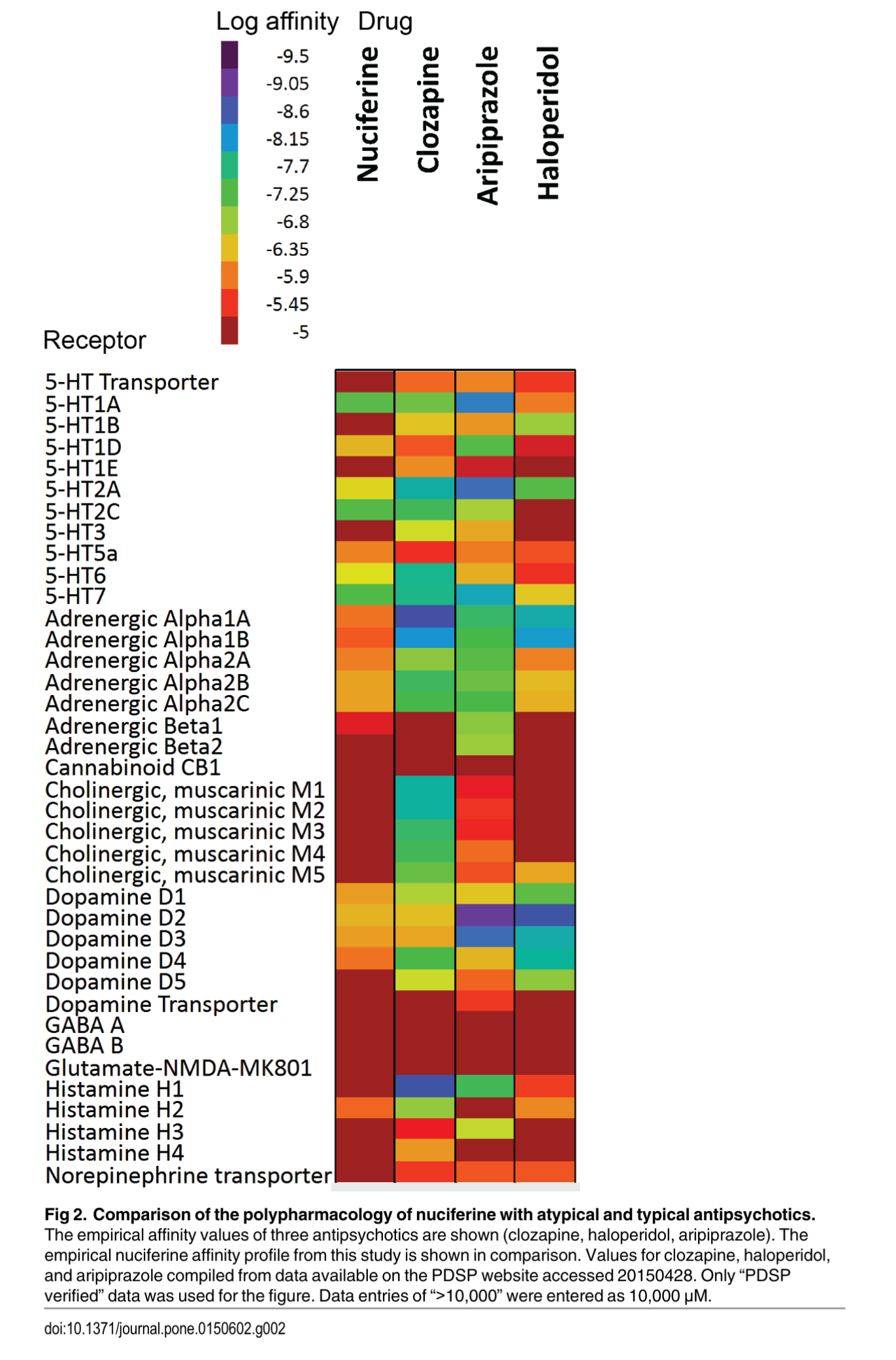
A couple of relevant papers on Nucuferine specifically,I think the main headline here is it resembles aspects of the pharmacology of atypical antipsychotics (in rats) although nuciferine is not pharmacologically identical to aripiprazole or clozapine. However Blue Lotus also has Apomorphine which also acts on D2 receptor so whether it's worth trying Nucuferine powder on it's own is another question....


In Vitro and In Vivo Characterization of the Alkaloid Nuciferine


use https://www.tesble.com/ to read it if you don't have an account

"Results
Nuciferine shares a receptor profile similar to aripiprazole-like antipsychotic drugs. Nucifer-
ine was an antagonist at 5-HT2A, 5-HT2C, and 5-HT2B, an inverse agonist at 5-HT7, a partial
agonist at D2, D5 and 5-HT6, an agonist at 5-HT1A and D4 receptors, and inhibited the dopa-
mine transporter. In rodent models relevant to antipsychotic drug action, nuciferine blocked
head-twitch responses and discriminative stimulus effects of a 5-HT2A agonist, substituted
for clozapine discriminative stimulus, enhanced amphetamine induced locomotor activity,
inhibited phencyclidine (PCP)-induced locomotor activity, and rescued PCP-induced dis-
ruption of prepulse inhibition without induction of catalepsy.
Conclusions
The molecular profile of nuciferine was similar but not identical to that shared with several
approved antipsychotic drugs suggesting that nuciferine has atypical antipsychotic-like
actions."

image.png


ChatGPT analysis of the table above, I asked it to consider only receptors that were meaningfully activated


Receptor
Nuciferine affinity / potency​
MechanismLikely functional effectsConfidence / comments
D2 dopamine
Ki ~515 nM; EC50 ~65 nM
Partial agonist; also competitively reduces dopamine signalingModulates dopamine signaling rather than simply turning it on/off. Can potentially reduce excessive D2 signaling while retaining some activity; may affect motivation, salience, movement and psychotic-like signalingVery high relevance. Emax ≈67% of dopamine. This is one of the strongest functional findings. (PubMed Central (PMC))
5-HT7
Ki ~49.8 nM; EC50 ~150 nM
Inverse agonistSuppresses constitutive 5-HT7 signaling. Could influence mood, cognition, sleep/circadian regulation and serotonergic processingHigh relevance. Very strong binding and functional potency. (PubMed Central (PMC))
5-HT2C
Ki ~60.5 nM; IC50 ~131 nM
AntagonistRemoves some 5-HT2C-mediated inhibition of dopaminergic/noradrenergic pathways; can influence appetite, arousal, mood and dopamine releaseHigh relevance. Functional antagonist activity demonstrated. (PubMed Central (PMC))
5-HT2A
Ki ~312 nM; IC50 ~478 nM
AntagonistReduces 5-HT2A signaling, particularly cortical serotonergic signaling; can reduce perceptual/cognitive effects mediated through 5-HT2AHigh relevance. Nuciferine blocked DOI-induced head-twitch behavior in mice, a commonly used 5-HT2A-mediated model. (PubMed Central (PMC))
5-HT6
Ki ~268 nM; EC50 ~700 nM
Very-low-efficacy partial agonist (~17.3% maximal response)Probably relatively modest 5-HT6 activation; potentially affects cognition, learning and neurotransmitter releaseModerate. Strong enough binding, but the functional response is weak. (PubMed Central (PMC))
5-HT2B
Ki ~41 nM; IC50 ~1,000 nM
AntagonistBlocks peripheral/CNS 5-HT2B signaling; effects on mood/perception are probably less important than 5-HT2A/2CBinding is extremely strong, functional potency considerably weaker. 5-HT2B is also a receptor where peripheral effects matter. (PubMed Central (PMC))
D1 dopamine
Ki ~752 nM
Functional action not established in this studyCould potentially alter D1-mediated excitation in corticostriatal circuits, affecting cognition, motivation and motor processesUncertain. Binding was demonstrated, but no functional assay was performed. (PubMed Central (PMC))
D3 dopamine
Ki ~741 nM
Functional action not establishedPotential modulation of mesolimbic dopamine signaling; theoretically relevant to reward, motivation and salienceUncertain. Binding ≠ demonstrated agonism/antagonism. (PubMed Central (PMC))
5-HT1D
Ki ~518 nM
Functional action not establishedCould modify serotonin release, since 5-HT1D receptors function partly as inhibitory autoreceptors/heteroreceptorsUncertain. Binding demonstrated, functional direction unknown. (PubMed Central (PMC))
α2B adrenergic
Ki ~687 nM
Functional action not establishedPotential modulation of noradrenergic signaling; could theoretically influence arousal, vascular tone and CNS signalingUncertain. No functional assay in this study. (PubMed Central (PMC))
α2C adrenergic
Ki ~693 nM
Functional action not establishedPotential effects on norepinephrine/dopamine regulation, cognition, attention and motor circuitsUncertain. Binding demonstrated but direction of effect unknown. (PubMed Central (PMC))


The receptors I would not put in the “likely perceptually important” group
There are a few that deserve special mention because they can look important from the heatmap but probably shouldn't be interpreted that way:
D4 — EC50 ~2 µM
Nuciferine is an agonist, but its functional potency was ~2 µM. That's substantially weaker than D2/5-HT7/5-HT2C. It could become relevant at sufficiently high concentrations, but I wouldn't put it in the strongest-effect tier.
D5 — EC50 ~2.6 µM
Partial agonist (~50% maximal response), again substantially weaker than D2. It may contribute at higher exposure but isn't likely to dominate the profile.
5-HT1A — EC50 ~3.2 µM
Nuciferine is an agonist, but its functional potency is relatively low despite its excellent binding affinity (Ki 77 nM). This distinction is important: it binds very well but activates the receptor relatively weakly in the assay.
DAT

The interesting finding here is actually quite unusual. Nuciferine didn't behave as a conventional DAT blocker in the experiments. In DAT-expressing cells, it increased dopamine uptake by ~60%, with an apparent EC50 of 1.8 nM in that particular assay. However, the effect disappeared when DAT and VMAT2 were expressed together, so interpreting this as straightforward “DAT activation” would be misleading.

If we're specifically asking: “What could I actually feel?”​

I'd rank the functional targets roughly like this:

1. D2 — probably the most important dopamine component​

Partial agonism + antagonism of dopamine signaling.
This is a very interesting pharmacological arrangement. Nuciferine can activate D2 receptors, but because it is only a partial agonist, it can also compete with dopamine and reduce the response when dopamine concentrations are high.

The authors measured ~67% of dopamine's maximal D2 response, compared with ~50% for aripiprazole in the cited comparison.

Potential consequences include:
  • reduced excessive dopaminergic signaling
  • altered salience/reward processing
  • changes in motivation
  • changes in locomotor activity
  • potentially reduced psychotic-like signaling
  • potentially some sedation or emotional flattening at sufficient exposure
This is not equivalent to D2 blockade, though.

2. 5-HT7 — very strong serotonergic component​

Nuciferine has ~50 nM binding affinity and ~150 nM functional potency here. It is an inverse agonist, meaning it can suppress baseline receptor activity rather than merely preventing serotonin from activating it.

This could potentially contribute to:
  • altered mood
  • altered cognition
  • changes in sleep/wake regulation
  • changes in anxiety
  • altered sensory processing
But translating a 150-nM cellular potency into a subjective human effect is not straightforward.

3. 5-HT2A — probably the most relevant receptor for perception

This is the one I'd pay particular attention to if by “perception” you mean visual/sensory/cognitive perception.

Nuciferine is a 5-HT2A antagonist, with:
  • Ki ≈ 312 nM
  • IC50 ≈ 478 nM
Importantly, this wasn't merely a binding prediction: nuciferine blocked the head-twitch response produced by the 5-HT2A agonist DOI in mice.
So its likely effect is not psychedelic activation of perception. It's essentially the opposite direction at this receptor: reducing 5-HT2A signaling.
That could theoretically mean:

less sensory amplification → less perceptual distortion → less psychedelic-like signaling

rather than hallucinations or visual enhancement.

4. 5-HT2C — strong modulatory component​

At ~60 nM Ki / 131 nM IC50, this is another relatively high-affinity interaction. Nuciferine is an antagonist.
Because 5-HT2C receptors regulate dopamine and norepinephrine circuits, blocking them can indirectly increase dopaminergic/noradrenergic signaling in some pathways.

This makes the overall pharmacology more complicated than simply saying “nuciferine suppresses dopamine.”

The important distinction: affinity vs actual effect​


I'd divide the table into three levels:


🔴 Tier 1 — strongest evidence for meaningful CNS effects​


D2 → 5-HT7 → 5-HT2C → 5-HT2A


These are the four I'd focus on.


There's experimental evidence that nuciferine actually does something functional at each:


  • D2: partial agonist
  • 5-HT7: inverse agonist
  • 5-HT2C: antagonist
  • 5-HT2A: antagonist

That is much more compelling than merely seeing a red/green/blue cell in the binding heatmap.


🟠 Tier 2 — potentially relevant but probably secondary​


5-HT6 → 5-HT2B


5-HT6 has 700-nM potency but only ~17% efficacy, while 5-HT2B has ~1-µM functional potency despite very strong binding.


🟡 Tier 3 — potentially relevant binding, but unknown functional direction​


D1, D3, 5-HT1D, α2B, α2C


These are where I'd be particularly cautious. A receptor's Ki tells us:


"Nuciferine can bind this receptor."

It does not tell us:


"Nuciferine activates this receptor."

It could be an agonist, antagonist, inverse agonist, biased agonist, etc.

Discovery of eight alkaloids with D1 and D2 antagonist activity in leaves of Nelumbo nucifera Gaertn. Using FLIPR assays​


"Results: Alkaloids in the lotus leaves were the bioactive phytochemicals and inhibited dopamine from accessing the D1 and D2 receptors. All eight compounds functioned as D1-receptor antagonists and except N-nornuciferine, seven alkaloids functioned as D2-receptor antagonists. (S)-coclaurine and (R)-coclaurine are optical isomers and antagonized both D1 and D2 with equivalent potencies, suggesting that the optical rotation of the methylene linker in the monobenzyl isoquinoline backbone did not influence their activity. Among the eight alkaloids, O-nornuciferine was the potent antagonist to both receptors (the lowest IC50 values, D1: 2.09 ± 0.65 μM and D2: 1.14 ± 0.10 μM) while N-nornuciferine was found to be the least potent as it moderately antagonized D1 and was inactive on D2. O-nornuciferine was also a 5-HT2A antagonist (IC50~20 μM) while N-nornuciferine had no activity. These hinted the importance of a methyl group attached to the nitrogen atom in the aporphine backbone. Armepavine showed a nearly 10-fold selectivity to D2.
Conclusions: In this work, eight alkaloids were isolated from the leaves of Nelumbo nucifera Gaertn. and assayed on the D1 and D2 receptors. They were D1/D2 antagonists with IC50 values in the mid- to low-micromolar range and O-nornuciferine was the most potent alkaloid among the eight. This family of alkaloids was biochemically evaluated on the dopamine receptors by the same platform for the first time."
 
If you add Albizia to that you'd be surprised I think
I finally got around to looking at this and might give it a try, just got to find the right kind and a decent source for it

again ChatGPT summary highlights there are different kinds so picking the right 1 is key but the silk tree looks interesting to me. needs a bit of research

Here are Albizia species that are commonly encountered in literature/uses, along with known/likely active constituents and what that plausibly implies for effects. Note: for “psychoactive/perceptual” effects in humans, the evidence is sparse—most data are phytochemistry/pharmacology (often preclinical).
Albizia species (common name)Alkaloids / major active compounds reported in researchLikely / potential effects (most plausible)Confirmed human perceptual effects?
Albizia julibrissin (silk tree)Rich in saponins (julibrosides) and flavonoid glycosides; some reviews also discuss neuroactive modulation pathways (e.g., 5-HT1A, GABA\_A in preclinical models)Anxiolytic/sedative-like, relaxation, antidepressant-like effects (in models); at higher exposures could contribute to sleep/dreaminess, but perceptual distortion is not well establishedNo—no strong, controlled human evidence tying it to specific perceptual hallucinoid effects
Albizia lebbeck (siris/Indian siris)Plant extracts show alkaloids plus tannins/phenolics, saponins, flavonoids, glycosides, steroids (composition varies by extract/part)Astringent/anti-inflammatory and other non-specific CNS effects are plausible, but perceptual/psychedelic effects are not supported by solid human evidenceNo
Albizia amaraMentioned in chemical biology literature (e.g., DNA-interacting macrocyclic alkaloids named in older work)In vitro/biological activity exists, but translation to human “trip-like” perception is speculativeNo
Albizia chinensisReports of cytotoxic oleanane-type triterpene saponins (saponin chemistry)Likely more anti-proliferative/bioactivity than psychoactivityNo
Albizia coriariaReports of acacic acid glycosides and other saponin/glycoside constituentsPrimarily not framed as neuroactive/perceptualNo
Albizia proceraExtracts include triterpenoid saponins (including N-acetyl sugar variants reported in phytochemistry)Likely not specifically linked to perceptual changesNo
Albizia grandibracteataReports of triterpenoid saponin anthranilates in natural products literatureNot psychoactive in a clear, human-perceptual way
 
again ChatGPT summary highlights there are different kinds so picking the right 1 is key but the silk tree looks interesting to me. needs a bit of research

I personally always prioritise the traditional usage. Albizia julibrissin bark and flowers, each contains different components but the bark is broadly appropriate whilst flowers are more specialised so to speak.

The latest research has been categorized according to the pharmacological functionalities of Albizia julibrissin, which are recognized for their diverse and significant therapeutic effects. These findings have been systematically compiled into tables to enhance clarity and ease of reference. Readers are advised to consult these tables to accurately trace and comprehend the extensive range of bioactive effects identified in recent studies. This methodical presentation underscores the multifaceted potential of the plant and offers a comprehensive overview of its promising applications in contemporary medical research. (source)

Also Polygala tenuifolia ("botanical ketamine") is worth exploring. As is Viburnum opulus aka Guelder rose (scopoletin: 5-HT2A, D2).
 
Last edited:
Been gonna try this since it's one of few psychoactive compounds you can fully just buy on amazon in my country.

Is it worth taking?
 
Is it worth taking?
yeah it's worth it just make sure you get a good trusted source.

it's subtle though, personally I think it really benefits from weed and alcohol ideally (though I'm back on a dry month).

the best effects are the crazy vivid dreams, I'd take it just for that tbh!

usual advice, empty stomach if swallowing or make sure you hold the tincture under your tongue for a decent amount of time.

I'm tempted to order some of the 98% powder to give that a try....I just need to read about LD50/toxicity as I'll be tempted to do quite a lot of the powder I suspect....but at the normal dose it's just a chill vibe, bit like a weak kratom
 
Top