• N&PD Moderators: Skorpio

DOC NMR Analysis

sub-di

Bluelighter
Joined
Dec 9, 2003
Messages
196
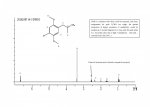
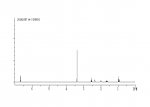
This is from a batch I will be receiving in a few short days. Anyone here with experience reading NMR graphs with some spare time, I would be more than grateful for a critique of its legitimacy/purity. Certificate of Analysis indicates 97.4% purity. This is told to be a difficult one to synth, so I am being as careful as possible with this (as of yet) untested batch.

Forgive me if this is not the right place to post this, move if necessary.
 

Attachments

  • DOC-NMR_analysis.jpg
    DOC-NMR_analysis.jpg
    79.8 KB · Views: 296
  • DOC-NMR__analysis_comments.jpg
    DOC-NMR__analysis_comments.jpg
    79.8 KB · Views: 363
P.S. Have fun with that one, heh. It had me seeing "cosmic bubbles" appearing in the middle of the room and rainbows spreading out from a candle flame. The main thing to watch for is the overstimulation but you probably already know that since it seems you have had previous batches ;).
 
The image resolution is way too low, I hope this is not as good as the spectrum results get?

Also I don't think you could distinguish DOC from another halogenated amphs with a H-NMR...
 
Wouldn't your more electronegative halogenated amphs have less of a chem shift than their less electronegative cousins? SO DOI would have a peak further downfield due to less steric hindrance.
 
looks pretty reasonable at first glance, but indeed, the resolution is way to low:
the multiplicity is not clear, and integration of the peaks would also prove useful.
 
It looks potentially totally wrong to me. For a start the peak around 1ppm should be a doublet, not a triplet as it appears to be. The peak labelled D is at far too low a shift to be a CH next to an amine. The peak labelled DMSO should be more complicated than the triplet it appears to be. Water in DMSO (there's always some) gives a singlet at 3.3ppm, and there's nothing there. The methoxy peaks generally come around 3.8ppm not ~3.4.

And I'd expect the two aromatic protons to show up as two singlets, though it's conceivable they would overlap and it would be impossible to tell without the integration. I'd try and cancel or check they sent you the right spectra.
 
Skillet beat me to it... His criticism about this spectrum is right in every aspect.
I can simply confirm: Doesn't look neither like a spectrum in DMSO-d6 nor like the spectrum of DOC to me.

- Murphy
 
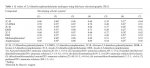
Doesn't look quite right to me, either. Why was it run in DMSO? The closest I can compare it with is 2CC in D2O (below). The aromatic Hs in 2CC are clearly separated, as are the methoxys. Those should be almost the same in DOC. Maybe the solvent would make it that different, but I doubt it.

 
It looks potentially totally wrong to me. For a start the peak around 1ppm should be a doublet, not a triplet as it appears to be. The peak labelled D is at far too low a shift to be a CH next to an amine. The peak labelled DMSO should be more complicated than the triplet it appears to be. Water in DMSO (there's always some) gives a singlet at 3.3ppm, and there's nothing there. The methoxy peaks generally come around 3.8ppm not ~3.4.

Not much into 1H NMR spectroscopy but can you or anyone explain the peak at 3.4ppm? In fact in all methoxy groups coupled to aromatic rings, the peak is always around 3.7-3.8. What can explain this discrepancy in the current sample? All the others seem minor compared to this, and perhaps explained, but this one in fact baffles me. What substance could cause such a spectrum?
 
Not much into 1H NMR spectroscopy but can you or anyone explain the peak at 3.4ppm? In fact in all methoxy groups coupled to aromatic rings, the peak is always around 3.7-3.8. What can explain this discrepancy in the current sample? All the others seem minor compared to this, and perhaps explained, but this one in fact baffles me. What substance could cause such a spectrum?

The large peak at 4.65 is HDO. The quartet at 3.4 ppm in the 2CC spectrum is from the CH2 of diethyl ether, which is a common crystallization solvent for amine hydrochlorides. There is a corresponding triplet for the methyl of diethyl ether at around 1 ppm, off the end of the graph. Or were you referring to the DOC spectrum.
 
The large peak at 4.65 is HDO. The quartet at 3.4 ppm in the 2CC spectrum is from the CH2 of diethyl ether, which is a common crystallization solvent for amine hydrochlorides. There is a corresponding triplet for the methyl of diethyl ether at around 1 ppm, off the end of the graph. Or were you referring to the DOC spectrum.

yes, the DOC. Thanks for any clarification
 
The solvent residual signal of DMSO comes at 2.5 ppm, water at usually at 3.3 ppm, but the latter can shift depending on basic or acidic impurities. Maybe it's the water signal (would be quite a wet sample then; looks to sharp for water either, which usually tends to be lower and broader).
Without integrals it is not possible to accurately compare a large singulett like the one at ~3.4 ppm with splitted, hardly recognizable signals e.g. at 1.6-1.7 ppm. I wouldn't even dare to assign a total number of protons for this spectrum.

Furthermore, it is not unrealistic to think that the 2 aromatic protons, which separate nicely in tryp2fun's spectrum measured in D2O, could indeed interfere in a DMSO-spectrum. After all, there are only 0.1 ppm seperated. One of the main problems in the OP's spectrum is the low resolution and lack of numerical values of the signals, which do not allow any further distinction. Nonetheless, I admit I doubt it. Looks not too probable to me. Both methoxy's as well as both aromatic signals should appear nicely separated.


Peace! - Murphy
 
where is the baseline noise in the NMR spectrum of DOC?

it looks like if this is a real spectra then the vertical expansion has been dropped to nothing with a reasonable sample concentration, or the sample concentration is very low and the post processing has removed the noise.

either way not a very helpful spectra

I am surprised that someone trying to prove the identity hasn't just used ms. 1H NMR is not going to be much use distinguishing between DOC and DOI DOB. GCMS is cheaper than NMR too.
 
Last edited:
The low resolution looks perfectly like of those reference-spectra from SDBS (5th entry from below). It's definitely due to after-processing of the picture (why would somebody do that for any other reason than trying to fake?).

- Murphy
 
The low resolution looks perfectly like of those reference-spectra from SDBS (5th entry from below). It's definitely due to after-processing of the picture (why would somebody do that for any other reason than trying to fake?).

- Murphy

I admit it is bizarre, however in that site I could not find any results with methoxy groups coupled with aromatic rings, with values different from 3.7-3.8ppm (and I searched a large number of samples). That peak (of 3.4 in the OP spectrum) is the thing that bothers me the most.
 
where is the baseline noise in the NMR spectrum of DOC?

it looks like if this is a real spectra then the vertical expansion has been dropped to nothing with a reasonable sample concentration, or the sample concentration is very low and the post processing has removed the noise.

either way not a very helpful spectra

I am surprised that someone trying to prove the identity hasn't just used ms. 1H NMR is not going to be much use distinguishing between DOC and DOI DOB. GCMS is cheaper than NMR too.

Actually, the separation of the aromatic H's is quite different for 2C-C, B, and I, the separation is larger as you go from Cl to Br and I. I would expect the same from the DOX's.
 
Actually, the separation of the aromatic H's is quite different for 2C-C, B, and I, the separation is larger as you go from Cl to Br and I. I would expect the same from the DOX's.

the point was NMR is not the right tool for the job, if you have a hammer all problems look like nails, any kind of MS would give an immediate unequivocal answer better still GCMS would also tell you the approximate purity.

The position of the hydrogen ortho versus meta to the halogen is going to shift with the halogen but an analytical technique that requires comparison to other spectra (of DOB or DOI ) is weak and requires other reference spectra. I would suggest never try to identify a halogen with NMR or with IR for that matter. the unique isotope pattern is a gift for analyists.
 
the point was NMR is not the right tool for the job, if you have a hammer all problems look like nails, any kind of MS would give an immediate unequivocal answer better still GCMS would also tell you the approximate purity.

The position of the hydrogen ortho versus meta to the halogen is going to shift with the halogen but an analytical technique that requires comparison to other spectra (of DOB or DOI ) is weak and requires other reference spectra. I would suggest never try to identify a halogen with NMR or with IR for that matter. the unique isotope pattern is a gift for analyists.

You are absolutely right. There is a fingerprint that the halogens give the 1H-NMR of these compounds, but you could only use it by comparison with a known standard. I could distinguish the 2CX's from 1H-NMR because I am familiar with the spectra of the compounds. MS is an absolute technique that provides direct evidence for the presence and identity of the halogen without any prior data. On the other hand, it would be hard to distinguish between the positional isomers by MS. One should use all of the tools at hand, hammers, screwdrivers, and saws.
 
Top