


-
DPMC Moderators: tryptakid
You are using an out of date browser. It may not display this or other websites correctly.
You should upgrade or use an alternative browser.
You should upgrade or use an alternative browser.
Boys, 2 and 5, Smoked Pot, Police Say [Updated 4/26/07]
- Thread starter dankhead88
- Start date



But seriously, some of you guys bring up very valid points. I don't see anyone freaking out about dousing children in caffeine, candy, fattening foods, and other crap you consume to shorten your life
Caffeine and Candy shortens your life ? Got any study where I can read about that ?
Really ? Again, do you have any sources for this information ? I thought pollution like that was only in very few cities on earth , ie Mexico City.any kids living a metropolitan area already inhale the equivilant to a pack of cigarettes a day.
Yes you must be right, we already established you are an expert on most of the subjects in this post.I don't see how the psychological effects would really do anything to a kid anyhow. They're already high/tripping in behavior

panic_the_digital
Bluelighter
- Joined
- Feb 28, 2006
- Messages
- 1,172
ellua said:by the looks of them? what can you see, other than they're black? take that shit somewhere else.
That's funny, because I haven't seen the video and I thought it was the actions of stupid white trash.
Can't help but agree with DM and LG. Hell, haven't any of your family members given you a sip of beer as a small child? We all know how much worse alcohol is for you, but if they taped the kids sipping a beer ands making a gross face, it would be on America's Funniest Home Videos.
BTW, I do not endorse providing drugs to ANYONE under 18.

ellua
Bluelighter
- Joined
- Jun 21, 2006
- Messages
- 1,191
panic_the_digital said:Can't help but agree with DM and LG. Hell, haven't any of your family members given you a sip of beer as a small child? We all know how much worse alcohol is for you, but if they taped the kids sipping a beer ands making a gross face, it would be on America's Funniest Home Videos.
tru dat :/

lurkerguy
Bluelighter
- Joined
- Dec 16, 2006
- Messages
- 2,380
Crazeee said:Caffeine and Candy shortens your life ? Got any study where I can read about that ?
You think candy and soda is good for you?
Seriously?
http://www.cspinet.org/liquidcandy/(PDF 718Kb)
Press Release: CSPI Calls on FDA to Require Health Warnings on Sodas
Americans consume gargantuan quantities of carbonated soft drinks and suffer untoward health consequences. Companies annually produce enough soda pop to provide 557 12-ounce cans - 52.4 gallons - to every man, woman, and child.
Adding in noncarbonated soft drinks (including fruit drinks, ades, iced teas, and the like) adds thousands of more empty calories to the diet each year.
Carbonated soft drinks are the single biggest source of calories in the American diet, providing about 7 percent of calories; adding in noncarbonated drinks brings the figure to 9 percent. Teenagers get 13 percent of their calories from carbonated and noncarbonated soft drinks.
Consumption of carbonated soft drinks peaked in 1998, when consumption was 56.1 gallons per person. In a historic turnaround, consumption was 7 percent lower in 2004. And because some people have switched to diet sodas, the consumption of caloric soft drinks declined by 12 percent.
Soft drinks provide large amounts of sugars (mostly high-fructose corn syrup) to many individuals' diets. Soda pop provides the average 12- to 19-year-old boy with about 15 teaspoons of refined sugars a day and the average girl with about 10 teaspoons a day. Those amounts roughly equal the government's recommended limits for teens' sugar consumption from all foods.
Soft drinks are a problem not only for what they contain, but for what they push out of the diet. In 1977–78, boys consumed more than twice as much milk as soft drinks, and girls consumed 50 percent more milk than soft drinks. By 1994–96, both boys and girls consumed twice as much soda pop as milk. Heavy soft drink consumption is associated with lower intake of numerous vitamins, minerals, and dietary fiber.
The empty calories of soft drinks are likely contributing to health problems, particularly overweight and obesity. Those conditions have become far more prevalent during the period in which soft drink consumption has soared. Several scientific studies have provided experimental evidence that soft drinks are directly related to weight gain. That weight gain, in turn, is a prime risk factor for type 2 diabetes, which, for the first time, is becoming a problem for teens as well as adults. As people get older, excess weight also contributes to heart attacks, strokes, and cancer.
Frequent consumption of soft drinks may also increase the risk of osteoporosis—especially in people who drink soft drinks instead of calcium-rich milk. Dental experts continue to urge that people drink less soda pop, especially between meals, to prevent tooth decay (due to the sugars) and dental erosion (due to the acids).
Frequent consumers of soft drinks may also be at a higher risk of kidney stones and a slightly higher risk of heart disease. More research is needed in both of those areas.
Besides the sugars and acids, other soft drink ingredients are of concern. Caffeine, which is added to many of the most popular soft drinks, is a mildly addictive, stimulant drug. It also increases slightly the excretion of calcium. Artificial colorings, especially Yellow No. 5, promote attention-deficit hyperactivity disorder in some children. Yellow No. 5 also causes hives, asthma, and other allergic reactions in a small number of individuals.
Soft drinks are heavily consumed in part because companies promote them vigorously and market them everywhere—in stores, restaurants, gas stations, museums, vending machines, and even schools. Companies spend roughly $700 million on media advertising each year, and hundreds of millions more on other promotional activities, which may involve musicians, actors, contracts with schools, and price discounting.
A number of parents and educators have—in response to the obesity epidemic among youths—begun successful efforts to curb the sale of soft drinks in schools. Currently, many middle schools and most high schools sell soda, with many schools having exclusive marketing contracts with companies. California, Tennessee, Arizona, Philadelphia, New York City, and other jurisdictions have barred non-diet soft drinks from some or all schools.
To help reduce the consumption of soft drinks, especially non-diet varieties, the Center for Science in the Public Interest makes these and other recommendations:
* National and local governments should require chain restaurants to declare the calorie content of soft drinks and all other items on menus and menu boards.
* The Food and Drug Administration should require labels on non-diet soft drinks to state that frequent consumption of those drinks promotes obesity, diabetes, tooth decay, osteoporosis, and other health problems.
* Local, state, and federal governments should provide water fountains in schools, government buildings, parks, and other public spaces.
* School systems and other organizations catering to children should stop selling soft drinks (as well as candy and other junk foods) in hallways, shops, and cafeterias.
* State and local governments should consider levying small taxes on soft drinks, with the revenues earmarked for promoting health and fitness. A national 2-cent tax on a can of soda pop would raise $3 billion annually.

Last edited:

~*geNeRaTiOn E*~
Bluelight Crew
that is severely disturbing.

SonOF
Bluelighter
- Joined
- Nov 6, 1999
- Messages
- 4,918
Holy shit, everyone knows caffeine and junk food are bad for children; this make it any more RIGHT that the kids were given marijuana. Stupid fucking analogies. Junk food can be moderated. Do you want to "moderate" a 2 or 5 year old's marijuana intake?
You guys are seriously underestimating marijuana as a mind-altering substance. Remember how high you were the first time you smoked? Maybe even a little freaked out? Now imagine weighing 40 fucking pounds. Has the potential to fuck up the little one's psyche, don't you think?
LSD is also a relatively safe drug for ADULTS who don't have any mental issues. And no, I don't want you giving my toddler acid, regardless of the dose.
You guys are seriously underestimating marijuana as a mind-altering substance. Remember how high you were the first time you smoked? Maybe even a little freaked out? Now imagine weighing 40 fucking pounds. Has the potential to fuck up the little one's psyche, don't you think?
LSD is also a relatively safe drug for ADULTS who don't have any mental issues. And no, I don't want you giving my toddler acid, regardless of the dose.
lurkerguy
Bluelighter
- Joined
- Dec 16, 2006
- Messages
- 2,380
I don't think you remember how fucked up and wired you got off of caffeine at age 5.
I saw a kid run around in circles for 60+ minutes screaming after drinking Pepsi.
The only reason people can't accept it as an analogy, is because Cannabis is illegal and evil in everyone's eyes, even people who think they want it legal and smoke it themselves, in the back of their mind, the propaganda got to them to one extent or another.
I saw a kid run around in circles for 60+ minutes screaming after drinking Pepsi.
The only reason people can't accept it as an analogy, is because Cannabis is illegal and evil in everyone's eyes, even people who think they want it legal and smoke it themselves, in the back of their mind, the propaganda got to them to one extent or another.

DarthMom
Bluelighter
SonOF said:Holy shit, everyone knows caffeine and junk food are bad for children; this make it any more RIGHT that the kids were given marijuana. Stupid fucking analogies. Junk food can be moderated. Do you want to "moderate" a 2 or 5 year old's marijuana intake?
You guys are seriously underestimating marijuana as a mind-altering substance. Remember how high you were the first time you smoked? Maybe even a little freaked out? Now imagine weighing 40 fucking pounds. Has the potential to fuck up the little one's psyche, don't you think?
LSD is also a relatively safe drug for ADULTS who don't have any mental issues. And no, I don't want you giving my toddler acid, regardless of the dose.
Edited - n4k33n
pick the least evil, and don't make a big deal when it happens.
and if it happens ....don't treat the children like criminals.
Last edited by a moderator:
DarthMom
Bluelighter
sorry!
and thank you.
and done.
:D
and thank you.
and done.
:D
Edited - n4k33n
Thanks for the insult, dully noted. Now its closed.
Last edited by a moderator:
Startling new information in toddlers smoking weed case - Rap did it!
Its too bad the original thread about this case got closed. Maybe a mod could reopen it and add this into it, if not i still think its intresting enough to stand up on its own.
Anyways, here is a video from Fox (the show is The Big Debate i believe) with a lil bit of discussion about the cause of why this thing happened.
...I know usually we post articles here but I think it could make some useful discussion. since it aint only about drugs in the media, but also discussing the effect the media has on drug use, i think it fits in jus fine here and hope its allowed to stay.
Its the anchor talkin to the founder of AllHipHop.com.
Anyways, he basically starts off his opening arguement with "So, can you tell me anything to convince me that hip hop is NOT to blame for this incident?"
8(
Its great for a laugh but also pretty pathetic. I thought yall might like to see this.
And also , i figured yall would wanna know who/what to point the finger at, so now that this extremely unbiased, informative program filled us in i guess shits easier.
So , enjoy the vid....
Heres the clip.
http://www.youtube.com/watch?v=wMazStubtAY
Its too bad the original thread about this case got closed. Maybe a mod could reopen it and add this into it, if not i still think its intresting enough to stand up on its own.
Anyways, here is a video from Fox (the show is The Big Debate i believe) with a lil bit of discussion about the cause of why this thing happened.
...I know usually we post articles here but I think it could make some useful discussion. since it aint only about drugs in the media, but also discussing the effect the media has on drug use, i think it fits in jus fine here and hope its allowed to stay.
Its the anchor talkin to the founder of AllHipHop.com.
Anyways, he basically starts off his opening arguement with "So, can you tell me anything to convince me that hip hop is NOT to blame for this incident?"
8(
Its great for a laugh but also pretty pathetic. I thought yall might like to see this.
And also , i figured yall would wanna know who/what to point the finger at, so now that this extremely unbiased, informative program filled us in i guess shits easier.
So , enjoy the vid....
Heres the clip.
http://www.youtube.com/watch?v=wMazStubtAY

15 year old African-American boys have to be listening to hip-hop! they can't like any other music! heaven forbide a young black male listens to oldies, metal, or punk!
how presumptious. "you need to ask the larger question why society would have toddlers given weed." that is exactly my point here. in the video I watched of these kids smoking weed, there is no indication that these fellas listened to hip-hop, save their Avirex shirts and the fact that they are black. you can't even say Avirex shirts because I rock them all the time and you couldn't really call me "hip-hop."
don't even get me started on Murdoch's Fox News, which is blashpemous to any journalistic mind to begin with.
how presumptious. "you need to ask the larger question why society would have toddlers given weed." that is exactly my point here. in the video I watched of these kids smoking weed, there is no indication that these fellas listened to hip-hop, save their Avirex shirts and the fact that they are black. you can't even say Avirex shirts because I rock them all the time and you couldn't really call me "hip-hop."
don't even get me started on Murdoch's Fox News, which is blashpemous to any journalistic mind to begin with.
yea the shit had me doin some serious What the fuck's.
I couldnt believe how the dude was pretty much racist as hell but masking it and shit....come on...
like to him , black=listens to hiphop=does what hiphop says
"Well they just keep talking about these BLUNTS!"
Yea, and eric clapton made a entire song about COCAINE. pretty much EVERY form of music mentions drugs at some point.
fuckin asshole.
I couldnt believe how the dude was pretty much racist as hell but masking it and shit....come on...
like to him , black=listens to hiphop=does what hiphop says
"Well they just keep talking about these BLUNTS!"
Yea, and eric clapton made a entire song about COCAINE. pretty much EVERY form of music mentions drugs at some point.
fuckin asshole.

Psych0naut
Bluelighter
Fuck, that kid is fat! :Dlurkerguy said: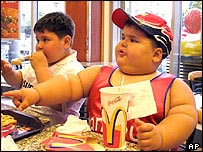
Featured above, sadistic fucks abuse children, providing them with the harmful drug Coca Cola, known to cause hyper activity, sleeplessness, obesity, diabetes etc.
In addition, they provide them with trans fatty fries and burgers, known to cause serious long term health problems, including death.
To top it all off, the abusers are brazen enough to photograph the abuse!

lacey k said:yea the shit had me doin some serious What the fuck's.
I couldnt believe how the dude was pretty much racist as hell but masking it and shit....come on...
like to him , black=listens to hiphop=does what hiphop says
"Well they just keep talking about these BLUNTS!"
Yea, and eric clapton made a entire song about COCAINE. pretty much EVERY form of music mentions drugs at some point.
fuckin asshole.
yeah, I read this one article by a pop. culture journalist who said that many anti-hip-hop comments made by the establishment are in fact, anti-black comments incognito. this makes sense now more than ever.

Transcendence
Bluelighter
- Joined
- Jul 19, 2006
- Messages
- 2,502
Oh yeah, cause the music of his era didn't glorify drug use at all.
pr0ficient
Bluelighter
Toddlers Filmed Smoking Pot to Remain in Foster Care
Fox News
Fox News
Thursday 26 April 2007
FORT WORTH, Texas — A 2-year-old and 4-year-old who were shown on videotape being taught how to smoke marijuana by two teens will remain in foster care, a judge ruled Thursday.
Juvenile Court Judge Kim Brown issued the temporary order during a brief hearing. She said no appropriate relatives could be found to care for the youngsters but that officials would keep searching.
Results of drug tests done on the boys last month were not revealed in court Thursday. Assistant District Attorney Clifford Bronson, citing the judge's gag order, said he could not comment on whether those results were a factor in the decision to keep the children in foster care.
But some of the children's relatives said the decision was unfair because those responsible for the incident remain jailed. Several relatives outside the courtroom Thursday said they can provide a loving home for the youngsters.
"It's no use for them being in the system," said Sharonda McCoy, 19, the boys' aunt, who said she talked to the youngsters recently. "This is hurting them. ... They just want to come home."
The children were removed from their home in Watauga, a Fort Worth suburb, in February after police investigating a burglary found the videotape while searching the house.
It shows one teen lighting a marijuana cigar in the 2-year-old's mouth, then laughing as the toddler coughs. One teen then tells him to pass it to his brother, who also smokes it and coughs, as the teens laugh. The youngsters keep smoking, and one teen asks: "You want that candy? You got the munchies?"
The children's uncle, Demetris McCoy, 17, of Watauga and Vanswan Polty, 18, of Fort Worth remained jailed Thursday on charges of two felony counts of injury to a child. A 16-year-old accused of videotaping the incident also was arrested.
The children's mother, 21-year-old Shatorria Russell, was asleep in a back bedroom and did not know what was going on, police have said. She was not arrested.
It's unclear how long the children will remain in the custody of Child Protective Services, but another hearing will be held in 60 days or less if an appropriate relative is found, officials said.
Cynthia Tucker, the boys' paternal grandmother, said after the hearing that she wants to care for them. She said she was upset by the ruling because she was never investigated by CPS as a possible caregiver.
Tucker, whose son is in prison, said she was upset when she saw the videotape. Tucker said the boys are normal tots who love to go to the park and zoo and play outside.
"I love my grandchildren," Tucker said. "I can give them the love they need."
Fox News