• Psychedelic Drugs Welcome Guest
    View threads about
    Posting RulesBluelight Rules
    PD's Best Threads Index
    Social ThreadSupport Bluelight
    Psychedelic Beginner's FAQ
  • PD Moderators: Esperighanto | JackARoe |

Health New molecular structure for psychedelic drugs : ZC-B and LPH-5

ascinating, what's the logic on the SAR with a structure like this? I imagine that the idea would be the creation of a dimer that gets lysed via metabolism into something expected to be active, but do we have an understanding on how adjacent halogens like the two bromines in there would metabolize? Triisopropylsilyl groups are also something I've never seen on a medication expected to be consumed, do you think that would be safe? Genuinely curious here.

Must've been fascinating working in Trachsel's lab as well!!! Any experiences or learnings from there that you wish made it into his book Phenethylamines or his other papers?

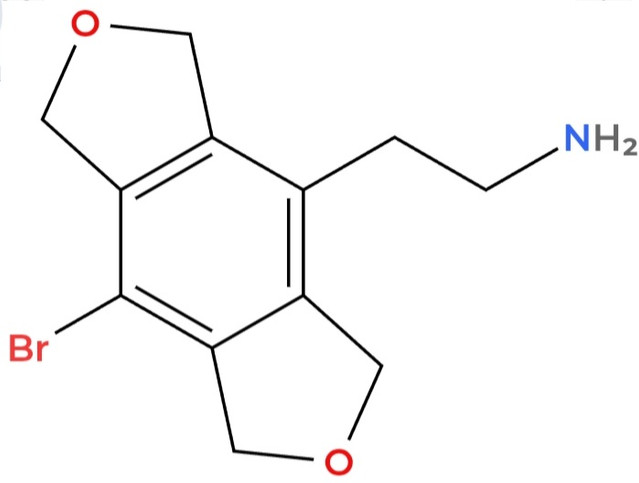
No, the molecule is an intermediate of synthesis, TIPS are protecting groups for indole because next reaction was reacting it with 1 eq. of BuLi and forming the aldehyde. Final molecule will be NCCC1=C2C=CNC2=C(Br)C2=C1NC=C2 , you can generate from this SMILES the molecule on https://www.rcsb.org/chemical-sketch . I choose this work but it is not finished and only appear on the book as idea. The book is the most complete collection of psychedelic phenethylamine chemistry and pharmacology I've ever seen. Congratulation M. Traschel. If I could finished the molecule its activity was determined by him and his team. I live in the same country and we studied at the same time but not in the same university. I wish I couls have more time to make my molecule tested and probably published. There is another team that make isofly structures that are apparently more potent than simple fly or butterfly, it didn't appear on the book but Im pretty sure they designed for the Traschel's team, it have been published somewhere but I don't remember here. Structure is here NCCC1=C2COCC2=C(Br)C2=C1COC2 . This is the full 2c-B-Isofly but I think the most active was hemi-isofly, don't remember whether it's 2- or 5- isomer.

 
No, the molecule is an intermediate of synthesis, TIPS are protecting groups for indole because next reaction was reacting it with 1 eq. of BuLi and forming the aldehyde. Final molecule will be NCCC1=C2C=CNC2=C(Br)C2=C1NC=C2 , you can generate from this SMILES the molecule on https://www.rcsb.org/chemical-sketch . I choose this work but it is not finished and only appear on the book as idea. The book is the most complete collection of psychedelic phenethylamine chemistry and pharmacology I've ever seen. Congratulation M. Traschel. If I could finished the molecule its activity was determined by him and his team. I live in the same country and we studied at the same time but not in the same university. I wish I couls have more time to make my molecule tested and probably published. There is another team that make isofly structures that are apparently more potent than simple fly or butterfly, it didn't appear on the book but Im pretty sure they designed for the Traschel's team, it have been published somewhere but I don't remember here. Structure is here NCCC1=C2COCC2=C(Br)C2=C1COC2 . This is the full 2c-B-Isofly but I think the most active was hemi-isofly, don't remember whether it's 2- or 5- isomer.

This is fascinating! Are you aware of any connections between the extended duration of the 5-Ethoxy variants of Shulgin's 2,4,5-trisubstituted phenethylamines, and the various fly compounds? I've been intrigued by 2C-E-5EtO, which Shulgin claimed was deemed "Eternity" by some members of the initial testing group due to how long the effects lasted. Could this quirk in the phenethylamine SAR be extended to the fly compounds somehow, perhaps a bulkier "wing" where the 5-Ethoxy would be could increase duration, I'm not sure, but it seems like an element of the SAR worth probing into.

2-Ethoxy-5-Methoxy variants of 2,4,5-trisubstituted phenethylamines also play into this, as 2C-B-2EtO was found to have a shorter duration than 2C-B. It seems as if the extra carbon being on the 5 is the longest lasting, both the 2 and the 5 positions being balanced is in the middle, and the 2 position having the extra carbon is the shortest lasting. This characteristic of psychedelic phenethylamines' SAR is what I'm asking about here, my apologies for the verbose description, I'm not a formally trained chemist.
 
I'm interested in synthesizing some of the tetrahydroisoquinolines (THIQs) that give peyote a unique experience, to combine with non-mescaline phenethylamines

There are so many THIQs that remain to be investigated... Pellotine shows activity at HT1D, 6, 7:
Pellotine (1), a Lophophora alkaloid... Furthermore, radioligand-displacement assays showed that 1 is selective for the serotonergic system and in particular the 5-HT1D, 5-HT6, and 5-HT7 receptors, where it binds with affinities in the nanomolar range. Additionally, 1 was functionally characterized at 5-HT6 and 5-HT7, where it was found to be an agonist at the former and an inverse agonist at the latter (source)

Recently, pellotine (1a), a Lophophora alkaloid, was unexpectedly shown to be an inverse agonist of the 5-HT7R. Therefore, we evaluated close analogs of compound 1a, both naturally occurring and synthetic analogs, as inverse agonists of the 5-HT7R. (source)
 
Last edited:
If only I could speak german…
get the book and you can use google lens. snap a pic translate and screenshot everything. I am doing it with one of his other books that I bought as a kindle book. Psychedelische Chemie. Its a little annoying but so worth it, I just do a few pages every day. It's got a lot of the same compounds of Pihkal and Tihkal, but now there's so many new experience reports and psychedelic anecdotes that I would have never been able to read. I can't afford Phenethylamine - Structure to Funcion yet as it's only available in hardback but someday. I think cost is around $200.

Was just looking through this patent https://patents.google.com/patent/WO2022221774A1/en and what excites me the most is that these azetedine or piperine analogues allow even more places for substitutions. I hadn't realized that Nichols and company wrote the patent on ZC-B. I figured Nichols being retired, wasn't doing so much work in the field any more but i was very wrong about that.

 
Atai Beckley were also working on a 5-MeO-DMT formulation.
I was reading about that earlier, the WSJ frames it as follows:
The Race to Commercialize the World’s Most Powerful Psychedelic
An obscure and extremely powerful psychedelic called 5-MeO-DMT is drawing intense interest from the pharmaceutical industry, where biotech companies are racing to turn it into a commercially available treatment...

Big pharma Lily just bought Atai Beckley, who was working on LPH-5
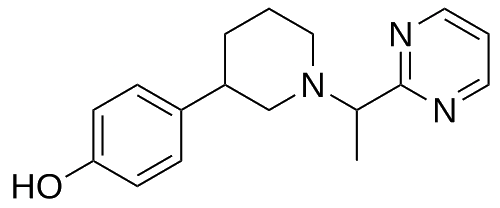
Take LPH-5 (2C-TFM-3PIP), remove the 2,5-DM, replace 4-TF with 4-HO and add α-methyl benzyl ...and you have Z7757, highly selective for 2A.

2026-07-19-0wt-Kleki.png
 
Last edited:
More on the pharma 5-MeO-DMT:

The JAMA Psychiatry randomized clinical trial of GH001, a synthetic inhaled formulation of 5-MeO-DMT, is the most clinically relevant data I’ve read this quarter for exactly that population. The trial evaluated single-day treatment with GH001 versus placebo in patients with treatment-resistant depression.
https://www.clinicaltrialvanguard.c...us-about-the-limits-of-our-trd-trial-designs/

5‐MeO‐DMT has the highest binding affinity for the 5‐HT1A receptor (i.e., 1.9–3 nM) and a 300–1000 fold higher selectivity compared with the 5‐HT2A receptor. This is noteworthy, as for most psychedelics, the effects in humans appear to be mediated primarily via activation of 5‐HT2A (source)

We show that a 5-HT1A-selective 5-MeO-DMT analogue is devoid of hallucinogenic-like effects while retaining anxiolytic-like and antidepressant-like activity (source)
 
Last edited:
Curiously 5-MeO-DMT and DMT seem to have pretty similar binding profiles, except for 5-MeO-DMT's agonism at 5-HT1A. 5-HT1A activation also attenuates HTR in rodents (and thus the compound is less psychedelic as our assays say so 😜).

It would be very interesting - but perhaps hard to get across an ethical committee - to consume 5-MeO-DMT while co-administering one of those selective 5-HT1A antagonists. It is quite possible that the colourful rich visual experience (and nature!) of DMT returns to the 5-MeO-DMT realm then. Or the results are entirely different but then we could ask new questions.
 
I admit I have never looked at them in detail personally. You can find a number of antagonists on Wikipedia: https://en.wikipedia.org/wiki/5-HT1A_receptor#Ligands It seems like some of the earlier contendors for selective antagonism later turned out to bind off-target here and there. And then of course it would be ideal if at least some amount of clinical trials on humans have been done to get the research sanctioned. Of course as a private "researcher" no need to answer any ethic commission, but good luck buying these obscure selective antagonists.
 
What's a good example of one of these?

Not sure about 'good' but there's WAY-100635.
For context, this quote is from a paper on 2-Br-LSD which is a biased 2A agonist (unlike LSD):
There are countervailing interactions between 5-HT1A and 5-HT2A receptors and activation of 5-HT1A can block the HTR induced by psychedelic drugs. Because 2-Br-LSD acts as a potent full agonist at the 5-HT1A receptor, it is possible that 2-Br-LSD’s 5-HT1A agonism masks the HTR. We therefore tested whether 2-Br-LSD can induce the HTR in the presence of WAY-100635. Pretreatment with 1 mg/kg WAY-100635 had no
effect on the response to 2-Br-LSD in the HTR assay. These results confirm that 2-Br-LSD’s 5-HT1A agonism is not suppressing the HTR. (source)
 
Last edited:
5-HT1A activation also attenuates HTR in rodents (and thus the compound is less psychedelic as our assays say so 😜).

it seems HT2c and TAAR1 influence the HTR also:
We have confirmed the key role of 5-HT2A in HTR, an inhibitory effect of 5-HT1A, a bimodal contribution of 5-HT2C and a role of TAAR1 in modulating HTR induced by 5-HTP. (source)

There's also likely contributions from HT5, 6 and 7 on the HTR, and I suspect indirectly via D2, adrenergic and sigma receptors.
 
It would be very interesting ... to consume 5-MeO-DMT while co-administering [a] selective 5-HT1A antagonist. It is quite possible that the colourful rich visual experience (and nature!) of DMT returns to the 5-MeO-DMT realm then. Or the results are entirely different but then we could ask new questions.

Indeed it's always worthwhile to ask new questions. Some say that the HT1a activity of psychedelics plays a notable role in coordinating the 2A downstream effects, effectively allowing them to 'shine' in a particular way that is conclusive to 'a quality psychedelic experience'.

This is perhaps best contemplated with the example of LSD, an equipotent 1A and 2A agonist:
...most psychedelic drugs tested at 5-HT2A showed partial agonism ... LSD and 5-MeO-DMT were effectively equipotent at 5-HT1A and 5-HT2A.
...
Despite the variation in selectivity and potency, the tryptamine psychedelics were full or near-full agonists of 5-HT1A ... These findings validate the potency and efficacy of both LSD and 5-MeO-DMT at 5-HT1A, complementing previous studies that have demonstrated the importance of 5-HT1A in the in vivo pharmacology of both drugs. (source)

I presume that LSD's qualities arise from it's rich polypharmacology which seems to headline HT1A and HT2A (and ofc D2 et al). Would LSD sans-1A be any better? I think not as 1A likely "quietens" the 5-HT network allowing 2A to "shine"; implying 1A plays a crucial role in LSD's effects... but that's just imo.

LSD and DMT also interact with HT6 & HT7:
Synaptogenic responses occur after agonism at additional receptor sites including 5-HT6 and 5-HT7. Since DMT can bind to these receptors, we speculate that its mechanism of action may include their diverse effects after activation. For example, the agonism of 5-HT7 facilitates synaptogenesis and increases the density of dendritic spines in the forebrains of mice. Chronic activation leads to sustained effects within the postnatal cortical and striatal neurons. Acute activation resulted in neurite elongation within these regions. This effect also occurs within the hippocampus at early postnatal stages. The 5-HT7 receptor also mediates arborization in rat forebrains due to agonism in late adolescent development, and is maintained into adulthood. This effect may occur in an age-dependent manner, with the structural effects being attenuated into adulthood.

Another target of interest includes the 5-HT6 receptor, which plays a role in the development of neural circuits. Specifically, its activation is implicated in neuronal migration and neurite outgrowth. Constitutive activation of 5-HT6 through its interaction with Cdk5 leads to neurite growth, which was abolished through the administration of a 5-HT6 receptor antagonist. These 5-HT6 receptor sites have received less attention as potential mediators of psychedelic-mediated neuritogenesis, and future investigation into their contribution is certainly warranted based on the preliminary findings of in vitro and in vivo studies. (source)

LSD is a potent 5-HT receptors ligand endowed with high affinity for most of all 5-HT subtypes (source)

DMT is a partial agonist to several serotonin receptors, including 5-HT1A, 5-HT1B, 5-HT1D, 5-HT2A, 5-HT2B, 5-HT2C, 5-HT5A, 5-HT6, and 5-HT7, with varying affinities... DMT is the only known endogenous mammalian N,N-dimethylated trace amine to bind the sigma-1 receptor... The sigma-1 receptor is implicated in having a neuroprotective role against a myriad of neuropsychological conditions via neuroplastic and anti-inflammatory processes. Thus, the sigma-1 receptor may be another potential mediator of DMT’s psychogenic effects and a target in the treatment of neurodegenerative diseases. (source)

Over the course of the last 25 years, 5-HT7 has been the subject of intense investigation, and it has been demonstrated that 5-HT7 plays an important role in a wide range of pharmacological processes. As a result of these findings, modulation of 5-HT7 activity has been the focus of numerous drug discovery and development programs. This review provides an overview of the roles of 5-HT7 in normal physiology and the therapeutic potential of this interesting drug target. (source)

An an aside, here's a wink to not having "5-HT2A tunnel vision", apparently put forward by Shulgin:
After the emergence of the 5-HT2 paradigm the full-flavor concept appeared mainly outside of the mainstream of neuroscience (Shulgin & Shulgin, 1991) (Goldsmith, 2007) (Doyle, 2011)(Coyle et al., 2012) (Ray, 2012).

A concept of complex action was advanced by (Shulgin & Shulgin, 1991)
 
Last edited:
...tryptamines are highly reminiscent of the Indole analogs of phenethylamines, think about benzofurans also being off by a single oxygen.
Amongst the FLY series (inc DFLY, hemi[D]FLY-×), there's also isoFLY and hemi-isoFLY. isoFLY looks neat.
Structure is here NCCC1=C2COCC2=C(Br)C2=C1COC2 . This is the full 2c-B-Isofly
Screenshot-20260720-201058-Brave.jpg


I wonder about furan rings instead of those tetrahydrofurans (and what about thiophene/thiolane). It's possible that multiple optimal configurations exist. Eg perhaps a hemiDFLY-5 to overlay the indole pyrrole and who knows what for '2-'3.

Alternatively a hemi-isoFLY-2 and a 6-MeO making it:
— Ψ-2C-B-hemi-isoFLY-2

Those 6-MeO Ψ PEAs are interesting for sure. There's a great 2025 paper on this ft Trachsel:
Receptor interaction profiles of 4-alkoxy-2,6-dimethoxyphenethylamines (Ψ derivatives) and related amphetamines
 
Last edited:
Top