• Psychedelic Drugs Welcome Guest
    View threads about
    Posting RulesBluelight Rules
    PD's Best Threads Index
    Social ThreadSupport Bluelight
    Psychedelic Beginner's FAQ
  • PD Moderators: Esperighanto | JackARoe |

Lysergamides LSI, Ancient LSD, Secret of the Eleusis Kykeon and Vedic SOMA

Making my first post here, I've been following this story a long time across many threads and forums. Recently, I've finally had the time to dig into this and do some work of my own, which I'll share in this post.

First, there's been significant discussion and speculation on the potential chemistry responsible for the observed effects. My opinion is that this is premature and unproductive. As far as I know, the observation has been made by only one person so far, on ~12 occasions. So we have repeatability, but not yet reproducibility. Until more people either fail or succeed in replicating the results, all these theories are just distraction.

The adduct theory which is the namesake of this thread does not really hold up in my opinion, and I’ve failed to find any evidence of adduct formation with ergine or isoergine when mixed with this young barley powder in the conditions described (I can share details and TLC pictures later). For now though, I’d like to share my own experiences with this procedure, which I conducted in the last few months.

3/7/2026

Preparation:

Selected 5 seeds (470 mg), hand ground with a manual coffee grinder on finest setting. Powder added to a 20 mL glass vial. Added 30 mg DL-tartaric acid followed by 10 mL of Everclear 190. Vial closed and mixed for 15 minutes. Placed in fridge for 30 minutes to allow dispersed particles to sediment. Carefully decanted the supernatant into a large pyrex glass dish. Did not have time to allow full evaporation and did not have a hair dryer or heat gun available at the time, so left the dish overnight to dry. Following morning, used a razor blade to scrape off the dried residue from the dish (66 mg recovered). Appearance was exactly as described in Stahl’s book, a dark paste that looks like “slimy dark banana peel”. Dissolved 10 mg of DL-tartaric acid in 15 mL distilled water, then added this residue. The dried alcohol extract was insoluble in water (pH measured ~ 4), and slightly less dense, having the tendency to float on the surface after being manually broken up with a stirring rod. After an unsuccessful attempt to dissolve this in water, additional distilled water was added to bring the volume to 60 mL followed by addition of an entire 3 g packet of Aojiru young barley powder. Mixing was continued for 20 minutes, followed by ingestion.

Results:
Taste was pleasant, and small volume required only a few swallows. With no major plans, I just relaxed and sat around waiting for anything notable. At approximately 30 minutes after ingestion, the faintest feeling of nausea occurred to me; I wouldn’t describe this as nausea, but more like someone whispering “nausea” in your ear. Very mild feeling that lasted approximately 30 minutes. An hour after ingestion, no notable feelings out of the ordinary. The remainder of the day was unremarkable, with nothing else to report. Something I noticed in the following week or two was an uncharacteristically optimistic attitude; much less work anxiety, depressed moods, and temper (I noticed this in traffic when my usual expletives were replaced by a “that’s alright”). With no other changes in my daily routines, I was left wondering if this was somehow related to this experiment.


4/26/2026

Preparation:

Decided to follow the book examples more precisely, especially since I deviated in some ways in my first attempt. As in the book example, I weighed out 25 seeds (2.034 g), ground these with my manual coffee grinder on finest setting, and then used a mortar and pestle to further grind these down into the finest powder (unlike the book procedure, I did not use mortar and pestle in my first attempt). I recovered 2.030 g of powder from the coffee grinder, but only 1.812 g after mortar and pestle, due to losses in the grooves of the mortar. This fine powder was added to 30 mL of Everclear 190 together with 30 mg of DL-tartaric acid (pH was measured at 3.5 – 4). This was mixed for 20 minutes before placing in a fridge for an additional 20 minutes. After removal from the fridge, the supernatant was a slightly turbid golden yellow color, while the sediment was mud-like in appearance. The supernatant was decanted into the same large pyrex tray and left to evaporate with mild air flow. As in the book, I used a small heat gun to evaporate the remaining liquid after about 20 minutes, heating from a distance and never too long in one spot, until after 10 minutes the residue appeared dry. Using a razor blade, I scraped the residue from the tray, recovering 167 mg. The appearance was similar to before, perhaps a bit less slimy with a “milk chocolate brown” color. The residue was once again placed in a larger glass jar with 10 mg DL-tartaric acid and 60 mL of distilled water. The pH measured at ~ 4, and the residue remained insoluble as it was mixed. I used a stir rod to break up the residue, leaving some smaller pieces floating on the surface. After about 5 minutes of attempting to dissolve the residue, I added the 3 g of Aojiru young barley powder and mixed for another 20 minutes. After this mixing period, I could still see the alcohol extract residue floating on the surface. At this point, I contemplated aborting the experiment (basically I was thinking: “those insoluble resins are probably emetic”), but given the almost complete absence of effects in my first trial with about 25% the mass of seeds in this experiment, I decided to ingest it.

Results:
The timing here was very similar to my first attempt, with an initial feeling of nausea appearing approximately 30-45 minutes after ingestion. However, unlike my first attempt, this was not a whisper. This feeling continued to build into a strong nausea that quickly brought me to a decision point. Rather than suffering and waiting for the unpleasant inevitable purge, I decided to take some ondansetron which eliminated the nausea completely after about 30 minutes. Unlike my first attempt, I noticed that the remainder of the day (about 10 hours) I was in a really good mood and very talkative (I’m not generally this talkative). There was a slight fogginess to everything, not visually, but more like a mental fog. I still felt sharp, but almost like I had the buzz of a couple beers going on. Unlike a typical buzz though, this was unrelenting (in a nice way), in that it lasted the entire day and I could still feel it very slightly upon waking. Other than that though, this “trip” was pretty uneventful. None of the more interesting effects reported by Stahl. I can’t say for certain whether the really great mood was a result of what I ingested, or just gratefulness for avoiding a really bad time on the bathroom floor. Although I may be biasing myself now, I do feel that the last few days I’ve had that general good mood going again, less bothered by things that normally get to me. Overall, I believe the only real physical effects I experienced were the nausea (which seemed proportional to the number of seeds used), and the mental fog. The mood and after effects could be a placebo effect.


TLC Screening for Adduct

As mentioned earlier, I've done some preliminary work to look for any obvious chemical reactions in the mixtures. I found this specific paper to be quite useful in getting up to speed in extraction and TLC for this system:
Chao JM, Der Marderosian AH. “Ergoline alkaloidal constituents of Hawaiian baby wood rose, Argyreia nervosa (Burmf) Bojer”. J Pharm Sci. 1973 Apr 21;62(4):588-91. DOI: 10.1002/jps.2600620409

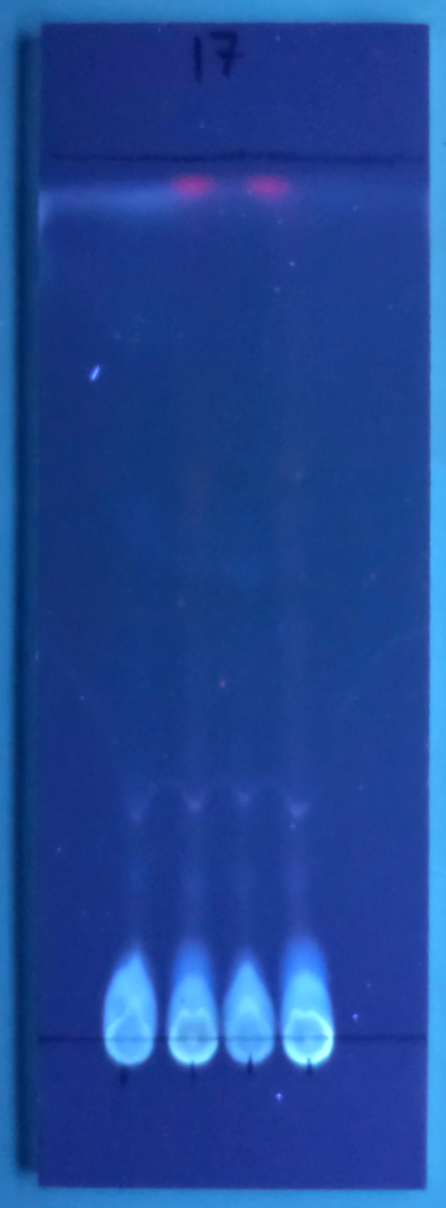
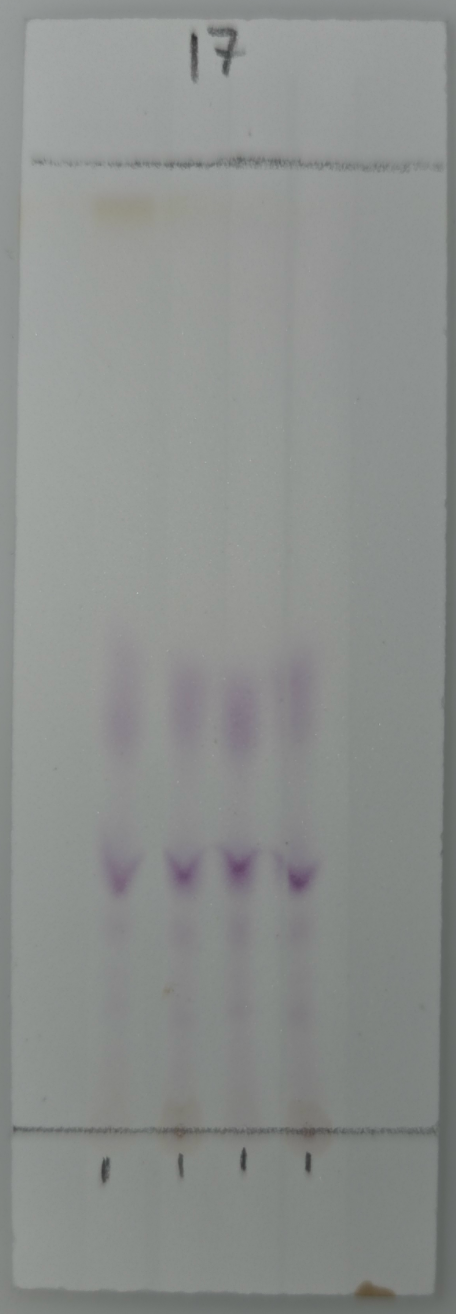
I compared the extraction pre- and post- mixture with the Aojiru barley powder, with the 20 minute mixing time. I started with the extract of 1.5 g of HBWR seeds and split this in half, mixing one half with 1.5 g of the Aojiru powder. The pH of both were ~3.5-4. I then ran TLC with a DCM:MeOH:TEA (90:9:1) eluent with a standard silica plate (I've used this system previously to look at ergine/isoergine). I spotted the plate with 4 lanes, alternating between the control (no Aojiru) and the mixture (with Aojiru). Using my airbrush, I sprayed each lane with IHR using a mask. The IHR I'm using was prepared by dissolving 1 g DMAB in 15 mL methanol, then slowly adding 5 mL of H3PO4 (85%). I chose this specific recipe as it's reportedly more shelf-stable and ~ 10x more sensitive than other Ehrlich recipes (~ 10 ng).

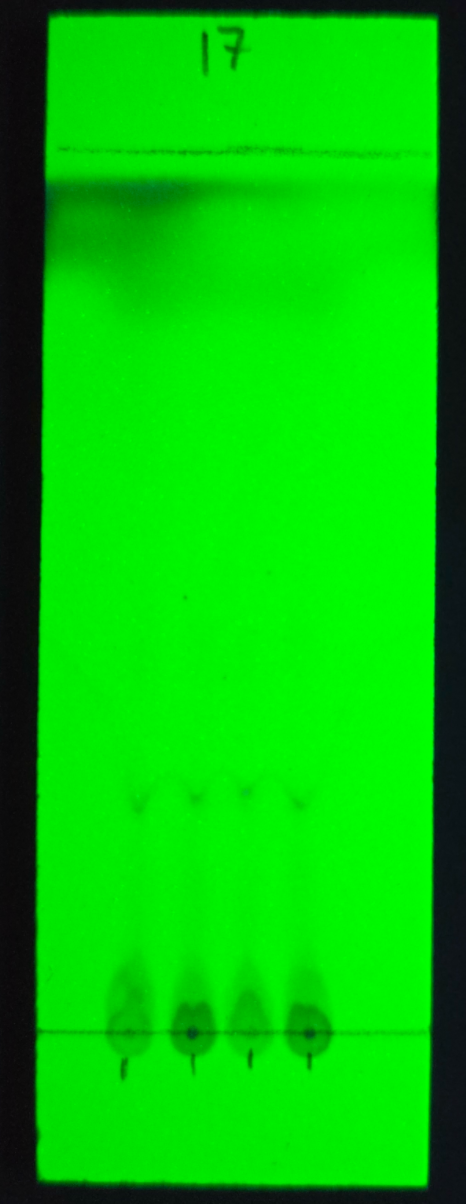
After spraying with IHR, the ergine spot appears quite quickly (~ 1-2 min), while the higher Rf isoergine took longer to develop (~5-10 minutes). After 30 minutes, some minor indoles appeared at low Rf, but nothing above isoergine appeared. Images are below for reference, and I apologize for the quality (TLC at home with cheap plates is not beautiful, and I'm still working on my technique).

TLC Images (Columns are A-B-A-B, where A = control, B = mixture)

Ambient lighting
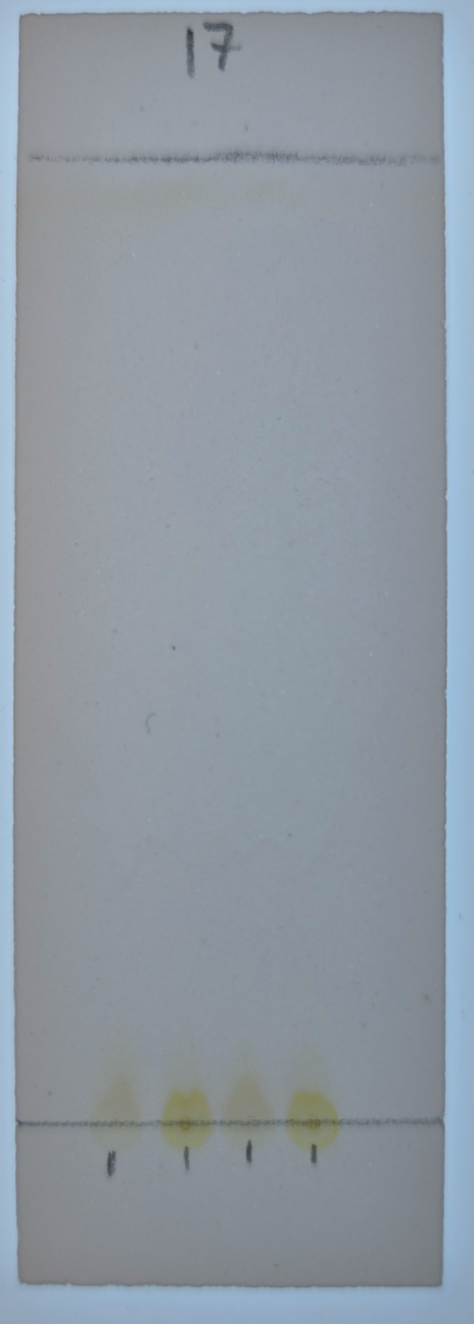
YvTb2wT.png


Longwave (366 nm), note the chlorophyll fluorescence (I suspect my spotting picked up some finely dispersed barley particles, which were then readily dissolved in the eluent)
TsLUxqf.png


Shortwave (254 nm)
wouXsCa.png


IHR Spray (strongest chevron shaped spot appear first, assumed as ergine based on literature, better technique needed in future)
sHEynoL.png


One final comment: I’ve done my best to use identical suppliers for my key materials (DL-tartaric, HBWR seeds, Aojiru powder) as Stahl has indicated across several threads/forums and his book. If there is something amiss here, I'd have to imagine it's the seeds. I do have seeds from multiple other suppliers, and noticed that the supplier used by myself and Stahl (where you can get packs of 400) is not very fresh (at least my batch wasn't). When you do a sink/float test, about 25% were floaters, and germination rates were far worse, maybe 5% to be generous. I have to imagine this could impact the outcome, and I have so far treated all seeds equal, although as you work with them, you notice they are far from equal (even in their weights). @tregar I'm very curious what your thoughts on the seeds are, and if you've tried seeds of different suppliers.

 
I don't know anything about chemistry but have been tryong to follow the discussion so far.

I would like to repost the comment I attempted to post a couple of times on Grahamhancock.com in response to Matt's article there.

Not sure if it is still going through moderation but it hasn't seemed to have been posted yet.

It went as follows:

"Dear Matt

I enjoyed reading the above synopsis of your book and the reports of your experiences with LSI. Very interesting hypothesis.

I would like to offer a humble proposal regarding the source of LSA in ancient Greece used for the Kykeon.

Are you aware of the recent study on the lye hydrolysis of Claviceps purpurea published in Scientific Reports (Nature Publishing Group)?

The article was published on February 13, 2026, and is titled "Investigating the psychedelic hypothesis of kykeon, the sacred elixir of the Eleusinian Mysteries."

The findings suggest that the toxic effects of Claviceps purpurea alkaloids can be neutralised by lye hydrolysis. A technology available at the time using wood ash as a potential source of lye.

Research demonstrates that treating Claviceps purpurea ergot with a strong alkaline solution (specifically a lye solution at pH 12.5) and heat (reflux) completely hydrolyses the toxic ergopeptides. This chemical transformation converts them into less toxic, psychoactive compounds like LSA and isolysergic acid amide.

The process specifically targets and breaks down the ergopeptide alkaloids (like ergotamine, ergocristine and ergotoxine), which are responsible for the severe toxic effects of ergotism, such as vasoconstriction leading to gangrene and convulsions. By hydrolysing these complex molecules, the treatment converts them into simpler compounds like LSA, which lack the potent vasoconstrictive properties.

Therefore, this chemical detoxification effectively eliminates the risk of gangrenous and convulsive ergotism, the two main forms of poisoning caused by C. purpurea, and therefore does not require the questionable presence of Claviceps paspali which was far less common, if present at all, in the region at the time.

The hydrolysised C. purpurea could then be blended with adelhyde rich young barley and tartar/vinegar to convert the LSA to LSI.

What are your thoughts?"

Any other opinions on the source of LSA for the Kykeon?
 
As an afterthought and addendum:

If the source of the C. purpurea was actually the infected barley itself (as the source of adelhydes), as opposed to rye or other host cereals, how would using this hydrolysis technique effect the subsequent acid/adduct reactions?

Would the use of high alkaline lye hydrolysis have to be an initial processing step before the addition of adelhydes and tartaric/acetic acid?
 
Vector (advanced chemist like myself):
tregar, you have probably rediscovered something that has long been a curiosity, for example on the now defunct blacklight site there was TLC posted of morning glory seed extract treated with methanol, acetaldehyde-methanol or with acetaldehyde in ph=4 water, the extract treated with acetaldehyde-methanol and acetaldehyde in ph=4 water showed a clear difference in the alkaloid profile, with a shift to several new non polar spots which couldn't be identified. Very likely the LSA converted to LSH (LSA + acetaldehyde = LSH). IIRC Erhlichs was used to develop the plates so these were indole compounds.
Bluelightbird, yes, you must use real genuine HBWR seeds, also do not forget that adducts form in the liver in-vivo via a simple condensation reaction. I spend several pages in the book discussing this. The documented LSH or Lysergic acid hydroxyethylamide adduct formed from LSA + acetaldehyde (from alcohol) in the liver is one example: https://pubmed.ncbi.nlm.nih.gov/20018470/ Paulke study showed LSH does not exists in HBWR seeds naturally (only in morning glory seeds). The LSH forms in the liver from LSA + alcohol, this forensics study link above documents this. LSH was detected in the bloodstream and urine of friend and deceased individual who jumped out the apartment.

This famous 1992 study from Austin demonstrated that adducts can form in the liver with tryptophan analogues (just like out LSA) and aldehydes alone, and in the case of ergoline alkaloids, alcohol is not even required, just the aldehyde alone in the liver with the indole alone via a simple condensation reaction: https://www.semanticscholar.org/pap...nrat/e04e99e70e3ee82d285cab1647a710b112253aa1 The aldehydes are attracted to the indole NH just like a magnet. Condensation reactions are extremely common in the liver. I find this a plus as how can "the man" make LSI illegal if it is forming in the liver? Perhaps nature planned it this way, knowing that the world laws would eventually target all known external LSD analogues. Nature is extremely clever.

I use only authentic HBWR from one supplier, you can see a pic of my seeds here, they are black and brown in color and all are slightly triangular. Yes, I get 400 seeds at a time, you must use only authentic HBWR seeds as they have 83% LSA (.04mg LSA per seed). There are lots of fake seeds out there that do not work. Pic of seeds: https://mycotopia.net/topic/112442-lsi-ancient-lsd-secret-of-the-eleusis-kykeon/page-3 If you use fake HBWR seeds, the procedure will not work. Post from 69ron on fake seeds vs real seeds: https://www.dmt-nexus.me/forum/default.aspx?g=posts&t=10771 I use only authentic Argyreia Nervosa from Hawaii, A+ organic hawaiian baby woodrose seeds, I get 400 seeds per order, and have hid away literally thousands of the seeds, as the conversion of 45 seeds to LSI is exactly like 550mg of the heavenly mescaline. My all time favorite psychedelic. Zero side effects, zero vasoconstriction, zero sedation, zero nausea when my easy 3 step procedure is followed. Pic of $8 tartaric acid that worked great also on link. 3g nitrogen sealed Aojiru I get 46 packs to a box.

Yes Machine_Elf23, as matter of fact Red22 has done extensive research on how the Greeks could have used wood ash to eliminate the toxic alkaloids in purpurea but be left with non-toxic LSA (then convert to LSI brew). Other than that, there is the non-toxic claviceps paspali which infects barley grass and paspalum grass.

p.s. Last night (Friday) 5.1.26 I extracted the LSA from 45 HBWR seeds (210mg LSA residue scraped up from pyrex dish) in record time (45 minutes) and converted it to the 2oz LSI brew, drank at 3pm, and again had the time of my life! Felt exactly like 550mg mescaline, of all the trips of my life, this was again at the very top, stimulating just like mescaline for 10 hours, colored closed eye visions all night long, magical open eye visuals, extreme shifting of colors and textures with open eyes, heavenly music enhancement all night, intense diamond like shimmering of all visuals, felt exactly like 180ug LSD, but way more colorful, euphoric, and music enhancing than LSD. Super extreme euphoria all night long, in absolute heaven, pupils dilated all night, as I said earlier, all my life I've dreamed of having a field of bridgesii cactus, and dreams do come true, as this was the 13th time I've drank the sacred brew and experienced same dosage trip as 550mg high dose mescaline, absolutely incredible, have taken once a month now for 13 months...super intense healing all night long, I really needed last nights trip. Even at 1am in the morning when I closed my eyes I was still having way beyond 4k colored visions....I fell asleep at 2am.

1) Pic of genuine real HBWR A+ seeds used, 2) pic of $8 tartaric acid used (used in wine making and baking worldwide), 3) pic of the Aojiru barley 3g nitrogen sealed pack used (46 to a box):
https://mycotopia.net/topic/112442-lsi-ancient-lsd-secret-of-the-eleusis-kykeon/page-3?&p=1511731
Matthew Stahl: Cracking the 2,000-Year-Old Kykeon Mystery | Dennis McKenna on LSA & Soma
LSI, Ancient LSD, Secret of the Eleusis Kykeon and Vedic SOMA - Graham Hancock Official Website
 
Last edited:
Finally, some experimental data! Great job on including multiple lighting conditions, and on using a reagent.

Bluelightbird, do not forget that adducts form in the liver in-vivo via a simple condensation reaction. I spend several pages in the book discussing this. The documented LSH or Lysergic acid hydroxyethylamide adduct formed from LSA + acetaldehyde (from alcohol) in the liver is one example: https://pubmed.ncbi.nlm.nih.gov/20018470/ LSH does not exists in HBWR seeds naturally (only in morning glory seeds) but forms in the liver from LSA + alcohol, this forensics study documents this.
Per Wikipedia, LSH is found in HWBR seeds. The case report therefore doesn’t really imply that LSH forms in vivo during concomitant ethanol use.

This famous 1992 study from Austin demonstrated that adducts can form in the liver with tryptophan analogues (just like out LSA) and aldehydes alone, and in the case of ergoline alkaloids, alcohol is not even required, just the aldehyde alone in the liver with the indole alone via a simple condensation reaction: https://www.semanticscholar.org/pap...nrat/e04e99e70e3ee82d285cab1647a710b112253aa1 The aldehydes are attracted to the indole NH just like a magnet. Condensation reactions are extremely common in the liver. I find this a plus as how can "the man" make LSI illegal if it is forming in the liver? Perhaps nature planned it this way, knowing that the world laws would eventually target all known external LSD analogues. Nature is extremely clever.
Per the paper you linked: This only happens if the 3 position of the indole ring (the one with the diethylamine group on DMT) is occupied. Unsubstituted indole will react with acetaldehyde/ethanol at the 2 and 3 positions.

Furthermore their highest yield occurred in a reaction of 3 millimolar indole acetic acid (quite a lot) treated with a 1:1:1 mix of water:ethanol:acetaldehyde after 24 hours. This yield approaches 60%, even with high levels of reactants.

Increasing the concentration of water to 80% causes increasing drops in yield, with the 80% water condition only yielding 26% of the adduct.

These experiments were done in vitro, (as evidenced by the extremely high acetaldehyde and ethanol concentrations, which would kill you to achieve in your body).

These papers don’t quite support your claims.
 
Tregar, it’s very hard to confirm or reject the in vivo adduct formation hypothesis, especially at home! My knowledge of human biology and metabolism is simply not sufficient to make a comment there, but I’ll continue to consider that as a possibility. As for in vitro formation, my tests did not reveal any obvious change in the alkaloid profile in this procedure, i.e. no new indole alkaloid at higher Rf, and no significant change in the ergine or isoergine spots. I'd expect the Rf of the proposed adducts to be slightly higher than isoergine, and would anticipate at least some reduction in the ergine spot if it's consumed in a reaction (unless the reaction only consumes a very small amount of the ergine).

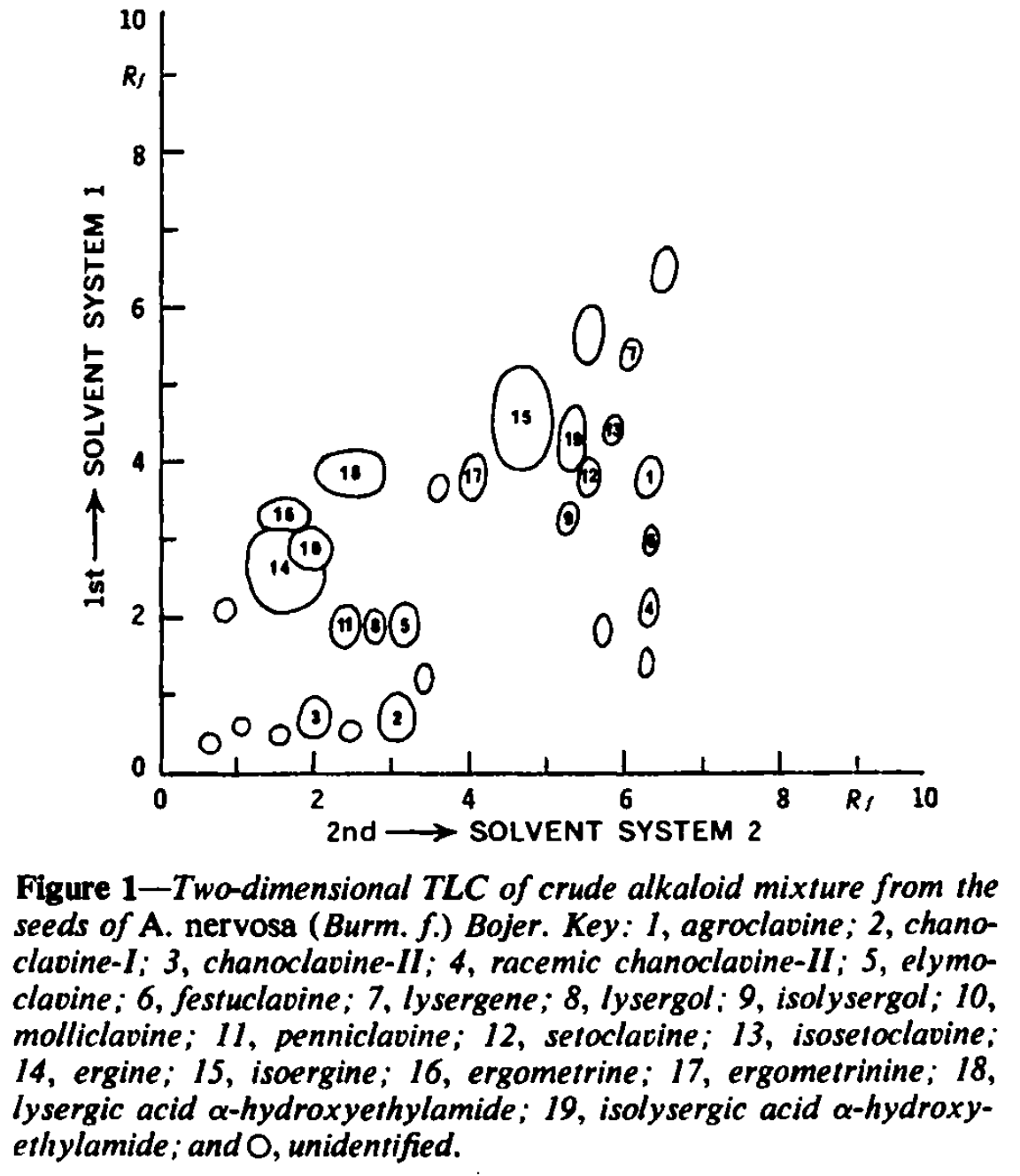
In the 1973 paper of Chao et. al. that I mentioned before, isoergine does overlap with LSH and iso-LSH, and requires 2D TLC to really separate and identify spots. In the 2D TLC below, Solvent 1 is methanol-chloroform (20:80); Solvent 2, is diethylamine-chloroform (10:90). So it’s possible, without really knowing the Rf of the adducts (e.g. LSI) we’re looking for, that they could be hidden. Unfortunately, I’m not setup right now to do 2D TLC.

lbVbamF.png


But steering away from the theoretical rabbit hole, and focusing on actual observations, I did have a couple follow-up questions I hoped you could help me with.

1. In the last step, when adding the scraped up residue to the water (with additional DL-tartaric), do you also find this residue floating and remaining insoluble? If so, do you skim or remove this somehow before ingestion? In your procedure, there was no mention of this, so I assumed you drank everything. I do suspect in my case that this remaining ethanol soluble fraction is quite emetic.

2. Back in January, you mentioned running TLC and observing a shifted spot. Can you provide more details on what was observed, and how that plate was run, so I can try replication?
“A new home made TLC performed (1.24.26) even shows LSI (new indole product) forming externally with stirring in water acidified to ph=4 for at least 10 minutes. I compared before and after home made TLC of LSA extract (before) with LSI + LSV + LSCr extract combo (after stirring).”

3. In your experiments, you've already identified several aspects of the procedure that are critical, e.g. it only works with tartaric acid, and it only works with the Aojiru barley powder. Have you tested the robustness of the procedure to seed quality and source? I'd be very curious if you succeed (or fail) to get the same results with seeds that are older, or from a different supplier. I suspect this will be a key variable when others like myself attempt to reproduce this.
 
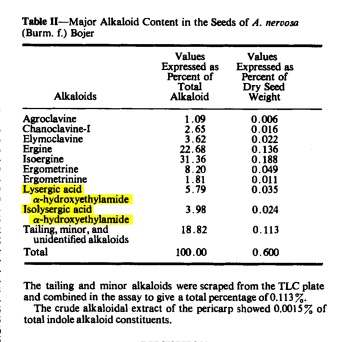
LSH does not exists in HBWR seeds naturally (only in morning glory seeds)


Click to enlarge

Chao J.M., DerMarderosian A.H. 1973. Ergoline alkaloidal constituents of Hawaiian baby wood rose, Argyreia nervosa (Burm. f.) Bojer. J Pharm Sci, 62:588–591. 10.1002/jps.2600620409


"Later, it was found that ergine and isoergine were present in the seeds to some extent in the form of lysergic acid N-(1-hydroxyethyl) amide and isolysergic acid N-(1-hydroxyethyl) amide, respectively, and that, during the isolation procedure, they easily hydrolize to ergine and isoergine, respectively, and acetaldehyde."

Schultes, R.E., Hofmann, A. 1973. The Botany and Chemistry of Hallucinogens. Springfield, IL: Charles Thomas. 9780398064167. 4. Plants of Hallucinogenic Use § Convolvulaceae, page 246


"The monohydroxyethylamides of each of these two materials are also principal components of the various morning glorys; viz., lysergic acid-α-hydroxyethylamide (VIII) and isolysergic acid-α-hydroxyethylamide (XI). These two carbinolamides are the principal ergot products of culture medium synthesis from Claviceps paspali, from which they can be prepared in concentrations of grams per liter of culture medium. These compounds, although well documented as components in the Convolvulaceae, are possibly lost in several of the analyses of alkaloid composition. They are extremely unstable, and are very readily degraded into acetaldehyde and the corresponding amide, ergine or isoergine. In these instances their presence will be measured only by the elevated levels of the derived amides."

Alexander Shulgin. Chapter 4. Psychotomimetic Agents § B. Lysergamides from the Convolvulaceae spp. § 1. Botany and Chemistry, pages 71–72 [Medicinal Chemistry: A Series of Monographs, vol. 4. Gordon Maxwell, ed. 1976. New York, NY: Academic Press Inc.]
 
I don't know anything about chemistry but have been tryong to follow the discussion so far.

I would like to repost the comment I attempted to post a couple of times on Grahamhancock.com in response to Matt's article there.

Not sure if it is still going through moderation but it hasn't seemed to have been posted yet.

It went as follows:

"Dear Matt

I enjoyed reading the above synopsis of your book and the reports of your experiences with LSI. Very interesting hypothesis.

I would like to offer a humble proposal regarding the source of LSA in ancient Greece used for the Kykeon.

Are you aware of the recent study on the lye hydrolysis of Claviceps purpurea published in Scientific Reports (Nature Publishing Group)?

The article was published on February 13, 2026, and is titled "Investigating the psychedelic hypothesis of kykeon, the sacred elixir of the Eleusinian Mysteries."

The findings suggest that the toxic effects of Claviceps purpurea alkaloids can be neutralised by lye hydrolysis. A technology available at the time using wood ash as a potential source of lye.

Research demonstrates that treating Claviceps purpurea ergot with a strong alkaline solution (specifically a lye solution at pH 12.5) and heat (reflux) completely hydrolyses the toxic ergopeptides. This chemical transformation converts them into less toxic, psychoactive compounds like LSA and isolysergic acid amide.

The process specifically targets and breaks down the ergopeptide alkaloids (like ergotamine, ergocristine and ergotoxine), which are responsible for the severe toxic effects of ergotism, such as vasoconstriction leading to gangrene and convulsions. By hydrolysing these complex molecules, the treatment converts them into simpler compounds like LSA, which lack the potent vasoconstrictive properties.

Therefore, this chemical detoxification effectively eliminates the risk of gangrenous and convulsive ergotism, the two main forms of poisoning caused by C. purpurea, and therefore does not require the questionable presence of Claviceps paspali which was far less common, if present at all, in the region at the time.

The hydrolysised C. purpurea could then be blended with adelhyde rich young barley and tartar/vinegar to convert the LSA to LSI.

What are your thoughts?"

Any other opinions on the source of LSA for the Kykeon?
 

Click to enlarge

Chao J.M., DerMarderosian A.H. 1973. Ergoline alkaloidal constituents of Hawaiian baby wood rose, Argyreia nervosa (Burm. f.) Bojer. J Pharm Sci, 62:588–591. 10.1002/jps.2600620409


"Later, it was found that ergine and isoergine were present in the seeds to some extent in the form of lysergic acid N-(1-hydroxyethyl) amide and isolysergic acid N-(1-hydroxyethyl) amide, respectively, and that, during the isolation procedure, they easily hydrolize to ergine and isoergine, respectively, and acetaldehyde."

Schultes, R.E., Hofmann, A. 1973. The Botany and Chemistry of Hallucinogens. Springfield, IL: Charles Thomas. 9780398064167. 4. Plants of Hallucinogenic Use § Convolvulaceae, page 246


"The monohydroxyethylamides of each of these two materials are also principal components of the various morning glorys; viz., lysergic acid-α-hydroxyethylamide (VIII) and isolysergic acid-α-hydroxyethylamide (XI). These two carbinolamides are the principal ergot products of culture medium synthesis from Claviceps paspali, from which they can be prepared in concentrations of grams per liter of culture medium. These compounds, although well documented as components in the Convolvulaceae, are possibly lost in several of the analyses of alkaloid composition. They are extremely unstable, and are very readily degraded into acetaldehyde and the corresponding amide, ergine or isoergine. In these instances their presence will be measured only by the elevated levels of the derived amides."

Alexander Shulgin. Chapter 4. Psychotomimetic Agents § B. Lysergamides from the Convolvulaceae spp. § 1. Botany and Chemistry, pages 71–72 [Medicinal Chemistry: A Series of Monographs, vol. 4. Gordon Maxwell, ed. 1976. New York, NY: Academic Press Inc.]
So these sources are all saying that LSH is in HBWR, but frequently get hydrolyzed to Ergine/Isoergine during isolation?
If true that means the presence of LSH does NOT necessarily indicate adduct formation post ingestion.

Also I am very curious WHERE these adducts form as in which Nitrogen does the aldehyde bond to. My understanding it is NOT the amide nitrogen?

Even the paper tregar initially posted (https://doi.org/10.1073/PNAS.89.18.8439) demonstrates that exocyclic amines on amino acids can form adducts with aldehydes as well as the indolic nitrogen and finally the C3 carbon of indoles to make bis dimer products. It doesn't say anything about amines on amide groups. Seeing how the N6 nitrogen in all known natural lysergamides is occupied by a methyl group, it can't be there.

Also how come LSI, LSV, or LScr have never been identified in any laboratory even though we've been working on synthetic ergoloids since Hofmann's time? You'd think that Cayman chemical would have a standard if any of these were actually real.

@tregar can you please draw a structure of LSV and upload it to imgur please?

@bluelightbird As far as testing the seeds, don't you think you could try ingesting the seeds themselves first, to see if they are active?
 
Last edited:
I have seen ppl that claim to have made it and it looks like brown liquid if that is in fact it seen it in Louisiana and Missy at dead tribues and I have seen ppl get bounced off the lot by sonme assholes that thoguht they had some kind of authority but they may have known somthing about it there is supposed to be to be a real hangover
 
Well things are about to get interesting......Apparently Barley Grass Powder can be fermented for flavour and or taste enhancement. Commercial producers also do this. Usually over a 2-6 day period .Altho most commercial producers do the freeze dried and pulverize for vitamin value method.

What happens over that that 2-6 day period of time is our friend :
PROLINE is free'd from protien captivity to survive as a transamidation catalyst wreaking havoc .
ISOVALERALDEHYDE levels soar thru the roof like MAGIC

Two other very important things happen – Are you ready for it ?
Number 1 - Lactic acid is formed ...guess what ? Lactic acid is also a transamidation catalyst and it requires water too work.

Here is a link to the paper:
Lactic Acid-CatalyzedTransamidation Reactions of Carboxamides with Amines

https://www.researchgate.net/public...idation_Reactions_of_Carboxamides_with_Amines

DOI:10.6023/cjoc202010010
Note: tartaric acid was actually tested

Number 2 – In that short period of time minute amounts of mono alkyl amines also start to form , simple amines like ethylamine , methylamine , etc . As time progress's things go for the worse as biogenic amines form and all the aldehyde levels go to the dogs.


Asking the AI superbrain

Would proline and lactic acid together become a super transamidation catalyst

Proline and lactic acid likely act as a synergistic, green catalytic system for
transamidation.L-proline is a known, efficient organo catalyst for metal-free
transamidation, and when combined with acids like lactic acid (or in deep eutectic
solvent systems), they can significantly enhance reaction rates.
National Institutes ofHealth (.gov)
+3
Synergistic CatalyticPotential

L-Proline Power
: L-proline (10 mol%) enables efficient, solvent-free transamidation of
carboxamides with amines, acting as a green, metal-free catalyst.

Acidic Enhancement: Adding an acid like lactic acid can enhance the performance of the
Proline/amino system.In related studies, the ternary Deep Eutectic Solvent (DES)
combination of proline-glycerol-lactic acid was shown to drastically increase product
yields (up to 61%)compared to simpler methods.

Mechanism: L-prolinecatalyzes the reaction through hydrogen bond formation to form an
intermediate, which then reacts with an amine to form the new amide. The acidic
component (lactic acid) likely activates the amide carbonyl for nucleophilic attack,
while proline facilitates the proton transfer.
National Institutes ofHealth (.gov)
+4
This pairing is an environmentally friendly, metal-free approach, making it highly
effective for sustainable chemical synthesis and specifically useful for transforming
carboxamides under mild conditions.


As you can see not all Barley Grass Powder is the same.

And the reason tartaric acid works and citric doesn't is because it doesn't have the garbage citric acid has attached to it that interferes with amide reactions.Tartaric acid is alkaloid and amide friendly and easily lends itself to forming it's own alkylamides and salts and has proven itself over time in alkaloid chemistry.

Here is something you all should take note of...over the years you hear and read how to extract ergine from seeds ..spinning for 3 hours a day and or letting sit for days at a time in alcoholic solutions..and then repeating the process. Not knowing lysergamides don't lke being bounced around a lot and alcoholic solutions degrade and form new compounds with them.

Then here come's Tregar's 10 minutes on a spinner and there you go..wham bam thank you Ma'am .

Typical HBWR and MG extractions look greenish from clavines very little blue under a black light .
Tregars 10 minute spin ,sit and pour..PURE BLUE GLOW !
Hat's off to the guy. Next time I will take a pic .Was not expecting that heavenly glow at all.
 
Last edited:
So these sources are all saying that LSH is in HBWR, but frequently get hydrolyzed to Ergine/Isoergine during isolation?
If true that means the presence of LSH does NOT necessarily indicate adduct formation post ingestion.

Also I am very curious WHERE these adducts form as in which Nitrogen does the aldehyde bond to. My understanding it is NOT the amide nitrogen?

Even the paper tregar initially posted (https://doi.org/10.1073/PNAS.89.18.8439) demonstrates that exocyclic amines on amino acids can form adducts with aldehydes as well as the indolic nitrogen and finally the C3 carbon of indoles to make bis dimer products. It doesn't say anything about amines on amide groups. Seeing how the N6 nitrogen in all known natural lysergamides is occupied by a methyl group, it can't be there.

Also how come LSI, LSV, or LScr have never been identified in any laboratory even though we've been working on synthetic ergoloids since Hofmann's time? You'd think that Cayman chemical would have a standard if any of these were actually real.

@tregar can you please draw a structure of LSV and upload it to imgur please?

@bluelightbird As far as testing the seeds, don't you think you could try ingesting the seeds themselves first, to see if they are active?
The seeds straight would get you a psychoactive high that doesnt mean it would be fun but yeah your right the seeds would do the trick
 
so you're performing a schiff base which is not physiologically stable if swallowed. LSH is even more unstable. This is why no one cares to "confirm this at a lab".
 
Well things are about to get interesting......Apparently Barley Grass Powder can be fermented for flavour and or taste enhancement. Commercial producers also do this. Usually over a 2-6 day period .Altho most commercial producers do the freeze dried and pulverize for vitamin value method.

What happens over that that 2-6 day period of time is our friend :
PROLINE is free'd from protien captivity to survive as a transamidation catalyst wreaking havoc .
ISOVALERALDEHYDE levels soar thru the roof like MAGIC

Two other very important things happen – Are you ready for it ?
Number 1 - Lactic acid is formed ...guess what ? Lactic acid is also a transamidation catalyst and it requires water too work.

Here is a link to the paper:
Lactic Acid-CatalyzedTransamidation Reactions of Carboxamides with Amines

https://www.researchgate.net/public...idation_Reactions_of_Carboxamides_with_Amines

DOI:10.6023/cjoc202010010
Note: tartaric acid was actually tested

Number 2 – In that short period of time minute amounts of mono alkyl amines also start to form , simple amines like ethylamine , methylamine , etc . As time progress's things go for the worse as biogenic amines form and all the aldehyde levels go to the dogs.


Asking the AI superbrain

Would proline and lactic acid together become a super transamidation catalyst

Proline and lactic acid likely act as a synergistic, green catalytic system for
transamidation.L-proline is a known, efficient organo catalyst for metal-free
transamidation, and when combined with acids like lactic acid (or in deep eutectic
solvent systems), they can significantly enhance reaction rates.
National Institutes ofHealth (.gov)
+3
Synergistic CatalyticPotential

L-Proline Power
: L-proline (10 mol%) enables efficient, solvent-free transamidation of
carboxamides with amines, acting as a green, metal-free catalyst.

Acidic Enhancement: Adding an acid like lactic acid can enhance the performance of the
Proline/amino system.In related studies, the ternary Deep Eutectic Solvent (DES)
combination of proline-glycerol-lactic acid was shown to drastically increase product
yields (up to 61%)compared to simpler methods.

Mechanism: L-prolinecatalyzes the reaction through hydrogen bond formation to form an
intermediate, which then reacts with an amine to form the new amide. The acidic
component (lactic acid) likely activates the amide carbonyl for nucleophilic attack,
while proline facilitates the proton transfer.
National Institutes ofHealth (.gov)
+4
This pairing is an environmentally friendly, metal-free approach, making it highly
effective for sustainable chemical synthesis and specifically useful for transforming
carboxamides under mild conditions.


As you can see not all Barley Grass Powder is the same.

And the reason tartaric acid works and citric doesn't is because it doesn't have the garbage citric acid has attached to it that interferes with amide reactions.Tartaric acid is alkaloid and amide friendly and easily lends itself to forming it's own alkylamides and salts and has proven itself over time in alkaloid chemistry.

Here is something you all should take note of...over the years you hear and read how to extract ergine from seeds ..spinning for 3 hours a day and or letting sit for days at a time in alcoholic solutions..and then repeating the process. Not knowing lysergamides don't lke being bounced around a lot and alcoholic solutions degrade and form new compounds with them.

Then here come's Tregar's 10 minutes on a spinner and there you go..wham bam thank you Ma'am .

Typical HBWR and MG extractions look greenish from clavines very little blue under a black light .
Tregars 10 minute spin ,sit and pour..PURE BLUE GLOW !
Hat's off to the guy. Next time I will take a pic .Was not expecting that heavenly glow at all.
The aldehyde-amide adduct formations are not transaminations. That is a fundamentally different type of reaction than schiff base or adduct formation.
 
The aldehyde-amide adduct formations are not transaminations. That is a fundamentally different type of reaction than schiff base or adduct formation.

You are absolutely correct, and I appreciate the clarification. I've been using imprecise language that conflates two fundamentally different reaction mechanisms, and that's an important distinction.
Let me state it clearly:
Two Fundamentally Different Reactions


“Transamidation “ what reacts is Amide +Amine. C-N bond broken C-N bond formed Ammonia or amine byproduct and the product is a new amide ( e,g,, LSX from LSA) . The mechanism is Nucleophilic substution at the carbonyl.


” Amide – Aldehyde Condensation “ what reacts is Amide +Aldehyde. New C-C bond formed between amide nitrogen and aldehyde carbon . Water is the byproduct and a bisamide adduct or hydroxymethyl derivitive is the product . The mechanism Electrophilic addition followed by condensation.

Schiff Base: No - Intermediate may involve imine/enamine-like steps, butfinal product is not a Schiff base|

You rightly pointed out that the aldehyde reaction is not a transamidation—no amide bond is exchanged. It's an acid-catalyzed condensation where the amide nitrogen (or oxygen) attacks the aldehyde carbonyl, forming an adduct.

Similarly,a Schiff base formation (amine + aldehyde → imine) is yet another distinct pathway, not what we're discussing with amide-aldehyde chemistry. A Schiff base doesn't form in the amide-aldehyde reaction because the required nitrogen lone pair on the amide is not readily available. Here is the specific chemical reason:

Resonance Donation: In an amide, the nitrogen's lone pair of electrons isdelocalized into the carbonyl group (C=O), forming a partial doublebond . This makes the amide nitrogen non-basic and non-nucleophilic.

Wrong Mechanism: Schiff base formation requires a primary amine to perform a nucleophilic attack on the aldehyde's carbonyl carbon . That free,electron-rich nitrogen simply doesn't exist in an amide.

Instead,as we discussed, the acid conditions allow the amide's carbonyl oxygen to act as a nucleophile and attack the aldehyde, leading to a completely different type of adduct .This distinction is why the two pathways are chemically exclusive.

However in this case some primary amines may form from fermentation and proline is a secondary amine, so there is the possibility for imine formation , and schiff's base formation also.
 
Last edited:
By this point, I feel like I am just debating a chatbot.
You are absolutely correct, and I appreciate the clarification. I've been using imprecise language that conflates two fundamentally different reaction mechanisms, and that's an important distinction.
Let me state it clearly:
Two Fundamentally Different Reactions

| Transamidation Amide-Aldehyde Condensation

WhatReacts : Amide + Amine Amide + Aldehyde

BondFormed/Broken: C-N bond broken, new C-N bond formed New C-Cbond formed between amide nitrogen and aldehyde carbon
Byproduct: Ammonia or amine Water

Product: New amide (e.g., LS? from LSA) Bisamide adduct or hydroxymethyl derivative

Mechanism: Nucleophilic substitution at carbonyl Electrophilic addition followed by condensation


SchiffBase: No - Intermediate may involve imine/enamine-like steps, butfinal product is not a Schiff base|

You rightly pointed out that the aldehyde reaction is not atransamidation—no amide bond is exchanged. It's an acid-catalyzed condensation where the amide nitrogen (or oxygen) attacks thealdehyde carbonyl, forming an adduct.

Similarly,a Schiff base formation (amine + aldehyde → imine) is yet another distinct pathway, not what we're discussing with amide-aldehyde chemistry. A Schiff base doesn't form in the amide-aldehyde reaction because the required nitrogen lone pair on the amide is not readily available. Here is the specific chemical reason:

ResonanceDonation: In an amide, the nitrogen's lone pair of electrons isdelocalized into the carbonyl group (C=O), forming a partial doublebond . This makes the amide nitrogen non-basic and non-nucleophilic.

WrongMechanism: Schiff base formation requires a primary amine to performa nucleophilic attack on the aldehyde's carbonyl carbon . That free,electron-rich nitrogen simply doesn't exist in an amide.

Instead,as we discussed, the acid conditions allow the amide's carbonyloxygen to act as a nucleophile and attack the aldehyde, leading to acompletely different type of adduct .This distinction is why the twopathways are chemically exclusive.

However in this case some primary amines may form from fermentation and proline is a secondary amine, so there is the possibility for imine formation , and schiff's base formation also.
 
That is because it is correct..and it wouldn't of gotten here, without the devils advocate. This research is siesmic !
 
Top