• N&PD Moderators: Skorpio

Pharmacology The official redefinition of "psychedelic drugs" by certain academics

This thread contains discussion about a Pharmacology-related topic

Allylbenzene

Bluelighter
Joined
Jul 25, 2025
Messages
987
The first debate the editorial board had was to decide the meaning of the term psychedelic, in the context of what would be acceptable for journal content, as well as standardizing scientific terminology. The English psychiatrist Humphrey Osmond first coined the term “psychedelic,” from the Greek meaning “mind-manifesting”
...
For that reason, [we] propose that the term “psychedelic” used in the broader scientific sense is limited to the description of psychoactive substances that have as a primary mechanism of action activation of 5-HT2A receptors.

- 10.1089/psymed.2022.0008


The authors feel justified but was this redefinition of "psychedelic" appropriate? There were 2 formal rebuttals here and here.

The implicit association of "psychedelic" with "5-HT2a" seems convenient but might offer a distorted perspective for researchers (and the public) who wish to learn about the subject. The focus on 5-HT2a might detract from the role of other receptors in the medicinal benefits of psychedelics. The receptor profile for 25 psychedelics was explored in this paper which made controversial moves - although it has been posted on Alexander Shulgins publishing company site alongside an insightful video.

Shulgin seemed aware of this:
After the emergence of the 5-HT2 paradigm the full-flavor concept appeared mainly outside of the mainstream of neuroscience (Shulgin & Shulgin, 1991) (Goldsmith, 2007) (Doyle, 2011)(Coyle et al., 2012) (Ray, 2012).
...
A concept of complex action was advanced by (Shulgin & Shulgin, 1991)

Modern "psychedelic" research seems mostly fixated on 5-HT2a whether it's understanding how it works or designing drugs which are selective for that single receptor.

This new definition of psychedelic also favours the "psychedelic industry" consisting of companies who develop, patent and sell "psychedelic" drugs. Having spoken to an academic who works closely with 2A Biosciences - with academic zeal it was claimed that the 5-HT2a receptor is the be-all and end-all for medicinal benefits. In other words that it was solely responsible for the therapeutic benefits of psychedelic drugs.

A good example here is the polypharmacological drug LSD which interacts with multiple receptors including 5 dopamine, at least 6 serotonin and at least 2 adrenergic sites (besides potentially undiscovered interactions).

Modern drug development targets one single receptor. Thus the concept of LSD is figuratively reduced to 5-HT2a and packaged in a future FDA-approved drug. This seems reminiscent of the introduction of the prescription drug Marinol (pure THC) which some academics consider medicinally equivalent to the cannabis plant.

As an aside, the new 5-HT2a specific definition excludes various botanicals associated with psychedelic effects - including Salvia, Amanita muscaria, Cannabis and Datura.
 
Last edited:

This post from another forum seemed relevant.
A pharmacologist voices his concerns.

Oh you misunderstand, see science has recently decided to throw its full weight behind a push to strip the magic out of hallucinogens in the hopes of developing non-hallucinogenic 'psychedelic' therapeutics.

As a pharmacologist, I fully understand the reasoning behind why doing so is highly desirable (financial potential notwithstanding). However, on a personal level I find the idea of painstakingly teasing apart psychedelics' complex pharmacology just to turn around and create therapeutics that fit neatly into the current healthcare model to be almost grotesque.

It ensures that any systemic lessons or paradigm shifts they may have brought about will be avoided in the name of convenience and profit. The truly remarkable aspect of psychedelics having been stripped away to birth another generation of daily/weekly antidepressants/anxiolytics with slightly better efficacy, slightly different/fewer side effects, and a shiny new 5HT2a-related MoA with no psychoactivity whatsoever.

Apologies for the rant, this topic really hits all of my sore spots as a jaded researcher.
 
- 10.1089/psymed.2022.0008

The authors feel justified but was this redefinition of "psychedelic" appropriate? There were 2 formal rebuttals here and here.
I am unsure of what the second rebuttal says after reading the non-paywalled bits. The first rebuttal is quite reasonable, arguing for serotonergics to be referred to as “classical psychadelics”, which to me makes sense as those were the original compounds defined as psychadelic drugs (where other hallucinogens typically were put into other categories).

The implicit association of "psychedelic" with "5-HT2a" seems convenient but might offer a distorted perspective for researchers (and the public) who wish to learn about the subject. The focus on 5-HT2a might detract from the role of other receptors in the medicinal benefits of psychedelics. The receptor profile for 25 psychedelics was explored in this paper which made controversial moves.

Modern "psychedelic" research seems mostly fixated on 5-HT2a whether it's understanding how it works or designing drugs which are selective for that single receptor.
Except for ketamine and analogs, mdma and analogs, ibogaine derivatives,

This new definition of psychedelic also favours the "psychedelic industry" consisting of companies who develop, patent and sell "psychedelic" drugs. Having spoken to an academic who works closely with 2A Biosciences - with academic zeal it was claimed that the 5-HT2a receptor is the be-all and end-all for medicinal benefits. In other words that it was solely responsible for the therapeutic benefits of psychedelic drugs.
That is a silly statement, but 5HT2A agonism is a necessary component of many psychedelic drugs, while not being
necessary to induce the psychedelic state.


A good example here is the polypharmacological drug LSD which interacts with multiple receptors including 5 dopamine, at least 6 serotonin and at least 3 adrenergic sites (besides potentially undiscovered interactions).
These all contribute to the flavor of an LSD trip, but serotonin antagonists are sufficient to end such a trip. This indicates that the effects of these other receptors is not

Modern drug development targets one single receptor. Thus the concept of LSD is figuratively reduced to 5-HT2a and packaged in a future FDA-approved drug. This seems reminiscent of the introduction of the prescription drug Marinol (pure THC) which some academics consider medicinally equivalent to the cannabis plant.
Sometimes— but there are plenty of drugs which are considered quite “dirty” that are modern pharmaceuticals. I would suggest you don’t view the field as so monolithic.

As an aside, the new 5-HT2a specific definition excludes various botanicals associated with psychedelic effects - including Salvia, Amanita muscaria, Cannabis and Datura.
Don’t they all fall under the hallucinogen umbrella? At the end of the day I believe there should be a broad term encompassing all hallucinogenic compounds, and specific ones which are more indicative of the mechanism of action of the drugs.
This post from another forum seemed relevant.
A pharmacologist voices his concerns.
Yeah, it sucks that these compounds are not hallucinogenic, and speaks to limitations on our medical system where we prefer a “general pill” rather than interventions which take work and persistence. I see this as a broader societal problem.

I don’t think all of this work is valueless, as foundational work in the psychoplastogen/non-hallucinogenic psychedelic field have mapped specific interactions in the 5HT2A receptor responsible for hallucinogenic behavior.
 
Who is to say that still more targets won't be discovered?

Indeed, as well as rediscovering existing targets as alluded to by Shulgin and others:
After the emergence of the 5-HT2 paradigm the full-flavor concept appeared mainly outside of the mainstream of neuroscience (Shulgin & Shulgin, 1991) (Goldsmith, 2007) (Doyle, 2011)(Coyle et al., 2012) (Ray, 2012).
...
A concept of complex action was advanced by (Shulgin & Shulgin, 1991)

The most recent work by Ray, 2012 was featured on Shulgin's publisher site.
Tom Ray had 25 psychedelic drugs from Shulgin’s toolkit broadly assayed by the National Institute of Mental Health – Psychoactive Drug Screening Program. By synthesizing the subjective experience and molecular affinity data, he has been able to realize the Shulgin’s vision of using their toolkit of drugs to advance our understanding of the relationships between the brain, the drugs, and the mind; and most importantly, our understanding of ourselves.

Excerpts:
A new method is introduced for normalizing affinity (Ki) data that factors out potency so that the multi-receptor affinity profiles of different drugs can be directly compared and contrasted.

In the listing below, the npKi values for each drug are arranged in decreasing order. A value of 0.00 means that the Ki value was measured as >10,000 nm. npKi values below about 2.0 should be imperceptible, while values above about 2.0 should be perceptible, and the higher the npKi value, the more perceptible a receptor should be.
LSD: 4.00 5ht1b, 3.77 5ht7, 3.75 5ht6, 3.73 5ht1a, 3.70 5ht1d, 3.64 5ht5a, 3.54 5ht2a, 3.16 D3, 3.11 5ht2b, 3.11 5ht2c, 2.93 Alpha2A, 2.62 5ht1e, 2.55 D2, 2.39 D4, 2.34 D1, 2.05 D5, 1.54 Alpha1A, 1.40 H1, 1.39 Beta1, 1.05 Beta2, 0.65 Alpha1B
DMT: 4.00 5ht7, 3.97 5ht1d, 3.91 5ht2b, 3.53 Alpha2B, 3.53 Alpha2C, 3.51 D1, 3.42 5ht2c, 3.28 5ht1e, 3.25 5ht6, 3.16 5ht5a, 3.13 Imidazoline1, 2.95 Alpha1B, 2.75 Alpha2A, 2.70 Alpha1A, 2.58 5ht2a, 2.37 SERT, 2.23 Sigma1
• 0.00: 5ht1a, 5ht1b, D2, D3, D4, D5
Psilocin: 4.00 5ht2b, 3.40 5ht1d, 3.37 D1, 3.03 5ht1e, 2.88 5ht1a, 2.83 5ht5a, 2.82 5ht7, 2.82 5ht6, 2.67 D3, 2.52 5ht2c, 2.19 5ht1b, 2.14 5ht2a, 1.77 Imidazoline1, 1.74 SERT, 1.57 Alpha2B, 1.36 Alpha2A, 1.03 Alpha2C
• 0.00: D2, D4, D5
2C-B: 4.00 5ht2b, 3.71 5ht1d, 3.69 5ht2a, 3.18 5ht2c, 3.12 Alpha2C, 3.11 5ht1b, 3.05 5ht1e, 2.81 5ht7, 2.75 5ht1a, 2.64 Alpha2A, 2.63 5ht6, 2.31 Alpha2B, 2.22 M3, 1.80 Imidazoline1, 1.60 D2, 1.28 D3
• 0.00: 5ht5a, D1, D4, D5
DOI: 4.00 5ht2c, 3.79 Alpha2A, 3.52 Beta2, 3.44 5ht2a, 3.13 Alpha2B, 3.13 5ht2b, 3.00 5ht1d, 2.90 M4, 2.89 Beta1, 2.88 Alpha2C, 2.83 SERT, 2.66 5ht1e, 2.51 M3, 2.42 H1, 2.36 M2, 2.34 5ht6, 2.32 M5, 2.31 5ht1a, 2.23 M1, 1.90 5ht7, 1.73 Sigma1, 1.70 Sigma2, 1.67 D1
• 0.00: 5ht1b, 5ht5a, D2, D3, D4, D5

The three B statistics provide a very consistent ranking for the top seven receptors. In descending order of importance: 5-HT2b, 5-HT1a, 5-HT7, 5-HT1d, 5-HT2a, 5-HT2c, α2C. This set of top receptors would be a good place to look for receptors other than 5-HT2a & 5-HT2c, which play an important role in the actions of psychedelic drugs.

With Nichols redefining of psychedelic as 5HT2a agonists, all the focus is there. How long will it take academics to start investigating other targets? Or even investigating if non-HT2a hallucinogens (eg salvinorin, muscimol, scopolamine) activate the same downstream areas as classical psychedelics.

Slowly but surely -
The polypharmacology of psychedelics reveals multiple targets for potential therapeutics (2025)​
The classical psychedelics LSD, psilocybin, and mescaline exert their psychedelic effects via activation of the 5-HT2A serotonin receptor. Recent clinical studies have suggested that classical psychedelics may additionally have therapeutic potential for many neuropsychiatric conditions including depression, anxiety, migraine and cluster headaches, drug abuse, and post-traumatic stress disorder. In this study, we investigated the pharmacology of 41 classical psychedelics from the tryptamine, phenethylamine, and lysergamide chemical classes. We profiled these compounds against 318 human G-protein-coupled receptors (GPCRs) to elucidate their target profiles, and in the case of LSD, against more than 450 human kinases. We found that psychedelics have potent and efficacious actions at nearly every serotonin, dopamine, and adrenergic receptor. We quantified their activation for multiple transducers and found that psychedelics stimulate multiple 5-HT2AR transducers, each of which correlates with psychedelic drug-like actions in vivo. Our results suggest that multiple molecular targets likely contribute to the actions of psychedelics.
https://doi.org/10.1016/j.neuron.2025.06.012
 
Last edited:
The idea of reducing the term psychedelic to 5HT2a agonism for research purposes seems reasonable to me, since it builds on quite a robust conjecture. This practice of nomenclature does not preclude research into other (arguably "psychedelic" yet different) compound classes such as those mentioned.

I'm more so bothered by the whole idea of public legitimization through institutionalized research and commercial pharmacology. Legalization of all psychoactive drugs is a necessary human rights reform and a prerequisite for any true democracy. It's not something that should hinge upon the verdict of any scientific institution.
 
Having spoken to an academic who works closely with 2A Biosciences - with academic zeal it was claimed that the 5-HT2a receptor is the be-all and end-all for medicinal benefits. In other words that it was solely responsible for the therapeutic benefits of psychedelic drugs.
That is a silly statement, but 5HT2A agonism is a necessary component of many psychedelic drugs, while not being necessary to induce the psychedelic state.

The academic in question is working with Nichols to develop 5HT2a-selective anti-inflammatory drugs. When this new NSAID is approved it might be heralded as the latest psychedelic medicine. One that is entirely non-psychoactive.

Modern drug development targets one single receptor. Thus the concept of LSD is figuratively reduced to 5-HT2a and packaged in a future FDA-approved drug. This seems reminiscent of the introduction of the prescription drug Marinol (pure THC) which some academics consider medicinally equivalent to the cannabis plant.
Sometimes— but there are plenty of drugs which are considered quite “dirty” that are modern pharmaceuticals. I would suggest you don’t view the field as so monolithic.

Sure, I'm aware that polypharmacological drugs are actively being prescribed. The context was specifically for psychedelic medicines so I used the example of LSD. Many academics now believe that the polypharmacological richness of LSD and it's subsequent therapeutic & psychedelic effects are due to 5HT2a. This interpretation seems short-sighted and possibly enabled by animal studies which aren't always reliable. The "neatness" of ascribing psychedelia to a single receptor is also attractive.

I don’t think all of this work is valueless, as foundational work in the psychoplastogen/non-hallucinogenic psychedelic field have mapped specific interactions in the 5HT2A receptor responsible for hallucinogenic behavior.

Of course, I recognise that research into 5HT2a is important for expanding our understanding. The paper on non-hallucinogenic isotryptamines was particularly interesting (isoDMT and analogs).

Perhaps a key "issue" is the societal perception of psychedelic drugs & psychedelic medicine and how this influences their development and application. These 2 notions have different connotations for different people. In a corporate healthcare setting, priority is placed on the non-hallucinogenic factor for various reasons which are fully justified (eg practicality - NSAIDs, antidepressants etc). If you speak to an indigenous herbalist from South America they might find the notion very bizzare - gaining the benefits of a visionary experience without the visionary experience. With a purely mechanistic understanding this notion would be absolutely possible and simply a question of finding the right ligand.

— But the indigenous herbalist from South America lacks this purely mechanistic understanding, much to their benefit I might add.

I believe this is a key issue in that most academics overlook the intangible aspects of the biochemistry for which they're designing drugs.
 
Last edited:
affinity ≠ effaciacy.

I'm PRETTLY sure I've told you this at least twice.

lisuride is an example of a high affinity, low effaciacy ligand. While 5HT2a silent agonists, inverse agonists and antagonists all find medical utility, they are not psychedelics.

A few times but a reminder is always good. The data does indicate sites of potential interest as part of the "psychedelic receptor ecosystem".

There's 5HT2a allosteric modulators also, eg:
(S)‐glaucine acted as a partial agonist at all three 5‐HT2 receptor subtypes, whereas (R)‐glaucine appeared to act as a positive allosteric modulator at the 5‐HT2A receptor.

- https://doi.org/10.1111/cbdd.13390
AB0124 is a 5-HT2A positive allosteric modulator. It is highly selective for potentiation of the 5-HT2A receptor, with no potentiation of the 5-HT2B and 5-HT2C receptors.

- see WO2023023287A1
CTW0404 and CTW0419 exhibited 5-HT2A PAM efficacy without intrinsic agonist activity, were devoid of actions at homologous 5-HT2R subtypes and possessed minimal binding to off-target CNS receptors.

- https://doi.org/10.1038/s41386-025-02280-3
 
Last edited:
It is certain that how psychedelics work is not limited to one receptor subtype, but Nichols essentally set out just to design probes to elucidate the steric bulk of the cleft of the site. It has value and is foundational work.

His research is excellent - I'm more-so questioning his resolution that formally defined "psychedelic drug" as "5HT2a agonist". I imagine that many academics place great value in his opinion which might detract from the role of other receptors and pathways. In a sense, the undiscovered elements won't be identified nor pursued because "we know it's 5HT2a, Nichols said so". More realistically there'll probably just be a delay until someone questions him and finds some evidence.

I mean, why is DMT so different to αMT? Yes, one enantiomer of αMT is a reuptake inhibitor but even (S) AMT is significatly different to DMT.

Perhaps to answer this more comprehensively the current paradigm of receptors needs upgrading? Something along the lines of Dr Gilbert Lings work which is somewhat outlined in these quotes:
Dr Gilbert Ling's research. Neither believed in the fatty acid lipid bilayer cell membrane of the cell (embedded with receptors). The cell being electrical (nano-protoplasm, structured water, pH, cardinal absorbents, structural proteins, etc)

Q:
So when they speak about a drug blocking a receptor what’s the drug actually doing?

A:
The cell is charged, meaning vibrating, with frequency. Like Jello, when you take it out its container and place on a plate, it holds its shape. All the science I know is there has to be a charge potential difference. There is ATP and other Cardinal Absorbents that can attach to molecules outside of the cell (on the cell surface) and allow them to enter or prevent

...

Receptors are a thing (clearly many are documented/measured), but he said they act as accelerants for effects of a molecule, not the only way to get effects as they create changes outside of the receptor too.

But that 7-methyl increases the monoamine moduation by an order of magnitude and who knows, a 5-MeO derivative MAY then allow things larger than a -CH3 to sit at the 7 without screwing the 5HT2a activity.

It's not 5HT2a but this 7-x-indole metabolite gains potency:
7-hydroxyropinirole is described as a highly potent and highly selective dopamine D2-like agonist. It has been reported to be 30-fold more potent than ropinirole as a D2 agonist in vitro.
https://doi.org/10.1016/j.tips.2019.12.002
 
Last edited:
Perhaps to answer this more comprehensively the current paradigm of receptors needs upgrading? Something along the lines of Dr Gilbert Lings work which is somewhat outlined in these quotes:

Ling made foundational discoveries that allowed for electrophysiology to become such a powerful technique but his association induction hypothesis has not fared well. Both its predictions for ionic behavior in cells have not been corroborated by experiments, and denying the role of pumps is harder to do in the days of modern reverse genetic techniques and imaging techniques that can capture native protein complexes like cryo-em.

To give Ling credit, the hypothesis is from 1962 when the inside of a cell was much more difficult to directly interrogate.
 
A lot of people would say Marijuana is Psychedelic too. So, that's another drug a people could claim to be Psychedelic even though it doesn't effect the 5-HT2 receptors. So, far as we know.
 
BUT what did they miss? Yep, a 7 (4 in PEA numbering) substituent. I would bet £1 that the 7-methyl derivative would have been far, far more potent BUT the important concept I suggested was that with that 2,5-dimethoxy (or bioisostere thereof), a BIGGER 7 substituent would still be (very) active.

I would begin with the 7-methyl as I suggest it would be much like DOM (depending on enantiomer). I honestly think that DOM got a bad name because the raecemate was the thing being distributed.
would be incredibly fascinating if true... an entirely new TiHKAL primarily composed of indolic substitutions rather than primarily ethanamine substitutions could be written. However, this paper by Glennon seems to cast doubt on any crazy increased efficacy of any 5-7 substituted tryptamines. Specifically the 5-MeO-7-methyl had similar affinity for 2a as DMT. The 5-MeO-7-MeO saw a six-fold reduction in affinity. Interestingly, solely 7-substituted tryptamines do seem to produce significantly increased affinity, with 7-bromo-dmt appearing to have triple the affinity of DMT for 5-HT2a.

Of course the only 'efficacy' testing is rat drug discrimination assays, not terribly inaccurate, but definitely to be taken with a grain of salt. The 7-substituted tryptamines should absolutely be explored further. This paper may also be of interest; discusses the receptor pharmacology a little further with regards to optimizing binding at the 7-position.
 
Last edited:
In the 1960s Upjohn demonstrated that 7-methyl derivatives of α alkyl tryptamines (e.g. αMT, aET, αPT & αBT) were potent monoamine reuptake inhibitors in vitro - Upjohn was looking for an antidepressant, you see. But I knew Dan (Lednicer) who ran the Upjohn Drug Discovery Laboratory and asked why 7-methyl aMT was absent. His response was that at higher doses, it WAS a psychedelic so was omitted from further research and therefore is not in the patents (this was around the time the Soviets were prescribing AMT for depression). Crawford Antony William even had to patent routes to the 7-methyl indole precursors.
Wow! very cool stuff. I guess it's not too surprising that the 7-methyl α-alkylated tryptamines are more potent than the non-ring substituted ones, given how effective substitution at the 7 position can be for the non-branched chain tryptamines. It's funny that Upjohn was too weary of 7-Me-aMT because of the psychedelic properties at higher doses, but not of the clearly entactogenic monoamine releasing properties of aMT at pretty reasonable doses itself :laughing: I guess they had to draw the line somewhere? The fact that aMT was ever used pharmaceutically has always seemed pretty incredible to me.
Now I think simple (R) 7,α DMT is the best MDMA alternative
wow! have you tried enantiopure (R) 7,α DMT? Would love to hear more!
 
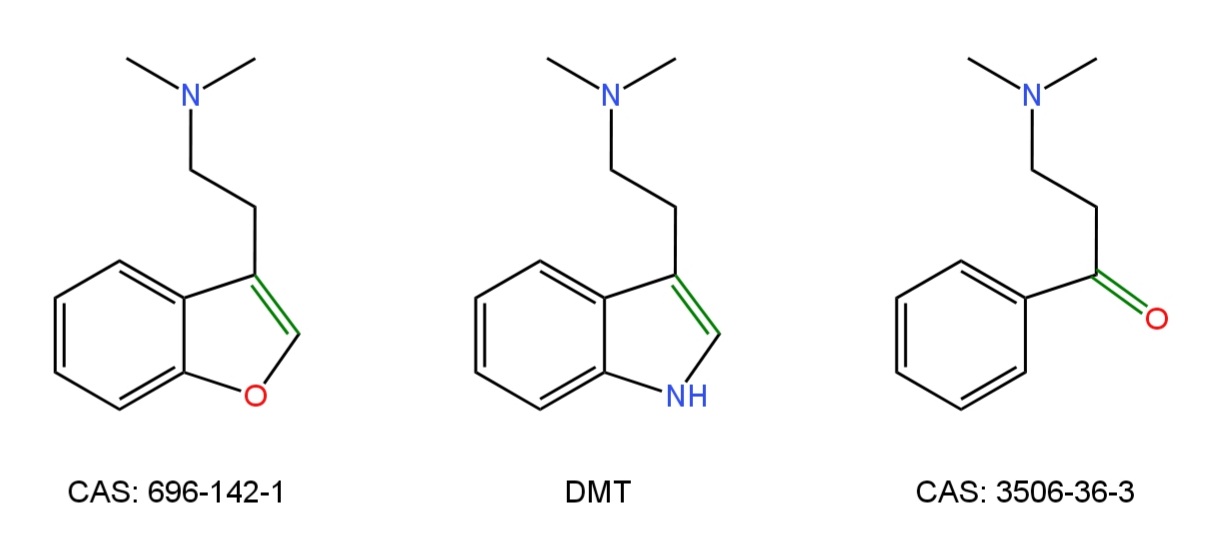
Benzofuran bioisosteres are, to noones surprise, psychedelics, just less potent. Fine, it it allows 7 substitutions and is safer (which nobody knows).

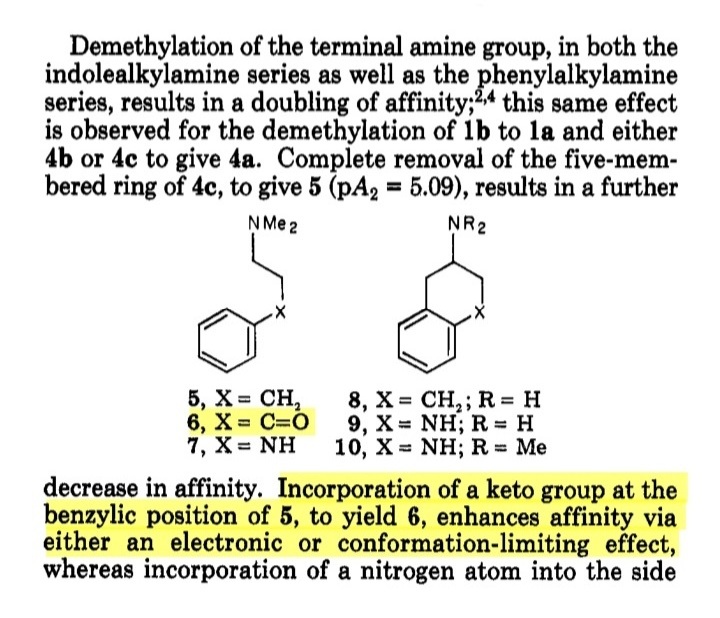
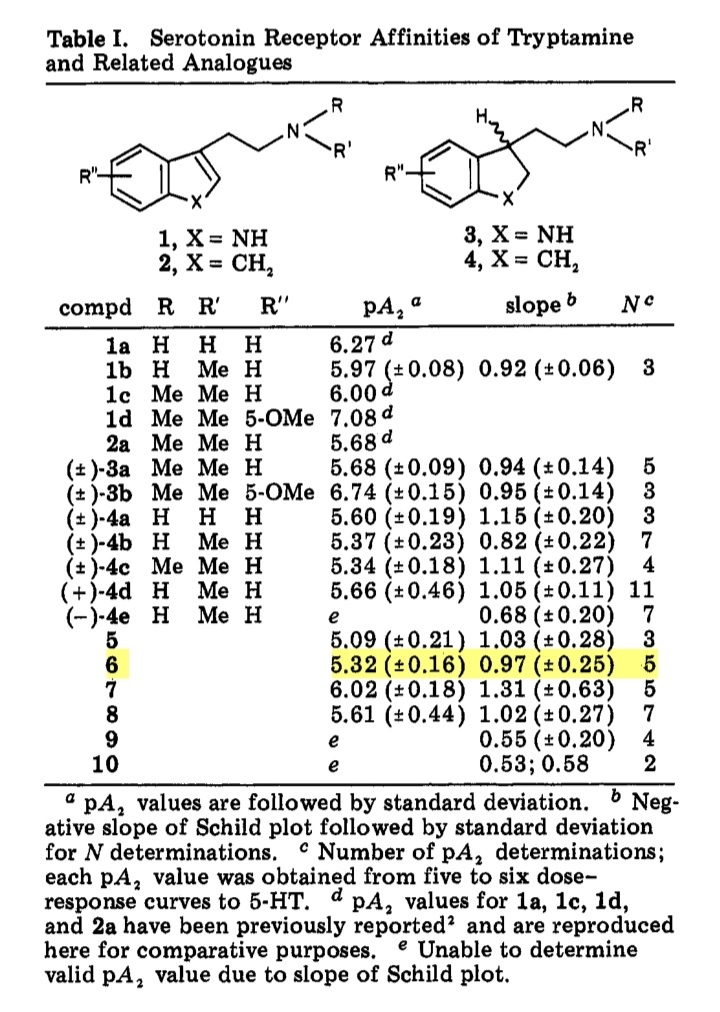
The ß-aminoketone form of the tryptamines are also worth exploring imo. Ie removing the indole pyrrolidine and adding a keto group. Tryptamine would give ß-keto-phenylpropylamine.

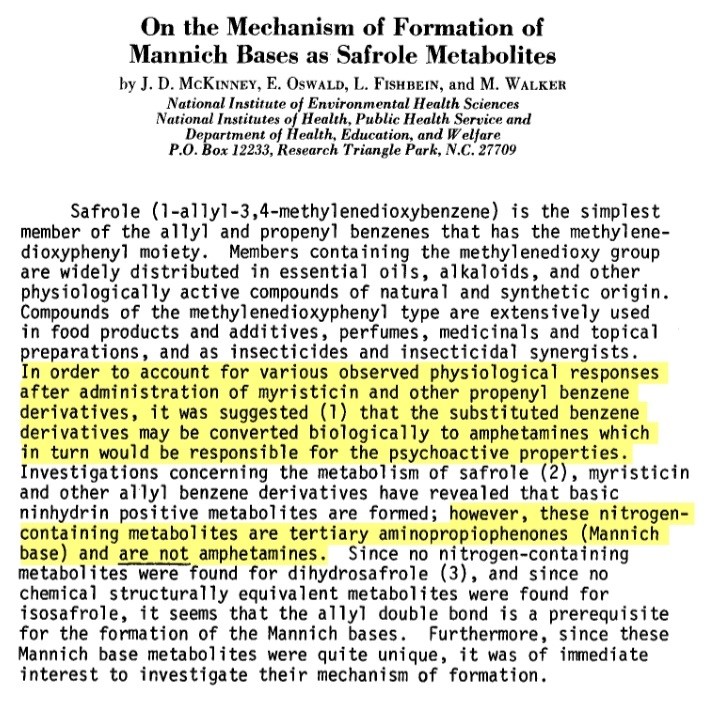
These ß-aminoketones were identified as metabolites from administering pure allylbenzenes like eugenol, γ-asarone, elemicin, safrole and myrstricin.

The mechanism for psychoactivity was once believed
to involve metabolism of the allylbenzene to an amphetamine [8]. Oswald and coworkers [9--12] have determined the structures of basic ninhydrin-positive
metabolites of safrole, myristicin, elemicin, and eugenol to be tertiary amino-propiophenones not amphetamines.

- https://doi.org/10.1016/0304-4165(77)90216-1
 
Last edited:
Allylbenzenes undergo oxidation so EPOXIDES are an intermediate and epoxides are highly reactive and is why some essential oils now carry warnings that they should not be consumed!
I think cloves & parsnips might be listed as possible carcinogens due to the eugenol & myrstricin respectively. They also form phenyl vinyl ketones which are reactive.

The authors synthesised the aminated metabolites in a conventional manner so there's no need to resort to a drop of mace, parsley or dill oil.

Nowhere does it even mention tryptamines, still less that they are psychoactive.
I never said they mentioned tryptamines, that observation was made decades later in 2011. The activity is as yet not formally recognised.

Draw them and try PubChem. It they are known, PubChem likely lists them.
Pubchem lists most of them.
 
Last edited:
Well, a reference or indeed as many as you have would be appreciated. You specified the year so I assume you are referring to an academic paper.

I was referring to someone who in 2013 (not 2011) observed the structural relationship between tryptamines and these ß-aminoketones. He was investigating why allylbenzenes can cause such dramatic hallucinogenic effects. I presume he wasn't aware of this paper below (which I just found) as he would have mentioned it:

• 10.1021/jm00343a013:

Screenshot-20260412-141253-PDF-Reader-Hi-Read.jpg

Screenshot-20260412-140119-PDF-Reader-Hi-Read.jpg


Screenshot-20260412-140924-King-Draw-Chemical-Structure-Editor.jpg


If so, maybe larger 7-substitutions so someone could go right through Pihkal and make the tryptamine analogs.

Similarly it seems reasonable to go through Tihkal and make the ß-aminoketone analogs. Perhaps also applying Shulgins classic Pihkal motifs ie 3,4 - 3,4,5 - 2,4,5 (etc) as found in the allylbenzenes. It was Shulgin who theorised that allylbenzenes (safrole, elemicin, γ-asarone etc) form the equivalent amphetamines (MDA, TMA, TMA-2 etc) but perhaps he was wrong. I wonder if Shulgin ever spoke with Oswald about this back in the 70s since Oswald initially discovered the ß-aminoketones when he set out to verify Shulgins theory.
 
Last edited:
1982, but as it says 'first recieved in 1981'.

The 1982 paper where those images originated is totally separate from Oswalds 70s papers. It looks like the 1982 paper discovered the ß-aminoketone structure totally independently, I see no mention of Oswald in the references.

McKinney, J.D., Oswald, E., Fishbein, L. et al. On the mechanism of formation of Mannich bases as safrole metabolites. Bull. Environ. Contam. Toxicol. 7, 305–310 (1972). https://doi.org/10.1007/BF01684530

Screenshot-20260412-181457-PDF-Reader-Hi-Read.jpg


Peele JD Jr, Oswald EO. Metabolism of naturally occurring propenylbenzene derivatives. III. Allylbenzene, propenyl benzene, and related metabolic products. Biochim Biophys Acta. 1977 Apr 27;497(2):598-607. doi: 10.1016/0304-4165(77)90216-1​

So don't assume that in 45 years better studies don't exist. Use PubMed. If it's been synthesized, likely it's in PubMed which gives you the list of references and/or patents.

It looks like they were last studied in that 1982 paper and haven't resurfaced in the literature since save a few patents for NSAIDs in 1990-2001 (aside, currently Nichols is exploring 5HT2a agonists as new NSAIDs).

In 1991 someone posted a well-known report/recipe about them on erowid. In 2005 the owner of shaman-australis documented their potent psychoactive effects indicating this was somewhat well-known since at least 1995. I encountered the subject in 2009 from bluelight and drugs-forum.

You'd think that research into safrole toxicity (and by extension items like basil, cloves, dill, pepper, parsnips, parsley etc) would lead to a rediscovery of ß-aminoketone metabolites but apparently not.
 
Last edited:
No, 1982, but as it says 'first recieved in 1981'.
Again, a 1972 paper!

Yes I know, thats why I highlighted the year. I was correcting your statement about 1982.

Perhaps there was miscommunication when I described a forum user in 2013 who observed the structural relationship between tryptamines and these ß-aminoketones.

Before 2013, the only internet-record of this is the 1982 paper and Oswalds 1970s papers.

Sarfole is a ring-substituted ALLYLbenzene. Isosafrole is a ring-substituted propenylbenzene which is not found in nature (as far as I know).

Yes, Oswalds papers are centered around allylbenzenes.
 
Yes, there is no disagreement here. I read the paper and it indeed says 1980s:
R A Glennon et al. J Med Chem. 1982 Jan.​
The forum user who posted about the tryptamine/ß-aminoketone similarities did so in 2013 (not 2011 as I initially thought). I was on the same forum at the same time and he never mentioned the 1980s paper so presumably he just never found it.

Cherry-picking sections of 50+ year old academic papers is an example of conformation bias.
I'm purposefully highlighting parts relevant to the thread/discussion. Anyone can go ahead and read the entire paper, I've not got anything to hide. Posting the entire paper in the thread would be unreasonable, it's several pages long.
 
Last edited:
Top