




Shinji Ikari
Bluelighter
Hello friends. As some of you may know Shinji is currently enjoying his first full blown vacation in nearly a decade. So today I decided to hire a driver and do some sight seeing 
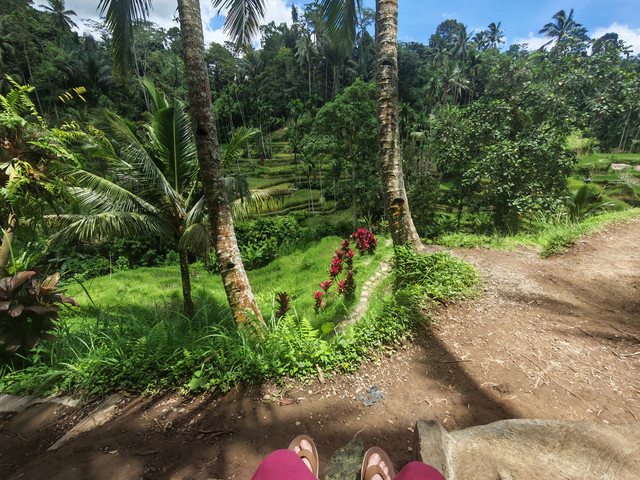
First stop was Tagallalang rice terrace, a must see destination and popularly known as the most beautiful rice paddies in the world.
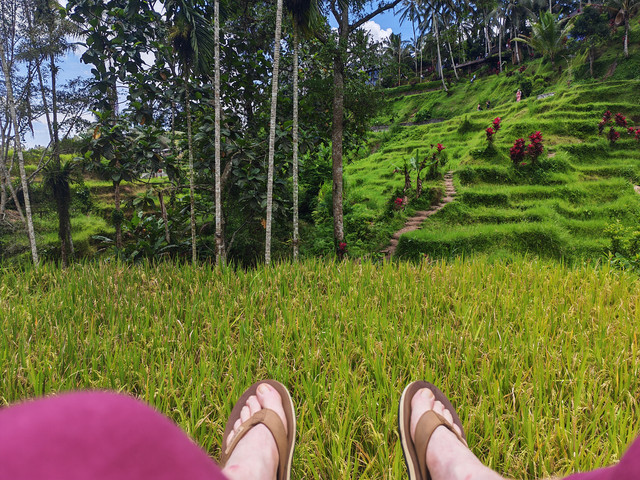
The rice fields employ an ancient irrigation system known as subak which allows water from a mountain spring to flow down the contours of the hill.
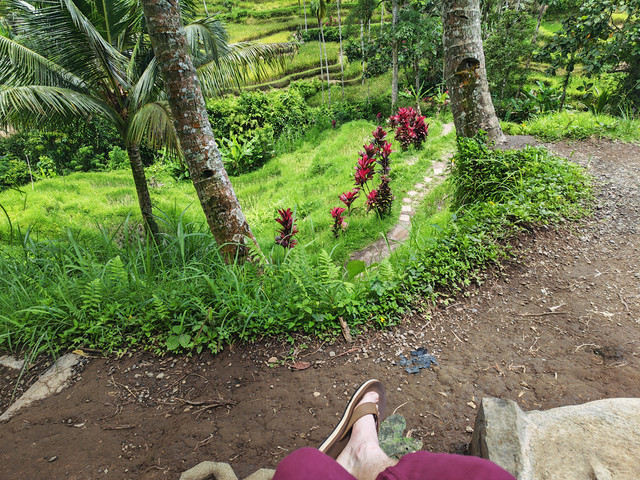
This multi tiered approach allows relies solely on gravity to keep the fields watered negating the need for pumps while facilitating some truly breathtaking views.
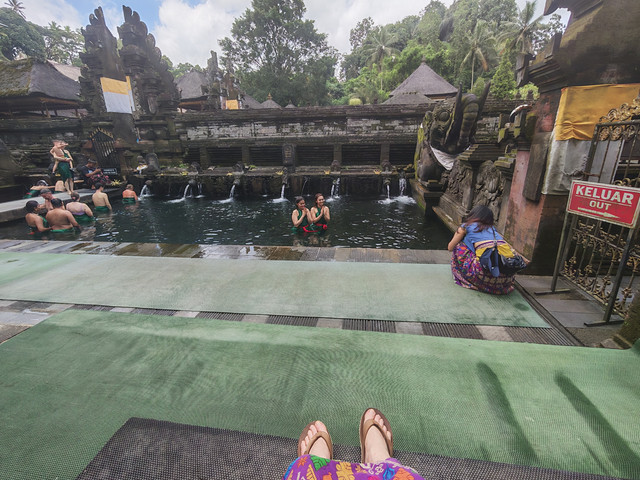
Next stop was Tirta Empul also known as the holy water temple. It's a small temple but has unique appeal on account of the holy water pouring into the pool. Worshippers first pray and present an offering before donning a special sarong and bathing in the fountain to receive a blessing. I didn't partake as I am already blessed and also I didn't feel like getting wet
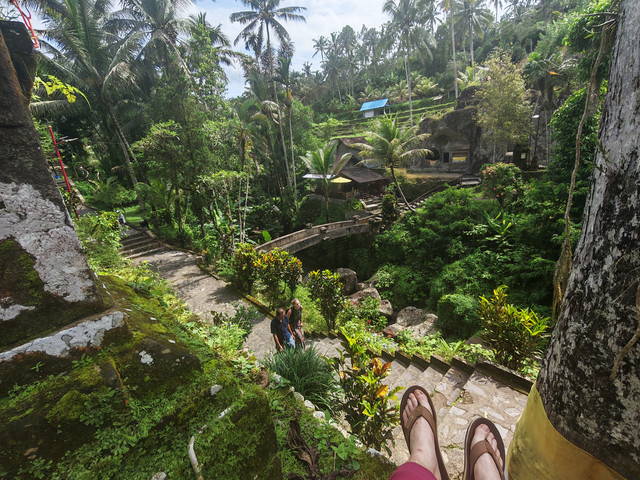
Our next destination was Gunung Kawi temple in the village of Tampaksiring (fun bit of trivia, "tampak" is the ancient Balinese word for foot)
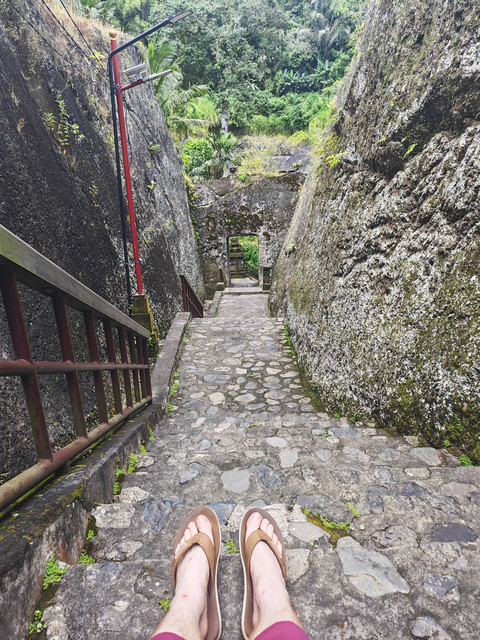
This is appropriate as you have to descend hundreds of stairs to reach the temple and climb them again to leave. It's worth the effort though, and there was a mercifully placed ice cream stand at the top of the stairs.
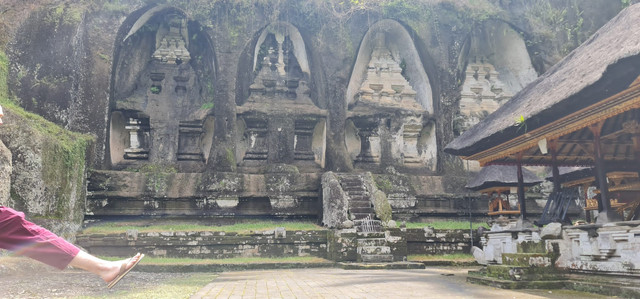
Gunung Kawi is also known as The Valley of the Balinese Kings. It is part place of worship and part resting grounds. This was one of my favourite stops today the architecture is stunning. I had my friend take this picture as his phone has a wide angle lens
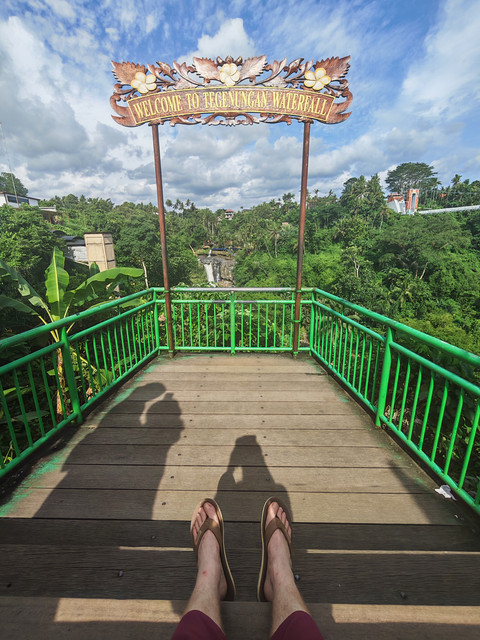
For our penultimate stop we visited, well, the name is on the sign.
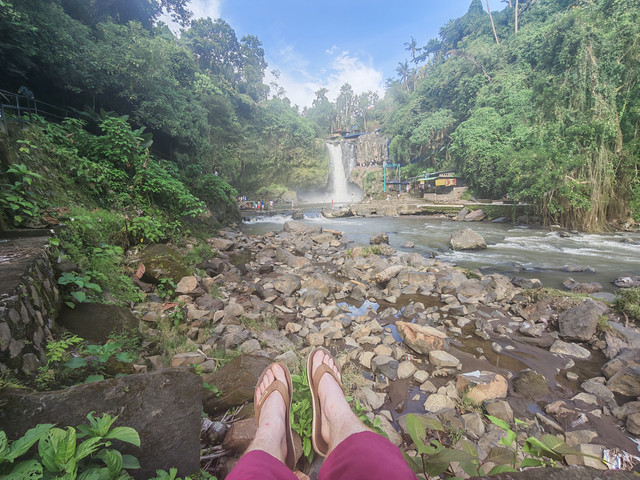
The waterfall itself is of course stunning but the site is as much resort as it is a waterfall. The grounds were littered with bars restaurants and various pools. You can swim by the waterfall too but you're not allowed to swim directly under it because you'd probably die.
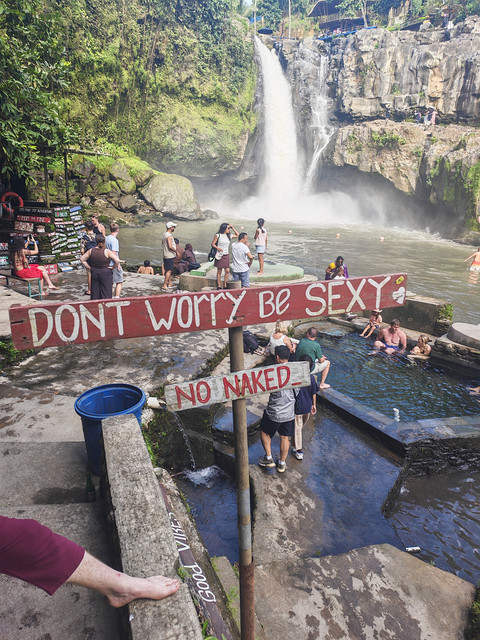
Balinese signage tends to be direct and to the point. I thought this one was hilarious and had to get a picture.
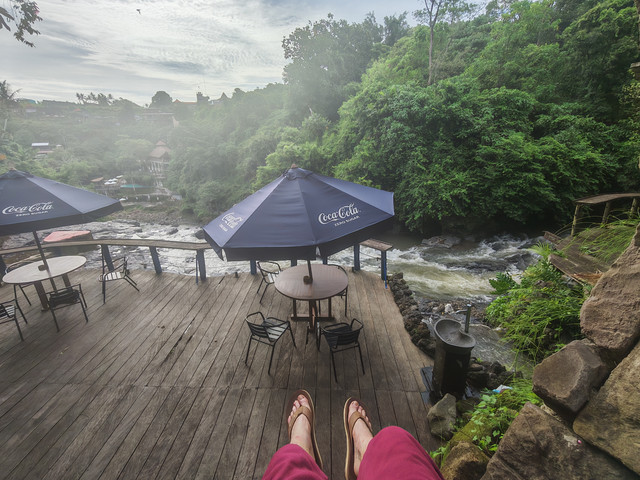
You can also climb to the top of the waterfall and there are various little shops and cafes on the way up. I popped in one of the shops for some smokes and a bottle of water and got chatting to the lady on the counter. She introduced herself as Butuk Ari and I learned that Balinese women take the name of their first born son as a second name, so Ari is the name of her eldest son. Isn't that charming?
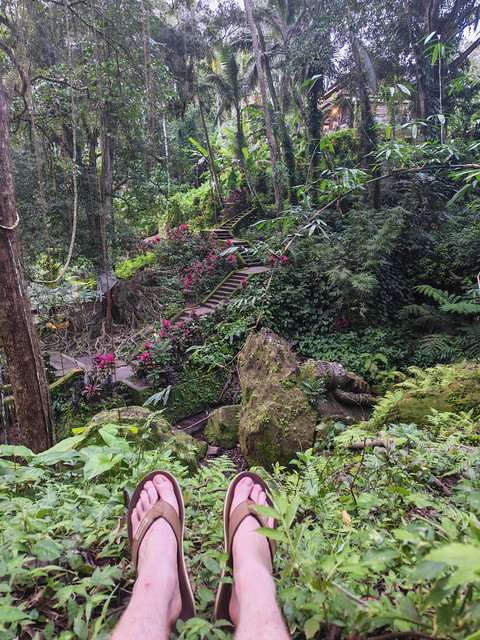
Final stop: Goa Gajah Temple AKA the elephant cave. The site dates back to the 9th century but actually constitutes two temples, the remains of an ancient bhudist temple and a separate Hindu temple. Between the ridge I took the photo from and the stairs in the background is an ancient bhudist statue being taken over by moss. You can imagine how grand it must have looked before it fell apart.
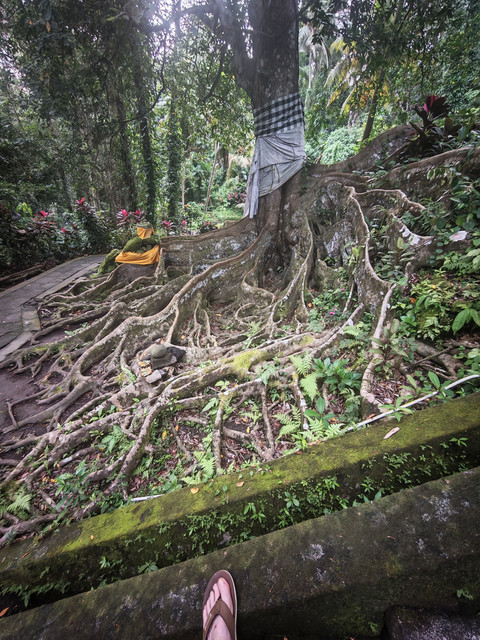
I accidentally hired a guide (making eye contact with anyone in Bali often constitutes an engagement of services) who told me this tree is 300 years old. It was a pretty cool tree.
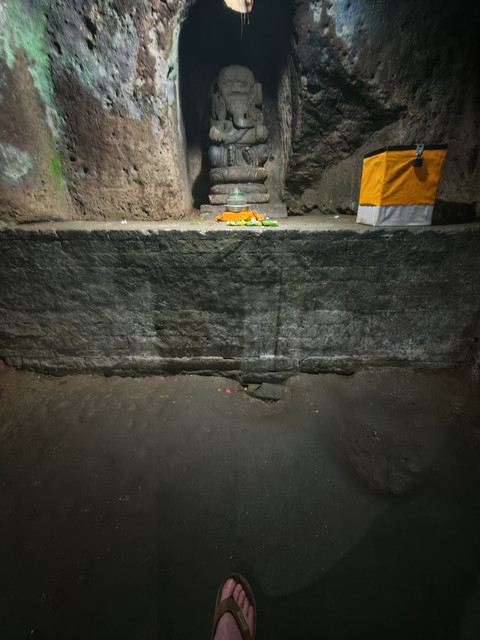
Of course what the site is best known for is the thousand odd year old cave housing this depiction of the Hindu elephant deity Ganesh. Not pictured to my right is a single alcove and to my left three. My accidental guide explained that monks would practice meditation in this cave, the master would sit in the larger alcove to the right while his disciples would sit in the three smaller alcoves to the left.
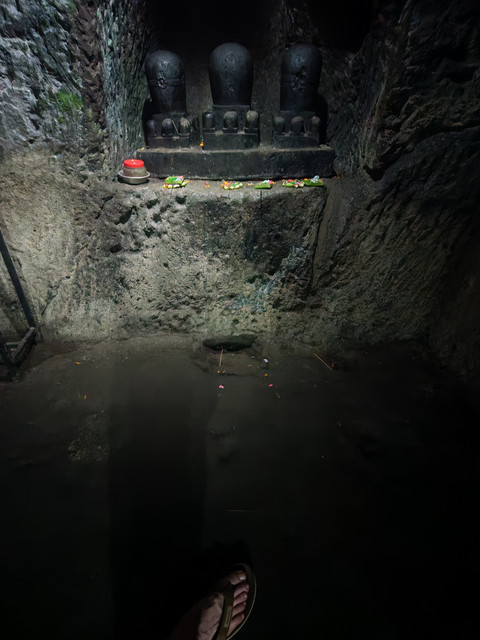
On the other side of the cave you have these three statues. Accidental guide did name the deities but I can remember them all off the top of my head. I believe the middle one is Shiva and what I can tell you is that they represent the elements of fire water and wind.
Edit: I didn't point this out because I've gotten so used to seeing them everywhere but see those 4 little trays in front of the statues? They're called Banten. It's an offering to the gods that the Balinese put out daily. You see them absolutely everywhere: outside bars, restaurants, shops, temples, houses; you won't pass a building without one out the front and they're replaced multiple times a day. The tray is made out of banana leaf and decorated with flowers I don't know the name of and then for the offering itself it can be anything from a piece of candy, a biscuit, a cigarette, sometimes a small amount of cash, anything that might please the gods. Whenever one is lost or trampled they replace it and light a fresh stick of incense. I've also noticed that when they're placing them down they all splash them with water. I've seen places that hold classes on how to make them and the cultural significance but I've been keeping busy and haven't had the chance to attend one yet, hopefully I'll be able to fit it in before I go home.
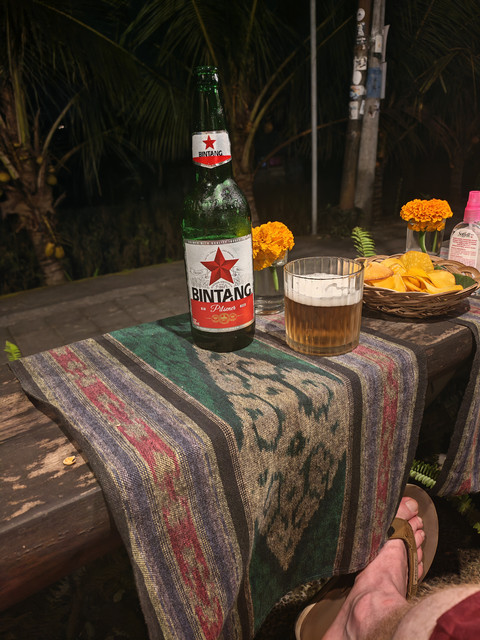
And with that our tour is concluded. All that's left to do is kick back and relax with the mosquitos and an ice cold Bintang. Have a blessed days folks!
Edit: typos etc

First stop was Tagallalang rice terrace, a must see destination and popularly known as the most beautiful rice paddies in the world.
The rice fields employ an ancient irrigation system known as subak which allows water from a mountain spring to flow down the contours of the hill.
This multi tiered approach allows relies solely on gravity to keep the fields watered negating the need for pumps while facilitating some truly breathtaking views.

Next stop was Tirta Empul also known as the holy water temple. It's a small temple but has unique appeal on account of the holy water pouring into the pool. Worshippers first pray and present an offering before donning a special sarong and bathing in the fountain to receive a blessing. I didn't partake as I am already blessed and also I didn't feel like getting wet

Our next destination was Gunung Kawi temple in the village of Tampaksiring (fun bit of trivia, "tampak" is the ancient Balinese word for foot
)
This is appropriate as you have to descend hundreds of stairs to reach the temple and climb them again to leave. It's worth the effort though, and there was a mercifully placed ice cream stand at the top of the stairs.

Gunung Kawi is also known as The Valley of the Balinese Kings. It is part place of worship and part resting grounds. This was one of my favourite stops today the architecture is stunning. I had my friend take this picture as his phone has a wide angle lens
For our penultimate stop we visited, well, the name is on the sign.

The waterfall itself is of course stunning but the site is as much resort as it is a waterfall. The grounds were littered with bars restaurants and various pools. You can swim by the waterfall too but you're not allowed to swim directly under it because you'd probably die.
Balinese signage tends to be direct and to the point. I thought this one was hilarious and had to get a picture.
You can also climb to the top of the waterfall and there are various little shops and cafes on the way up. I popped in one of the shops for some smokes and a bottle of water and got chatting to the lady on the counter. She introduced herself as Butuk Ari and I learned that Balinese women take the name of their first born son as a second name, so Ari is the name of her eldest son. Isn't that charming?

Final stop: Goa Gajah Temple AKA the elephant cave. The site dates back to the 9th century but actually constitutes two temples, the remains of an ancient bhudist temple and a separate Hindu temple. Between the ridge I took the photo from and the stairs in the background is an ancient bhudist statue being taken over by moss. You can imagine how grand it must have looked before it fell apart.

I accidentally hired a guide (making eye contact with anyone in Bali often constitutes an engagement of services) who told me this tree is 300 years old. It was a pretty cool tree.

Of course what the site is best known for is the thousand odd year old cave housing this depiction of the Hindu elephant deity Ganesh. Not pictured to my right is a single alcove and to my left three. My accidental guide explained that monks would practice meditation in this cave, the master would sit in the larger alcove to the right while his disciples would sit in the three smaller alcoves to the left.

On the other side of the cave you have these three statues. Accidental guide did name the deities but I can remember them all off the top of my head. I believe the middle one is Shiva and what I can tell you is that they represent the elements of fire water and wind.
Edit: I didn't point this out because I've gotten so used to seeing them everywhere but see those 4 little trays in front of the statues? They're called Banten. It's an offering to the gods that the Balinese put out daily. You see them absolutely everywhere: outside bars, restaurants, shops, temples, houses; you won't pass a building without one out the front and they're replaced multiple times a day. The tray is made out of banana leaf and decorated with flowers I don't know the name of and then for the offering itself it can be anything from a piece of candy, a biscuit, a cigarette, sometimes a small amount of cash, anything that might please the gods. Whenever one is lost or trampled they replace it and light a fresh stick of incense. I've also noticed that when they're placing them down they all splash them with water. I've seen places that hold classes on how to make them and the cultural significance but I've been keeping busy and haven't had the chance to attend one yet, hopefully I'll be able to fit it in before I go home.

And with that our tour is concluded. All that's left to do is kick back and relax with the mosquitos and an ice cold Bintang. Have a blessed days folks!
Edit: typos etc
Last edited:





