
6 PSYCHOACTIVE CACTI THAT DON'T CONTAIN MESCALINE
The desert holds secrets that don't fit in a single name. Not all psychoactivity in the Cactaceae kingdom comes from mescaline: there exists a complete universe of phenethylamines, extremely rare alkaloids, and nearly forgotten molecules that live in species equally sacred, ancient, and fascinating.
From macromerine to candicine, passing through unique compounds like weberine, longimammosine, longimammamine, and even little-known derivatives of mescaline, these cacti reveal the immense chemical diversity that Mexico and South America have silently protected for millions of years.
In this carousel I explore psychoactive cacti that DO NOT contain mescaline, but possess other alkaloids capable of generating altered, symbolic, and profoundly visionary states —from 11-meter giants to 4 cm miniatures that guard entire kingdoms in their sap.
Each species tells a story:

The Coryphantha revered in Coahuila as "Doña Ana,"
The monumental Pachycereus weberi,
The mysterious Mammillaria longimamma with its unprecedented natural amphetamines,
The tiny and complex Turbinicarpus pseudomacrochele,
And the Obregonia denegrii, an endangered jewel that some psychonauts describe as a living doorway.
This post is not an invitation to consume

, but rather a tribute to visionary botany, natural chemistry, and the peoples who have safeguarded these species.

Psychonautics is also knowledge, respect, and preservation.
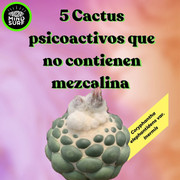
5 Psychoactive Cacti That Don't Contain Mescaline
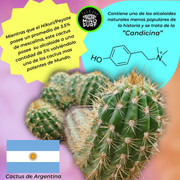
Coryphantha elephantidens var. Inermis
While Hikuri/Peyote has an average of 3.5% mescaline, this cactus contains its alkaloid at a quantity of 5%, making it one of the most potent cacti in the World.
It contains one of the least popular natural alkaloids in history, which is "Candicine".
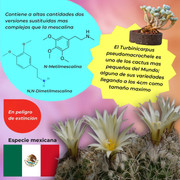
It contains high quantities of two more complex substituted versions than mescaline:
N-Methylmescaline
N,N-Dimethylmescaline
Turbinicarpus pseudomacrochele is one of the smallest cacti in the World; some of its varieties reaching 4cm as their maximum size.
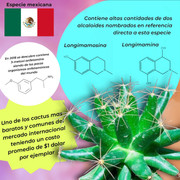
It contains high quantities of two alkaloids named in direct reference to this species:
Longimammosine
Longimammamine
In 2018 it was discovered to contain 3-methoxy-amphetamine, being one of the few amphetamine-containing organisms in the world.
One of the cheapest and most common cacti in the international market, with an average cost of $1 dollar per specimen.
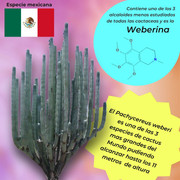
Pachycereus weberi is one of the 3 largest cactus species in the World, capable of reaching up to 11 meters in height.
It contains one of the 3 least studied alkaloids of all cacti, which is Weberine.
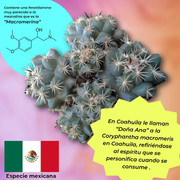
In Coahuila they call Coryphantha macromeris "Doña Ana," referring to the spirit that personifies itself when consumed.
It contains a phenethylamine very similar to mescaline, which is "Macromerine"
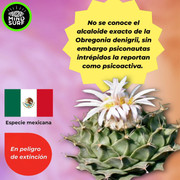
The exact alkaloid of Obregonia denegrii is unknown; however, intrepid psychonauts report it as psychoactive.
Spanish:
6 CACTUS PSICOACTIVOS QUE NO CONTIENEN MESCALINA
El desierto guarda secretos que no caben en un solo nombre. No toda la psicoactividad del reino Cactaceae nace de la mezcalina: existe un universo completo de fenetilaminas, alcaloides rarísimos y moléculas casi olvidadas que viven en especies igual de sagradas, antiguas y fascinantes.
Desde la macromerina hasta la candicina, pasando por compuestos únicos como la weberina, longimamosina, longimamina, e incluso derivados poco conocidos de la mescalina, estos cactus revelan la inmensa diversidad química que México y Sudamérica han protegido silenciosamente durante millones de años.
En este carrusel exploro cactus psicoactivos que NO contienen mezcalina, pero que poseen otros alcaloides capaces de generar estados alterados, simbólicos y profundamente visionarios —desde gigantes de 11 metros hasta miniaturas de 4 cm que guardan reinos enteros en su savia.
Cada especie cuenta una historia:
La Coryphantha reverenciada en Coahuila como “Doña Ana”,
El monumental Pachycereus weberi,
La misteriosa Mammillaria longimamma con sus anfetaminas naturales inéditas,
El diminuto y complejo Turbinicarpus pseudomacrochele,
Y la Obregonia denegrii, joya en peligro de extinción que algunos psiconautas describen como una puerta viva.
Este post no es una invitación al consumo
, sino un homenaje a la botánica visionaria, a la química natural y a los pueblos que han resguardado estas especies.
La psiconáutica también es conocimiento, respeto y preservación.
 https://www.instagram.com/mindsurf33/p/DRggdWEDtgF/
 2025-11-26









 I?ve been feeling really off this past year and couldn?t figure it out until I realized I haven?t had a good Mescaline trip in over a year. I?ve been taking it fairly regularly since I was young and I feel it has strong anti-depressant like qualities that last long after the experience is over. I?m now planning my next adventure very soon.


