• N&PD Moderators: Skorpio

Can someone explain "Auto-oxidation of dopamine" and what its effects (neurotoxic) are

Zonxx

Bluelighter
Joined
Apr 28, 2019
Messages
2,860
Location
Somwhere in the north
basically title, cant easily find the information and would like to know what actually happens during the process thankyou!
I found a site thst elaborates on exactly what happens during the process and its results however someone else take a look and simplify it for my severely sleep deprived brain?
How is it bad im just not catching onto this one
Is dopamine destroyed by the process? Is there some other reaction thats negative srf. This one bothers me ive re read it several times

 
Last edited:
basically title, cant easily find the information and would like to know what actually happens during the process thankyou!
I found a site thst elaborates on exactly what happens during the process and its results however someone else take a look and simplify it for my severely sleep deprived brain?
How is it bad im just not catching onto this one
Is dopamine destroyed by the process? Is there some other reaction thats negative srf. This one bothers me ive re read it several times


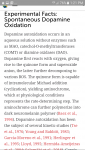
Autooxidation = Oxidation of chemical compounds by oxygen (counter-intuitively, "oxidation" is defined by a transfer of electrons; it does not necessarily have to involve the presence of oxygen atoms).

Dopamine is destroyed in the process, but this is not really a problem, since these neurotransmitters have a very high turnover rate anyway, normally being broken down by enzymes and quickly replaced.

Well, ok, it kind of is a problem, but also a good thing: The oxidation of dopamine can result in the formation of radicals / reactive oxygen species ("ROS"), which can cause damage to your neurons. On the other hand, dopamine can also react with these reactive oxygen species to render them less dangerous to your neurons. (Edit: Forgot the word "less" in the second sentence). Therefore, dopamine can be said to possess both pro-oxidant and anti-oxidant activity.

Like many reactions in the body, the rate of autooxdation may affected by the pH value of the medium. HOWEVER, it should be pointed out that you cannot meaningfully affect your body's pH value by eating so-called "alkaline" foods/supplements. Those are either ineffective or - especially in the case of so-called "cleanses" - actually harmful, and generally advocated for by people who barely even seem to understand how the pH scale works.
 
Last edited:
basically title, cant easily find the information and would like to know what actually happens during the process thankyou!
I found a site thst elaborates on exactly what happens during the process and its results however someone else take a look and simplify it for my severely sleep deprived brain?
How is it bad im just not catching onto this one
Is dopamine destroyed by the process? Is there some other reaction thats negative srf. This one bothers me ive re read it several times


Sure. Dopamine breakdown products, mostly quinones, are highly atomically unstable and steal electrons from neighboring cells. The brakdown products of these metabolites are even more pro-oxidant, pure reactive oxygen species like hydrogen peroxide and superoxide anion. Neurons contain high amounts of antioxidant enzymes like superoxide dismutase that nullifies these ROS. But when someone it abusing potent dopamine releasers like methamphetamine or phenmetrazine, or taking l-dopa and carbidopa in large amounts without MAO inhibitors, the amount of these free radicals generated overwhelms the body's detox system. Eventually, the amounts of electrons stolen from the neurons is so huge that the cell can no longer maintain memebrane integrity, and enters into a state of cell suicide, apoptosis.

This is why no medical doctor will prescribe l-dopa for the treatment of Parksinson's without also giving MAO-b inhibitors like selegiline and rasagiline. Not only do the MAO-b inhibitors significantly increase the effectiveness of the l-dopa, allowing for lower doses, but also protects the brain from free radical damage that would otherwise result from taking l-dopa by stopping dopamine for getting broken down, especially in the striatum. Giving l-dopa alone would accelerate Parkinson's even more, as it would kill dopaminergic neurons. L-dopa supplements are now sold without prescription in the form of Mucuna Pruriens extract. This is criminal as l-dopa is a neurotoxin if not given with MAOIs. Fortunately, l-dopa is not very effective at reaching the brain without being combined with an l-amino acid decarboxylase inhibitor like carbidopa, because most of it gets broken down by decarboxylase enzyme in the body before reaching the brain. Fortunately! If l-dopa were effective at reaching the brain alone, we would have massive increases in the number of people suffering from Parkinson's disease. Now, if you were to take it with selegiline or rasagiline, it is safe for the brain. Problem is, l-dopa + MAOIs is really, really hardcore stuff and should never be taken without the supervision of a doctor. Flu-like symptoms, severe movement problems, hallucinations, severe hypotension and headaches are only a few of the side effects of this combination. Unless you have serious illness and are under the care of an expert doctor, you have no business taking this.
 
Sure. Dopamine breakdown products, mostly quinones, are highly atomically unstable and steal electrons from neighboring cells. The brakdown products of these metabolites are even more pro-oxidant, pure reactive oxygen species like hydrogen peroxide and superoxide anion. Neurons contain high amounts of antioxidant enzymes like superoxide dismutase that nullifies these ROS. But when someone it abusing potent dopamine releasers like methamphetamine or phenmetrazine, or taking l-dopa and carbidopa in large amounts without MAO inhibitors, the amount of these free radicals generated overwhelms the body's detox system. Eventually, the amounts of electrons stolen from the neurons is so huge that the cell can no longer maintain memebrane integrity, and enters into a state of cell suicide, apoptosis.

This is why no medical doctor will prescribe l-dopa for the treatment of Parksinson's without also giving MAO-b inhibitors like selegiline and rasagiline. Not only do the MAO-b inhibitors significantly increase the effectiveness of the l-dopa, allowing for lower doses, but also protects the brain from free radical damage that would otherwise result from taking l-dopa by stopping dopamine for getting broken down, especially in the striatum. Giving l-dopa alone would accelerate Parkinson's even more, as it would kill dopaminergic neurons. L-dopa supplements are now sold without prescription in the form of Mucuna Pruriens extract. This is criminal as l-dopa is a neurotoxin if not given with MAOIs. Fortunately, l-dopa is not very effective at reaching the brain without being combined with an l-amino acid decarboxylase inhibitor like carbidopa, because most of it gets broken down by decarboxylase enzyme in the body before reaching the brain. Fortunately! If l-dopa were effective at reaching the brain alone, we would have massive increases in the number of people suffering from Parkinson's disease. Now, if you were to take it with selegiline or rasagiline, it is safe for the brain. Problem is, l-dopa + MAOIs is really, really hardcore stuff and should never be taken without the supervision of a doctor. Flu-like symptoms, severe movement problems, hallucinations, severe hypotension and headaches are only a few of the side effects of this combination. Unless you have serious illness and are under the care of an expert doctor, you have no business taking this.
Man thankyou so much for the explanation! I really just didnt comprehend why it was negative finally i do, all about cell death etc etc i get it now!
 
Going off of Roxford's explanation this is a reason DRIs are a little less neurotoxic than releasers. Dopamine reuptake inhibitors keep the dopamine in the synaptic cleft which is extracellular. Releasers cause dopamine inside of the cell to increase and flow down the concentration gradient into the synapse. The high cytosolic dopamine concentration is more damaging to the neurons in this case.

This is also a mechanism for neurotoxicity in MDMA and other combined serotonin/dopamine releasers. When high levels of serotonin and dopamine are in the synapse the serotonin transporter will accidentally pick up dopamine, and serotonin neurons are typically less robust with regards to oxidative insult because they are not used to handling dopamine and its basal oxidative load. This causes some part of the serotonergic neurotoxicity of mdma.
 
Top