-
Neuroscience & Pharmacology Discussion Welcome Guest
Posting Rules Bluelight Rules Recent Journal Articles Chemistry Mega-Thread FREE Chemistry Databases! Self-Education Guide -
N&PD Moderators: Skorpio
You are using an out of date browser. It may not display this or other websites correctly.
You should upgrade or use an alternative browser.Can high doses of drugs damage the Nucleus
- Thread starter lemonman
- Start date



sekio
Bluelight Crew
Not through direct means, indirectly though I don't see why not (hyperthermia on amphetamines, hypoxia in opioid OD, etc)Just research encitotoxicity and what it does and doesn't do.
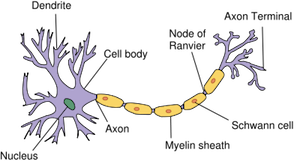
By the way there is no nucleus in the axon
NSFW: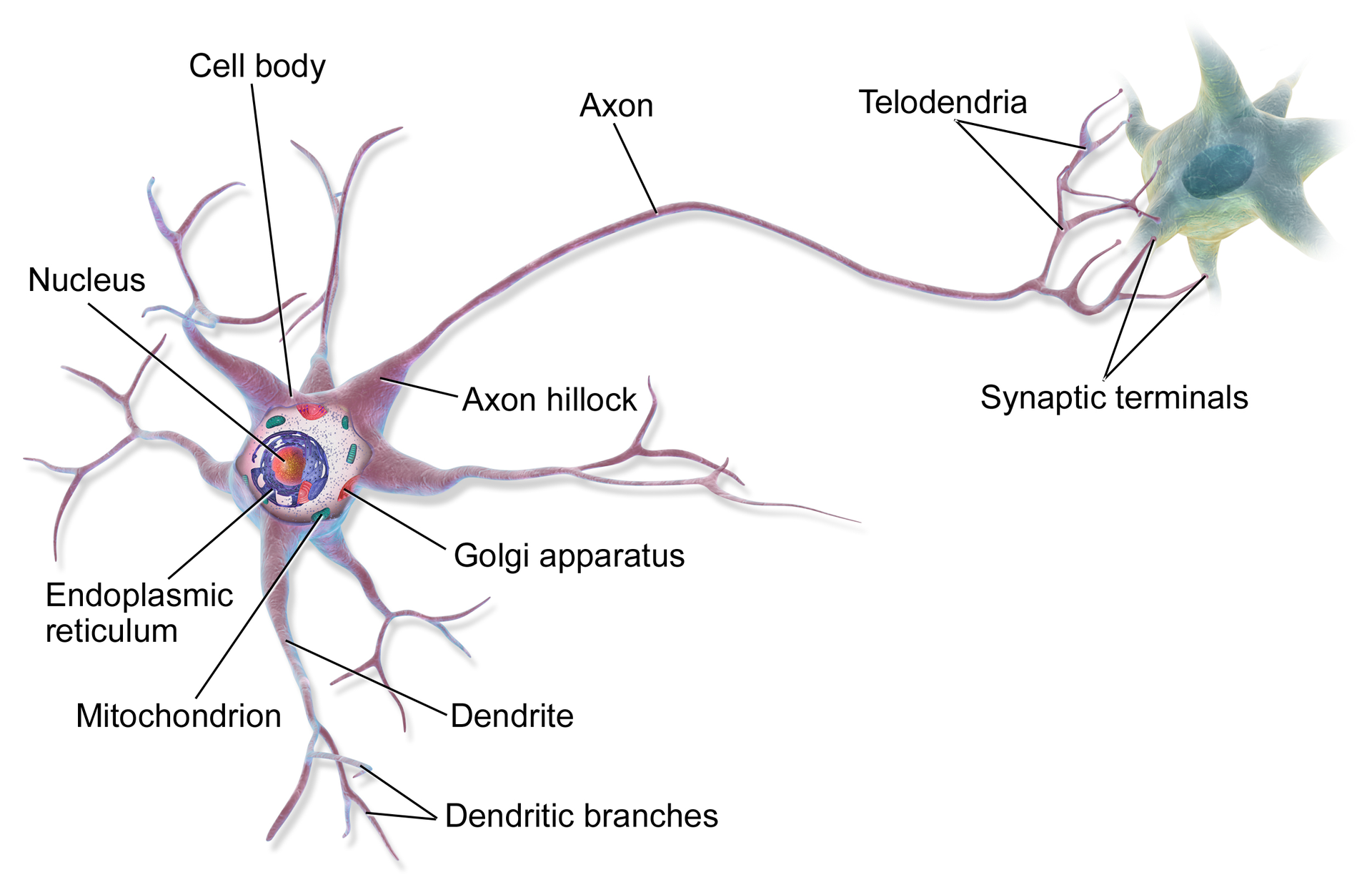
Do you mean the nuclei in the Schwann cells that ensheathe myelinated axons?
Also, agreed that context matters: all substances have toxic dosages, just often when we talk about toxic we implicitly mean at "significantly" and relevantly low dosages which does not apply to something like water. A lot of things can go wrong at overdoses / toxic levels and this often says very little about the general properties of a drug. So to get a meaningful answer you'd first need to say why it matters. A lot of statements about toxicity (like the one about water as d1nach pointed out) can be meaningless out of context and easily misinterpreted, like the joke about getting people riled up over the dangers of "H2O" Last edited:NSFW:
See that picture, where it says Nucleus.
I'm talking about exactly that.
Regarding that whole picture there's loads of different parts,
do you know which part or parts get damaged from high doses?.
and can Na+ , Ca2+ ,etc decrease the damage done?.
Vastness
Bluelight Crew
^ Are you the same person as the OP? Anyway I have not studied neurology in any significant depth, but from my uneducated position I would say your questions are far too broad for anyone to give a definitive answer. I would expect that every part of the neuron can be damaged by something, to a greater or lesser degree depending on what substance you're talking about. Presumably the effectiveness of various ions in preventing damage would also depend on by what mechanism the damage is being done in the first place.^ Are you the same person as the OP? Anyway I have not studied neurology in any significant depth, but from my uneducated position I would say your questions are far too broad for anyone to give a definitive answer. I would expect that every part of the neuron can be damaged by something, to a greater or lesser degree depending on what substance you're talking about. Presumably the effectiveness of various ions in preventing damage would also depend on by what mechanism the damage is being done in the first place.
Which ions prevent damage?.
Vastness
Bluelight Crew
All of them, or none of them, presumably.
Cotcha Yankinov
Bluelight Crew
- Joined
- Jul 21, 2015
- Messages
- 2,919
If neurotoxicity from e.g. methamphetamine does occur, it occurs first in the nerve terminals. The nerve terminal is the very tip of the axon - these are the ends that release neurotransmitters such as serotonin. They are the most vulnerable part here.do you know which part or parts get damaged from high doses?.
and can Na+ , Ca2+ ,etc decrease the damage done?.
The axon nerve terminals express transporters such as the serotonin reuptake transporter that can uptake different molecules other than which they were meant to transport (e.g. meth, uptake of which is necessary for the effects of meth). Once these harmful molecules are inside the terminal and many other conditions are met, the terminals can degenerate while part of the axon may still be spared (axotomy is also another scenario), but most often the cell body itself is spared.
In the case of animals given high doses of MDMA, the neurotoxic effects to serotonin are pretty limited to the axons/nerve terminals. In fact, in particular only a certain kind of fine nerve fiber is vulnerable to the effects of substituted amphetamines.
With regards to Na/Ca ions, these are excitatory ions and can contribute to the harmful effects via indirect means.