• N&PD Moderators: Skorpio

Could cocaine be made into a morphinan (and remain active)?

Nagelfar

Bluelight Crew
Joined
Nov 23, 2007
Messages
2,527
Location
Vancouver, Washington USA
Morphine.png
Morphine &
CocaineHCl.gif
Cocaine.

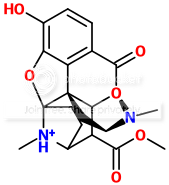
Look at the cocaine image and rotate it 30 degrees (clockwise) and how much it resembles a three ring structure of the morphinan carbon ring skeleton (with the middle ring being only a link but the outline of the ring nonetheless), of course, the tropane on the cocaine molecule, if I'm not mistaken, is where the active place on the morphinan for a mu agonist would be which may make it impossible to be a mu agonist but would it be able to become a morphinan and remain a DRI?

(alternate 2D diagrams: morphine and cocaine)

(EDIT: notice the alternate 2D morphine's unusual ring structure that is often depicted as a simple ring in 2D otherwise, as is the common 2D depiction of cocaine's tropane that I here give above as a ring, another possible point of correlation?)

EDIT#2 Post Script: I am not asking how one would make such a substance (as to not violate the rule of no synthesis discussion), but rather I am asking would it be viable, and at what specific points could hydrogens, oxygens and et cetra work or not as functional substitutes for the active conformation of the alternate molecule in question while bringing the function and form of either molecule closer to the other without losing the original integrity, and which way(s) that could be done best without diverging from their contingent shapes.
 
Last edited:

those are two very different molecules. i've never taken organic chemistry, but i think i know enough to tell you that your idea isn't very plausible. i'm pretty sure that, at the very least, since the nitrogen is in a totally different spot it wouldn't work out.
 
I'd be curious to know what the pharmacology of cocaine with those two rings joined would be. I predict inactive or non-recreational if it is.
 
I'd be curious to know what the pharmacology of cocaine with those two rings joined would be. I predict inactive or non-recreational if it is.

The picture above is misleading. The tropane is bent away from the phenyl, it doesn't sit next to it like the picture displays.
 
The picture above is misleading. The tropane is bent away from the phenyl, it doesn't sit next to it like the picture displays.

Shouldn't it be able to freely rotate? I know it is commonly drawn with the tropane pointed the other way, but I don't see a reason why it wouldn't be able to rotate...
 
Yeah, sure he could explain it really well. I can't, but the way to short version-point in the other direction doesn't mean rotating freely, it's stuck pointing the other way until, uhm until whatever murphy or f&b or someone tells you happens
 
honestly, im no chemist, but i say impossible, only because if it was possible, wouldnt there already be a chem like this? wouldn't it be very dangerous at least, if the effects of cocaine are maintained?
 
Only in a world of endless devotion to organic chemistry and a psychotic devotion to 'I can, and will accomplish this' attitude (the realm of the total synthetic creation types - the types who have anguished nightmares trying to make what a salvia divinorum plant can make without breaking into a sweat). Total synthesis might start out using similar building blocks for morphinans and esters of ecognine/tropanes, but they rapidly go in different directions and going from one to the other isn't given over to much brain power. I can see a sort of loose semblance between metazocine type opioids (things like the ordeal opiate pentazocine) and cocaine, but we're talking about almost clutching at straws territory.

Now cocaine and pethedine reverse esters (the prodines) are almost kissin' cousins...
 
Thank you fastandbulbous.

I mean what points could connect and make chimera type molecules of the two, what is viable to whatever degree they are viable and how much bending and addition must be made, a morphinan with a tropane as a branch, two nitrogens (one in either spot where both are on either), four carbon rings (in the worst case scenario), etc.

Maybe the third carbon ring with the nitrogen would be on the opposite end than I suggested previously away from the freely rotatable link in cocaine, fixing it in place, etc. (as still implausble, but I want to know what fits and binds where is all. ;-p)
 
Last edited:
I think the OP confuses 2D- and 3D-structure of named compounds. As LawnChairSkank already pointed out correctly:
The picture above is misleading. The tropane is bent away from the phenyl, it doesn't sit next to it like the picture displays.

I took the systematical name provided by Wiki (methyl(1R,2R,3S,5S)-3-(benzoyloxy)-8-methyl-8-azabicyclo[3.2.1]octan-2-carboxylate) and translated it into the structure of cocaine:


BUT, that still doesn't the whole truth about the 3D-structure of cocaine in solution, although this projection is already more realistic that the flat one in opening post, which totally disregarded stereochemistry.

Next step is to get a threedimensional structure, done quickly with the MM2-force field (left) resp. MMFF94 (right) methods implemented in Chem3D:


Both methods are similar, and therefore, give similar results (the differences in both pics can be explained easily by slight rotation around single-bonds). As one can see, the benzoyl-residue points away from the tropane-ring. Theoretically it is possible that both rings are close to each other as drawn in the 2D-picture in the opening post, but sterical hindrance, electronical repulsion and bond strain will make it least probable. In contrary to the slight differences between the MM2- and the MMFF94-calculation, such rotations as suggested by Nagelfar would require far too much energy.


On topic, I don't think that the cocaine and the morphine-structure have much in common. As a rough but graphic demonstration, see how far (relatively) the nitrogen is away from the 3 oxygens in morphine, in contrary to cocaine (both MMFF94-minimized):


(Please note that every energy-minimization run can yield slightly different constitutions; this depends in the method of calculation.)


Peace! - Murphy
 
Last edited:
Just wanna quickly point out that the nitrogen is sp3 hybridized and so it's methyl can be oriented either towards or away from the substituents. More important, the nitrogen's lone electron pair can have either orientation.

Whether this can lead to enolate formation and subsequent cyclization is too sophisticated a question for me, but let me point out that I know of no active morphinan in which the nitrogen isn't connected to the phenantrene by two contiguous methylenes (this is one of the observations of the "morphine rule"), and that is, by definition, impossible for a tropane
 
Just wanna quickly point out that the nitrogen is sp3 hybridized and so it's methyl can be oriented either towards or away from the substituents. More important, the nitrogen's lone electron pair can have either orientation.
Agreed!
But I guess sterical hindrance will force it mainly into the direction as shown in the upper picture.

Cheers!
 
Messy as fuck.

Not as sloppy looking (in 2D at least) as the oripavine derivatives.

The only questionable part to me are the two nitrogens. Though that counters the main argument against so far; which was that the single nitrogen wasn't in the right place to function in both ways. (and that back orientation of those two double-bonded oxygens, that's too close to where substitutions which turn agonists into antagonists go, for my taste. Though I think I missed that bullet if there's any functionality at all.)
 
Last edited:
Top