



• N&PD Moderators: Skorpio

RB-101 - enkephalin reuptake / breakdown inhibitor

Lightning-Nl

Bluelighter
Joined
Nov 11, 2012
Messages
1,247
This is opioid peptide (enkephalin) enzyme "reuptake" inhibitor RB-101
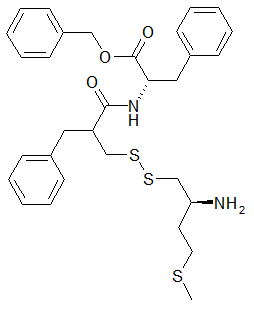
RB-101.png


I decided to make this a whole new thread due to the fact that there is actual research being done about this new drug.

RB-101 is an enkephalin enzyme inhibitor. It exerts its mechanism of action by blocking (inhibiting) enkephalinase enzymes - the enzymes that are responsible for breaking down enkephalin. RB-101 appears to also have very weak Delta-Opioid affinity, as well as slight sigma-1 activity.

RB-101 has shown to exert potentiating effects when combined with traditional opiates (such as methadone and morphine) and has its own relatively potent analgesic effects. They believe this could be used as a potential augmentation drug to help boost opiates in people who take them for pain management, without having to bump up their doses. It also has the potential to be a very effective drug for managing and stopping withdrawal symptoms from other conventional opiates. But that's far from it's only uses.

RB-101 appears to have an incredibly small addiction potential when compare to other opiates. Studies have only shown dependence when taken in supratherapeutic doses. Self-administration has not yet been seen by studies and if this remains the case, this will be huge.

RB-101 has been shown to exert very potent, very effective - antidepressant and anxiolytic effects. Due to the fact that RB-101 appears to have much less addiction potential than opioid agonists - they are investigating RB-101's potential as an anxiolytic as well as an antidepressant.

This drug is incredibly new (2010 infact) but if studies remain as promising as everything I've read, we may have a very bright future ahead of us.
 
Last edited:

how interesting, kind of like to endogenous opiates as URB-597 is to endogenous cannabinoids (of course, URB is not a peptide)... i bet, like URB-597, it probably has some kind of weird and unanticipated side-effects. gotta do some research on this one.
 
too bad its not orally active

there have been enkephalinase inhibitors developed and used but not as antidepressants or narcotics. more like antidiarrehals. e.g. http://en.wikipedia.org/wiki/Racecadotril

the rumor was that d-phenylalanine was an "enkephalinase inhibitor" but in reality.... nope. it's not.

If you read farther down the article - it says that it was specifically designed to not be orally active and that since the original synthesis of RB-101, analogues of it has been made that are orally absorbed in humans. Such as RB-120 and RB-3009.

I just said RB-101 in my original post due to the fact that I can't find any information on those analogues anywhere.
 
These are the articles cited as sources for that mention of the other RB compounds on wiki.

http://www.painjournalonline.com/article/S0304-3959(02)00486-4/abstract
Abstract
The discovery that the endogenous morphine-like peptides named enkephalins are inactivated by two metallopeptidases, neutral endopeptidase and aminopeptidase N, which can be blocked by dual inhibitors, represents a promising way to develop ‘physiological’ analgesics devoid of the side effects of morphine. A new series of dual aminophosphinic inhibitors of the two enkephalin-catabolizing enzymes has been recently designed. In this study, one of these inhibitors, RB3007, was tested in various assays commonly used to select analgesics (mouse hot-plate test, rat tail-flick test, writhing and formalin tests in mice, and paw pressure test in rats), and the extracellular levels of the endogenous enkephalins in the ventrolateral periaqueductal grey have been measured by microdialysis after systemic administration of RB3007. In the mouse hot-plate test, the dual inhibitor induced long-lasting (2h) antinociceptive effects with a maximum of 35% analgesia 60min after i.v. or i.p. administration. These antinociceptive responses were antagonized by prior injection of naloxone (0.1mg/kg, s.c.). Similar long lasting effects were observed in the other animal models used. Very interestingly, injection of RB3007 (50mg/kg, i.p.) significantly increased (82%) the extracellular levels of Met-enkephalin with a peak 60min after i.p. injection. This increase parallels the antinociceptive responses observed. In addition, strong facilitatory effects of subanalgesic doses of the CCK2 receptor antagonist, PD-134,308 or the synthetic opioid agonist, methadone on RB3007-induced antinociceptive responses were observed. These findings may constitute promising data for future development of a new class of analgesics that could be of major interest in a number of severe and persistent pain syndromes.

http://informahealthcare.com/doi/abs/10.1517/14728222.11.2.145
The most efficient drugs to alleviate severe pain are opioid compounds. However, their chronic use could be associated with serious drawbacks, such as tolerance, respiratory depression and constipation. Therefore, there is a need for compounds able to efficiently alleviate inflammatory and neurogenic pain following chronic treatment. The discovery that the endogenous opioid peptides, enkephalins, are inactivated by two metallopeptidases, neutral endopeptidase and aminopeptidase N, which can be blocked by synthetic dual inhibitors, represents a promising way to develop ‘physiological’ analgesics devoid of morphine side effects. These dual inhibitors also have antidepressant-like properties through enkephalin-related activation of δ-opioid receptors. This is expected to reduce the emotional component of pain in humans. This article reviews the promising data obtained for future development of a new class of analgesic that could be of major interest in a number of severe and chronic pain syndromes.


Read More: http://informahealthcare.com/doi/abs/10.1517/14728222.11.2.145
http://www.eurekaselect.com/67731/article
Abstract:
Management of acute and chronic pain has always been a key area of clinical research. Enkephalinase inhibitors (EIs) seem to be promising as therapeutic agents having antinociceptive action. They additionally possess anticraving, antidiarrhoeal and antidepressant actions. The antinociceptive action of EIs has been reported for over a decade however, their therapeutic potential is yet to be effectively explored. EIs may be broadly classified as endogenous and those that are obtained synthetically. Endogenous EIs include peptides like spinorphin and opiorphin. And compounds like RB 101, RB 120, RB 3007 constitute the synthetically obtained EIs. Endogenous and synthetic inhibitors enkephalin degrading enzymes have been studied in vivo using standard animal models. The potential EI targets appear to be APN (Aminopeptidase N), NEP (Neutral endopeptidase), DPP-III (Dipeptidyl peptidase). EIs possess the advantage that they lack the opioid side effects. This article reviews the mechanisms by which EIs act and elucidates the pathways involved.
 
Mod bump, has anyone found any info on the peripheral vs central berbous system activity of this compound?
 
Mod bump, has anyone found any info on the peripheral vs central berbous system activity of this compound?

I don't have any info on the peripheral activity of this, but I do have a question.

I don't believe I remember seeing anywhere, any information about opioid peptides having an uptake transporter. Are they just secreted by the pituitary gland? and then destroyed almost immediately by enzymes?
 
All I know is there's lots of opioid peptides that are produced either naturally or recombinantly (DAMGO, DADLE, enkephalin, endorphin, caseomorphin, gluten-derived opioid peptides etc), but none of them are used as analgesics. And I don't see anyone arguing milk protien is an opioid, or junkies would be shoveling down skim milk powder.

Are they just secreted by the pituitary gland? and then destroyed almost immediately by enzymes?

I think that's the gist of it, yeah.
 
I don't have any info on the peripheral activity of this, but I do have a question.

I don't believe I remember seeing anywhere, any information about opioid peptides having an uptake transporter. Are they just secreted by the pituitary gland? and then destroyed almost immediately by enzymes?

The pituitary gland secretes endorphins into the peripheral blood stream, but these compounds can't get back into the brain. Central endorphins are released on demand from hypothalamic neurons, which allows better spatial control than just releasing it into the blood stream.
 
too bad its not orally active

there have been enkephalinase inhibitors developed and used but not as antidepressants or narcotics. more like antidiarrehals. e.g. http://en.wikipedia.org/wiki/Racecadotril

the rumor was that d-phenylalanine was an "enkephalinase inhibitor" but in reality.... nope. it's not.

To be fair, you can't say that it for sure doesn't have enkephalinase inhibiting effects. As either way has no conclusive evidence. However, I do agree. It more than likely doesn't and if it does, it's affinity for such an action is probably very minuscule.

The enkephalinase inhibitor Racecadotril intrigues me though. Do you know why it's only peripherally active? Does it not cross the blood-brain barrier? If that's the case, couldn't you use a P-glycoprotein inhibitor (Prilosec comes to mind) to allow the drug to cross BBB, like in the case of Loperamide?
 
I was reading into RB-101 more. Apparently, it's actually a prodrug for two enkephalinase inhibitors. It's split at the disulfide bond by CYP450 and then becomes active. Does anyone know of the two separate chemicals it produces then?

According to studies it's split at the disulfide bond here...
fc0b.png


and then the two active enzyme inhibitors are these two chemicals?

7nqn.png


y62y.png
 
Last edited:
N-([(R,S)-2-benzyl-3[(S)(2-amino-4-methylthio)butyl dithio]-1-oxopropyl)-L-phenylalanine benzyl ester (RB101) is the first systemically active prodrug generating through a biologically dependent cleavage of the disulfide bond the potent (S)2-amino-1-mercapto-4-methylthio butane (aminopeptidase N) (IC50 = 11 nM) and N-[(R,S)-2-mercapto-methyl-1-oxo-3-phenylpropyl]-L-phenylalanine (neutral endopeptidase) (IC50 = 2 nM)
http://www.ncbi.nlm.nih.gov/pubmed/1560364

The latter compound is already patented in the US an an enzyme inhibitor. (note: chemspider link is to the S-isomer, not the racemate)

Just FYI, when a disulfide bond is split (reduced), it goes from R-S-S-R' to R-S-H + H-S-R', two thiols.

Curiously the second compound is a benzylated thiorphan...
 
Last edited:
Bumping this cuz ChatGPT says it has promise.

👉 Enkephalinase inhibitors

• These do exist

• They extend the life of your body’s own opioids

• Example: RB-101, a prototype molecule that inhibits both aminopeptidase N and neutral endopeptidase

🧠 Animal studies showed:

Antidepressant-like effects

Anxiolysis without euphoria

No respiratory depression

Low abuse potential

[…]

Sadly, they were mostly abandoned due to lack of commercial interest.

 
Top
