Hamilton's Pharmacopeia features cutting edge psychedelic research
by Barbara Bauer, MS | Psychedelic Science Review
“We have some compounds now that are unlike anything you’ve ever seen before.”
The last episode of season three of
Hamilton Morris’s show
Hamilton’s Pharmacopeia aired last night on
Vice TV. Titled ULTRA-
LSD, the show features some of the biggest names in psychedelic research, talking about how they got started in the field. And, of perhaps greater interest, Morris gives exciting peeks inside some of the latest work in psychedelic research.
The show begins with a review of the research on the rye grain fungus known as ergot, which produces the alkaloid compound lysergic acid, among many others. Lysergic acid (a lysergamide) from the fungus is the starting material from which
Albert Hofmann first synthesized LSD. Morris talks to Dr.
Daniel Panaccione, a biochemist at West Virginia University, who has
spent his career studying the life cycle of ergot to understand how and why it produces alkaloid compounds, particularly lysergic acid.
Psychedelic cheese?
Morris poses a thought-provoking question to Panaccione regarding making ergot alkaloids, which are quite difficult to synthesize in the lab:
“How does the fungus accomplish what is so difficult for human chemists?”
Panaccione explains that the mystery lies within the complex genetics of the fungus.
“There are things you can do genetically to wake a fungus up to make them produce chemicals,” he says. Often researchers find they can activate all manner of unknown biosynthetic pathways that produce compounds that haven’t been chemically characterized yet.
He gives the example of the fungus that gives Camembert cheese (sometimes called brie) its unique aromas and flavors,
Penicillium camemberti. He says he was surprised to find from his research that
P. camemberti has all the genes needed to synthesize an ergot alkaloid. And yes, Panaccione says, “it wouldn’t be that difficult” to genetically engineer Camembert that contains psychedelic lysergamides.
So, why does ergot go to the trouble of making these alkaloids? It’s symbiosis. Panaccione theorizes that the fungus uses the rye as a food source in exchange for protecting the grain from insects. He has demonstrated the latter in his research by injecting insect larvae with ergot alkaloids and finding that it is lethal to them.
At the forefront of psychedelic research
Morris also presents fascinating interviews with
Amanda Feilding, Executive Director of
the Beckley Foundation, and Drs.
David Nichols and
Bryan Roth of the University of North Carolina (UNC)-Chapel Hill.
Feilding spoke about her background in psychedelics (including her experience with
trepanation) and the
research work of The Beckley Foundation, which spans a wide range of studies on compounds such as LSD, psilocybin, ayahuasca, and cannabis.
Last year,
Psychedelic Science Review published a
2-part series on a study that solved the crystal structure of LSD bound to the human
5-HT2A receptor. Roth and Nichols were both co-authors of the paper, and the testing was conducted at
Roth Labs. This crystal structure has swung the door wide open not just for studying the binding of compounds to 5-HT2A and their resulting effects but also for identifying new therapeutic compounds. As Roth puts it,
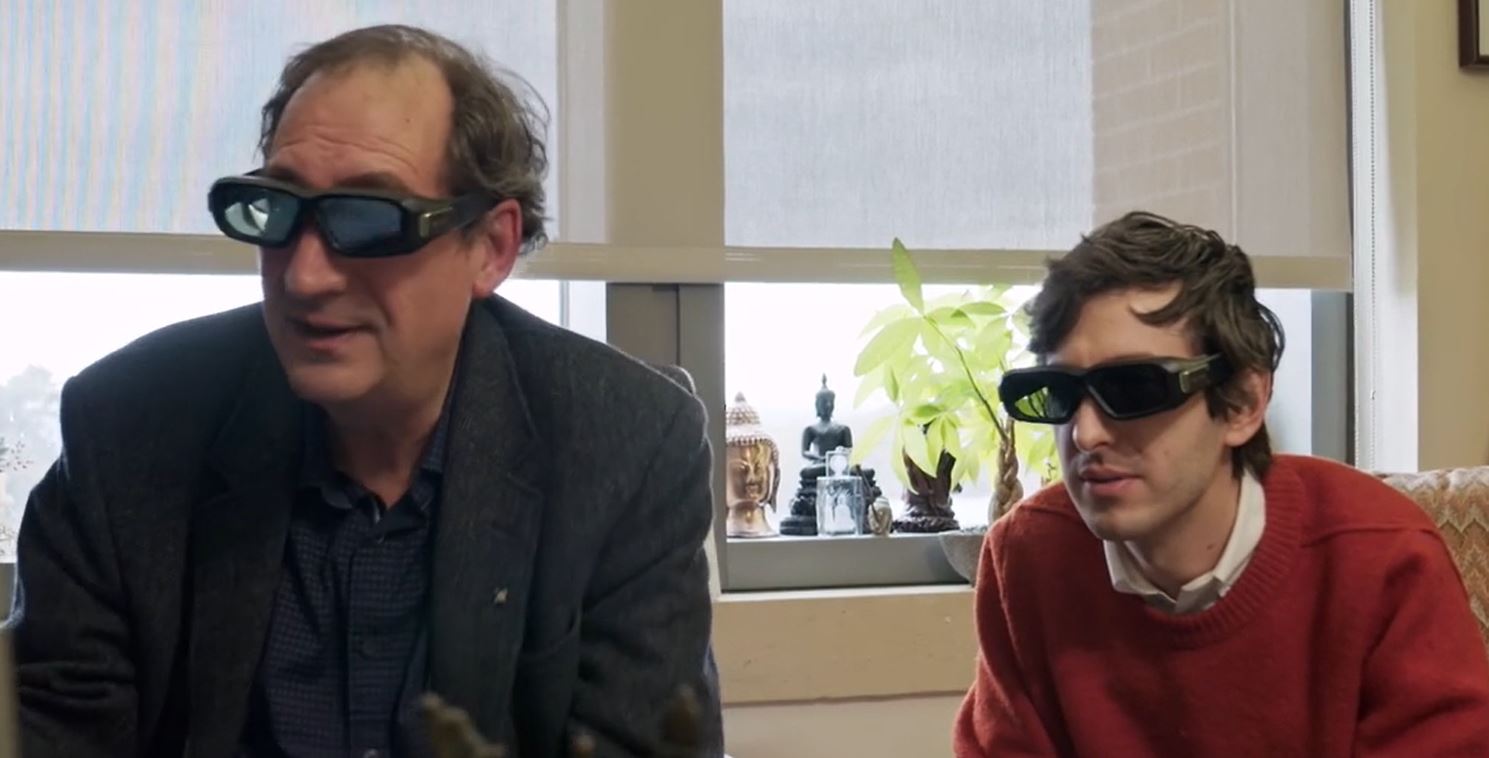
Morris visited David Nichols at his lab at UNC-Chapel Hill, where he learned about his current research focus dubbed CELAD (Nichols also made the LSD that Roth used in his crystal structure work). It’s unclear from the episode what the acronym stands for, but chemically, it is described as a
nitrogen mustard derivative of nor-LSD.
In his quintessential
Pharmacopeia manner, Morris relates how Nichols plans to apply CELAD to his psychedelic research. Nichols’ psychedelic nitrogen mustard would form an electrophilic aziridinium ion that he hopes would alkylate a mutant 5-HT2A receptor forming an irreversible bond that could facilitate study of the drug-receptor complex.
Nichols commented from his perspective on the rapid and revolutionary discoveries being made in psychedelics science:






 psychedelicreview.com