• Psychedelic Drugs Welcome Guest
    View threads about
    Posting RulesBluelight Rules
    PD's Best Threads Index
    Social ThreadSupport Bluelight
    Psychedelic Beginner's FAQ
  • PD Moderators: Esperighanto | JackARoe |

Phenethylamines A full guide for ultimate Mescaline potentiation

To be fair, the US laws surrounding the reserach into schedule 1 chemicals does somewhat conspire against research into mescaline. I believe Dr. Dave mentions that he was legally able to synthesize upto 500mg of any Shcedule 1 compound which means quite a lot of doses if it's a lysergamide or an NBOMe, but not many if mescaline is the target.

I think it interesting that Shulgin went to the effort of producing deuteated homologues of mescaline i.e (β-dideuteromescaline & 4-trideuteromescaline. I'm slighly suspicious of the stated Extensions and Commentry because as early as the 1970s it was known that the C-D bond will tend to alter (sllow down) the metabolismcompared to a C-H and it's known that demethylatyion of the para methoxy and oxudation of the β carbon are major metabolites of mescaline.

Certainly after Teva successfully patented the deuterated homologue of tetrabenzapine on the basis that it altered the activity of the drug, there were many other attempts to evergreen patented medicines on the basis that the deuterated homologues WERE patentable. It didn't last long as it was demonstable that in the vast majority of the cases, there was no observed differences but a few are in the pipeline.

So in no way does Shulgins work provide compelling data, clearly metabolites were recognized and an attempt was made to discover if modifying the metabolism of mescaline would alter the subjective effects.

Before bk-2CB we first tried bk-mescaline and it proved inactive at any reaonable dose. Now I have no way of knowing if knowing this is of value. but I felt it's a little bit of data that may be of value. It's worth noting that the LogP of mescaline is only 0.7 so to be honest, I did not hold out high hopes for any derivative with an even lower LogP. I'm pretty sure that there are free RO5 calculators on-line. Not perfect, I'm sure, but in my experience still useful in spotting trends.

I suppose if someone was more seriously looking into the metabolites of mescaline, tritation would potentially allow modern instumental analysis to provide further insights to the metabolic fate of mescaline. I seem to a recall a Japanese team using LiAlT4 to tritate BOL-148 (2-bromo LSD) with a view to instumental analysis so it's not a new or novel methodology.

I do appreciate that such analysis may not be practical but If there are several enzymes that can metabolize mescaline, blockade one and test.


I have no idea if the assertion that 50% of an oral dose of metabolism of mescaline undergoes first-pass metabolism but I can think of several relatively simple parentheral routes for a (non-toxic and water-soluble) addition salt of mescaline to test that statment and that's going to provide the most data for the least effort (depending on what you have access to).
 
Last edited:

To be fair, the US laws surrounding the reserach into schedule 1 chemicals does somewhat conspire against research into mescaline.
Investigation into the human pharmacokinetics and metabolism of mescaline seems to have come to a standstill after 1978. A question that was occasionally raised up to that time was if the pharmacology of mescaline might be due to one or more of its metabolites.
- https://doi.org/10.1021/acschemneuro.8b00215
I presume that since the mescaline affair is considered settled nobody sees any point in further research.

Clearly something does happen as reported by someone who used a prescription strength ALDHI with mescaline. I was on this forum and do not doubt the validity of his report. More recently someone else confirmed that mescaline is potentiated in some manner using an ALDHI.

So in no way does Shulgins work provide compelling data, clearly metabolites were recognized and an attempt was made to discover if modifying the metabolism of mescaline would alter the subjective effects.
...
I suppose if someone was more seriously looking into the metabolites of mescaline, tritation would potentially allow modern instumental analysis to provide further insights to the metabolic fate of mescaline.
It would be useful to uncover how mescaline's aldehyde metabolite interacts with endogenous amines, specifically piperidine, dimethylamine and pyrrolidine. This is the basis for potentiating mescaline using an ALDHI combined with lysine, choline or arginine to increase endogenous levels of piperidine, dimethylamine or pyrrolidine respectively.

It was theorised that the dimethylamine-type metabolite was prone to MAO deamination making the experience seem weaker (but this makes a case for the beneficial presence of the MAO-B inhibitor hordenine in mescaline containing cacti).

It's not as straightforward as phenacetylaldehyde + amine since the N,N-dimethyl Trichocereine is inactive, and I know of no imine reductase.

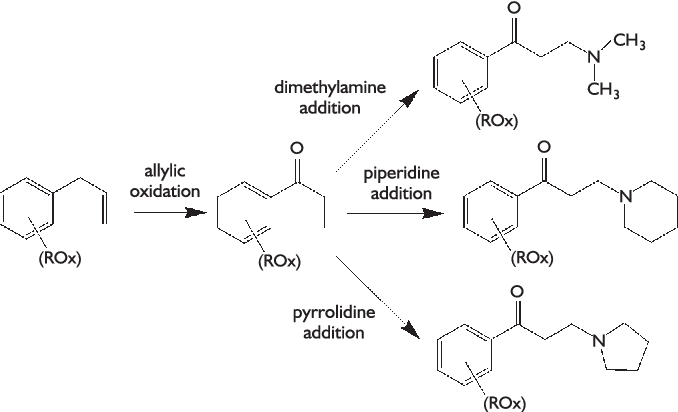
Alas the only mention of these secondary amines in the context of bio-transformation starts with an allylbenzene:

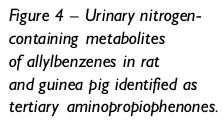
7-Figure4-1.png

allylconv-text.png

Allylbenzene is first oxidized on the benzylic carbon to form 1'-hydroxyallylbenzene, which is further oxidized to form phenyl vinyl ketone, which condenses with the secondary amines piperidine and dimethylamine to form tertiary aminopropiophenones (Mannich bases).
...
This proposed metabolic scheme is consistent with the chemical mechanism operative in the synthesis of Mannich base from allylbenzene via chromic acid oxidation followed by amine addition.
- https://doi.org/10.1016/0304-4165(77)90216-1

I do appreciate that such analysis may not be practical but If there are several enzymes that can metabolize mescaline, blockade one and test.
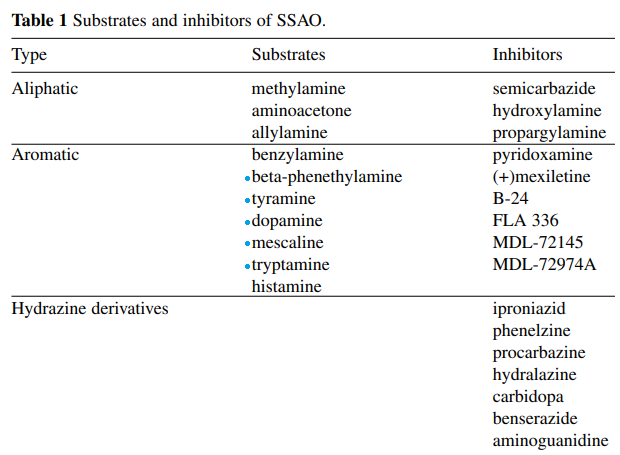
ALDH is the main enzyme that oxidises the aldehyde and it's primarily SSAO which deaminates mescaline to the aldehyde.

One way to find out if the aldehyde is a necessary intermediate for activity would be to use an ALDH inducer (eg sulforaphane) or a potent SSAOI before taking mescaline, one that's as selective as possible and without other psychoactivity.

image.png

- https://doi.org/10.1351/pac200173091393
 
Last edited:

I don't see any of the metabolites you mention in the paper you mentioned. But we already went through working through the aminataion proceeding via an epoxide intermediate and that said epoxide intermediate is likely a carcinogen.

I was also under the impression that the PEA prototype is a primary amine is two methylene spacers from the aromatic. At least for all of the 5HT2a ligands of related classes. So why would you think compounds with three methylene spacers and a tertiary amine would be active?

As I mentioned, we made bk-mescaline and it was inactive likely due to unfavourable LogP. So we then made bk-2CB which is around an order of magnitude less potent due to the lower LogP. So those hypothetical metabolites aren't going to have particularly good LogP values either. Better, yes, but not good. It does show what a ketone doesn't abolish activity, but neither is it optimal.

Before guessing, why not just compare oral mescaline with parentheral mescaline? If the latter is twice as potent (or roughly so) then it's not unreasonable to infer that the metabolites are due to first-pass metabolism and play no part in the subjective effects.

Exactly why a ring-substituted allyl benzene produces some manner of psychoactivity need not be due to amine containing metabolites.


The above link is simply of value for the citations it employs. As I've always maintained, it's absolutely your right to consume whatever compounds you see fit, but not to assert safety when there is overwhelming evidence that it poses significant risks.

I would ask the simple question - is it a metabolite of myristicin or being so lipopilic, isn't it possible that myristicin itself that is active? Easy to test. Fractionally distil oil of nutmeg. Write up the experiment BEFORE consumption so whatever the outcomes, the most data is available to others.
 
Last edited:

I don't see any of the metabolites you mention in the paper you mentioned.
The active metabolites for mescaline haven't been characterised, only the TMPAA will be seen. The active metabolites (it's likely there are at least 3) appear to be broken down into the aldehyde which has the ability to reform the active metabolite(s). This was termed 'cycling' (from recycling) meaning the mescaline effects can be cycled for as long as ALDH is inhibited.

As such, you will only see unchanged mescaline and TMPAA excreted.

But we already went through working through the aminataion proceeding via an epoxide intermediate and that said epoxide intermediate is likely a carcinogen.
If you're talking about allylbenzene metabolism forming tertiary amines, this paper describes it including their synthesis.
Allylbenzene is first oxidized on the benzylic carbon to form 1'-hydroxyallylbenzene, which is further oxidized to form phenyl vinyl ketone, which condenses with the secondary amines piperidine and dimethylamine to form tertiary aminopropiophenones (Mannich bases).
...
This proposed metabolic scheme is consistent with the chemical mechanism operative in the synthesis of Mannich base from allylbenzene via chromic acid oxidation followed by amine addition.

I was also under the impression that the PEA prototype is a primary amine is two methylene spacers from the aromatic. At least for all of the 5HT2a ligands of related classes. So why would you think compounds with three methylene spacers and a tertiary amine would be active?
Well it would be useful to see someone make and assess their receptor profile. Those tertiary amines are the metabolites of things like elemicin, safrole, myrstricin, estragole etc. The researchers set out to validate Shulgins idea that safrole became MDA in-vivo, instead they found those tertiary amines.

Before guessing, why not just compare oral mescaline with parentheral mescaline?
Alternatively someone could see if taking sulforaphane (ALDH inducer) and glucosamine (SSAO inhibitor) before mescaline would make it inactive.

The above link is simply of value for the citations it employs. As I've always maintained, it's absolutely your right to consume whatever compounds you see fit, but not to assert safety when there is overwhelming evidence that it poses significant risks.
Regarding allylbenzene metabolism, I never asserted safety. I was using the discovery of 3 tertiary amine metabolites as examples of bio-transformation involving piperidine, pyrrolidine and dimethylamine.

I would ask the simple question - is it a metabolite of myristicin or being so lipopilic, isn't it possible that myristicin itself that is active? Easy to test. Fractionally distil oil of nutmeg. Write up the experiment BEFORE consumption so whatever the outcomes, the most data is available to others.
Some people argue that the allylbenzenes themselves are active; as for 5-HT2A qualities, I'm not entirely convinced. Eugenol is probably the most researched and has several MOAs.
 
Last edited:
Alternatively someone could see if taking sulforaphane (ALDH inducer) and glucosamine (SSAO inhibitor) before mescaline would make it inactive.

I was under the impression that there were several metabolic pathways BUT most of them appear to be first-pass. So avoiding ALL the first-pass metabolism is the least effort AND safest option AND provides the most data.

After all, it can only be LESS potent if the metabolism takes place after the active enters the blood-stream thus overdose cannot be an issue. Several sources state that oral administration of mescaline sees about 50% of any dose being excreted unchanged.

No concoction - ONE well understood chemical taken at a significantly LOWER dosage (specifically half) so possibly of value IF it reduces the known side-effects. Thus worth knowing to all users. That would potentially be of value in terms of HR.

There are several later papers that give the same 50% figure specifically on the percentage of oral mescaline that is excreted unchanged in a 14C labelled study that does rather suggest that mescaline is indeed the active. It cites earlier works which I think are worth taking a look at.


As I previously noted, study of mescaline poses some unique problems but surely a divide-and-conquour methodology is going to be the most efficiant and given the relative simplicity and relative safety, also the logical first step in studying the stuff?

But before embarking on a hypothesis involving metabolites, if one can exclude biochmical production those metabolites, one KNOWS.
 
Last edited:
Top