UC Davis
by David E. Olson | ACS Publications | 25 Mar 2021
The vast majority of drugs in psychiatrists’ arsenals were developed decades ago during an era when we understood very little about the pathophysiology of neuropsychiatric disorders. As a result, even our best medicines for treating illnesses like depression can offer relief to only a subset of patients, usually for a limited amount of time. (1) It is clear that if we ever hope to move beyond simply treating symptoms to actually curing mental illness, we need to embrace truly innovative therapeutic approaches. The use of psychedelics as medicines is perhaps one of the most exciting developments in neuropsychiatry given that these drugs appear to produce both rapid and sustained therapeutic effects across multiple neuropsychiatric disorders, including depression, post-traumatic stress disorder (PTSD), and substance use disorder (SUD). Understanding exactly how these powerful drugs affect brain function will require all the tools of modern science as well as the combined efforts of chemists, molecular biologists, neuroscientists, psychologists, and clinicians. In this Special Issue of ACS Pharmacology& Translational Science, we highlight the incredible breadth of research being done to elucidate how psychedelics impact brain function—studies that span the molecular, cellular, and organismal levels.
As small molecule drugs, the functional properties of psychedelics are dictated by their chemical structures, making structure–activity relationship (SAR) studies essential for fully understanding how they affect the nervous system. Not only do these types of studies help to identify potential designer drugs of abuse, they are critical for efforts aimed at optimizing the therapeutic properties of psychedelics. Using rats trained to discriminate (−)-2,5-dimethoxy-4-methylamphetamine (DOM) from saline, Gatch and coworkers found that a variety of tryptamine analogues produced DOM-like effects. (2) The abuse potential of several of these compounds was also observed by Halberstadt and coworkers using an automated head-twitch response assay. (3) Moreover, they found that O-acetylation of 4-hydroxy-N,N-dialkyltryptamines drastically reduced potency in vitro but not in vivo, suggesting that these compounds likely serve as prodrugs for their 4-hydroxy parent compounds.
Like many tryptamines, a large number of phenethylamine-containing compounds possess psychedelic properties. Of these, phenethylamines possessing an N-methoxybenzyl group, so-called NBOMe compounds, have gained a lot of attention due to their high potencies. Stove and coworkers tested a series of 25H-NBOMe positional isomers in G protein and β-arrestin activation assays and found that they stimulate 5-HT2A receptors to varying degrees. (4) In an effort to explain the differences between these isomers, they performed modeling using the active-state cryo-EM structure of the 5-HT2A receptor recently reported by Roth and coworkers. (5) With the advent of cryo-EM and other advances in GPCR structural biology, it seems likely that in silico SAR studies will play a prominent role in psychedelic research in the not too distant future. Collectively, the SAR studies in this issue add to the large body of work by David Nichols, Richard Glennon, and others, investigating how the structures of psychedelics lead to their hallucinogenic effects.
In addition to inducing hallucinations, it is now clear that psychedelics can produce a variety of other important biological effects that may contribute to their therapeutic properties. These include the potential to promote neural plasticity (9) (i.e., psychoplastogenic effects) and the ability to dampen immune responses. (10) The first SAR study aiming to characterize the psychoplastogenic pharmacophore of psychedelics was published last year, (11) and here, Nichols and coworkers used a rodent model of allergic asthma to better define the anti-inflammatory pharmacophore. (12) Excitingly, they found that there is no correlation between anti-inflammatory and hallucinogenic effects, suggesting that psychedelics might be used as lead structures to identify nonhallucinogenic compounds capable of reducing inflammation.
Understanding the therapeutic mechanisms of psychedelics will be key for maximizing both efficacy and safety. Given that many stress-related neuropsychiatric disorders are characterized by the atrophy of neurons in the prefrontal cortex, the psychoplastogenic effects of psychedelics have received a lot of attention. (13) In this issue, our group demonstrated that the psychoplastogens ketamine and LSD only need to stimulate cortical neurons for a very short period of time to elicit sustained neuronal growth. (14) These results might explain why psychedelics can produce long-lasting behavioral effects after a single administration. (15) Additional support for the notion that LSD might promote plasticity in humans was provided by Kuypers and coworkers. They found that low doses of LSD (<20 μg) increased plasma levels of brain-derived neurotrophic factor (BDNF). (16)
The work of Kuypers and coworkers suggests that even low doses of psychedelics can increase measures of plasticity. Recently, the first nonhallucinogenic psychedelic analogue with sustained therapeutic properties was reported. (17) However, high doses of psychedelics produce profound subjective effects that are often cited as being among the most meaningful experiences in a person’s life. Together, these studies raise the question as to whether or not the subjective effects of psychedelics are necessary for their therapeutic properties. Two alternative views on this important topic are presented in this issue, (19,20) and it is clear that this debate will not be settled anytime soon.
As the field continues to move toward using psychedelics as medicines, it will be important to establish robust biomarkers for evaluating efficacy and understanding how these drugs impact brain function. Carrera, Torterolo, and coworkers used EEG to demonstrate that ibogaine produces a pattern of gamma oscillations that resembles activity observed during REM sleep. These results are intriguing given the well-known oneirogenic properties of ibogaine. In addition to its ability to induce a dream-like state and reduce drug-seeking behavior, ibogaine also binds to monoamine transporters and serves as a pharmacochaperone. (21,22) Frissmuth, Newman, and coworkers engineered ibogaine analogues with potential to correct monoamine transporter folding defects. (23) This work adds another potential medical condition that might be treated by psychedelics or related compounds.
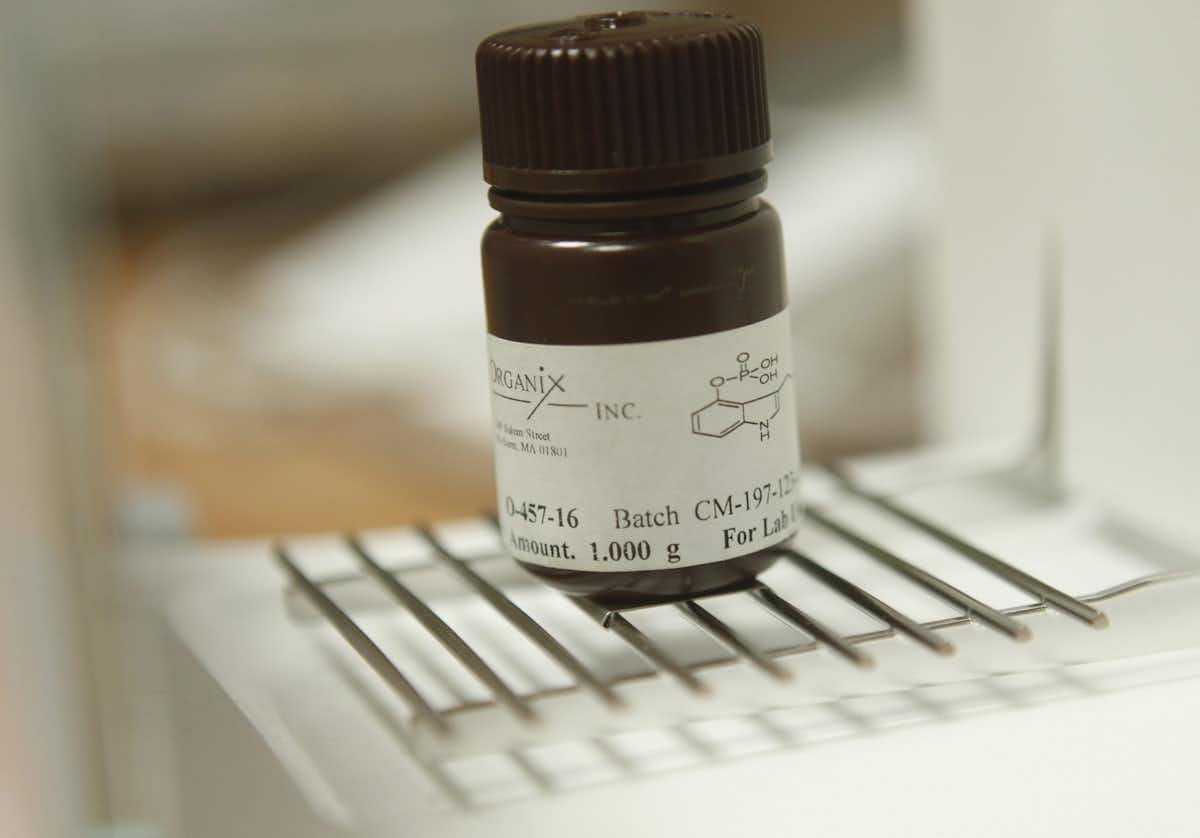
While the beneficial effects of psychedelics on depression are well-known, (24) very little is known about their effects on suicidality. To address this gap in knowledge, Weissman and coworkers reviewed the current literature and concluded that psychedelic therapy might reduce suicidality, though it is clear that this is a nascent area of research. Ross and coworkers made an important contribution to this field by reporting that psilocybin-assisted psychotherapy reduced suicidal ideation in people with cancer. (25)
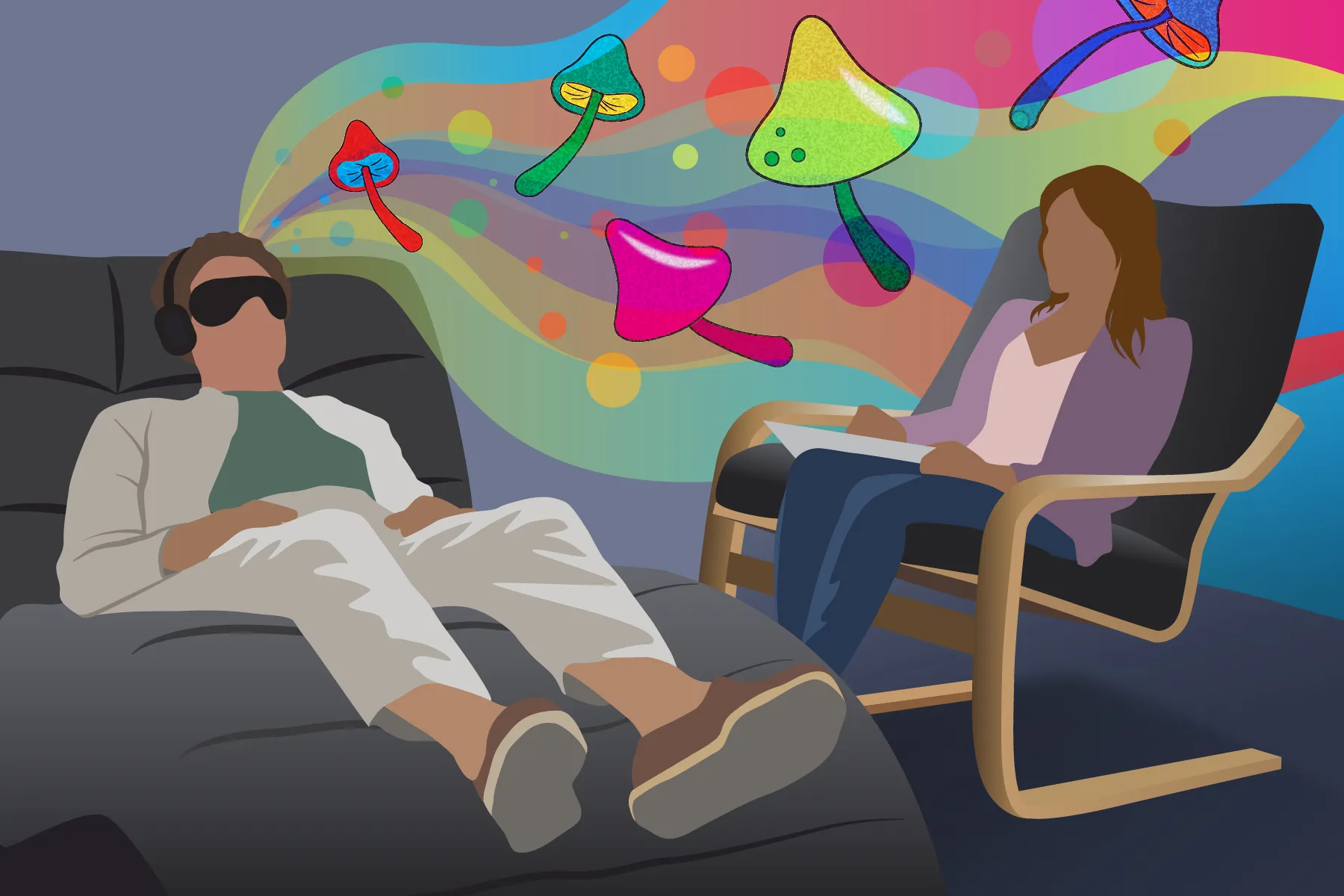
Optimizing the clinical efficacy of psychedelic treatment is an active area of research. Most people agree that “set and setting” are critical components of a psychedelic experience, but research aimed at systematically evaluating these factors is only in its infancy. (26) In this issue, Johnson and coworkers take an important step toward better understanding the influence of music genres on psychedelic therapy. They found that overtone-based music occasioned more mystical-type experiences and increased smoking abstinence compared to Western classical music. These results challenge the common practice of using Western classical music in psychedelic therapy sessions.
Identifying factors capable of predicting how patients will respond to psychedelic therapy is an important goal for maximizing therapeutic potential while minimizing risk of adverse effects. In a study on male AIDS survivors, Stauffer and coworkers determined that baseline attachment anxiety and baseline attachment avoidance correlated with mystical-type and challenging experiences, respectively. (27) Other factors with potential predictive power were identified in a systematic review of the literature by Aday and coworkers. For example, they found that patients exhibiting preoccupation, apprehension, and confusion were more likely to experience adverse effects, while those characterized by baseline openness, absorption, acceptance, and surrender were more likely to have mystical-type experiences. Importantly, they concluded that participant sex did not predict response, but other biological variables such as 5-HT2AR binding potential and rACC volume were important.
Liknaitzky and coworkers discuss another approach for optimizing psychedelic treatment involving its combination with mindfulness meditation. (29) They argue that a psychedelic experience might be useful for initiating a reorientation toward more adaptive behaviors and that mindfulness meditation might be effective at sustaining those changes.
With increased attention paid to the use of psychedelics in medicine, several important ethical concerns have emerged. In a viewpoint article, Johnson warns about the potential for clinicians/researchers to inappropriately impose their own religious/spiritual beliefs on patients. (30) He also cautions that without appropriate safeguards, such as the inclusion of multiple healthcare workers during drug and nondrug sessions, there is a real danger of clinicians acting inappropriately or abusing their positions of authority. If the field is to avoid repeating mistakes made in the 1960s, it is important to heed these warnings. Schenberg and coworkers raise another ethical concern regarding the cultural appropriation of psilocybin-related traditional medicines. (31)
We hope that this special issue of ACS Pharmacology& Translational Science underscores the breadth of research taking place in the field of psychedelic science. To fully understand how these powerful drugs impact brain function and human health, we need to embrace multiple perspectives, work across length scales, and take advantage of the latest scientific tools. Neuropsychiatry is desperate to find effective medicines for treating diseases such as depression, PTSD, and SUD, which are among the greatest contributors to disability worldwide. (32) While psychedelics have demonstrated enormous promise for combatting these illnesses, we must guard against hype, move cautiously toward therapeutic applications, and most importantly, conduct psychedelic research with the rigor demanded of modern science.

David E. Olson
Department of Chemistry, University of California, Davis, One Shields Avenue, Davis, California 95616, United States; Department of Biochemistry & Molecular Medicine, School of Medicine, University of California, Davis, 2700 Stockton Blvd, Suite 2102, Sacramento, California 95817, United States; Center for Neuroscience, University of California, Davis.
Department of Chemistry, University of California, Davis, One Shields Avenue, Davis, California 95616, United States; Department of Biochemistry & Molecular Medicine, School of Medicine, University of California, Davis, 2700 Stockton Blvd, Suite 2102, Sacramento, California 95817, United States; Center for Neuroscience, University of California, Davis.
Last edited: