• Psychedelic Drugs Welcome Guest
    View threads about
    Posting RulesBluelight Rules
    PD's Best Threads Index
    Social ThreadSupport Bluelight
    Psychedelic Beginner's FAQ
  • PD Moderators: Esperighanto | JackARoe |

Health DEPRESSION

mr peabody

Bluelight Crew
Joined
Aug 31, 2016
Messages
5,947
Location
Frostbite Falls, MN
wp1-02.jpg


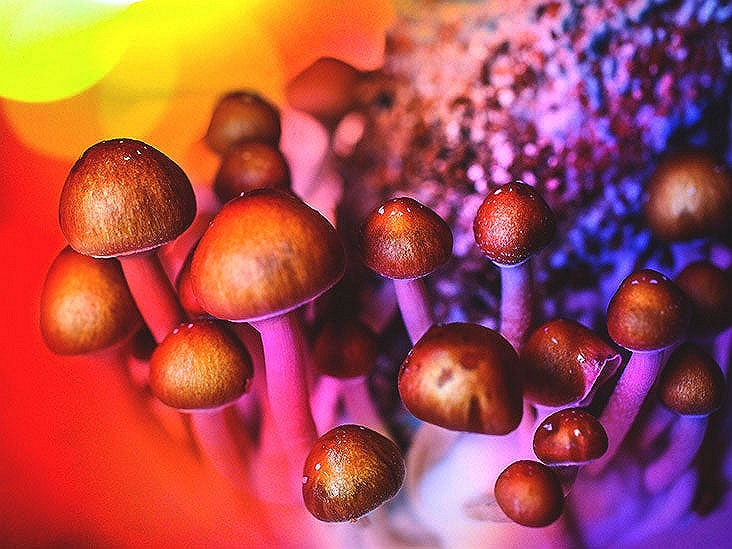
Can psilocybin treat severe depression?

by Barbara Geller, MD | NEJM Journal | 3 Nov 2017

Neuroimaging findings predicted response with this hallucinogen at post-treatment week 5 and correlated with decreased depressive symptoms and heightened mystic feelings.

In 1970, the FDA categorized psilocybin as a Schedule 1 drug, largely because of its recreational uses, which include inducing spirituality and synesthesias (e.g., seeing music, hearing art). Recently, several trials of this serotonin 2A agonist have supported further research into its use for treatment-resistant major depressive disorder. The researchers administered psilocybin to 19 medication-free participants with MDD.

Significant decreases in depression occurred post-treatment; 47% of participants met response criteria at 5-week follow-up. On fMRI, blood flow decreased from baseline in temporal (including amygdala) and parietal areas, similar to previous reports. Decreased amygdala activity significantly correlated with improved depression scores and increased feelings of a mystic experience. On resting-state fMRI, connectivity between several cortical areas increased post-treatment, contrary to findings elsewhere. Treatment response at 5 weeks was predicted by increased connectivity post-treatment between the ventromedial prefrontal cortex and inferior parietal cortex and by decreased parahippocampal-prefrontal connectivity.

Both the increased connectivity on post-treatment resting-state fMRI and its predictive value were similar to findings for electroconvulsive therapy, supporting the current study's validity. Experimental options for treatment-resistant MDD include invasive procedures like deep brain stimulation, which requires implanting brain devices with possible long-term adverse effects. Thus, clinicians can tell patients with access to federally funded psilocybin trials that this is a reasonable, noninvasive approach. Further, patients need to know that psilocybin must be taken only in closely supervised research settings because of its capacity to induce unusual psychic experiences.​

https://www.jwatch.org/na45292/2017/...ere-depression
 
PS.jpg


I suffered severe depression since childhood until I tried psilocybin

I've tried prescription antidepressants and therapy. I'm proactive and intelligent, I have never taken recreational drugs, and I try not to abuse alcohol. A good friend told me about psilocybin mushrooms and said they might help. Although deeply skeptical, I felt like it was worth a shot, so I took them in a safe, controlled environment. The difference has been enormous. It's like having the volume turned down on part of my brain that seizes onto negativity, waking up the next day and feeling optimistic about the future for the first time.

-----

I suffer from moderate to severe depression. I recently started taking a low dose of psilocybin, which has definitely helped my depression. Mushrooms are great because they are non-addictive, have no side effects, and I have a built in anti-abuse mechanism in the form of built up tolerance.

It forces you to wait a couple of weeks before taking any more, and at a low dose that seems to be the right amount of time!

-----

Nothing helps quite so much as being fully rested, and taking the most minimal doses of psilocybin. I don’t particularly enjoy getting high, but a threshold dose, just enough to notice a slight peculiarity in the appearance of the world, shifts my mood tremendously. I find small, daily doses, for several weeks, seem much more effective than larger doses, less frequently. Low doses of psilocybin, once a day, for up to several weeks, leaves me in a fairly positive place for nearly a full quarter.

-----

I've had moderate to severe depression since 2007. I've tried therapy, all types of medicine, self medication, and everything else imaginable. Nothing has come close to helping me like psilocybin. I can 100% attest that psilocybin helps me with my depression for as long as 6 months after use.

-----

The benefits of psilocybin are amazing. Not only during trips, which can be life changing and eye opening experiences, but also in microdosing, to help me with the effects of depression and anxiety. Microdosing significantly helped me with many internal issues I was having.

-----

Being a veteran and someone who had a tough childhood I found myself very depressed and suicidal. Even when I began to sort my life out, gave up alcohol and got myself fit again I still had a pain in my heart that left me feeling like ending my life. I stumbled across information on how psychedelics had help others with these feelings. After much research I decided to try mushrooms. to cut a long story short after the first journey I can with hand on heart say that it took me to a place of love that removed these negative feelings and the pain. These feelings have never returned.

-----

I have suffered from depression plus alcoholism with two deep bouts which led to many weeks out of work. Through the use of magic mushrooms I was able to recover from both, without the use for any antidepressants or CBT. Psychedelics work!

-----

Psilocybin is the only thing that's ever helped me. Self-medicating with psilocybin has saved my life twice, given me hope, and helped me see that I am connected, not isolated. Nothing medically prescribed by my GP has helped - just made it worse, numbed out and dumbed down, merely existing. I need this medicine in a legitimate clinical setting.

-----

I have experienced the healing benefits of psilocybin first hand. Dealing with depression has been a life-long struggle for me, and since taking psilocybin, I have experienced a significant change in my way of thinking and behaving. Microdosing especially helps me to break my habits and rusty old thought patterns.​

^^
https://psychedelicsociety.org.uk/pe...ession-anxiety
 
Last edited:
tingri-everest-base-camp-trek.jpg


Microdosing LSD for Treatment-Resistant Depression

by Sherry Amatenstein LCSW | Third Age

For years Rachel found herself battling a recurrent and noxious depression. She tried Zoloft but it had little effect. Nor did regular psychotherapy. In 2010 the then 45-year-old, a life coach, yoga devotee, and single mother began contemplating hallucinogens. She’d tried an LSD tab decades before at a music festival and found the 20-hour experience “intense but scary.”

However, her research into the efficacy of microdosing LSD (between 1 and 10 micrograms, below one/tenth of a regular dose) under controlled conditions convinced her to try this unorthodox “treatment.”

“The idea is to produce subtle changes in cognitive function without having to enter that world of hallucinogens where I experienced the walls collapsing in on me. Swallowing a few drops I put on a mint didn’t seem too risky. Yes, this was crude and unscientific but the protocol is very new.”

For five years Rachel microdosed LSD every three days. Afterward she typically did yoga or meditated. “I wasn’t taking it and going to a party or kite-surfing afterward! And I always waited to dose until my daughter left for school.” She finished, “It’s not like drinking alcohol or smoking pot. LSD made me very lucid and very sharp.”

The lucidity helped her combat the “emotionally cancerous mental loops in my head and find more joy.” Three years after stopping she still feels clarity and joy. But, she cautions, “Everyone has to make her own decisions about giving LSD a try.”

Ayelet Waldman’s 2017 article How Microdosing Made a Mega Difference in My Mood, My Marriage and My Life is an eye-and-mind-opening look at this controversial drug as a tool to achieve emotional well-being. And Michael Pollan’s just-released How to Change Your Mind: What the New Science of Psychedelics Teaches Us About Consciousness, Dying, Addiction, Depression, and Transcendence is not just a story of personal experimentation, but also a deep dive into the revolution occurring in the scientific and academic communities about psychedelics as healing agents.

However, caveat emptor. What is billed as the first comprehensive study about the potential effects of LSD microdosing is in the early stages.

In the meantime, Dr. Gladys Frankel, a NYC-based clinical psychologist who has been on the faculty of Weill Cornell College of Medicine, is among the many mental health practitioners urging caution. She says flatly, “Microdosing is a horrible idea. I have had patients who have been fried after one dose. A patient would look at a door and see the wood grain flowing, moving all of the time, years later! For people who have a vulnerability to schizophrenia, this can potentiate it.”

Julie Barron LPC offers an invaluable perspective on this issue. Founder of the Michigan Psychedelic Society, Barron, who has a Masters in Transpersonal Counseling Psychology explains, “When I was much younger I was very interested in psychedelics and studied at Naropa University where I was taught how to do therapy while in an altered state of consciousness.” Years later, she was in the midst of a depression for which she was both in talk therapy and on a cocktail of drugs – sleeping meds, pills for anxiety and depression. This regimen was having a detrimental effect on her life. So she began to microdose. “It had and has a huge positive impact. I was able to stop the pharmaceuticals.”

Clients come to her for advice on microdosing. “I can’t supply the drug but I’ll do therapy with them and share education and safety advice. Over all, I’m the feedback person. They’ll report, ‘I tried this, and such was my experience. What should I try next?’” says Julie. “I am very clear, it’s a personalized process. There is no one size fits all microdose strategy.” Indeed, sometimes Julie microdoses every day for weeks on end. Other times her protocol is every other day; sometimes once a month.

“Someone who hasn’t tried psychedelics can’t really help others. We are not a society that understands this from normal experience. I help people learn how to integrate microdosing into everyday life,” Julie says.​

https://thirdage.com/considering-mic...ad-this-first/
 
image.jpg


Are magic mushrooms the answer to depression?

by Josh Jacobs | The Guardian | 10 Jun 2019

New trials have shown the drug psilocybin to be highly effective in treating depression, with Oakland the latest US city to in effect decriminalise it last week. Some researchers say it could become ‘indefensible’ to ignore the evidence – but how would it work as a reliable treatment?

Lying on a bed in London’s Hammersmith hospital ingesting capsules of psilocybin, the active ingredient of magic mushrooms, Michael had little idea what would happen next. The 56-year-old part-time website developer from County Durham in northern England had battled depression for 30 years and had tried talking therapies and many types of antidepressant with no success. His mother’s death from cancer, followed by a friend’s suicide, had left him at one of his lowest points yet. Searching online to see if mushrooms sprouting in his yard were the hallucinogenic variety, he had come across a pioneering medical trial at Imperial College London.

Listening to music and surrounded by candles and flowers in the decorated clinical room, Michael anxiously waited for the drug to kick in. After 50 minutes, he saw bright lights leading into the distance and embarked on a five-hour journey into his own mind, where he would re-live a range of childhood memories and confront his grief. For the next three months, his depressive symptoms waned. He felt upbeat and accepting, enjoying pastimes he had come to feel apathetic about, such as walking through the Yorkshire countryside and taking photographs of nature.

“I became a different person,” says Michael. “I couldn’t wait to get dressed, to get into the outside world, to see people. I was supremely confident – more like I was when I was younger, before the depression started and got to its worst.”

The trial, finished in 2016, was the first modern study to target treatment-resistant depression with psilocybin, a psychedelic drug naturally occurring in around 200 species of mushroom. To varying degrees, Michael and all 18 other participants saw their symptoms reduce a week after two treatments, including a high, 25mg dose. Five weeks later, nine out of 19 patients found that their depression was still significantly reduced (by 50% or more) – results that largely held steady for three months. They had suffered from depression for an average of 18 years and all had tried other treatments. In January this year, the trial launched its second stage: an ambitious effort to test psilocybin on a larger group and with more scientific rigour (including a control group, which Michael’s study lacked), comparing the drug’s performance with escitalopram, a common antidepressant. The team has now treated about a third of the 60 patients and say that early results are promising for psilocybin.

Imperial’s current work is among a string of new studies that a group of professors, campaigners and investors hope will lead to psilocybin’s medical approval as a transformative treatment. Others soon to begin include an 80-person study run by Usona Institute, a Wisconsin-based medical non-profit, and a trial at King’s College London, as well as a 216-person trial that is already under way around the US, Europe and Canada, managed by the London-based life sciences company Compass Pathways. Robin Carhart-Harris, head of Imperial’s Centre for Psychedelic Research and a Compass scientific adviser, believes psilocybin could be a licensed medicine within five years, or potentially even sooner. “By about that point,” he says, “it would be like an irresistible force, and indefensible to ignore the weight of the evidence.”

Psilocybin mushrooms have been part of religious rituals for thousands of years. The Aztecs of Mexico referred to the mushroom as teonanácatl, or “God’s flesh”, in homage to its believed sacred power. In 1957, Albert Hoffman, a Swiss chemist working for the pharmaceutical company Sandoz, isolated psilocybin from the mushroom. Fifteen years earlier, he had accidentally ingested LSD, left work feeling dizzy, and experienced its psychedelic effects when he got home. During the 1960s, Sandoz sold psilocybin and LSD for research in medical trials, but the substances were soon outlawed after they became associated with the 60s counterculture.

Psilocybin remains in the most restricted category today under the UN Convention on Psychotropic Substances, the US 1970 Controlled Substances Act and the 1971 UK Misuse of Drugs Act, among others. David Nutt, a professor of neuropsychoparmacology at Imperial, who is overseeing the current trials, disputes the evidence for this, saying that heavily restricting the drug (and other psychedelics) has hindered research and propelled “lies” about its risks and medical potential. For him, the decision is “one of the most atrocious examples of the censorship of science and medicine in the history of the world”.

If successful, the new wave of research may continue to change psilocybin’s reputation after decades of prohibition. Carhart-Harris believes the drug offers a better and more comprehensive treatment than current antidepressants, and that it could well be a powerful new therapy for a host of other mental illnesses, including anxiety and food disorders. A 2016 Johns Hopkins University study of 51 patients with life-threatening cancer showed high doses of psilocybin significantly reduced end-of-life depression and anxiety for six months in 80% of cases, and helped patients accept death; a New York University study that year showed similar results. Current trials are looking further at psilocybin’s potential for reducing smoking addiction and alcohol dependency, after initial pilots yielded powerful results. (Johns Hopkins researchers showed in a small study, for example, that 80% of heavy smokers had not smoked for a least a week, six months after psilocybin treatment.)

Carhart-Harris thinks part of the reason the drug has been effective in treating depression in trials so far is that it can help people see their lives more clearly. When watching patients tripping, he often feels as if they see a truer version of reality than the sober therapists guiding them: “It is almost like being in the presence of someone particularly wise, in terms of what comes out of their mouth.” It is unclear how much of the depression alleviation comes from the psychiatric support surrounding the treatment. Either way, several patients have sourced top-ups independently since the first trial, as their depression has returned.

Much about the neuroscience of psychedelics remains unknown, but fMRI scans of patients’ brains after taking psilocybin showed reduced blood flow and resting activity in the amygdala, which is often overactive in depression and anxiety. They also show looser connections between brain networks, which then reintegrate in what the Imperial team suggests is part of the brain “resetting” itself on psilocybin. This may explain why the drug drives some patients to rethink entrenched beliefs and break compulsive thought patterns and behaviours. Imperial researchers believe that psilocybin operates differently from most current treatments. If common antidepressants dull emotions to help people cope, they theorise, psilocybin works on our serotonin system to heighten emotional responses and encourage people to actively confront their depression, which can prompt enduring shifts in mind-set.

For 48-year-old university design technician Kirk Rutter, this is why psilocybin seems to work – and why he hopes it will become medically available. He sees the drug not as a silver bullet but as a medicine that shows patients deep truths and requires them to apply teachings of this kind. Some other treatments, such as cognitive behavioural therapy, also seek to reshape thinking patterns, often in conjunction with antidepressants, but for many the current options fail to work. More than 300 million people suffer from depression globally, according to the World Health Organization, but researchers say that many of the most serious cases do not respond to antidepressants.

Rutter was in this group, having tried counseling and two prescription medicines in the five years before the Imperial trial, as his depression worsened following his mother’s death. After psilocybin, he began to break cycles of catastrophic thinking and had the confidence to make profound life changes, such as selling his house and moving away from abusive neighbours, reorganising his finances and traveling for enjoyment after years of not leaving the country. He says of psilocybin: “It removes any barriers and allows you to process what you need to in an almost seductive way. You are inevitably and irresistibly drawn into it.” One week after the treatment, he noticed a feeling of optimism come back to his life. “Hell,” he thought, “I haven’t had this for a long time.”

Even psilocybin’s fiercest proponents agree that it will take more evidence of its effectiveness on larger groups in controlled settings, and investigation into potential adverse effects, before it can be unleashed as a medicine. Current trials exclude people with a family history of psychosis for fear that the drug could trigger latent schizophrenia. And there are questions about psilocybin’s impact. Some patients say they hardly experienced the psychedelic effects, while others such as Michael had strong reactions to lower doses but less to higher ones. James Rucker, who worked on the first Imperial study and now directs psilocybin trials at King’s College London, remains agnostic about the drug as a reliable treatment.

“It’s an illusion that we know so much about psilocybin,” says Ekaterina Malievskaia, co-founder of Compass, which hopes to sell the drug as part of an approved treatment. “We really don’t. We know it can cause profound personal experiences; it can also cause all sorts of complications.”

But Malievskaia hopes that the Compass trials will provide the evidence needed to get the drug medically approved for treatment-resistant depression. She founded the company with her husband, George Goldsmith, three years ago, after her son’s severe depression and OCD got progressively worse while he was being treated with traditional antidepressants in a top US hospital. He later recovered with the help of psilocybin therapy, and the company says it has now attracted around £28m in funding, including from the venture capitalist Peter Thiel, and has applied to patent a process to make psilocybin at scale. Some former Compass associates fear the company seeks to monopolise the psilocybin market and control medical access, criticisms that were aired last year by the US business website Quartz, although Malievskaia denies this.

There are already signs that authorities may be beginning to shift. In October, US regulators gave Compass’s treatment breakthrough therapy status, a designation given to new medicines that might improve treatments for serious conditions, which means authorities will expedite their review of evidence. That decision was followed this May with Denver’s vote to in effect decriminalise magic mushrooms, making it the first US city to do so, followed last week by a similar measure for several psychedelic plants in Oakland, California. Activists are pushing for a state-wide vote in Oregon next year on whether to legalise psilocybin for medical use. Meanwhile, Compass hopes to request marketing authorisation for the drug within three years, if its trials are successful. It is proceeding slowly, though, having treated around six people since trials began in January, and Malievskaia says the process could take a decade until approval. She aims to accelerate progress, with new treatment sites recently opened at Columbia University, as well as in New Orleans and the Netherlands, among others.

Licensing is not the only obstacle to the drug becoming a common medicine. Taken over multiple hours in clinical settings with expert guides, psilocybin therapy does not come cheap. The new Imperial treatments cost more than £2,000 each, including doctors and therapists, and many patients could need multiple treatments each year for continued benefits. Malievskaia would not comment on how much Compass would plan to charge, but says she wants to maximise how many people can access the drug. Carhart-Harris says psilocybin therapy would be significantly more expensive than antidepressants and potentially more than counselling. “There is a cold reality as to why selective serotonin reuptake inhibitors [antidepressants] dominate mental healthcare and that is that they are cheap,” he says.

The scientific, legal and commercial challenges may take years to be settled. But for many of the patients who have already been treated, and for some of the therapists guiding them, there is little doubt: it is only a matter of time before psilocybin and similar psychedelics reshape how we treat suffering – and understand our minds.

Forty-year-old operations manager Melissa Elwin is among them. After an unpleasant first treatment, in which she felt trapped, during her second psychedelic trip inside Hammersmith Hospital, she felt as though she had left her body and was seeing her problems objectively. Psilocybin helped her confront her depression, fueled by a difficult relationship and fraught breakup, and anxiety she had had since childhood. Under the drug, she started to find a resilience that has since helped her face her father’s death from dementia and a protracted legal battle with her ex-partner. Her descriptions of the trip are similar to the awe and unity Hoffman at times experienced on psychedelics while testing them: he saw in them a powerful ability to put our self and troubles in perspective.

“I was literally everywhere during my trip,” says Elwin. “In the most amazing nature scenes, like the orb of light twinkling through trees, in the ocean, in waterfalls. I had no recollection of time and I just wanted it to last for ever. For so long, I felt my depression was part of me, there was nothing I could do to change it. The antidepressants only made me feel drowsy and stopped me caring about things. This made me completely break my mental shackles. I returned to work and I was euphoric. I felt: 'I can do this, I can change my situation.'
 
Last edited:
694940094001_1409784734001_640-brain.jpg


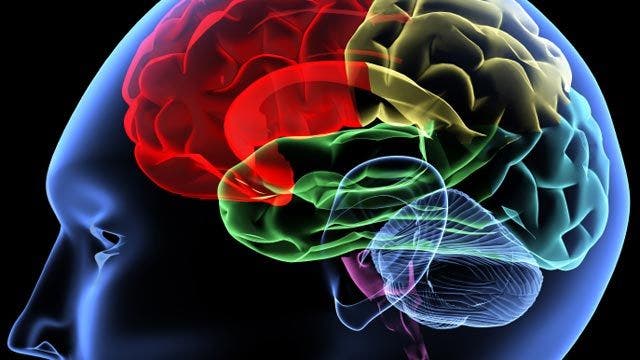
Ketamine hailed as 'a miracle for treating severe depression'

by Sara Solovitch | Washington Post

It was November 2012 when Dennis Hartman, a Seattle business executive, managed to pull himself out of bed, force himself to shower for the first time in days and board a plane that would carry him across the country to a clinical trial at the National Institute of Mental Health (NIMH) in Bethesda.

After a lifetime of profound depression, 25 years of therapy and cycling through 18 antidepressants and mood stabilizers, Hartman, then 46, had settled on a date and a plan to end it all. The clinical trial would be his last attempt at salvation.

For 40 minutes, he sat in a hospital room as an IV drip delivered ketamine through his system. Several more hours passed before it occurred to him that all his thoughts of suicide had evaporated.

"My life will always be divided into the time before that first infusion and the time after," Hartman says today. "That sense of suffering and pain draining away. I was bewildered by the absence of pain."

Ketamine has been around since the early 1960s. It is a staple anesthetic in emergency rooms, regularly used for children when they come in with broken bones and dislocated shoulders. Its an important tool in burn centers and veterinary medicine, as well as a notorious date-rape drug, known for its power to quickly numb and render someone immobile.

Since 2006, dozens of studies have reported that it can also reverse the kind of severe depression that traditional antidepressants often don't touch. The momentum behind the drug has now reached the American Psychiatric Association, which, according to members of a ketamine task force, seems headed toward a tacit endorsement of the drug for treatment-resistant depression.

Experts are calling it the most significant advance in mental health in more than half a century. They point to studies showing ketamine not only produces a rapid and robust antidepressant effect; it also puts a quick end to suicidal thinking.

Traditional antidepressants and mood stabilizers, by comparison, can take weeks or months to work. In 2010, a major study published in JAMA, the journal of the American Medical Association, reported that drugs in a leading class of antidepressants were no better than placebos for most depression.

A growing number of academic medical centers, including Yale University, the University of California at San Diego, the Mayo Clinic and the Cleveland Clinic, have begun offering ketamine treatments off-label for severe depression, as has Kaiser Permanente in Northern California.

The next big thing?

"This is the next big thing in psychiatry," says L. Alison McInnes, a San Francisco psychiatrist who has enrolled 58 severely depressed patients at Kaiser's San Francisco clinic. She says her long-term success rate of 60 percent for people with treatment-resistant depression who try the drug has persuaded Kaiser to expand treatment to two other clinics in the Bay Area. The excitement stems from the fact that its working for patients who have spent years cycling through antidepressants, mood stabilizers and various therapies.

"Psychiatry has run out of gas," she says. "There are a significant number of depressed people who don't respond to antidepressants, and we've had nothing to offer them other than cognitive behavior therapy, electroshock therapy and transcranial stimulation."

McInnes is a member of the APAs ketamine task force, assigned to codify the protocol for how and when the drug will be given. She says she expects the APA to support the use of ketamine treatment early this year.

The guidelines, which follow the protocol used in the NIMH clinical trial involving Hartman, call for six IV drips over a two-week period. The dosage is very low, about 1/10 of the amount used in anesthesia. And when it works, it does so within minutes or hours.

"It's not subtle," says Enrique Abreu, a Portland, Ore., anesthesiologist who began treating depressed patients with it in 2012. "It's really obvious if it's going to be effective. And the response rate is unbelievable. This drug is 75 percent effective, which means that three-quarters of my patients do well. Nothing in medicine has those kind of numbers."

So far, there is no evidence of addiction at the low dose in which infusions are delivered. Ketamine does have one major limitation: Its relief is temporary. Clinical trials have found that relapse usually occurs about a week after a single infusion.

Ketamine works differently from traditional antidepressants, which target the brains serotonin and noradrenalin systems. It blocks N-methyl-D-aspartate (NMDA), a receptor in the brain that is activated by glutamate, a neurotransmitter.

In excessive quantities, glutamate becomes an excitotoxin, meaning that it overstimulates brain cells.

"Ketamine almost certainly modifies the function of synapses and circuits, turning certain circuits on and off," explains Carlos Zarate, NIMH chief of neurobiology and treatment of mood disorders, who has led the research on ketamine. "The result is a rapid antidepressant effect."

Rapid effect

A study published in the journal Science in 2010 suggested that ketamine restores brain function through a process called synaptogenesis. Scientists at Yale University found that ketamine not only improved depression-like behavior in rats but also promoted the growth of new synaptic connections between neurons in the brain.

Even a low-dose infusion can cause intense hallucinations. Patients often describe a kind of lucid dreaming or dissociative state in which they lose track of time and feel separated from their bodies. Many enjoy it; some dont. But studies at NIMH and elsewhere suggest that the psychedelic experience may play a small but significant role in the drugs efficacy.

"It's one of the things that's really striking," says Steven Levine, a Princeton, N.J., psychiatrist who estimates that he has treated 500 patients with ketamine since 2011. "With depression, people often feel very isolated and disconnected. Ketamine seems to leave something indelible behind. People use remarkably similar language to describe their experience: a sense of connection to other people, a greater sense of connection to the universe."

Although bladder problems and cognitive deficits have been reported among long-term ketamine abusers, none of these effects have been observed in low-dose clinical trials. In addition to depression, the drug is being studied for its effectiveness in treating obsessive-compulsive disorder, post-traumatic stress disorder, extreme anxiety and Rett syndrome, a rare developmental disorder on the autism spectrum.

Booster treatments

The drugs fleeting remission effect has led many patients to seek booster infusions. Hartman, for one, began his search before he even left his hospital room in Bethesda.

4 years ago, he couldn't find a doctor in the Pacific Northwest willing to administer ketamine. "At the time, psychiatrists hovered between willful ignorance and outright opposition to it," says Hartman, whose depression began creeping back a few weeks after his return to Seattle.

It took nine months before he found an anesthesiologist in New York who was treating patients with ketamine. Soon, he was flying back and forth across the country for bimonthly infusions.

Upon his request, he received the same dosage and routine he received in Bethesda: six infusions over two weeks. And with each return to New York, his relief seemed to last a little longer. These days, he says that his periods of remission between infusions often stretch to six months. He says he no longer takes any medication for depression besides ketamine.

"I don't consider myself permanently cured, but now its something I can manage," Hartman says, "like diabetes or arthritis. Before, it was unmanageable, it dominated my life
and prevented me from functioning."


In 2012 he helped found the Ketamine Advocacy Network, a group that vets ketamine clinics, advocates for insurance coverage and spreads the word about the drug.

And word has indeed spread. Ketamine clinics, typically operated by psychiatrists or anesthesiologists, are popping up in major cities around the country.

Levine, for one, is about to expand from New Jersey to Denver and Baltimore. Portland's Abreu recently opened a second clinic in Seattle.

Depression is big business. An estimated 15.7 million adults in the United States experienced at least one major depressive episode in 2014, according to the NIMH.

"There's a great unmet need in depression," says Gerard Sanacora, director of the Yale Depression Research Program. "We think this is an extremely important treatment. The concern comes if people start using ketamine before CBT [cognitive behavioral therapy] or Prozac. Maybe someday it will be a first-line treatment. But we are not there yet."

https://www.washingtonpost.com/nati...e73862-b490-11e5-a76a-0b5145e8679a_story.html

 
Last edited:
Top