• BASIC DRUG
    DISCUSSION
    Welcome to Bluelight!
    Posting Rules Bluelight Rules
    Benzo Chart Opioids Chart
    Drug Terms Need Help??
    Drugs 101 Brain & Addiction
    Tired of your habit? Struggling to cope?
    Want to regain control or get sober?
    Visit our Recovery Support Forums
  • BDD Moderators: Keif’ Richards

veins

lovebuzzer

Bluelighter
Joined
Jan 11, 2011
Messages
55
Can anyone tell how to find veins not on the surface like trained nurses can. I can never find them like they can in a second. Is there a diagram or directions on how to find them?

 
Some people's veins are just less visible than others. You can try a warm compress or a tourniquet if you need to help find veins.
 
take a nice hot shower or bath to help bring those veins to the surface. also, keeping a dumbbell around so that you can curl a few sets will really help bulge your veins out as well. a tourniquet can also be useful, although i've never had to bother with one. my friend back home though always needed to use a tourniquet (you may be one of these people), and if he was in my car and forgot his, he would make use of one from the seat belt. also, stay plenty hydrated by drinking large amounts of water.
 
HR to BDD

what does this mean?

Today I had to go to the dock and get an IV. They found it very hard to find a vein. They said that you can go to a hospital and get a vein map that shows you exactly where all of your veins are. Has anybody heard of this or done it. That would be the ultimate.
 
Last edited by a moderator:
what does this mean?

IT means the thread was moved from the Harm Reducton forum to Basic Drug Discussion :)


lovebuzzer said:
Today I had to go to the dock and get an IV. They found it very hard to find a vein. They said that you can go to a hospital and get a vein map that shows you exactly where all of your veins are. Has anybody heard of this or done it. That would be the ultimate.

http://www.vdf.org/interactive/vein-artery-map.php

That site has a good general vein and artery map.
 
in my experience with vein localization, utilization, and the like, lay folks need to at least feel a ba-lottable vein +/- see a vein for iv fluids, iv medication, phlebotomy, or whatever. Nurses don't have some expertise in anatomy although they may know some novel places to look. At the end of the day, they feel and/or see a vein they access. The typical progression is antecubital (crease of your elbow region), then that scars down and pressure increases downstream in the forearm vein between the antecubital fossa and the wrist. By then, the individual knows how to use tournequets, gravity, sustained muscle contraction to dilate the veins on the back (dorsum) of the hand, inside of the wrist and then the wheels generally fall off at that point. They then move, if they are so motivated, to the lower extremity which mirrors closely the upper extremity with the inside of the knee joint being the analog of the elbow. It has a large vein running down the inside of the calf. This is the saphenous vein (used commonly for heart bypass grafting). If used wisely with small guage (24 or higher) needles, this can be used pretty much indefinitely, but can also be damaged resulting in thrombosis (clotting) or fibrosis to the point that it cannot be punctured predictably. Then the individual moves to the dorsum of the foot (much like they move to the dorsum of the hand when the large upper extremity veins become "difficult."). At this point, one must honestly assess their usage of veins as a route of administration. That is, IMHO, if you are "running out of veins" there is nowhere else to inject. Unfortunately, many folks end up injecting intramuscularly, subcutaneously, or in veins that are "really not there." Sorry for the long answer, but I'd love to hear other peoples input, in agreemant of otherwise.
 
I fully recommend a tourniquet. Some peoples veins are easily visible without but they will not be full of blood and prone to collapse or slip under the skin. Tourniquet engorges the veins and keeps them open and nice + stable.

I believe the reason nurses/docs get good at hitting veins is not memorising maps, but learning to take their time locating them, know the general vicinity of where they are likely to be, then have a good old feel around to find one. Tis all experience and skilled technique imo..

I find that feeling for veins is often better than seeing them, for a couple of reasons. If you can't see them well but you can feel them they are fairly deep in the subcutanous tissue, and are therefore more stable and less likely to slip/pop. They often tend to be bigger than surface veins too. However this takes practice, and if you can't see a vein very well it is difficult to be 100% certain of its position unless you are experienced. They feel a little "bouncy" to me, different to the surrounding tissue, you can feel them spring back as you take the pressure off with your finger. Have a feel around of yours (and your mates if you can!) veins to see if you can get the hang of this technique.

Don't rely on normal anatomy beyond where the main few veins are. I have very abnormally deep veins in my antecubital fossa (ACF or inside of elbow) and my forearem veins are different to normal too. Tis useful to have a vague idea def, but really you just need to take your time, prep well (tourniquet, squeeze hand, warm water, make sure you are well hydrated) and take even more time!

I am sure you know (you havent said how long you've been injecting for) but just for harm reduction purposes here's some more general advice:

Start at the ACF then move down as you have to; behind knees is not that good due to proximity of arteries, but is used; there is often a large vein along the thumb-side of wrist (cephalic vein) but the skin is quite thick here and the vein tends to roll so be cautious using that one. Hand veins are very small and delicate so you need to be gentle, keep the hand holding the needle steady, and inject more slowly than you normally would.

Thigh veins/calf veins tend to be useless as the big ones are very deep indeed and the superficial ones very prone to collapse instantly. Feet veins can be quite prominent due to gravity but as with hand veins they are actually prettm small and delicate. You can put tourniqeuts around your calves.

Femoral vein is obviously an option but is a real last resort thing (besides jugular, and I guess penis in men!). It is a big vein and is actually easy-ish to hit once you know where you are going but it runs right next to (actually snuggled up against) the femoral artery (hit it and risk losing leg or bleeding out) and the femoral nerve (intense pain and risk of losing nerve supply to leg so no movement of it). It's also a LOT harder to be sterile and not introduce bacteria into the bloodstream as the groin area is generally a bit warm and sweaty (in everyone not just you haha.. so higher risk of septicaemia and infective endocarditis..). If it pulses, it's the artery, STAY AWAY! Info on reducing risk in femoral/groin injections can be found elsewhere I'm sure so won't go on about it.

Jugular vein - just don't even go there. Very high risk of infection, infective endocarditis, haemorrhage, hitting carotid, hitting nerves in neck etc etc etc. Not really any positive slant I can put on this one... if you must do it I suppose don't do it alone, preferaby have someone very experienced do it for you, use sterie gloves and kit, alcohol swab or alcohol gel the whole area and try to be fucking careful. And lucky.

Quick word on alcohol swabbing - most people don't realise you need to swab the area for 30 seconds (lot longer than it feels at the time, time yourself and see!) and let it airdry completely otherwise it just wipes the bacteria about and doesn't kill them. I know this is a faff, but you might as well not bother otherwise... and once you have swabbed, don't touch the site again if you can possibly help it - hands are covered in lovely bacteria! You can make an indentation using a penlip where the vein is if you are worried about losing it, or put gloves on to give yourself the shot.

If you can, get a mate to hold the skin taut under where you are injecting to stop the vein from moving and you missing your shot...

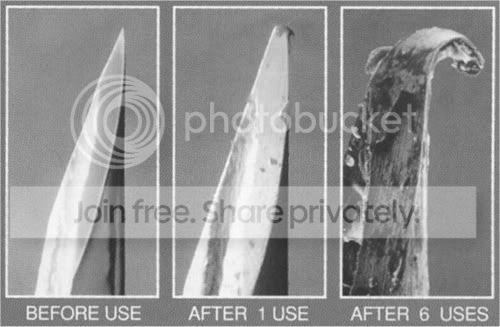
Finally, rotate your sites and never, ever use a needle into the skin more than once (twice at a push) even if its the same shot - it blunts the needle hugely and damages veins and will kill em off a lot sooner..

Have you considered plugging?? :D

Good luck <3
 
Last edited:
^^
good advice.

also, i find sometimes it's best to do a quick alcohol swab on your elbow before you start prepping everything up. sometimes i'll get everything set up super sterile (paper towels everywhere where i'm setting up, alcohol swabs on spoons, etc.), and then i'll completely forget to alcohol swab my arm before i inject. it's happened on multiple occasions, and i feel like an idiot every time since i have it sitting out in front of me. it's easy to get caught up in the moment tho, so a quick swab on my arm before hand is at least somewhat of a backup plan in case i forget to properly do it before.

its just something ive noticed during personal use, but it may not apply to you.
 
Thanks for the replies. I have been shooting for a while, hence the lack of ease of finding them. I have always used tornequets.

I have heard of plugging but does is give you the rush that IV does and do you need to use more?

The vein in the calf, how hard is that to find? is it in the back of the calf near the knee.

I have also heard of people injecting under their finger nails, is this to hide the marks or are their veins there? Or would this just be a type of IM injection?

One last ? has anyone noticed that when injectinginthe foot that the rush seems to come on slower and it is less intense?
 
Thanks for the replies. I have been shooting for a while, hence the lack of ease of finding them. I have always used tornequets.

I have heard of plugging but does is give you the rush that IV does and do you need to use more?

Some people find it does give a rush as it is absorbed into tbe bloodstream very quickly, but it's quite subjective - some people don't find it does at all. Bioavailability is likely to not be 100% so you probably would need a little more, but the rectum has a really good blood supply so overall bioavailability does tend to be pretty high. I'd try your normal amount first, to gauge how effective plugging is for you, then adjust as needed :)

The vein in the calf, how hard is that to find? is it in the back of the calf near the knee.

I don't have any experience of this I'm afraid. It's the great saphenous vein and runs down the inside of your thigh and calf, so wouldn't be behind the knee - it would be on the inside of your leg. Have a look at some vein maps if you're not sure. It's a really hard one to find I think. Don't blindly try to shoot in it.. Also it's kinda useful to leave a vein that doctors can use if they need to treat you..

Don't know if anyone here has any experience in using it..?

I have also heard of people injecting under their finger nails, is this to hide the marks or are their veins there? Or would this just be a type of IM injection?

That wouldn't be IM as it's not in a muscle. It wouldn't act like a subcut injection either as there is quite a good blood supply in your nail bed, however also big potential for very unpleasant infections I would imagine.There aren't any veins there but there are a lot of capillaries, which would absorb the drug and carry it to veins. It would be excruitatingly painful though!!! :!

One last ? has anyone noticed that when injectinginthe foot that the rush seems to come on slower and it is less intense?

Again no personal experience of this but logic says that your foot is further from the brain so the drug will take longer to reach it and will be more dilute (in your bloodstream) when it does, so less likely to produce the rush that a whole load of drug hitting your brain at once would. Also, your foot veins are quite small and blood flow is fairly sluggish so that will man it takes even longer to reach your brain. Injecting in your foot has a pretty high risk of infection if you miss, and the veins are fragile so easily popped, be really careful..

Hope that helped! :)
 
I've never done IV drugs, must be a pain in the ass because even though my forearm vascularity is great I have had nurses fuck it up and have to attempt it multiple times... :X
 
^ sometimes the veins that look the best are actually really hard, especially the sort that really stand out, as they roll a lot under the skin! Or sometimes nurses/doctors aren't that good at hitting veins, haha..
 
The nurse stuck the needle in my arm, missed, then moved the needle around while it was in my arm searching for the vein, UGHHHH such a weird burning feeling as she was doing it.

She still couldn't find it.


Then a male nurse came in and did it on the first try, zero pain.
 
Quick word on alcohol swabbing - most people don't realise you need to swab the area for 30 seconds (lot longer than it feels at the time, time yourself and see!) and let it airdry completely otherwise it just wipes the bacteria about and doesn't kill them. I know this is a faff, but you might as well not bother otherwise... and once you have swabbed, don't touch the site again if you can possibly help it - hands are covered in lovely bacteria! You can make an indentation using a penlip where the vein is if you are worried about losing it, or put gloves on to give yourself the shot.

When I was training for my EMT-B cert we were always discouraged to not use alcohol after an injection, as it inhibits clotting. Just putting that out there, but during the prep before the shot and alcohol pad and friction from rubbing it will raise the veins to the surface somewhat. And as someone mentioned earlier, yes there are vein and artery anatomy charts, we have one on the wall in the back of our bus which goes to show that even trained EMTs and paramedics can use a quick reference sometimes, it's definitely nothing to feel inferior about. Good luck lovebuzzer
 
I've never done IV drugs, must be a pain in the ass because even though my forearm vascularity is great I have had nurses fuck it up and have to attempt it multiple times... :X

Not exactly a pain in the ass, it's not bad at all actually, it's just the fact that you pay more attention to whats going on when you're the one administering the shot on yourself, a nurse is usually occupied with about 30 different things at once and making sure your IV is comfortable is not likely gonna be on her list lol 8)
 
When I was training for my EMT-B cert we were always discouraged to not use alcohol after an injection, as it inhibits clotting. Just putting that out there, but during the prep before the shot and alcohol pad and friction from rubbing it will raise the veins to the surface somewhat. And as someone mentioned earlier, yes there are vein and artery anatomy charts, we have one on the wall in the back of our bus which goes to show that even trained EMTs and paramedics can use a quick reference sometimes, it's definitely nothing to feel inferior about. Good luck lovebuzzer

Yeah definitely, no point alcohol swabbing after at all as the danger is the needle touching bacteria on the skin and pushing them into the body. Don't want to inhibit clotting after, you want the vein to heal up nicely with minimal bruising! And yeah rubbing alcohol pad on the skin while prepping is a good way to raise veins and make sure you decontaminate the skin well :)
 
^ very true - however you really don't want to fuck up your veins in the learning period, so also a good idea to read up on technique etc beforehand!

Top tip - do not use the same needle more than once, if you don't register first time - it blunts amazingly quickly.

needle-deterioration_icbg.jpg
 
Last edited:
I wish I knew what I do now when I started IVing. Sadly, I ended up fucking up a couple of veins before I really mastered proper technique. Don't make the same mistake!
 
Top



